Navigating dental insurance can feel like deciphering a complex code. When your dentist recommends a 3D dental scan—a cutting-edge imaging technology that provides a detailed, three-dimensional view of your jaws, teeth, and nerves—your first question is likely, “Will my insurance cover this?” It’s a crucial question, as these scans, often called Cone Beam Computed Tomography (CBCT), are more advanced and costly than traditional X-rays.
The good news is that in many clinically necessary situations, dental insurance does provide coverage for 3D scans. However, unlike a standard cleaning, coverage is not automatic or universal. It hinges on medical necessity, specific plan details, and proper coding by your dental office. This guide will demystify the process, giving you the knowledge and tools to effectively work with your dentist and insurance provider to secure coverage for this valuable diagnostic tool.
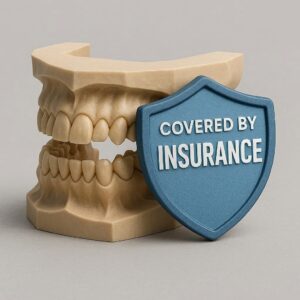
3D Dental Scan Covered by Insurance
Understanding the 3D Dental Scan (CBCT)
Before diving into insurance, let’s understand what we’re talking about. A Cone Beam CT scan is a revolutionary imaging machine that rotates around your head, capturing hundreds of images that are then compiled by computer software into a detailed 3D model.
Think of it this way:
-
Traditional Dental X-ray: A flat, two-dimensional photograph of a group of teeth.
-
3D CBCT Scan: A interactive, three-dimensional map that can be zoomed, rotated, and sliced to view bone density, nerve pathways, sinus locations, and tooth roots from any angle.
“This technology is a game-changer for diagnosis and treatment planning,” explains Dr. Amanda Lewis, a prosthodontist. “It moves us from educated guesswork to precise, measurable certainty. For complex procedures, it’s not just beneficial; it’s often the standard of care.”
Common Clinical Uses for 3D Scans (Where Insurance Often Applies)
This is where insurance companies see the value. Coverage is most likely when the scan is essential for a specific, planned treatment. Key applications include:
-
Dental Implant Planning: This is the most common reason for a CBCT. The scan reveals the exact bone quality, quantity, and location of critical structures like nerves and sinuses, allowing for virtual, precise implant placement.
-
Complex Root Canal Treatment: For diagnosing unusual root canal anatomy, fractures, or infections that standard X-rays can’t clearly show.
-
Impacted Tooth Assessment: Especially for wisdom teeth or canines, to see their exact position relative to nerves and other teeth.
-
Oral Surgery and Extractions: To assess the relationship of teeth to the mandibular nerve, sinus cavities, or for planning complex surgical extractions.
-
Temporomandibular Joint (TMJ) Disorder Evaluation: To examine the bone structure of the jaw joints.
-
Orthodontic Planning: For certain complex cases involving skeletal discrepancies or impacted teeth.
The Insurance Landscape for 3D Dental Scans
Dental insurance plans categorize 3D scans under “diagnostic imaging” or “radiographs,” but they treat them differently than routine bitewing X-rays. Coverage is almost always tied to demonstrating medical necessity.
Key Factors That Determine Coverage
-
Plan Type & Provider Network:
-
PPO Plans: Offer the most flexibility. You can see any dentist, but you’ll pay less if you use an in-network provider who has agreed-upon rates with the insurer.
-
DHMO/Managed Care Plans: Typically only cover services performed by in-network dentists. Coverage for advanced diagnostics like CBCT may be more restricted.
-
Indemnity Plans: Provide a set dollar amount toward the cost, regardless of the dentist you choose, but often have higher deductibles.
-
-
The Concept of “Medical Necessity”:
This is the cornerstone of coverage. Your dentist must provide a narrative and code that justifies why a 2D X-ray was insufficient for your specific case. The insurance company needs to understand that the scan is directly related to diagnosing a condition or planning a covered treatment. -
Pre-Treatment Authorization (Pre-Determination):
This is your most powerful tool. Before the scan is taken, your dental office can submit a pretreatment claim to your insurance company. This outlines the planned procedure (the scan) and the justifying reason (e.g., “planning for implant in site #30”). The insurer then returns an estimate of your benefits. This step is highly recommended for any non-emergency CBCT scan.
Typical Coverage Scenarios
| Scenario | Likelihood of Insurance Coverage | Key Reasoning & Notes |
|---|---|---|
| Diagnostic for Unexplained Pain | Low to Moderate | Requires strong justification that 2D films were inconclusive. May be covered if a specific pathology (e.g., fracture, hidden infection) is strongly suspected. |
| Routine Screening or New Patient Exam | Very Low | Insurance rarely covers advanced imaging for general screening purposes. This is typically an out-of-pocket expense. |
| Planning for a Single Dental Implant | High | Considered medically necessary for safe treatment planning. Usually covered under the “diagnostic” portion of the implant benefit. |
| Assessment of Impacted Wisdom Teeth | Moderate to High | Covered when proximity to the nerve needs evaluation to determine surgical risk and approach. |
| Follow-up Scan After Implant Placement | Low | Usually only covered if there is a specific complication or problem. Routine post-op checks use simpler X-rays. |
| Comprehensive Orthodontic Treatment | Variable | Some plans cover it as part of initial records; others may not. Depends on the plan’s orthodontic benefits. |
How to Maximize Your Chance of Coverage: A Step-by-Step Guide
Being proactive can make all the difference. Follow this checklist to navigate the process smoothly.
Step 1: Have a Clear Discussion with Your Dentist
Ask pointed questions:
-
“Why is the 3D scan necessary for my treatment instead of a standard X-ray?”
-
“What specific information will it provide that will change the treatment plan or outcome?”
-
“Can you provide the clinical notes that will justify this to the insurance company?”
Step 2: Contact Your Insurance Provider Directly
Call the customer service number on your card. Ask these specific questions:
-
“Does my plan include benefits for Cone Beam CT (CBCT) scans or 3D dental imaging?”
-
What is the code being used? (Common codes are D0364, D0365, D0366, D0367, or D0368 for specific areas).
-
“Is a pre-treatment authorization required for this procedure?”
-
“What percentage of the fee is covered, and does it apply to my annual deductible?”
Step 3: Ensure a Pre-Treatment Authorization is Submitted
-
Request that your dentist’s office submits a pre-authorization claim. This is not a guarantee of payment, but it gives you a reliable estimate and avoids surprises.
-
This process can take 2-6 weeks, so plan accordingly.
Step 4: Understand Your Plan’s Financial Structure
Know these numbers:
-
Deductible: The amount you pay out-of-pocket before insurance starts contributing.
-
Coinsurance: Your share of the costs (e.g., 50%) after the deductible is met.
-
Annual Maximum: The total amount your insurance will pay in a benefit year. A costly scan and subsequent treatment can approach or exceed this maximum.
Important Note for Readers: “Even with coverage, remember that a 3D scan may be subject to your plan’s deductible and coinsurance. A $400 scan with 50% coverage means a $200 cost to you, provided you’ve met your deductible. Always ask for a cost estimate in writing.”
Step 5: Review the Explanation of Benefits (EOB)
After the claim is processed, you will receive an EOB. This is not a bill. It explains what the insurance paid, what they denied, and why. Compare it to the pre-authorization estimate.
What to Do If Your Claim is Denied
A denial is not necessarily the final answer. Insurance denials are common and often appealable.
-
Understand the Reason: The EOB will list a denial code (e.g., “not medically necessary,” “procedure not covered”).
-
File an Appeal: Your dentist can submit a letter of medical necessity. This letter should detail the clinical rationale, reference the specific anatomy, and explain why alternative imaging was inadequate. Additional materials, like copies of blurry 2D X-rays, can be included.
-
Patient Advocacy: You can also write a letter yourself, calmly reiterating the clinical need as explained by your dentist.
-
Consider Medical Insurance: In some cases—such as scans for TMJ disorders (which may be classified as a medical condition), trauma, or pathology like cysts or tumors—your medical insurance may provide coverage. Your dentist’s office may need to use medical CPT codes (like 70350) instead of dental codes.
Conclusion
Getting a 3D dental scan covered by insurance is a manageable process rooted in understanding the principle of medical necessity. Success comes from clear communication with your dentist about the scan’s specific purpose, proactive verification of your plan’s benefits, and the strategic use of pre-treatment authorizations. By being an informed advocate for your own care, you can access this precise diagnostic technology while maximizing your insurance benefits and minimizing unexpected out-of-pocket expenses.
Frequently Asked Questions (FAQ)
Q: What is the average cost of a 3D dental scan without insurance?
A: Costs vary widely by region and the size of the area scanned, but typically range from $250 to $600 for a single, limited-area scan. A full-arch or full-mouth scan can be more.
Q: What are the common dental billing codes for a 3D scan?
A: The American Dental Association (ADA) codes are most common:
-
D0364 – CBCT image capture with limited area
-
D0365 – CBCT image capture with full arch
-
D0366 – CBCT image capture with full mouth
-
D0367 – 3D image reconstruction
-
D0368 – 2D image derived from 3D data
Q: Can I get a 3D scan if my dentist doesn’t have the machine?
A: Yes. Dentists often refer patients to a specialized oral and maxillofacial radiology center for CBCT scans. The radiologist provides a detailed report to your treating dentist.
Q: Is a 3D scan safer than traditional X-rays?
A: CBCT uses a cone-shaped beam and targeted exposure, which can result in a lower overall radiation dose compared to a traditional medical CT scan. However, the dose is generally higher than a single traditional dental X-ray. The principle of ALARA (As Low As Reasonably Achievable) is always followed, meaning the benefit of accurate diagnosis must outweigh the minimal radiation risk.