So, you’re thinking about adding a mechanical bull to your business. That’s fantastic! Whether it’s for a bar, a rental company, a festival, or a wedding, a mechanical bull is a guaranteed crowd-pleaser. But before you hear that first excited yell of “Yeehaw!”, there’s a crucial piece of business to tackle: insurance. Understanding mechanical bull insurance cost isn’t just about finding a policy—it’s about protecting your livelihood, your customers, and your dream from the unexpected.
This guide will walk you through everything you need to know. We’ll break down what influences the price, what coverage you absolutely need, and how you can manage your costs effectively. Let’s saddle up and get into the details.
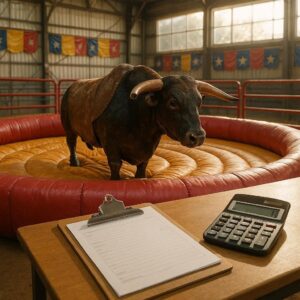
Mechanical Bull Insurance Cost
What is Mechanical Bull Insurance & Why Is It Non-Negotiable?
At its core, mechanical bull insurance is a specialized form of liability insurance. It’s designed to protect your business from financial losses if someone is injured while using or being around your ride, or if property is damaged. Think of it not as an optional expense, but as the essential safety net that allows your business to operate.
Why is it so critical? Unlike a simple slip-and-fall, a mechanical bull involves a dynamic, physically challenging activity. The risk of strains, falls, and more serious injuries is inherent. Without proper insurance, a single lawsuit could result in devastating out-of-pocket legal fees, settlement costs, and medical bills that could easily shutter your business.
“In the entertainment rental industry, insurance isn’t a line item you try to minimize—it’s the foundation of a responsible operation. It protects you, your client, and the participant, ensuring the fun doesn’t lead to financial ruin.” — Industry Risk Manager
Important Note for Readers: Never operate a mechanical bull without verifying you have adequate insurance in place. General liability policies often have exclusions for “amusement devices” or “inflatable devices,” so a specific rider or separate policy is almost always required.
Breaking Down the Core Components of Coverage
Your insurance policy isn’t a monolithic product. It’s built from key coverage parts. Understanding these helps you know what you’re paying for.
General Liability Insurance: The Foundation
This is the bedrock. It covers third-party bodily injury (e.g., a rider breaks an arm) and property damage (e.g., the bull crashes into a wall). It pays for medical expenses, legal defense, and settlements/judgments up to your policy limits.
Products-Completed Operations Insurance
This is vital for rental companies. It covers injuries that occur after you’ve completed your job—for example, if a part you installed fails a week later at a private party and causes an injury. It addresses the long-tail risk of your work.
Commercial Auto Insurance
If you transport the bull to events, your personal auto policy will not cover an accident. You need commercial auto insurance for the vehicle transporting the business equipment.
Inland Marine (Equipment) Insurance
This covers the mechanical bull itself against theft, fire, or damage while it’s in transit or at a venue. If your $15,000 bull is damaged in a truck accident, this is what helps you replace it.
Workers’ Compensation Insurance
If you have employees (operators, spotters, setup crew), this is legally required in most states. It covers medical costs and lost wages if an employee is injured on the job.
Key Factors That Determine Your Mechanical Bull Insurance Cost
The premium you pay isn’t pulled from thin air. Insurers assess risk based on a detailed profile of your operation. Here are the primary levers that affect your cost:
1. Type of Business & Use: A bar with a permanent bull has a different risk profile than a rental company servicing 50 events a month. Higher frequency of use typically means higher premium.
2. Location: Insurance costs vary by state and even zip code due to local laws, litigation history, and medical costs.
3. Coverage Limits: The maximum amount your insurer will pay. Higher limits (e.g., $2 million aggregate vs. $1 million) cost more but provide crucial protection.
4. Claims History: A clean record is your best friend. Past claims signal higher risk.
5. Safety Protocols: Insurers will ask: Do you use trained operators? Multiple spotters? Helmets and pads? Signed waivers? Rigorous safety measures can lead to discounts.
6. Annual Revenue/Payroll: For many policies, premium is calculated based on your business’s size, often tied to gross receipts or total payroll.
7. Deductible Amount: The portion you pay out-of-pocket in a claim. Choosing a higher deductible can lower your annual premium.
Comparative : Estimated Annual Cost Ranges
| Business Profile | Typical Coverage Focus | Estimated Annual Premium Range* | Key Cost Drivers |
|---|---|---|---|
| Small Rental Co. (1 bull, part-time) |
Liability ($1M), Inland Marine | $1,200 – $3,000 | Number of events, safety gear use, operator training. |
| Full-Time Rental Business (Multiple bulls) |
Liability ($2M+), Inland Marine, Auto | $3,000 – $8,000+ | Revenue, fleet size, geographic coverage area, employee count. |
| Bar/Nightclub (Permanent installation) |
Liquor Liability + Bull Rider | $2,500 – $6,000 | Alcohol sales, hours of operation, venue capacity. |
| Event/Party Planner (Occasional rental) |
Single-Event Insurance | $200 – $800 per event | Event duration, number of participants, venue requirements. |
*These are illustrative estimates. Actual quotes will vary significantly based on the factors listed above.
How to Get an Accurate Quote: A Step-by-Step Process
Getting the right insurance is an active process. Follow these steps:
-
Gather Your Documents: Have your business details (legal name, LLC documents, EIN), revenue estimates, and information about your bull (model, value, safety features) ready.
-
Research Specialty Providers: Look for insurers who specialize in amusement, entertainment, or party rental insurance. They understand the unique risks better than generalist companies.
-
Prepare for the Application Questions: Be ready to answer in detail about:
-
Your maximum participant weight limits.
-
Your operator training program.
-
Your waiver/release of liability form.
-
Your minimum age requirement for riders.
-
Your spotter-to-rider ratio.
-
-
Get Multiple Quotes: Contact at least 3-5 different agents or carriers. Compare not just price, but the coverage details and exclusions.
-
Review the Quote Carefully: Ensure it explicitly covers “mechanical bull operation” or “amusement devices.” Verify the limits, deductibles, and named insured are correct.
Helpful List: What to Have Ready for Your Agent
-
Business formation documents (e.g., Articles of Incorporation)
-
Description of operations (where, how often, for whom)
-
Copies of your safety rules and waiver forms
-
List of equipment with serial numbers and values
-
Previous insurance policies (if any)
-
Estimated annual revenue or payroll
Proactive Strategies to Manage and Reduce Your Insurance Costs
Insurance is a cost of doing business, but a smart one. Here’s how to be a preferable risk to insurers, which can help lower your premiums.
-
Implement a Ironclad Safety Program: This is the #1 factor you control. Create formal, documented procedures for setup, operation, and breakdown. Require comprehensive training and certification for all operators.
-
Use Superior Waivers: Have a well-drafted liability waiver/release form reviewed by an attorney in your state. Ensure every single participant (or parent/guardian for minors) signs it before riding. Note: Waivers are a deterrent and a layer of protection, but they do not replace insurance.
-
Require Safety Gear: Mandate the use of helmets, knee/elbow pads, and soft-soled shoes. This dramatically reduces the severity of injuries.
-
Maintain Impeccable Records: Keep logs of every event, maintenance check, operator training session, and signed waiver. This demonstrates professionalism to insurers.
-
Bundle Policies: Consider purchasing your general liability, inland marine, and auto coverage from the same carrier as a Business Owner’s Policy (BOP) for potential discounts.
-
Ask About Discounts: Inquire if discounts are available for things like paying annually instead of monthly, or for having no claims over a certain period.
The Real Cost of Being Uninsured: A Risk You Can’t Afford
Let’s be blunt: skipping insurance to save $2,000 a year is a catastrophic gamble. Consider this realistic scenario:
A rider falls awkwardly, suffering a serious back injury requiring surgery and long-term therapy. Medical bills exceed $150,000. They sue your business for negligence, pain and suffering, and lost wages. Legal defense costs start at $50,000. A settlement or judgment could easily reach $500,000 or more.
Without insurance, you are personally responsible for every dollar. This means liquidating business assets, personal savings, and potentially facing bankruptcy. The one-time premium is a fixed, manageable cost. The potential loss from being uninsured is infinite.
Conclusion
Navigating mechanical bull insurance cost is a fundamental part of running a safe and sustainable business. Your premium is an investment in your company’s longevity, reflecting the careful management of an inherently risky activity. By understanding the coverage components, the factors that influence price, and proactively implementing rigorous safety and risk management protocols, you can secure the protection you need at the most reasonable cost possible. Remember, the right insurance policy doesn’t just protect your finances—it protects your reputation and ensures the fun lasts for years to come.
FAQ: Mechanical Bull Insurance Costs
Q: Can I get insurance for just one single event?
A: Absolutely. Many specialty insurers offer short-term or single-event policies perfect for a festival, wedding, or corporate party. Costs typically range from a few hundred to under a thousand dollars for the day.
Q: Does my venue’s insurance cover my mechanical bull?
A: Almost certainly not. Venues will almost always require you, the operator, to provide a certificate of insurance naming them as an “Additional Insured” for the event. Their policy protects them, not your specific operation.
Q: Are signed waivers enough to avoid getting insurance?
A: No. Waivers are an important risk management tool and can deter some lawsuits, but they are not foolproof. They can be challenged in court (e.g., for a minor, or if gross negligence is alleged). Insurance is your primary financial backstop.
Q: How much coverage is enough?
A: A $1 million per-occurrence / $2 million aggregate limit is a common standard requirement from venues. For larger operations or higher-risk events, $2 million/$4 million or more may be advisable. Consult with your agent.
Q: Does the bull’s value affect liability insurance cost?
A: Not directly. The bull’s value affects the Inland Marine (equipment) portion of your policy. Liability costs are driven by the risk of injury to people, not the cost of the machine itself.