If you’re a Michigan driver, you’ve likely heard the term “PLPD insurance.” In a state with some of the highest auto insurance premiums in the nation, understanding this basic and mandatory coverage is the first step to protecting your wallet and your driving privileges. This comprehensive guide will break down everything you need to know about PLPD insurance cost in Michigan—what it is, what it covers, what influences its price, and how you can find the best deal without compromising on essential protection.
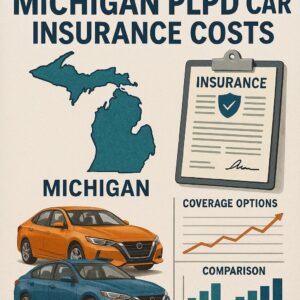
Michigan PLPD Insurance Cost
What is PLPD Insurance in Michigan?
Let’s start with the basics. PLPD stands for Personal Liability and Property Damage. This is the absolute minimum level of auto insurance required by Michigan law to legally operate a vehicle. It’s crucial to understand that PLPD is not full coverage. Instead, it’s designed to protect others from the costs associated with an accident you cause.
-
Personal Liability (Bodily Injury): This covers the medical expenses, pain and suffering, and lost wages of people injured or killed in an accident you are found legally responsible for. It does not cover your own injuries.
-
Property Damage (PD): This covers the cost of repairing or replacing another person’s property that you damage in an at-fault accident. This typically means the other driver’s vehicle, but can also include fences, buildings, or other structures.
A key Michigan-specific component bundled into standard PLPD policies is Personal Injury Protection (PIP), mandated by the state’s no-fault insurance system. PIP covers your own and your passengers’ medical expenses and lost wages, regardless of who caused the accident. Recent reforms have given drivers more choice in their PIP coverage level, which significantly impacts cost.
Industry Expert Note: “Many Michigan drivers confuse PLPD with ‘cheap’ or ‘insufficient’ coverage. In reality, it’s a foundational financial responsibility tool. The 2020 reforms changed the game, making PLPD with adjusted PIP options a more customizable and often more affordable starting point for many drivers,” says Michael Thompson, an insurance analyst based in Detroit.
What Does PLPD Insurance in Michigan Actually Cover? A Detailed Breakdown
To visualize the core protection, here’s what a standard Michigan PLPD policy includes:
| Coverage Component | Minimum Legal Requirement (Post-2020 Reforms) | What It Pays For |
|---|---|---|
| Bodily Injury Liability | $50,000 per person / $100,000 per accident | Other parties’ injury costs if you’re at fault. |
| Property Damage Liability | $10,000 per accident | Damage to others’ property (cars, fences, etc.) if you’re at fault. |
| Personal Injury Protection (PIP) | Choice Required: Medical expenses for you and your passengers. Options include unlimited, $500K, $250K, $250K (with Medicaid), $50K (for Medicaid enrollees), or an opt-out (if you have qualified other health insurance). | |
| Property Protection (PPI) | $1,000,000 | Damage to other people’s parked vehicles and property (like buildings) in Michigan, regardless of fault. |
| Residual Bodily Injury & Property Damage | A new, mandatory coverage that applies when you cause an accident in another state or when a non-Michigan resident sues you after an accident in Michigan. | Varies by policy. |
Important Limitations of PLPD:
-
Does NOT cover your vehicle. If you cause an accident, your PLPD policy will pay for the other car’s repairs, but not your own. Your vehicle damage would be an out-of-pocket expense.
-
Does NOT cover non-accident damage. Theft, vandalism, fire, hail, or animal collisions are not covered.
-
Does NOT provide comprehensive/collision. To cover your own car for repairs from an accident or other incidents, you must purchase optional Collision and Comprehensive coverages.
What is the Average Cost of PLPD Insurance in Michigan?
This is the million-dollar question, and the answer is: It depends dramatically on the driver. However, we can provide realistic ranges based on current industry data.
Following the 2020 auto insurance reforms, many drivers saw significant reductions in their PIP premiums, which is a major part of the PLPD package. Statewide, average premiums have decreased, but Michigan remains more expensive than the national average due to its unique no-fault system and high coverage requirements.
-
Estimated Monthly Range: For a single driver with a clean record selecting a mid-level PIP option ($250,000), monthly PLPD costs can range from $80 to $220.
-
Estimated Annual Range: Annually, you might expect to pay between $1,000 and $2,600 for a basic PLPD policy.
Critical Reader Note: These are statewide estimates. Your individual quote could be well below or above this range. The only way to know your true cost is to get personalized quotes from multiple insurers.
Key Factors That Determine Your PLPD Insurance Cost in Michigan
Insurance companies use a complex algorithm to assess risk. Here are the primary factors that will shape your premium:
1. Your Driving Record: This is the most significant factor you control. At-fault accidents, speeding tickets, DUIs, and other violations signal higher risk and can increase your premium by 30-100% or more.
2. Your PIP Medical Coverage Selection: Your choice here has a massive impact. Opting for the $50,000 PIP limit (if eligible) will be far cheaper than selecting unlimited PIP. This single decision can change your premium by hundreds of dollars per year.
3. Your Location: Urban areas like Detroit, Flint, Grand Rapids, and Lansing have higher rates of accidents, theft, and insurance claims, leading to higher premiums compared to rural areas.
4. Your Age, Gender, and Marital Status: Statistically, young drivers (especially teens) and male drivers are involved in more accidents. Senior drivers may also see rates increase. Married individuals often receive lower rates.
5. Your Vehicle: The car’s year, make, model, and safety features matter. Expensive cars cost more to repair, and models with high theft rates or poor safety ratings incur higher premiums.
6. Your Credit-Based Insurance Score: In Michigan, insurers can use your credit history as a factor (with some restrictions) to predict risk. A higher score typically leads to lower premiums.
7. Your Annual Mileage: The more you drive, the higher your chance of an accident. Low-mileage drivers often qualify for discounts.
8. Your Claims History: A history of filing frequent claims, even for not-at-fault incidents, can label you as a higher-risk customer.
9. Your Coverage Limits: While PLPD has minimums, you can choose to purchase higher liability limits (e.g., 100/300/100). This will increase your cost but provides much better financial protection.
How to Find Affordable PLPD Insurance in Michigan: A Step-by-Step Strategy
Finding the best rate requires proactive shopping. Follow this actionable checklist:
-
Audit Your Needs: Before you shop, decide on your PIP level and whether you need any optional coverages (like collision for a financed car).
-
Gather Your Information: Have your driver’s license, vehicle VIN, and current policy (if any) ready.
-
Shop Extensively, Not Lazily: Get quotes from at least 5-7 different companies. Include a mix of:
-
National insurers (State Farm, Geico, Progressive, Allstate)
-
Regional insurers (Auto-Owners, Citizens)
-
Direct online insurers
-
Local independent insurance agents (who can shop multiple companies for you)
-
-
Ask About Every Discount: Inquire specifically about:
-
Multi-policy (bundling home/renters)
-
Paid-in-full discount
-
Electronic documents/autopay discount
-
Good student discount
-
Defensive driving course discount
-
Anti-theft device/safety feature discount
-
Loyalty discounts
-
-
Consider a Higher Deductible on Optional Coverages: If you add collision/comprehensive, choosing a higher deductible (e.g., $1,000 vs. $500) lowers your premium.
-
Review and Adjust Annually: Your life changes, and so do rates. Don’t let your policy auto-renew without checking for better options.
Comparative Table: PLPD vs. Full Coverage in Michigan
| Aspect | PLPD Insurance | Full Coverage Insurance |
|---|---|---|
| Legal Requirement | Meets the minimum state requirement. | Exceeds the minimum; often required by lenders. |
| Covers Other Driver’s Car | Yes (Property Damage Liability). | Yes. |
| Covers YOUR Car for Repairs | No. | Yes (via optional Collision & Comprehensive). |
| Covers Theft/Vandalism | No. | Yes (via Comprehensive). |
| Covers Your Medical Bills | Yes (via your selected PIP). | Yes (via your selected PIP). |
| Typical Cost | Lower premium. | Higher premium (often 2x-3x the cost of PLPD). |
| Best For | Older vehicles with low market value, drivers on a strict budget, or extra vehicles. | New, leased, or financed vehicles; vehicles with high value. |
When Does Choosing PLPD Make Financial Sense?
PLPD is a strategic choice in specific scenarios:
-
You own an old car with low market value. If your car is worth less than $3,000-4,000, paying for collision coverage may not be cost-effective over time.
-
You are facing extreme financial constraints. It ensures you are legal to drive at the lowest possible upfront cost.
-
You have a separate “beater” or secondary vehicle that you could afford to repair or replace out-of-pocket.
Major Risk Warning: Choosing PLPD means you are self-insuring your own vehicle. In an at-fault accident, you must pay for your own car repairs. In a hit-and-run or if struck by an uninsured driver, you have no coverage for your vehicle. Be sure you have the savings to handle this potential expense.
Conclusion
Understanding Michigan PLPD insurance cost is about more than just finding the lowest number. It’s about balancing legal compliance, financial risk, and personal budget. By comprehending the coverage details, honestly assessing your personal risk factors, and diligently shopping around, you can secure a PLPD policy that provides the essential protection Michigan requires without overpaying. Remember, the cheapest policy is only the best value if it also provides the security you need.
Frequently Asked Questions (FAQ)
Q: I have great health insurance through my employer. Do I still need PIP?
A: Under Michigan’s reformed law, you can opt-out of PIP medical coverage if you have qualifying health insurance that explicitly covers auto accident injuries and has an individual deductible of $6,000 or less for auto-related injuries. Medicare Part A&B also qualifies. You must provide proof. Crucially, your health insurance must cover all resident relatives in your household.
Q: My car is paid off. Should I switch to PLPD?
A: It depends on your car’s value and your financial cushion. Calculate the annual cost of your collision/comprehensive coverage plus the deductible. If that amount is a significant percentage of your car’s current cash value (e.g., >15-20%), dropping to PLPD may be wise. If your car is still worth a substantial amount, retaining full coverage protects your asset.
Q: How can I lower my PLPD cost if I have a bad driving record?
A: It’s challenging but not impossible. Shop aggressively, as some companies specialize in higher-risk drivers. Take a state-approved defensive driving course for a potential discount. Most importantly, practice safe driving—over time, as violations and accidents age, their impact on your premium will diminish.
Q: Is PLPD the same as “No-Fault” insurance?
A: Not exactly. Michigan is a no-fault state, which means your own insurance (specifically your PIP) pays for your medical injuries regardless of fault. PLPD is a type of policy that includes the mandatory no-fault PIP coverage along with the liability coverages (Bodily Injury & Property Damage) that protect others when you are at fault.
Additional Resources
-
Michigan Department of Insurance and Financial Services (DIFS): The official state regulator. Their website provides consumer guides, details on the 2020 reforms, and a tool to file complaints. Visit Michigan DIFS
-
Insurance Information Institute (III): A national non-profit that provides unbiased educational resources on all types of insurance. Visit III
-
Free Quote Comparison Tools: Use online aggregator sites (like The Zebra, NerdWallet, or Bankrate) to get initial comparative quotes quickly. Remember to also contact companies directly for final, accurate quotes.