Navigating the world of travel softball involves more than just drills, tournaments, and team spirit. A critical, yet often overlooked, component is securing the right insurance. For team managers, coaches, and club directors, understanding travel softball team insurance cost is essential for budgeting and ensuring every player is protected. This comprehensive guide breaks down everything you need to know, from policy types to premium factors, providing you with the knowledge to make an informed, cost-effective decision for your team.
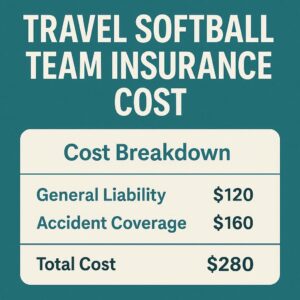
Travel Softball Team Insurance Cost
Travel Softball Team Insurance Cost
Why Your Travel Softball Team Absolutely Needs Insurance
Before we dive into costs, let’s establish the “why.” Unlike recreational league teams, travel teams operate independently, often outside the umbrella of a larger, insured organization like a city parks and rec department. This independence brings greater liability.
Think of insurance not as an optional expense, but as a fundamental part of your team’s foundation. It protects:
-
The Coaches and Volunteers: From lawsuits if a player is injured during practice or a game.
-
The Players: With medical coverage for injuries that occur during team activities, especially if their family health insurance has high deductibles.
-
The Club’s Finances: From devastating legal fees and settlement costs.
-
Your Equipment and Assets: Against theft, damage, or loss.
Operating without insurance is a massive financial risk that no responsible team should take.
The Core Components: What Does Travel Softball Insurance Cover?
Travel softball team insurance cost is directly tied to the coverage you select. Most policies are built from a combination of these core components:
1. General Liability Insurance
This is the cornerstone of any team policy. It protects your coaches, managers, and the organization itself if you are sued for causing bodily injury or property damage.
-
Example: A foul ball hits a spectator, a player collides with an umpire, or a coach accidentally damages a facility’s property.
-
Typical Limits: Policies often offer limits like $1,000,000 per occurrence and $3,000,000 in total aggregate.
2. Accident Medical Insurance
This helps cover a player’s out-of-pocket medical expenses resulting from a covered injury during a team activity. It acts as either primary coverage or a secondary supplement to the family’s existing health insurance.
-
What it covers: Emergency room visits, doctor appointments, physical therapy, surgery, and sometimes dental injuries.
-
Key Term: The deductible (e.g., $0, $100, $500) and maximum benefit (e.g., $25,000, $50,000, $100,000) significantly impact the cost.
3. Directors & Officers (D&O) Liability Insurance
This protects the club’s leadership (the board, directors, officers) against lawsuits alleging mismanagement. This can include claims of wrongful dismissal of a coach, discrimination, failure to adhere to bylaws, or misuse of funds.
-
Why it’s important: Even frivolous lawsuits require a legal defense, which D&O coverage provides.
4. Equipment & Property Insurance
Covers your team’s owned or leased equipment—bats, balls, helmets, catcher’s gear, uniforms, pitching machines, and sometimes even storage sheds or trailers—against theft, fire, vandalism, and damage during transport.
-
Coverage Basis: Usually written on an “actual cash value” (depreciated value) basis, though “replacement cost” coverage may be available for an added premium.
Breaking Down the Cost: Sample Premiums and Factors
So, what can you expect to pay? Travel softball team insurance cost is not a one-size-fits-all figure. It’s typically priced as an annual premium for the team or club. Here’s a realistic breakdown:
Sample Annual Premium Ranges (For a Team of 12-15 Players)
| Coverage Type | Low-End Estimate | High-End Estimate | Key Factors Affecting Price |
|---|---|---|---|
| General Liability | $400 – $700 | $800 – $1,200 | Number of teams/players, coverage limits, location |
| Accident Medical | $250 – $500 | $600 – $1,000+ | Deductible amount, maximum benefit per injury, sport risk level |
| D&O Liability | $200 – $400 | $400 – $800 | Club revenue, number of directors, claim history |
| Equipment Insurance | $150 – $300 | $400 – $800+ | Total value of equipment, deductible, storage location |
| **Estimated Total Per Team | $1,000 – $1,900 | $2,200 – $3,800+ | Bundling policies, safety record, insurer |
Important Note: “These figures are national averages. The most accurate way to determine your team’s specific cost is to get quotes from several specialized sports insurance providers. Always read the policy exclusions carefully.” – Advice from a veteran club treasurer.
Key Factors That Influence Your Premium
-
Team/Club Size: A single team will pay less than a full club with 10 teams across multiple age groups.
-
Coverage Limits and Deductibles: Higher liability limits ($2M vs. $1M) and lower medical deductibles ($0 vs. $1,000) increase cost.
-
Geographic Location: Insurance costs vary by state due to local laws and litigation rates.
-
Claim History: A club with previous claims may face higher premiums.
-
Activities Covered: Does the policy cover only games/tournaments, or also practices, fundraising events, and travel?
-
Safety Protocols: Insurers may offer discounts for teams that require background checks for coaches and have concussion protocols in place.
How to Get the Best Value on Team Insurance
Reducing your travel softball team insurance cost isn’t about finding the cheapest policy; it’s about finding the best value—adequate protection at a fair price.
-
Bundle Policies: Purchasing General Liability, Accident Medical, and D&O from the same insurer often results in a significant package discount.
-
Compare Quotes Diligently: Get at least three quotes from reputable providers specializing in sports insurance. Don’t just compare price; compare coverage details.
-
Adjust Deductibles Wisely: Opting for a higher deductible on accident medical coverage can lower your premium substantially. Ensure your families are prepared for that out-of-pocket cost if needed.
-
Implement Risk Management: Create and enforce safety guidelines. Document all incidents. Use signed waivers and release forms for all players. A proven safety record makes you a lower risk.
-
Review Annually: Don’t auto-renew without reviewing. Your needs change, and better deals may be available.
Frequently Asked Questions (FAQ)
Q: Can we just rely on the tournament’s insurance?
A: Rarely. Tournament insurance typically covers the event organizers, not individual teams for their liabilities or player injuries. Your team needs its own primary coverage.
Q: Is player insurance included in team fees?
A: In most well-run travel organizations, yes. The insurance premium is a line item in the annual budget and is included in the player fees. This should be transparently communicated to parents.
Q: What’s the difference between primary and secondary accident coverage?
A: Primary coverage pays first, regardless of other insurance. Secondary coverage only pays after the family’s primary health insurance has paid its portion, often covering co-pays and deductibles. Secondary coverage is usually less expensive.
Q: Are fundraising activities covered?
A: Not automatically. You must ensure your liability policy includes coverage for team-sponsored fundraising events (car washes, restaurant nights, etc.). Ask your agent about adding this endorsement.
Q: How do we file a claim?
A: Your insurance provider will have a clear process. Immediately report any incident (injury or property damage) to your club’s leadership, who should then contact the insurer. Documentation (photos, incident reports, witness info) is crucial.
Conclusion
Securing the right insurance is a non-negotiable pillar of responsible travel softball team management. The travel softball team insurance cost is a strategic investment in your players’ safety, your coaches’ peace of mind, and your organization’s long-term stability. By understanding the coverage types, the factors that influence price, and strategies for obtaining value, you can confidently select a policy that provides robust protection without straining your budget. Protect your team’s future, so you can focus on the game.
Additional Resource:
For a deeper dive into risk management and sample safety plans for youth sports, visit the National Alliance for Youth Sports (NAYS) resource library at www.nays.org (Note: This is a genuine resource link for informational purposes).