For any tree care professional, from a solo arborist to the owner of a multi-crew operation, insurance isn’t just a line item on a budget—it’s the safety net that allows you to work with confidence. Understanding tree trimming insurance cost is crucial for responsible business planning. This comprehensive guide will break down the types of coverage you need, the factors that determine your premiums, and practical strategies for managing expenses without compromising on essential protection.
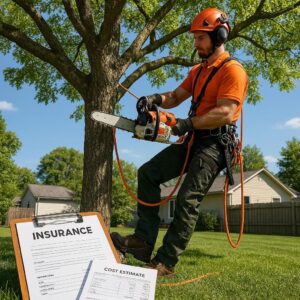
Tree Trimming Insurance Costs
What is Tree Trimming Insurance and Why is it Non-Negotiable?
Tree trimming and removal is classified as high-risk work. You’re dealing with heavy machinery, elevated work, falling limbs, and property in close proximity to homes, power lines, and people. Insurance protects your business from financial ruin in the event of an accident, injury, or property damage.
As one seasoned arborist puts it: “Your skill prevents accidents, but your insurance protects your livelihood when the unexpected happens. It’s the cost of doing business responsibly in the air.”
Without adequate insurance, a single incident could lead to devastating lawsuits, medical bills, and equipment replacement costs that could shutter your business permanently.
Core Types of Insurance for Tree Service Businesses
Your insurance portfolio should be a tailored suit of armor, not a one-size-fits-all poncho. Here are the essential coverages that contribute to the overall tree trimming insurance cost.
1. General Liability Insurance
This is your fundamental coverage. It protects against third-party claims of bodily injury or property damage.
-
Example: A limb you cut damages a client’s roof, or a pedestrian is injured by a falling twig.
-
Typical Coverage: Usually starts at $1 million per occurrence and $2 million aggregate.
2. Workers’ Compensation Insurance
This is legally required in almost every state if you have employees. It covers medical expenses and lost wages for employees injured on the job, regardless of fault.
-
Critical Note: For tree services, Workers’ Comp is often the most significant portion of the insurance premium due to the high-risk classification of the work.
3. Commercial Auto Insurance
Covers vehicles used for business (trucks, chippers, stump grinders on trailers). Personal auto policies will not cover accidents that occur during work.
-
Key Consideration: You may need hired and non-owned auto liability if your employees use their personal vehicles for work-related tasks.
4. Inland Marine (Equipment) Insurance
This covers your tools and equipment, whether they are at your shop, on a truck, or at a job site.
-
Covers: Theft of chainsaws, chipper breakdown, damage to a stump grinder.
5. Umbrella/Excess Liability Insurance
This provides an extra layer of liability coverage above the limits of your General Liability and Auto policies. It’s cost-effective for significantly higher protection.
6. Professional Liability (Errors & Omissions)
Less common but important for consulting arborists, this covers financial loss from advice, like incorrectly diagnosing a tree’s health.
Breaking Down the Cost: What You Can Expect to Pay
Tree trimming insurance cost is not a flat fee. It’s a variable figure built from your business’s unique risk profile. The following table outlines typical annual premium ranges for small to medium-sized tree service businesses.
| Coverage Type | Typical Annual Cost Range | Primary Cost Drivers |
|---|---|---|
| General Liability | $2,500 – $7,000+ | Revenue, services offered, claims history |
| Workers’ Compensation | $5,000 – $20,000+ per employee | Payroll, job classification risk code, experience mod |
| Commercial Auto | $2,000 – $5,000 per vehicle | Vehicle type, driving records, use |
| Inland Marine | $500 – $2,000+ | Value of equipment, deductible chosen |
| Umbrella Liability | $800 – $2,500+ per million | Underlying policy limits, risk exposure |
Important Note: These are national estimates. Your actual tree trimming insurance cost can be lower or significantly higher based on the factors discussed below. A one-person operation might see total costs starting around $5,000-$7,000 annually, while a multi-crew business can easily exceed $30,000-$50,000.
The 7 Key Factors That Determine Your Insurance Premium
Insurance providers assess risk. Your premium is their calculation of how likely you are to file a claim.
-
Payroll and Revenue: This is the baseline. Higher payroll (for Workers’ Comp) and higher revenue (for Liability) mean higher premiums.
-
Services Performed: Insurers see a clear risk hierarchy:
-
Lower Risk: Pruning, trimming, consulting.
-
Moderate Risk: Removals away from structures.
-
Highest Risk: Removals near homes/power lines, crane work, storm damage clean-up. If you do high-risk work, expect higher costs.
-
-
Experience Modification Rate (Ex-Mod): This is a crucial number for Workers’ Comp. It’s a multiplier based on your company’s past claims history compared to industry averages.
-
Ex-Mod < 1.0: You get a credit (lower premium). You have a better-than-average safety record.
-
Ex-Mod > 1.0: You get a debit (higher premium). Your claims history is worse than average.
-
-
Safety Programs and Training: Documented safety meetings, OSHA 10/30-hour certifications for crew leaders, and formal training programs can lead to discounts. They prove you’re proactively managing risk.
-
Claims History: A history of frequent or severe claims is the single biggest red flag and will increase your costs dramatically.
-
Location: Operating in a state with high medical costs or a litigious environment will increase premiums. Local factors like frequent storms or high theft rates also play a role.
-
Coverage Limits and Deductibles: Choosing higher policy limits or lower deductibles increases your premium. Opting for a higher deductible can lower your annual cost, but ensure you can afford it if a claim occurs.
How to Get an Accurate Quote and Reduce Your Costs
Don’t just accept the first quote you receive. Be an active participant in the process.
Preparing for an Insurance Application:
-
Have 3-5 years of loss run reports (claims history) ready.
-
Prepare accurate payroll and revenue projections.
-
Create a list of all equipment with values.
-
Write down a detailed description of your services.
-
Document your safety program and employee training.
Proven Strategies to Manage Tree Trimming Insurance Cost:
-
Shop Around with Specialists: Use independent agents who work with multiple carriers, particularly those specializing in landscaping or contractor insurance.
-
Bundle Policies (BOP): A Business Owner’s Policy (BOP) bundles General Liability and Property/Equipment insurance, often at a 10-15% discount.
-
Prioritize Safety Relentlessly: A clean safety record is your greatest long-term lever for lowering costs. Your Ex-Mod is your financial safety score.
-
Consider Association Memberships: Joining professional groups like the International Society of Arboriculture (ISA) or Tree Care Industry Association (TCIA) may give you access to group insurance programs with competitive rates.
-
Review Classifications: Ensure your employees are classified correctly. A clerical worker shouldn’t be coded as a tree climber.
-
Ask About Payment Plans: Many insurers offer monthly or quarterly payment plans to help with cash flow.
Conclusion
Navigating tree trimming insurance cost is about balancing comprehensive protection with financial practicality. By understanding the essential coverages—Liability, Workers’ Compensation, Auto, and Equipment—and actively managing the key factors like safety, training, and accurate reporting, you can secure the necessary coverage to safeguard your business while controlling expenses. Invest time in getting the right policy; it’s the foundation upon which a resilient and reputable tree service business is built.
Frequently Asked Questions (FAQ)
Q: I’m a solo operator with no employees. Do I need insurance?
A: Yes. At a minimum, you need General Liability to protect against property damage and injury to others. You should also have Inland Marine for your tools and Commercial Auto for your work truck. Without employees, Workers’ Comp is not legally required, but consider disability insurance for yourself.
Q: What is the most common claim in the tree service industry?
A: Property damage claims (e.g., damaging a roof, fence, or car) are very common. However, the most costly claims are typically related to serious employee injuries (covered by Workers’ Comp) or major third-party bodily injury.
Q: How does my insurance company verify my payroll?
A: Insurers conduct annual audits. You must provide documentation like tax filings (Form 941), payroll registers, and general ledgers. Under-reporting payroll to save money is fraud and can result in massive back-premium bills and policy cancellation.
Q: Can I be added as an “additional insured” to a client’s policy?
A: Sometimes, for very large projects (like municipal contracts), you may be asked to be added to the client’s policy. However, standard practice is for the tree service to carry its own insurance and provide a Certificate of Insurance (COI) naming the client or property manager as the certificate holder.
Additional Resources
-
For industry best practices and safety standards, visit the Tree Care Industry Association (TCIA) website: https://www.tcia.org
-
For arborist certification and educational resources, visit the International Society of Arboriculture (ISA): https://www.isa-arbor.com