For many, a snowmobile represents freedom—the thrill of exploring pristine winter trails and the joy of a cold-weather adventure. But before you hit the powder, there’s a practical matter to consider: insurance. Understanding the average cost of snowmobile insurance is a crucial step in responsible ownership. However, pinning down a single number is tricky, as your premium is as unique as your riding style. This guide will demystify the pricing, explore the factors that influence your quote, and provide you with the knowledge to secure the right protection without overspending.
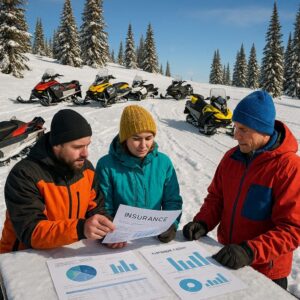
average cost of snowmobile insurance
What is the National Average Cost of Snowmobile Insurance?
Let’s address the headline question directly. Based on industry data and provider estimates, the typical snowmobile owner in the United States can expect to pay between $100 and $500 per year for a standard liability and collision policy. The most common range falls around $250 to $350 annually.
To provide a clearer picture, here is a comparative table based on common coverage levels:
| Coverage Profile | Estimated Annual Cost Range | What’s Typically Included |
|---|---|---|
| State-Minimum Liability Only | $100 – $200 | Bare-bones coverage for bodily injury/property damage you cause to others. Often insufficient. |
| Standard Full Coverage | $250 – $500 | Combines liability, comprehensive (theft, fire, vandalism), and collision (accident damage). The most common choice. |
| High-Performance/Luxury Sled | $500 – $1,000+ | Enhanced coverage for high-value, high-horsepower machines, often with accessory coverage. |
| Low-Mileage/Recreational Rider | $150 – $300 | For riders who use their sled infrequently on approved trails. May include discounts. |
Important Note: “These figures are national averages and should be used as a starting point only,” advises a veteran insurance underwriter. “Your actual premium will be calculated based on a personal risk profile. A 25-year-old riding a turbocharged sled in a high-theft area will pay dramatically more than a 45-year-old with a clean record riding a utility sled in a rural community.”
As you can see, the range is broad. This is because insurance companies assess risk, and your personal details determine where you fall on that spectrum.
Key Factors That Determine Your Snowmobile Insurance Premium
Your premium isn’t pulled from thin air. Insurers evaluate a specific set of criteria to determine how likely you are to file a claim. Here are the primary factors that shape your snowmobile insurance cost.
1. Your Snowmobile’s Make, Model, and Value
This is the most obvious factor. A brand-new, high-horsepower performance sled from a manufacturer like Arctic Cat or Ski-Doo will cost significantly more to insure than a five-year-old, mid-range touring or utility model. Engine size (cc) is a major rating factor—more power generally equates to higher risk and higher repair costs.
2. Your Riding Location and Storage
Where you live and ride has a massive impact. States with dense riding populations and higher claims histories (like Michigan, Minnesota, and Wisconsin) may see higher average rates. Furthermore, if you live in an area with high rates of theft or vandalism, your comprehensive coverage cost will rise. Securely storing your sled in a locked garage, as opposed to leaving it on an open trailer, can lead to discounts.
3. Your Age, Riding Experience, and Driving Record
Insurers heavily favor experience and a history of responsibility. A rider over 30 with a decade of experience and a clean driving record (both auto and snowmobile) will receive the most favorable rates. Younger riders, especially those under 25, often face higher premiums. A history of traffic violations or prior snowmobile insurance claims will negatively affect your quote.
4. Your Desired Coverage Types and Limits
The coverage you choose is a direct lever on price.
-
Liability Limits: Higher limits (e.g., $300,000 combined single limit vs. $50,000) cost more but provide crucial financial protection.
-
Deductibles: Opting for a higher deductible (the amount you pay out-of-pocket in a claim) will lower your premium. A $1,000 deductible will yield a cheaper annual cost than a $250 deductible.
-
Additional Coverages: Adding elements like accessory coverage (for custom parts), trailering coverage, or uninsured/underinsured rider protection will increase your premium but broaden your safety net.
5. Your Annual Usage and Mileage
How you use your sled matters. Insurers will ask:
-
Is it for recreational trail use only?
-
Do you use it for competition or racing (which typically requires a separate policy)?
-
Is it used for commercial or farming purposes?
-
What’s your estimated annual mileage?
Lower, recreational mileage typically translates to a lower risk profile and lower costs.
How to Get the Best Rate on Your Policy
Knowing the factors empowers you to take action. Here is a practical list of strategies to manage your snowmobile insurance expenses:
-
Shop Around and Compare Quotes. This cannot be overstated. Get quotes from at least three different providers, including specialized powersports insurers and your existing auto/home insurer (for potential bundling discounts).
-
Ask About Every Possible Discount. Common discounts include:
-
Multi-policy (bundling with auto or home insurance)
-
Multi-sled (insuring more than one machine)
-
Safety course completion (MSF or state-approved courses)
-
Claim-free history
-
Mature rider discount
-
Paid-in-full discount
-
-
Choose Your Deductible Wisely. Select the highest deductible you could comfortably afford to pay in the event of a claim. This simple choice can reduce your annual premium by 15% or more.
-
Maintain a Clean Record. Your history on the road and the trail is your most valuable asset for keeping costs down. Ride safely and responsibly.
-
Consider Usage-Based Insurance. Some modern insurers offer programs where a small device monitors your riding habits (mileage, time of day, smoothness of operation). Safe riding can earn you significant discounts.
Beyond the Premium: Understanding Your Coverage
While cost is critical, understanding what you’re buying is paramount. A cheap policy that leaves you exposed is no bargain.
-
Liability Coverage: This is mandatory in most states that require insurance. It covers injuries to others or damage to their property if you are at fault in an accident.
-
Collision Coverage: This pays for damage to your own snowmobile resulting from an accident with another object, regardless of fault.
-
Comprehensive Coverage: This covers non-collision losses like theft, fire, vandalism, or hitting an animal (like a deer).
-
Uninsured/Underinsured Rider Protection: This is vital. It protects you if you’re injured or your sled is damaged by a rider who has no insurance or insufficient coverage.
Helpful Reminder: Most standard policies do not automatically cover you if you ride off-trail or in areas not designated for snowmobile use. Always clarify the “territory” covered by your policy with your agent.
Conclusion
The average cost of snowmobile insurance provides a helpful benchmark, but your actual price is a personal equation. It reflects your machine, your location, your experience, and the coverage you choose. By understanding these factors, shopping strategically, and prioritizing both value and protection, you can secure a policy that safeguards your investment and your peace of mind, letting you focus on the pure joy of the ride.
FAQ: Snowmobile Insurance Costs
Q: Is snowmobile insurance legally required?
A: Laws vary by state. Some states mandate liability insurance, especially if riding on public lands or trails. Even if it’s not required by law, most leasing companies and financed sled loans require full coverage. It is also a critical financial protection against lawsuits.
Q: Can I just add my snowmobile to my auto insurance policy?
A: Sometimes, but not always. Many standard auto policies do not extend to off-road vehicles like snowmobiles. You may need a separate “powersports” policy or a specific endorsement. Always confirm with your insurer.
Q: Does my credit score affect my snowmobile insurance rate?
A: In most states, yes. Insurers often use insurance-based credit scores as a factor in determining risk, finding a correlation between financial responsibility and claim likelihood. Maintaining good credit can help secure a better rate.
Q: What is the single most effective way to lower my premium?
A: The most impactful step is to combine shopping around for quotes with taking a recognized snowmobile safety course. This demonstrates responsibility to insurers and often unlocks a direct discount.
Additional Resource
For state-specific requirements, trail maps, and official safety course information, a superb resource is the International Snowmobile Manufacturers Association (ISMA) website. They provide links to state and provincial snowmobile associations, which are the most authoritative local sources. Link to ISMA