Navigating the world of commercial truck insurance can feel like driving through a dense fog. For owner-operators and small fleet managers relying on a 26ft box truck, understanding insurance costs isn’t just about compliance—it’s a critical factor in your business’s financial health. The price tag for insuring your 26-foot workhorse is far from a one-size-fits-all figure. It’s a dynamic number shaped by your experience, your cargo, your driving record, and a host of other variables.
This guide will cut through the complexity. We’ll provide you with a realistic, detailed look at what goes into determining your 26ft box truck insurance premium, offer actionable strategies to manage your costs, and equip you with the knowledge to shop for coverage confidently. Let’s shift into gear and demystify the costs of protecting your asset and your livelihood.
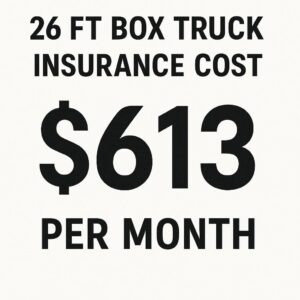
26ft Box Truck Insurance Cost
Understanding the Insurance Landscape for a 26ft Box Truck
A 26ft box truck occupies a unique space in the commercial vehicle spectrum. It’s larger and carries more risk than a standard cargo van, but it doesn’t fall into the heavy-duty, long-haul category of semi-trucks. Insurers view it as a medium-duty commercial vehicle, often used for local and regional hauling. The insurance requirements and cost structures reflect this middle ground.
“Insuring a 26ft box truck is about balancing adequate protection with operational affordability. It’s not just another vehicle; it’s a mobile warehouse and the backbone of many small businesses,” notes a veteran commercial insurance underwriter.
The core purpose of the insurance is to shield your business from catastrophic financial loss—from accidents, theft, liability claims, and cargo damage. Getting the cost right starts with understanding the components of the policy itself.
Key Insurance Coverage Types for Your Box Truck
Your insurance policy is a package of different coverages. Here’s a breakdown of the essential types you’ll encounter:
-
Primary Liability Insurance: This is the foundational, and often legally required, coverage. It pays for bodily injury and property damage you cause to others in an at-fault accident. It does not cover damage to your own truck.
-
Physical Damage Coverage: This protects your investment—the truck itself. It’s typically split into two parts:
-
Collision: Covers damage to your truck from an accident, regardless of fault.
-
Comprehensive: Covers non-collision events like theft, vandalism, fire, hail, or hitting an animal.
-
-
Cargo Insurance: This is crucial for a box truck. It covers the loss or damage to the goods you are hauling. The value and type of cargo (e.g., general merchandise vs. high-value electronics) heavily influence this cost.
-
Motor Truck Cargo Legal Liability: Often confused with standard cargo insurance, this specifically covers your legal liability for someone else’s cargo you are transporting under a bill of lading.
-
Uninsured/Underinsured Motorist Coverage: Protects you and your driver if you’re hit by someone with little or no insurance.
What is the Average Cost to Insure a 26ft Box Truck?
Let’s address the most pressing question first. Providing a single “average” is challenging due to the variables involved, but we can present a realistic range based on 2024 market data.
For a 26ft box truck operated by a business with a clean record, typical annual insurance costs can fall within these brackets:
| Coverage Type | Low-End Annual Estimate | High-End Annual Estimate | Key Influencing Factor |
|---|---|---|---|
| Liability Only | $3,500 – $5,500 | $8,000 – $12,000+ | State minimums vs. higher limits; driving record. |
| Liability + Physical Damage | $5,500 – $8,500 | $12,000 – $20,000+ | Truck value, deductible choice, usage. |
| Full Coverage (Incl. Cargo) | $7,000 – $11,000 | $15,000 – $30,000+ | Cargo value, radius of operation, industry. |
Important Note: These are annual premium estimates. Newer operations, those in high-risk industries, or drivers with recent violations can see premiums at the very top or even above these ranges. Established businesses with excellent records may qualify for rates toward the lower end.
Breaking Down the Cost Factors: What Drives Your Premium?
Your final quote is a puzzle assembled from many pieces. Understanding each one gives you power to influence the outcome.
1. Driver & Business Factors
-
Experience and Age: A driver with 20 years of clean commercial driving history will pay significantly less than a new entrant. Insurers see a proven track record as a lower risk.
-
Driving Record (MVR): This is non-negotiable. Accidents, DUIs, and moving violations (especially serious ones like reckless driving) will cause premiums to skyrocket.
-
Business Experience: An LLC that’s been in operation for 10 years is viewed more favorably than a brand-new sole proprietorship.
-
Credit-Based Insurance Score: In most states, insurers use a credit-based insurance score as a statistical predictor of risk. Maintaining good personal and business credit can lead to better rates.
2. Truck & Usage Factors
-
Truck Value and Age: A brand-new 2024 26ft truck with a $90,000 price tag costs far more to insure for physical damage than a 2015 model worth $25,000.
-
Radius of Operation: Where you drive matters immensely.
-
Local (Under 100 miles): Lowest risk, lowest cost.
-
Regional (Multi-state, under 500 miles): Moderate increase.
-
Long-Haul / National: Highest risk due to more miles and varied road conditions, leading to the highest premiums.
-
-
Annual Mileage: More miles on the road equals a higher statistical probability of an incident.
-
Type of Cargo Hauled: This is a massive factor. Insuring a truck hauling lightweight blankets is cheap. Insuring one hauling hazardous materials, high-value pharmaceuticals, or perishable groceries is exponentially more expensive and complex.
-
Garaging Location: The ZIP code where the truck is parked overnight affects rates. Urban areas with higher traffic density and theft rates typically cost more than rural locations.
3. Policy & Coverage Choices
-
Coverage Limits: Choosing state minimum liability limits (e.g., $750,000) is cheaper than opting for $1 million or more. However, higher limits provide essential protection against devastating lawsuits.
-
Deductibles: This is the amount you pay out-of-pocket before insurance kicks in, especially for Physical Damage. Opting for a higher deductible (e.g., $2,500 instead of $1,000) will lower your premium.
-
Additional Coverages: Adding bobtail insurance, non-trucking liability, or higher cargo limits will increase your total premium but expand your protection.
Actionable Strategies to Lower Your 26ft Box Truck Insurance Cost
You are not powerless against premium costs. Proactive management can yield substantial savings.
-
Shop Around Diligently: Never, ever take the first quote. The commercial insurance market is competitive. Get quotes from at least 5-7 insurers or work with an independent broker who can do this for you.
-
Increase Your Deductibles Wisely: If you have sufficient cash reserves, raising your physical damage deductible is one of the most effective ways to lower your premium. Just ensure you can afford the deductible if you need to file a claim.
-
Bundle Policies: If you have other business insurance needs (general liability, commercial property), placing them all with the same carrier often results in a multi-policy discount.
-
Invest in Safety and Training: Consider installing telematics devices or dashcams. Many insurers offer discounts for these risk-mitigation tools. Enrolling drivers in formal safety courses can also help.
-
Pay Annually: If possible, pay your premium in full annually. Most carriers charge fees for monthly installment plans.
-
Build and Maintain a Clean Record: This is a long-term strategy, but it’s the most powerful. A clean driving and claims history is your greatest asset when negotiating rates.
-
Accurately Classify Your Operation: Work with your agent to ensure your truck is correctly classified by usage, radius, and cargo. An incorrect classification can lead to overpaying or, worse, a denied claim.
How to Get the Right Quote: A Step-by-Step Process
Follow this checklist when seeking insurance quotes to ensure you get accurate, comparable numbers:
-
Gather Your Documents: Have ready your driver’s licenses and MVRs for all drivers, the truck’s VIN and purchase documents, your business license/EIN, and details about your typical cargo and annual mileage.
-
Define Your Needs: Determine your required liability limits, deductible comfort level, and necessary add-on coverages before you start calling.
-
Use an Independent Agent/Broker: They have access to multiple markets and can do the legwork of comparing policies that genuinely fit your operation.
-
Compare Apples to Apples: When reviewing quotes, ensure the coverage types, limits, and deductibles are identical. The cheapest quote is worthless if it leaves dangerous gaps in coverage.
-
Ask About Discounts: Inquire directly about any discounts for safety features, experienced drivers, bundling, or paying in full.
-
Review the Carrier: Don’t just look at price. Research the insurer’s financial strength (via A.M. Best ratings) and customer service reputation, especially their claims handling process.
Conclusion
The cost to insure a 26ft box truck is a complex calculation, but not an indecipherable one. By understanding the core factors—from your driving history to the value of your cargo—you can move from being a passive consumer to an informed buyer. Remember, the goal isn’t always the absolute cheapest policy; it’s securing the right coverage at a fair price that protects your business on the road ahead. Invest time in shopping around, consider strategic adjustments like higher deductibles, and prioritize building a safe, professional operation. These steps will put you in the driver’s seat for managing this essential business expense.
Frequently Asked Questions (FAQ)
Q: Is insurance for a 26ft box truck more expensive than for a pickup truck?
A: Yes, significantly. A 26ft box truck is a commercial vehicle carrying more weight, value, and liability risk. Commercial policies are inherently more complex and costly than personal auto policies.
Q: Can I use personal auto insurance for my box truck if I just started my business?
A: Almost certainly not. Personal auto policies explicitly exclude coverage for vehicles used for business purposes, especially ones of this size and weight. Using a personal policy would likely result in a denied claim.
Q: How much cargo insurance do I need for a 26ft box truck?
A: It depends entirely on what you haul. You need enough to cover the full value of your average load. Many shippers and contracts also specify minimum cargo insurance requirements (e.g., $100,000). Always carry enough to meet your contractual obligations and protect your financial liability.
Q: Does my credit score really affect my commercial truck insurance rate?
A: In most states, yes. Insurers statistically correlate creditworthiness with risk and use a credit-based insurance score as one factor in determining premiums.
Q: How can I get insurance quickly to start a job tomorrow?
A: While some brokers specialize in faster placements, “quick” often comes at a premium. The underwriting process for proper coverage typically takes a few days. The best practice is to secure insurance well before you need to operate the vehicle.
Additional Resources
For further reading on federal motor carrier safety regulations and requirements, visit the official Federal Motor Carrier Safety Administration (FMCSA) website: https://www.fmcsa.dot.gov/. This is an essential resource for understanding the legal framework surrounding commercial vehicle operation.