Starting and running a pressure washing business is an exciting venture. You’re focused on equipment, marketing, and building a client list. But there’s one crucial, non-negotiable foundation you must lay: proper business insurance. The question isn’t if you need it, but how much it will cost and what it truly covers.
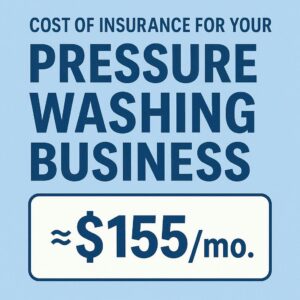
The cost of insurance for a pressure washing business isn’t a single number. It’s a range, typically between $1,200 and $4,800 per year, or $100 to $400 per month. For many small to medium-sized operations, the annual premium often falls in the $2,000 to $3,500 range. This variation isn’t arbitrary; it’s a personalized calculation based on your unique business profile.
Think of insurance not as an expense, but as the cost of credibility, security, and peace of mind. A single accident without coverage can wipe out everything you’ve built. This guide will walk you through every factor that influences your premium, the essential coverage types you need, and practical strategies to manage the cost effectively.
Cost of Insurance for Your Pressure Washing Business
Why Insurance is Non-Negotiable for Pressure Washing
Before we dive into dollars and cents, let’s establish why this is so critical. Pressure washing is classified as a high-risk trade by insurance companies. You’re working with powerful equipment that can cause significant property damage or bodily injury. You’re often on clients’ properties, around windows, siding, decks, and landscaping.
“A pressure washer is a tool of incredible power. In the wrong circumstances, that power can instantly become a massive liability. Insurance is the shield that protects your business from the unforeseen consequences of everyday work,” notes an industry risk assessor.
Imagine these common scenarios:
-
You accidentally chip a window with a high-pressure stream, and it shatters.
-
Water infiltrates a client’s electrical outlet, causing a short and fire damage.
-
A pedestrian slips on the wet sidewalk you just cleaned and suffers an injury.
-
Your employee accidentally damages historic brickwork on an expensive home.
-
A gallon of chemical cleaner spills and kills a client’s prized landscaping.
Without insurance, you are personally and financially responsible for all related costs—repairs, medical bills, legal fees. These can easily reach tens or even hundreds of thousands of dollars.
Key Factors That Determine Your Insurance Premium
Your insurance quote is a snapshot of your business’s risk profile. Underwriters evaluate several data points to calculate your premium.
1. Business Size and Revenue
This is a primary driver. A sole proprietor working part-time will pay significantly less than a company with multiple employees and trucks.
-
Low Risk: Solo operator, under $50K in annual revenue.
-
Higher Risk: Business with 3-5 employees, multiple vehicles, and over $250K in revenue.
2. Coverage Types and Limits
The more comprehensive your coverage and the higher your policy limits, the more you’ll pay. Choosing a $1 million per-occurrence general liability limit will cost more than a $500,000 limit, but it provides crucial additional protection.
3. Location
Insurance costs vary by state and even by zip code. Areas with higher costs of living, greater population density, or higher frequencies of claims (like regions with more litigation) will see higher premiums.
4. Claims History
A clean record is your best friend. A history of past claims signals higher risk to insurers and will increase your costs, sometimes substantially.
5. Services Offered
Not all pressure washing is viewed as equally risky.
-
Standard Risk: Residential driveway, sidewalk, and house washing.
-
Higher Risk: Commercial building washing (especially multi-story), roof cleaning, graffiti removal, and any service involving harsh chemicals. Fleet washing often requires specialized coverage.
6. Deductible Amount
This is the amount you pay out-of-pocket before insurance kicks in. Opting for a higher deductible (e.g., $2,500 instead of $1,000) can lower your annual premium, but you must be prepared to cover that cost if a claim occurs.
Essential Types of Insurance for Pressure Washers
Your insurance portfolio should be tailored to your specific operations. Here are the core policies to consider.
General Liability Insurance: Your Essential Foundation
This is the absolute minimum and is often required to secure contracts. It covers third-party bodily injury and property damage.
-
What it covers: A client’s broken window, water damage to interior drywall, a slip-and-fall injury on a wet surface.
-
Typical Cost Impact: This forms the base of your premium, often 60-80% of your total insurance cost.
Commercial Auto Insurance
If you use a vehicle for business (even a personal vehicle), you need commercial auto coverage. Personal auto policies often exclude business use.
-
What it covers: Accidents while driving to a job, damage to your vehicle, or if your vehicle damages someone else’s property.
-
Typical Cost Impact: A significant add-on, depending on the number and type of vehicles.
Commercial Property Insurance
This protects your business’s physical assets, whether you own or rent your space.
-
What it covers: Your pressure washer, hoses, reels, chemicals, tools, and office equipment from theft, fire, or vandalism.
-
Typical Cost Impact: A moderate add-on, based on the total value of your insured equipment.
Workers’ Compensation Insurance
This is legally required in almost every state if you have employees. It covers medical expenses and lost wages for work-related injuries or illnesses.
-
What it covers: An employee who injures their back, suffers chemical burns, or is hurt in a vehicle accident while on the job.
-
Typical Cost Impact: A major cost factor. Premiums are based on your payroll and the risk classification of your work.
Tools and Equipment (Inland Marine) Insurance
This is vital for mobile businesses. It covers your tools and equipment while they are in transit or on a job site.
-
What it covers: Your $5,000 pressure washer skid if it’s stolen from your truck or damaged in a collision.
-
Typical Cost Impact: A relatively low-cost add-on for high-value protection.
Pollution Liability / Environmental Impairment
Crucial if you use chemicals. Standard liability policies often exclude pollution events.
-
What it covers: The cost of environmental cleanup if your chemicals seep into soil or contaminate a water source.
-
Typical Cost Impact: A specialized, necessary add-on for chemical users.
Cost Breakdown: Average Premiums and Scenarios
To give you a realistic picture, here are estimated annual premium ranges for different business profiles. These are illustrative averages; your actual quote will vary.
Comparative Cost Table
| Business Profile | General Liability | Workers’ Comp (1 Employee) | Commercial Auto | Estimated Annual Total |
|---|---|---|---|---|
| Solo Operator (Part-time, uses personal vehicle, low revenue) | $800 – $1,500 | Not Applicable | (Rider on personal policy) | $1,200 – $2,200 |
| Small Business (Solo owner-operator, 1 truck, full-time) | $1,200 – $2,200 | Not Applicable | $1,200 – $2,000 | $2,400 – $4,200 |
| Growing Business (Owner + 1 employee, 2 trucks, chemical use) | $1,500 – $2,500 | $2,000 – $4,000 | $2,400 – $3,500 | $5,900 – $10,000+ |
Scenario Analysis
Scenario A: Mike’s Part-Time Residential Washing
Mike operates solo on weekends, uses his pickup truck, and washes residential driveways and homes without chemicals. He gets a Business Owner’s Policy (BOP)—a bundled package of general liability and property insurance for small businesses.
-
Annual Premium: ~$1,500
-
Key Factor: Low risk profile and bundled discount.
Scenario B: ClearView Pressure Washing
Sarah runs a full-time operation, has one employee, owns a dedicated box truck, and offers roof and deck cleaning with mild biodegradable cleaners. She needs a robust package.
-
Policies: General Liability, Commercial Auto, Workers’ Comp, Tools/Equipment.
-
Annual Premium: ~$6,500 – $8,000
-
Key Factor: Employee costs (workers’ comp) and commercial auto are major drivers.
How to Get the Best Insurance Rate: 7 Pro Tips
-
Shop Around and Compare: Get quotes from at least 3-5 insurers. Use independent agents who work with multiple carriers specializing in commercial/trade insurance.
-
Ask About Bundling: A Business Owner’s Policy (BOP) bundles general liability and commercial property insurance, often at a 10-20% discount.
-
Maintain a Spotless Claims History: Operate safely, train employees thoroughly, and document all procedures. A clean record is your biggest leverage.
-
Choose Your Deductible Wisely: If you have a healthy emergency fund, a higher deductible can meaningfully lower your premium.
-
Report Accurate Payroll: For workers’ comp, premiums are audited. Under-reporting payroll will lead to a large bill at audit time.
-
Inquire About Discounts: Ask about paid-in-full discounts, association memberships (e.g., the Pressure Washers of North America – PWNA), or safety program credits.
-
Review and Update Annually: Don’t just auto-renew. As your business grows or changes, your needs change. An annual review ensures you’re not over- or under-insured.
Important Note for Readers: The cheapest policy is not always the best. Carefully review the policy exclusions. Does it cover damage from water intrusion? Does it exclude roof cleaning? Ensure you are comparing equivalent coverage, not just price.
Building Your Insurance Package: A Step-by-Step Plan
-
Inventory Your Risks: List your services, equipment value, number of vehicles and employees.
-
Identify Mandatory Requirements: Check state laws for workers’ comp and any requirements from landlords or commercial clients.
-
Get Multiple Quotes: Provide identical business information to each agent for a true comparison.
-
Read the Fine Print: Understand exclusions, especially for water damage, pollution, and specific services.
-
Purchase Before Your First Job: Never operate, even for a “quick test,” without active coverage.
Conclusion
Securing the right insurance for your pressure washing business is a fundamental step in building a resilient and professional operation. The cost, typically ranging from $1,200 to over $10,000 annually, is a direct reflection of your business’s size, services, and risk profile. By understanding the factors at play—from liability limits to workers’ compensation—and proactively shopping for tailored coverage, you can protect your assets and reputation without breaking the bank. Remember, this investment safeguards not just your business’s finances, but also the trust of every client you serve.
FAQ
Q: Can I operate a pressure washing business without insurance?
A: While it may be legally possible in some areas (but not if you have employees), it is extremely risky and unprofessional. Most clients, especially commercial ones, will require a certificate of insurance before signing a contract. One incident could lead to financial ruin.
Q: What is the single most important policy for a starter pressure washer?
A: A General Liability Insurance policy is the absolute cornerstone. It’s the baseline protection for the most common third-party claims. For many sole proprietors, a Business Owner’s Policy (BOP) that bundles this with equipment coverage is the ideal starting point.
Q: Does my homeowner’s insurance cover my home-based pressure washing business?
A: Almost certainly not. Homeowner’s policies explicitly exclude business-related activities and liabilities. Using business equipment or conducting business operations under a homeowner’s policy will likely void your coverage.
Q: How much general liability coverage (limits) do I need?
A: A common and recommended standard is $1,000,000 per occurrence and $2,000,000 aggregate. Many commercial clients will contractually require these limits. Starting with at least $500,000/$1,000,000 is advisable.
Q: What’s the fastest way to get proof of insurance for a client?
A: Once you purchase a policy, your insurer can instantly issue a Certificate of Insurance (COI). You can often request and download these online or have your agent email them directly to you and your client.
Additional Resources
For further guidance on industry best practices, safety standards, and connecting with certified professionals, consider exploring the resources provided by the Pressure Washers of North America (PWNA) at https://pwna.org/. They offer training, safety programs, and may have partnerships with insurance providers familiar with the industry’s unique needs.