For any charter bus company, from a family-owned operator with a few coaches to a large fleet owner, insurance is not just a line item on the budget—it’s the foundation of your operational security and financial stability. The cost of charter bus insurance is a significant and necessary investment, but it’s often shrouded in complexity and variability. You’re not just buying a policy; you’re purchasing peace of mind, knowing that your passengers, your assets, and your livelihood are protected against the unpredictable.
This guide is designed to demystify that process. We’ll walk through what you’re actually paying for, the factors that influence your premium, realistic cost ranges, and, most importantly, strategies you can employ to manage these costs effectively without compromising on essential coverage. Our goal is to equip you with the knowledge to make confident, informed decisions for your business.
Charter Bus Insurance Cost
What Is Charter Bus Insurance and Why Is It Non-Negotiable?
At its core, charter bus insurance is a specialized package of commercial auto liability and physical damage coverages tailored to the unique risks of transporting groups of people for hire. Unlike personal auto insurance, it addresses the heightened liabilities and regulatory requirements of a passenger transportation business.
Operating without adequate insurance is not only financially reckless but also illegal. The Federal Motor Carrier Safety Administration (FMCSA) mandates minimum levels of liability coverage for vehicles transporting passengers for hire. As one industry risk manager puts it, “Your insurance certificate is your ticket to operation. Without it, you don’t leave the yard, and you are personally assuming a level of risk that could wipe out a lifetime of work in an instant.”
The Core Components of Your Policy
Your charter bus insurance policy is typically a combination of several key coverages, each addressing a specific area of risk. Understanding these is the first step to understanding your costs.
Primary Liability Insurance
This is the cornerstone of your policy and is required by law. It covers bodily injury and property damage that you or your driver are found legally responsible for in an at-fault accident involving a third party (e.g., another driver, a pedestrian, or property). FMCSA minimums are substantial, often starting at $5 million for vehicles designed to transport 16 or more passengers. Most reputable operators carry limits well above the minimum to protect their assets.
Physical Damage Insurance (Collision & Comprehensive)
This portion of your policy covers damage to your own buses.
-
Collision: Covers damage from an impact with another vehicle or object, regardless of fault.
-
Comprehensive: Covers “other-than-collision” events like theft, vandalism, fire, hail, or hitting an animal.
This is often subject to a deductible (e.g., $1,000, $2,500), which you choose. A higher deductible lowers your premium but increases your out-of-pocket cost if a claim occurs.
Uninsured/Underinsured Motorist Coverage
This protects you and your passengers if you are in an accident caused by another driver who has no insurance or insufficient insurance to cover the damages. Given the frequency of underinsured motorists on the road, this is a critical safeguard.
Passenger Accident Insurance (Optional but Highly Recommended)
While liability insurance covers injuries you are legally liable for, passenger accident insurance provides no-fault medical benefits to your passengers injured in an accident, regardless of who was at fault. This can be a crucial tool for providing immediate assistance and managing relationships with clients and passengers after an incident.
Non-Trucking Liability (Bobtail Insurance)
If you use owner-operators who drive your buses under your authority, this coverage protects them (and you) when the vehicle is being used for personal reasons without a trailer or passengers.
What Determines Your Charter Bus Insurance Cost? The 8 Key Factors
Insurance providers use a detailed risk assessment model to determine your premium. It’s not a random number; it’s a calculated prediction of risk. Here are the primary levers that move your cost up or down.
1. Your Operational Profile and Experience
This is arguably the most significant factor. Insurers will scrutinize:
-
Years in Business: A company with a 20-year history demonstrates stability and experience.
-
Claim History: A clean record over 3-5 years is the single best way to secure lower rates. Frequent or severe claims will increase premiums dramatically.
-
Safety & Compliance Record: Your CSA (Compliance, Safety, Accountability) scores from the FMCSA are public and heavily weighted. Serious violations (like hours-of-service or driver fitness violations) are red flags.
-
Type of Clients & Trips: Insuring buses for school charters may be viewed differently than those for casino trips or long-distance cross-country tours. Regular, predictable routes are often seen as lower risk than one-off, irregular operations.
2. Driver Qualifications and Management
Your drivers are your frontline risk managers. Insurers will want to know:
-
Hiring Practices: Do you conduct thorough background checks, including motor vehicle records (MVR), criminal history, and pre-employment drug testing?
-
Training Programs: Do you provide formal onboarding and ongoing safety training (defensive driving, passenger management, etc.)?
-
Monitoring: Do you use telematics, onboard cameras, or regular driver performance reviews?
3. Fleet Characteristics
The specifics of your buses matter:
-
Vehicle Age & Value: Newer, more expensive coaches cost more to repair or replace, raising physical damage premiums. However, newer buses may have advanced safety features that can earn discounts.
-
Maintenance Schedule: A documented, proactive maintenance program (not just reactive repairs) is a strong indicator of risk management.
-
Safety Technology: Equipping buses with collision mitigation systems, lane departure warnings, electronic stability control, and video monitoring can lead to direct discounts.
4. Coverage Limits and Deductibles
This is the direct trade-off you control:
-
Higher Liability Limits = Higher Premium. Carrying $10 million instead of $5 million will increase your cost, but it provides crucial extra protection.
-
Lower Deductibles = Higher Premium. Choosing a $500 collision deductible instead of a $2,500 deductible will raise your physical damage premium, as the insurer takes on more of the risk for each claim.
5. Geographic Territory of Operation
Where you drive significantly impacts cost. Operating primarily in dense urban areas with high traffic congestion, theft rates, and litigation environments (like certain major metropolitan areas) will typically result in higher premiums than operating in rural regions.
6. Annual Mileage
More miles on the road statistically correlate with a higher exposure to accidents. Providing accurate annual mileage estimates is crucial for a correct premium.
7. Insurance Carrier and Market Conditions
The insurance market experiences “hard” and “soft” cycles. In a “hard market,” premiums rise, coverage terms tighten, and capacity shrinks. In a “soft market,” competition drives prices down and terms are more flexible. Your premium is influenced by these broader economic trends.
8. Your Risk Management Culture
This overarching factor ties everything together. An operator with a formal, documented safety program, regular driver meetings, a clear drug & alcohol policy, and a commitment to compliance will be viewed more favorably than one without these structures.
Realistic Charter Bus Insurance Cost Ranges: What Can You Expect?
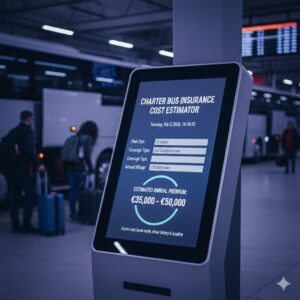
Providing a single “average” cost is misleading, as the factors above create immense variation. However, we can outline realistic annual premium ranges. These are illustrative estimates for a single coach. Your actual quote will vary.
Estimated Annual Premium Ranges for a Single Charter Bus
| Risk Profile / Operational Context | Estimated Annual Premium Range | Key Influencing Notes |
|---|---|---|
| Newer Operator / Higher Risk | $12,000 – $25,000+ | New business (<3 years), may have lower liability limits, operating in urban areas, basic safety program. |
| Established Operator / Moderate Risk | $8,000 – $15,000 | 5+ years in business, clean CSA scores, good MVRs, mixed urban/rural routes, standard safety tech. |
| Highly Experienced Operator / Low Risk | $5,000 – $10,000 | 10+ years with impeccable claim history, elite driver training, advanced telematics/safety systems, high liability limits. |
Important Note: These are per-vehicle estimates. A fleet of 10 buses will have a total premium in the tens of thousands, though fleet discounts usually apply. The cheapest policy is rarely the best value. Adequate coverage is paramount.
Breaking Down the Cost: A Sample Premium Analysis
Let’s assume a premium of $10,000 annually for a well-established operator. Where does that money go?
-
Primary Liability Coverage ($5M+): ~$4,000 – $5,000 (40-50% of premium)
-
Physical Damage (Collision/Comprehensive): ~$3,000 – $4,000 (30-40% of premium)
-
Uninsured/Underinsured Motorist: ~$500 – $1,000 (5-10% of premium)
-
Other Coverages & Policy Fees: ~$1,000 (10% of premium)
Actionable Strategies to Manage and Reduce Your Insurance Costs
You have significant power to influence your premium through proactive risk management. Here is a practical checklist to lower your long-term costs.
1. Build and Protect Your Safety Record
-
Prioritize Zero Claims: Every incident, no matter how small, should be investigated and used as a training tool to prevent recurrence.
-
Manage CSA Scores Aggressively: Assign someone to monitor your BASICS weekly. Address any alert immediately.
2. Invest in Your Drivers
-
Implement a Rigorous Hiring Process: Never cut corners on background checks.
-
Provide Continuous Training: Go beyond the minimum. Use online courses, in-person workshops, and simulated training.
-
Create a Positive Safety Culture: Reward safe driving miles. Involve drivers in safety meetings.
3. Leverage Technology
-
Install Telematics/GPS: Systems that monitor speeding, harsh braking, and idling provide data to coach drivers and often earn an insurer discount.
-
Consider Onboard Cameras: Forward-facing and driver-facing cameras protect against fraudulent claims and exonerate your driver in “not-at-fault” incidents.
-
Equip Advanced Safety Systems: Collision mitigation is becoming a standard discount driver.
4. Optimize Your Policy with Your Agent
-
Review Deductibles Annually: As your cash reserves grow, increasing your deductible can yield meaningful savings.
-
Bundle Coverages: Use one insurer for your auto liability, physical damage, and general liability (for your office/garage) to seek a package discount.
-
Ask About Discounts: Inquire about paid-in-full, association membership (e.g., ABA, UMA), or defensive driving course discounts.
5. The Annual Insurance Review: A Non-Negotiable Practice
Don’t just auto-renew. At least 90 days before your policy expires:
-
Gather Updated Data: Prepare current MVRs for all drivers, updated mileage, list of any new safety equipment, and your loss runs.
-
Shop the Market: Work with a specialized commercial transportation broker to get 3-5 competitive quotes. Loyalty has value, but so does competition.
-
Discuss Risk Transfer: Ensure your contracts with clients and your own lease/contractor agreements have appropriate insurance and indemnity clauses.
Critical Mistakes to Avoid When Buying Insurance
-
Choosing Price Over Protection: The lowest quote often comes with inadequate limits, high deductibles, or a carrier with poor claims service.
-
Underestimating Liability Limits: A severe accident can result in judgments far exceeding the FMCSA minimums. Skimping here risks your entire business.
-
Failing to Disclose Information: Be transparent with your agent about all operations, drivers, and past incidents. Non-disclosure can void your policy.
-
Not Reading Your Policy: Understand your exclusions (e.g., driving into Mexico, using unapproved drivers) and obligations (e.g., immediate accident reporting).
-
Neglecting Certificates of Insurance (COIs): Always get a COI from any subcontractor (like a mechanic or towing service) working on your vehicles, and provide them promptly to your clients.
Conclusion
Managing your charter bus insurance cost is an ongoing strategic part of your business, not an annual administrative chore. By deeply understanding the coverages, actively managing every factor within your control, and partnering with a knowledgeable insurance professional, you can secure robust protection that safeguards your passengers and your enterprise. The ultimate goal is to transform your insurance from a simple cost center into a demonstrable mark of your company’s safety, reliability, and professionalism.
Frequently Asked Questions (FAQ)
Q: What is the single biggest thing I can do to lower my insurance premium?
A: Maintain a clean driving and safety record over multiple years. Consistent, claim-free operation is the most powerful factor insurers consider.
Q: Are there payment plans available for charter bus insurance?
A: Yes, most insurers offer monthly, quarterly, or semi-annual payment plans. Note that there is often a fee for installment payments, and paying in full annually usually comes with a discount.
Q: Does my personal auto insurance cover me if I drive a charter bus for my business?
A: Absolutely not. Personal auto policies explicitly exclude coverage for vehicles used for commercial purposes or carrying passengers for hire. You must have a commercial charter bus policy.
Q: How quickly should I report an accident to my insurer?
A: Immediately. Your policy requires prompt notification, typically within 24 hours. Delaying can complicate the claims process and potentially violate your policy terms.
Q: Can I get insurance if I’m a new charter bus company with no history?
A: Yes, but you will be placed in a “new venture” category, which carries higher initial premiums. You can offset this by having experienced drivers with clean records, a solid business plan, and investing in safety technology from day one.
Additional Resources
To further your knowledge on safety and compliance, which directly impact your insurability and costs, we recommend visiting the official Federal Motor Carrier Safety Administration (FMCSA) website. Their resources on regulations, safety materials, and the CSA program are invaluable for any professional operator: FMCSA Safety Portal