Navigating the world of commercial insurance can be complex, and for limousine service operators, securing the right coverage is not just a business necessity—it’s a critical pillar of your operation’s stability and reputation. The cost of limousine insurance is a major operational expense, but it’s also your primary shield against financial ruin. This guide will demystify the factors that determine your premium, explore coverage options, and provide actionable strategies to manage your insurance costs effectively without compromising on protection.
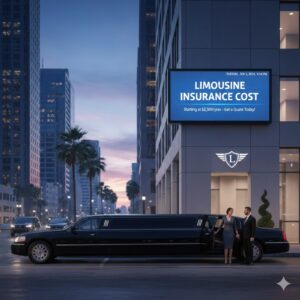
Limousine Insurance Cost
What is Limousine Insurance and Why is it Non-Negotiable?
Limousine insurance is a specialized form of commercial auto liability insurance designed for vehicles that transport passengers for hire. Unlike personal auto insurance, it addresses the unique and elevated risks associated with livery services. These risks include higher passenger occupancy, frequent use in high-traffic areas, and the substantial liability that comes with being responsible for the safety of paying clients.
“A standard personal auto policy will explicitly exclude coverage for accidents that occur while the vehicle is being used for hire,” explains Michael T. Anderson, a veteran commercial transport insurance underwriter. “Operating without proper livery coverage isn’t just risky—it’s effectively driving uninsured.”
Without this specific coverage, an at-fault accident could lead to out-of-pocket costs for vehicle repairs, medical bills for multiple passengers, and devastating lawsuits that could easily exceed millions of dollars, potentially bankrupting your business.
Core Components of a Limousine Insurance Policy
A robust policy is built on several key coverage types, each addressing a different layer of risk:
-
Commercial Auto Liability: The foundation. Covers bodily injury and property damage you cause to others in an accident.
-
Physical Damage (Comprehensive & Collision): Covers repair or replacement of your limousine itself, whether from an accident, theft, vandalism, or weather events.
-
Uninsured/Underinsured Motorist (UM/UIM): Protects you and your passengers if the at-fault driver has no insurance or insufficient coverage.
-
Medical Payments (MedPay) or Personal Injury Protection (PIP): Covers medical expenses for you and your passengers, regardless of fault.
-
Hired and Non-Owned Auto Liability (HNOA): Essential if you or your employees ever use a personal or rented vehicle for company business (e.g., running an errand).
Key Factors That Determine Your Limousine Insurance Cost
Your premium is not a random number. Insurers use a detailed risk assessment model to calculate it. Understanding these factors puts you in a stronger position to manage costs.
1. Operational and Business Factors
-
Location of Operation: A limousine service based in a dense, congested urban area like Manhattan or Chicago will face significantly higher premiums than one in a suburban or rural setting due to higher traffic density, accident rates, and claim frequencies.
-
Years in Business & Claims History: A well-established company with a clean, claims-free history is viewed as a much lower risk and will reap the benefits in lower premiums. Newer companies or those with past claims will pay more.
-
Annual Mileage: More miles on the road statistically equates to a higher chance of an accident. Accurate mileage reporting is crucial.
-
Revenue and Payroll: For some coverage lines like general liability, your business’s size and revenue can influence the premium.
2. Vehicle and Usage Specifics
-
Type and Value of Limousine: Insuring a brand-new, stretched Lincoln Navigator will cost far more than an older Lincoln Town Car sedan. The vehicle’s make, model, year, cost to repair or replace, and even its safety ratings are critical factors.
-
Primary Use: Is the vehicle used for airport transfers, weddings, proms, corporate events, or nightlife? Prom and nightlife work often carry a higher risk perception than corporate shuttle services.
-
Radius of Operation: Do you serve a single city, or do you provide long-distance charters across state lines? A wider operational radius increases risk exposure.
3. Human Element: The Driver
-
Driver Screening: Insurers will scrutinize the driving records (Motor Vehicle Reports – MVRs) of every driver on your policy. Major violations (DUIs, reckless driving) or a pattern of minor violations (speeding tickets) will sharply increase costs.
-
Driver Experience: Drivers with extensive professional chauffeur experience are preferred.
-
Training Programs: Implementing formal driver safety training programs can sometimes qualify you for discounts.
4. Coverage Decisions You Control
-
Coverage Limits: This is the single most significant lever you control. Higher limits mean higher premiums, but also greater protection.
-
Deductibles: The amount you pay out-of-pocket on a claim before insurance kicks in. Opting for a higher deductible on physical damage coverage can lower your premium.
How Much Does Limousine Insurance Cost? Breaking Down the Numbers
It’s vital to move beyond a single number. Costs are highly individual but fall into recognizable ranges.
Average Cost Ranges and Real-World Examples
The following table provides a realistic snapshot of how annual premiums can vary based on common scenarios. These are estimates; your actual quote will differ.
| Operational Profile | Vehicle Type | Coverage Limits (Liability) | Estimated Annual Premium Range |
|---|---|---|---|
| New Urban Operator | Stretch Limousine (8-10 passengers) | State Minimum ($1.5M) | $12,000 – $20,000+ |
| Established Suburban Service | Luxury Sedan / SUV (6 passengers) | $1 Million CSL | $5,000 – $9,000 |
| Corporate Fleet (3 Vehicles) | Executive Vans & Sedans | $5 Million Combined Single Limit | $18,000 – $30,000+ for the fleet |
| Part-Time Wedding Service | Classic Stretch Limo | $1 Million CSL | $4,000 – $7,000 |
Note on Limits: “State Minimum” is almost always inadequate for a limousine business. A serious accident involving multiple passengers can generate liabilities in the tens of millions. Most industry experts and contracts (e.g., with venues or hotels) require a minimum of $1 million to $1.5 million in liability coverage. A Combined Single Limit (CSL) policy, which provides a single pool of money for bodily injury and property damage, is often more straightforward than split-limit policies.
Important Note for Readers: The cheapest quote is rarely the best value. A policy with exclusions you don’t understand, from an insurer with poor claims service or financial instability, can cost you far more in the long run. Always prioritize comprehensive coverage and insurer reputation.
The Critical Role of Liability Limits
Choosing your liability limit is a balance between cost and catastrophic risk protection.
-
Low Limits ($750k/$1.5M Split): Lower premium, but exposes your business assets to extreme risk if a claim exceeds your limit.
-
High Limits ($1M+ CSL or $5M Umbrella): Higher premium, but provides essential peace of mind and asset protection. It also makes your business more attractive to high-end clients and partners who require proof of substantial coverage.
Practical Strategies to Reduce Your Insurance Premium
You can actively work to lower your costs through responsible management and smart choices.
-
Prioritize Safety and Hiring: Implement a rigorous driver screening process, mandate regular MVR checks, and establish a ongoing safety training program. A documented safety culture is attractive to insurers.
-
Increase Deductibles Wisely: Consider raising your physical damage deductibles. Ensure you have the cash reserves to cover the higher deductible if needed.
-
Bundle Policies: Purchase your commercial auto, general liability, and perhaps even property insurance from the same carrier. This “business owner’s policy” approach often yields a significant multi-policy discount.
-
Pay Annually: If cash flow allows, pay your premium in full annually to avoid monthly installment fees.
-
Shop Around with an Expert: Don’t just get online quotes. Work with an independent insurance agent or broker who specializes in commercial transportation. They have access to multiple “A-rated” carriers and understand the nuances of livery insurance. Get quotes every 2-3 years.
Coverage You Should Seriously Consider
Beyond the basics, these add-ons are often worth the investment:
-
$0 Glass Deductible: Limousines have large, expensive windows. This rider can save you thousands on a single windshield replacement.
-
Loss of Use: Covers the cost of renting a replacement vehicle while your limo is being repaired after a covered claim, keeping your business running.
-
Downtime/Contingent Liability: Provides coverage if a leased or financed vehicle is out of service, helping you meet lease payments.
How to Get an Accurate Quote: A Step-by-Step Checklist
Being prepared streamlines the process and leads to more accurate quotes.
Information to Have Ready for Your Agent:
-
Business name, entity type (LLC, Corp., etc.), and years in operation.
-
List of all vehicles (Year, Make, Model, VIN, purchase price/current value).
-
Projected annual mileage for each vehicle.
-
Zip codes where vehicles are garaged and primary areas of operation.
-
Driver list with names, dates of birth, driver’s license numbers, and years of professional driving experience.
-
Description of services (weddings, corporate, airport, etc.).
-
Desired coverage limits and deductibles.
-
Your current policy declaration page (if switching).
Conclusion
Managing your limousine insurance cost is an ongoing part of running a successful livery business. It involves understanding the multifaceted risk factors insurers evaluate, from your drivers’ records to your vehicle’s usage. By investing in safety, carefully selecting appropriate coverage limits, and partnering with a specialized insurance professional, you can secure essential protection at the most sustainable cost. Remember, effective insurance isn’t just an expense—it’s a strategic investment in the longevity and credibility of your company.
Frequently Asked Questions (FAQ)
Q: What’s the difference between a “livery” policy and a “for-hire” endorsement?
A: A true livery policy is a standalone commercial policy built for passenger transport. A “for-hire” endorsement is an add-on to a personal or standard commercial policy, often with strict limitations on vehicle type and use (e.g., rideshare). It is typically insufficient for a traditional limousine service.
Q: Can I get insurance if I’m just starting my limo business?
A: Yes, but you will likely pay a higher initial premium due to lack of prior insurance history in the business. Providing detailed business plans, driver qualifications, and vehicle safety features can help. Some carriers specialize in “new ventures.”
Q: Are passengers covered if they injure themselves getting in or out of the vehicle?
A: This depends on your policy’s medical payments (MedPay) coverage and the specific circumstances. General liability may also come into play. It’s a key reason to have robust medical payments limits.
Q: How does a claim affect my future premiums?
A: Significantly. An at-fault accident, especially a major one with a large payout, will likely cause your premium to increase at renewal, sometimes substantially, for three to five years. It may also make it harder to find coverage.
Additional Resources
-
National Limousine Association (NLA): The leading industry body. They often partner with insurance providers to offer member-focused programs and provide valuable risk management resources. https://www.limo.org/