Navigating the world of livery insurance can feel complex, but understanding the factors that influence your premium is the first step to finding the right coverage at a fair price. Whether you operate a black car service, a taxi fleet, or a rideshare vehicle, livery insurance is a critical business expense designed to protect you, your passengers, and your assets. This guide will walk you through everything you need to know about livery insurance cost, helping you make informed, confident decisions for your transportation business.
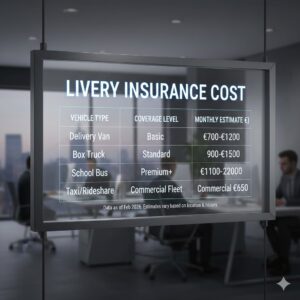
Livery Insurance Cost
What is Livery Insurance?
Livery insurance is a specialized form of commercial auto insurance for vehicles that transport passengers for a fee. Unlike personal auto insurance, which explicitly excludes paid passenger transport, livery policies are built for the unique risks of the for-hire industry. This coverage is legally required in almost all jurisdictions for any vehicle operating as a taxi, limousine, shuttle, or rideshare (when the driver’s personal policy is inactive).
Key Coverages in a Livery Policy
A robust livery insurance policy isn’t a one-size-fits-all product. It typically includes several core components:
-
Liability Coverage: Protects you if you are at fault in an accident, covering costs for third-party bodily injury and property damage.
-
Physical Damage Coverage: Covers repairs to your own vehicle from collisions, theft, vandalism, or other comprehensive perils like fire or hail.
-
Uninsured/Underinsured Motorist Coverage: Steps in if you’re in an accident caused by a driver with little or no insurance.
-
Medical Payments (MedPay) or Personal Injury Protection (PIP): Helps pay for medical expenses for you and your passengers, regardless of fault.
-
Contingent Liability: Crucial for rideshare drivers, this covers the “gap” period when the app is on but a ride hasn’t been accepted yet.
Breaking Down the Factors That Affect Your Premium
Livery insurance cost is not a random number. Insurers use a detailed risk assessment based on your specific operation. Here are the primary factors that determine your quote.
1. Type of Livery Operation
Your specific business model significantly impacts risk.
| Operation Type | General Risk Profile | Key Cost Influencer |
|---|---|---|
| Black Car/Limousine | Moderate to High | Higher vehicle values, chauffeur requirements, commercial clientele. |
| Taxi | High | Constant city driving, street hails, higher mileage, cash transactions. |
| Non-Emergency Medical Transport | Moderate | Specialized client needs, potential for higher liability limits. |
| Rideshare (Uber/Lyft) | Variable | Mileage driven with app on, coverage gaps, personal use mix. |
| Shuttle Service | Moderate | Fixed routes, higher passenger capacity, commercial liability needs. |
2. Driver Experience and History
Insurers closely scrutinize who is behind the wheel. A clean driving record is your most valuable asset for lowering costs.
-
Driving Record: Accidents, moving violations (especially DUIs), and insurance claims from the past 3-5 years will sharply increase premiums.
-
Commercial Driving Experience: Drivers with a long, clean history in livery or trucking are often viewed as lower risk.
-
Age: Inexperienced drivers under 25 typically face higher rates due to statistical risk.
3. Vehicle Details
The vehicle you insure is a major cost component.
-
Make, Model, and Year: Luxury vehicles (like Lincoln Navigators for limos) cost more to insure due to expensive parts and repair costs. Newer models may have higher comprehensive/collision premiums but might feature safety discounts.
-
Vehicle Use and Mileage: More annual miles equate to a higher chance of an accident. Insurers will ask for an estimated yearly mileage.
-
Safety and Anti-Theft Features: Vehicles with advanced safety features (automatic emergency braking, blind-spot monitoring) and verified anti-theft systems can qualify for discounts.
4. Coverage Selections and Limits
Your choices directly shape your final quote.
-
Liability Limits: State minimums are often insufficient for livery operations. Increasing limits from, say, $100,000 to $1,000,000 will increase your premium but provides essential asset protection.
-
Deductibles: Choosing a higher deductible for collision and comprehensive coverage will lower your premium, but means you pay more out-of-pocket if a claim occurs.
-
Optional Coverages: Adding endorsements like loss of use (for rental income while your car is repaired) or hired auto coverage will add to the cost.
5. Geographic Location
Where you operate is as important as how you operate.
-
City vs. Rural: Operating in dense urban areas (e.g., New York City, Chicago) leads to higher premiums due to congested traffic, higher accident rates, and greater claim frequency.
-
State Regulations: Insurance requirements and costs vary dramatically by state due to different liability laws, fraud rates, and repair costs.
Estimated Cost Ranges: What Can You Expect?
It’s crucial to understand that livery insurance is significantly more expensive than personal auto insurance due to the elevated risk. The following table provides a general overview, but your actual quote will vary based on the factors listed above.
| Livery Operation Type | Average Annual Premium Range | Important Notes |
|---|---|---|
| Rideshare Driver | $2,000 – $4,000+ | Highly dependent on personal driving record, location, and the specific coverage during Periods 1, 2, & 3. |
| Single Taxi Medallion Owner | $5,000 – $12,000+ | Costs in major metropolitan areas can be at the extreme high end of this range or beyond. |
| Black Car / Limousine | $3,500 – $8,000+ | Vehicle value is a major driver. Stretch limos or luxury SUV fleets will see higher premiums. |
| Small Shuttle Fleet (3-5 vans) | $10,000 – $25,000+ | Fleet discounts may apply. Passenger capacity (e.g., 15-passenger vans) heavily influences liability costs. |
Important Note: “These ranges are national estimates. The most accurate way to determine your cost is to get customized quotes from multiple insurers who specialize in livery coverage. Never simply choose the cheapest policy—ensure it provides the robust protection your business truly needs.” – Industry Underwriter
Practical Strategies to Manage and Reduce Your Insurance Cost
While livery insurance is a substantial expense, proactive management can help you secure better rates.
1. Shop Around with Specialty Insurers
Not all insurance companies understand the livery business. Seek out carriers that specialize in commercial transportation. They often offer more competitive rates and appropriate coverage than standard personal lines insurers trying to enter the market.
2. Leverage Discounts and Bundling
Ask every insurer about available discounts:
-
Fleet Discount: Insuring multiple vehicles under one policy.
-
Safety Course Discount: Completing a defensive driving or commercial driver safety program.
-
Paid-in-Full Discount: Paying your annual premium upfront instead of monthly.
-
Bundling: Purchasing your general business liability or property insurance from the same carrier.
3. Optimize Your Coverage Annually
Conduct an annual insurance review with your agent.
-
Adjust Deductibles: If your cash flow has improved, consider raising your deductible to lower your premium.
-
Update Mileage: If you drove less than projected, provide updated logs.
-
Re-evaluate Vehicle Value: For older vehicles, consider dropping collision/comprehensive if the premium exceeds the car’s value.
4. Prioritize Safety and Risk Management
Insurers reward proactive risk reduction.
-
Implement a formal driver training program.
-
Use telematics or dashcams (with privacy consent) to monitor safe driving habits; some insurers offer discounts for this.
-
Enforce a strict zero-tolerance drug and alcohol policy.
-
Maintain meticulous vehicle maintenance records.
Common Pitfalls to Avoid
-
Underinsuring to Save Money: This is the biggest risk. A major accident can lead to lawsuits that bankrupt your business if you only carry state minimums.
-
Misrepresenting Vehicle Use: Never use a personal auto policy for livery activities. This is called material misrepresentation and will result in a denied claim and policy cancellation.
-
Not Reading the Policy Exclusions: Understand what is not covered (e.g., certain types of property left in the vehicle, wear and tear).
-
Failing to Report Drivers: Ensure every driver who operates your vehicle is listed on the policy. An unreported driver in an accident can void coverage.
Conclusion: Investing in Smart Protection
Understanding livery insurance cost empowers you to see it not just as an expense, but as a strategic investment in your business’s longevity and stability. By focusing on risk management, shopping smartly with specialty providers, and choosing coverage based on value rather than just price, you can secure the protection you need at a sustainable cost. Remember, the right policy isn’t the cheapest one—it’s the one that ensures your livelihood can survive a serious accident.
Frequently Asked Questions (FAQ)
Q: Is livery insurance the same as commercial auto insurance?
A: Livery insurance is a specific type of commercial auto insurance designed for passenger transport for hire. Other commercial auto policies might be for goods delivery or service vehicles.
Q: Can I drive for Uber with just my personal insurance?
A: No. Personal auto policies explicitly exclude coverage when you are transporting passengers for payment. While Uber provides insurance during specific periods (Periods 2 & 3), there is a coverage gap (Period 1) that you must cover with a rideshare endorsement or specific livery policy.
Q: How much liability coverage should I really have?
A: While state minimums can be as low as $25,000, most industry experts recommend at least $1,000,000 in combined single limit (CSL) coverage. The cost to increase from minimums to $1 million is often less than you’d think and provides critical asset protection.
Q: My driving record has a minor violation. Will I still get insured?
A: Yes, but you will likely pay a higher premium. Different insurers weigh violations differently, so shopping around is even more critical.
Q: Does my credit score affect my livery insurance cost?
A: In most states, yes. Insurers use credit-based insurance scores as a statistical factor in determining risk. Maintaining good credit can help you secure better rates.
Additional Resources
For more information on state-specific insurance requirements and industry best practices, a valuable resource is the National Association of Insurance Commissioners (NAIC) Consumer Resource Center. You can search for your state’s insurance department to file complaints or get local guidance: NAIC Website