Understanding your employee benefits is a crucial part of your financial and personal well-being. For professionals at Booz Allen Hamilton, navigating the landscape of health insurance options can feel overwhelming. You’re likely asking: What will this cost me? What plans are available? How do I choose the right one?
This guide is designed to answer those questions clearly and realistically. We’ll walk through the typical structure of health benefits at a large consulting firm like Booz Allen, explain the factors that influence your out-of-pocket expenses, and provide you with the tools to make an informed decision during open enrollment or when you first join the company.
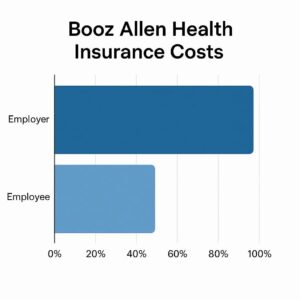
Booz Allen Health Insurance Costs
TABLE OF CONTENTS
ToggleUnderstanding the Cost Structure of Employer-Sponsored Health Insurance
Your total health insurance cost is not just one number. It’s a combination of several financial components that you pay, with your employer covering a significant portion of the overall premium. Think of it as a shared responsibility for your healthcare.
Breaking Down the Key Cost Components
When evaluating your Booz Allen health plan options, you’ll encounter these standard terms:
-
Premium: This is the monthly fee you pay to have insurance. It’s typically deducted directly from your paycheck. Your employer pays a large share (often 70-80% of the total premium), and you pay the remainder.
-
Deductible: The amount you must pay out-of-pocket for covered medical services before your insurance plan starts to pay. For example, if your deductible is $1,500, you pay for the first $1,500 of covered services yourself.
-
Copayment (Copay): A fixed amount you pay for a covered healthcare service, usually at the time of service. Common copays are $25 for a primary care visit or $50 for a specialist.
-
Coinsurance: Your share of the costs of a covered healthcare service, calculated as a percentage of the allowed amount for the service. After you meet your deductible, you might pay 20% (coinsurance) for a procedure, and your plan pays the other 80%.
-
Out-of-Pocket Maximum: The most you will have to pay for covered services in a plan year. After you spend this amount on deductibles, copayments, and coinsurance, your health plan pays 100% of the costs of covered benefits. This is a critical financial safety net.
How Employer Contributions Work
Booz Allen, like most major employers, subsidizes your health insurance to make it affordable. This employer contribution is a key part of your total compensation package. While the exact percentage is internal information, it’s safe to assume they cover a substantial portion of the premium, especially for employee-only coverage. The subsidy for dependents (spouses, children) is often less, which is why adding family members increases your paycheck deduction more significantly.
Exploring Typical Booz Allen Health Plan Options
Large firms typically offer a menu of plans to suit different needs and risk tolerances. While specific plan names and exact pricing change annually, they generally fall into these categories.
Common Plan Types Offered
| Plan Type | How It Works | Typical Cost Profile | Best For |
|---|---|---|---|
| Health Maintenance Organization (HMO) | Requires care from doctors in the plan’s network. A Primary Care Physician (PCP) coordinates your care and provides referrals to specialists. | Lower monthly premiums. Lower out-of-pocket costs when using network providers. No coverage for out-of-network care (except emergencies). | Individuals who want predictable costs and don’t mind having a primary doctor manage their care. |
| Preferred Provider Organization (PPO) | Offers more flexibility. You can see any doctor, but you pay less when using in-network providers. No referral needed to see a specialist. | Higher monthly premiums. Higher deductibles, but greater choice. Partial coverage for out-of-network care. | Those who want maximum flexibility, travel frequently, or have preferred doctors outside a strict network. |
| High-Deductible Health Plan (HDHP) with HSA | Features a higher deductible than traditional plans. Must be paired with a Health Savings Account (HSA), which lets you save pre-tax money for medical expenses. | Lowest monthly premiums. High deductible. Significant tax advantages via the HSA (contributions are pre-tax, growth is tax-free, withdrawals for medical expenses are tax-free). | Generally healthy individuals who want to save on premiums and are comfortable with a higher deductible. Excellent for those who want to invest for future medical costs. |
| Point of Service (POS) | A hybrid of HMO and PPO features. You need a referral from your PCP to see a specialist, but you have some out-of-network coverage. | Moderate premiums. Costs are lower in-network. More structured than a PPO but more flexible than an HMO. | Someone who wants the cost control of an HMO but with the option to go out-of-network for a higher price. |
The High-Deductible Health Plan and HSA Advantage
The HDHP/HSA combination is a powerful financial tool that many savvy employees choose.
“An HSA is the only triple-tax-advantaged account available: contributions are tax-deductible, the funds grow tax-free, and withdrawals for qualified medical expenses are tax-free. For the right person, it’s one of the best benefits in the package,” notes a benefits consultant.
Booz Allen likely makes an employer HSA contribution to encourage enrollment in these plans. This is essentially free money deposited into your savings account to help offset the higher deductible. This contribution can be a significant factor in making the HDHP the most cost-effective choice.
Estimating Your Real-World Costs
Let’s move from theory to practice. Your actual costs depend heavily on your personal healthcare usage.
Scenario-Based Cost Comparisons
Here’s a simplified model comparing how different plan types might handle two common scenarios. (Note: These figures are illustrative examples based on industry standards, not Booz Allen’s actual pricing.)
Scenario 1: The Healthy Individual (Routine Care Only)
-
Services: Annual physical, one urgent care visit for a sinus infection.
-
HMO: Low premium + copays only. Likely lowest total annual cost.
-
PPO: Higher premium + copays/coinsurance. Moderate total annual cost.
-
HDHP/HSA: Very low premium + pay full cost until deductible (but employer HSA contribution may cover it). Potentially very low cost if expenses are minimal.
Scenario 2: Individual Managing a Chronic Condition (e.g., Diabetes)
-
Services: Multiple specialist visits, regular prescriptions, lab work.
-
HMO: Low premium + predictable copays throughout the year. Costs are stable and manageable.
-
PPO: Higher premium + deductible + coinsurance until out-of-pocket max is met. Higher potential cost, but with maximum flexibility.
-
HDHP/HSA: Low premium + high deductible met early in the year, then 100% coverage. Could be high upfront cost, but then capped. HSA funds can be used to manage the deductible.
Factors That Influence Your Personal Premium
Your bi-weekly or monthly paycheck deduction for health insurance is determined by:
-
The Plan You Select: An HDHP will have a much lower premium than a PPO.
-
Tier of Coverage: Employee Only, Employee + Spouse, Employee + Child(ren), or Family.
-
Tobacco Use: Most companies, including Booz Allen, charge a surcharge for tobacco users.
How to Make the Right Choice During Open Enrollment
Don’t just auto-renew your old plan. Your life changes, and so should your coverage.
A Step-by-Step Decision Guide
-
Gather Your Documents: Wait for the official Open Enrollment guide from Booz Allen. This has the only accurate, current prices and plan details for the coming year.
-
Assess Your Previous Year’s Healthcare: How often did you see a doctor? Did you have any procedures? What were your total pharmacy costs? This is your best predictor.
-
Consider Life Changes: Are you planning for a baby? Is a dependent aging off the plan? Have you been diagnosed with a new condition?
-
Model the Costs: Use the plan comparison tool and any calculators provided by Booz Allen. Input your expected usage for each plan type to see a projected total cost (premium + estimated out-of-pocket).
-
Check Your Doctors & Medications: Always verify that your preferred doctors, hospitals, and medications are in-network for the plan you are considering, especially for HMOs and PPOs.
Important Notes for Readers
-
The information in this article is a general guide. The definitive source for your benefits is always the official Booz Allen Hamilton HR resources, such as the internal HR portal or direct communications from the benefits team.
-
Open Enrollment is typically once a year. This is your only chance to switch plans unless you have a Qualifying Life Event (e.g., marriage, birth of a child, loss of other coverage).
-
Take advantage of ancillary benefits. Booz Allen’s package almost certainly includes valuable extras like Dental, Vision, Disability Insurance, and Life Insurance. Review these costs and coverage options as well.
Maximizing the Value of Your Total Benefits Package
Your health insurance is one piece of a larger puzzle. Booz Allen offers a comprehensive suite of benefits designed to support your overall wellness, often at little to no extra cost.
Wellness Programs and Resources
Many companies offer incentives for participating in wellness activities, such as completing a health assessment or getting a preventative screening. These can result in premium discounts or direct contributions to your HSA. Furthermore, take advantage of:
-
Employee Assistance Program (EAP): Offers free, confidential counseling and support services.
-
Telemedicine: Often included at a low copay or free, perfect for quick consultations.
-
On-site Health Clinics: If available at your location, these can provide basic care at reduced costs.
The Role of Flexible Spending Accounts (FSAs)
If you do not choose an HDHP/HSA, you may be eligible for a Healthcare Flexible Spending Account (FSA). This allows you to set aside pre-tax money for medical expenses, reducing your taxable income. Remember, FSA funds generally have a “use-it-or-lose-it” rule, so careful estimation is key.
Conclusion
Understanding Booz Allen health insurance costs requires looking beyond the monthly premium to the full picture of deductibles, copays, and out-of-pocket maximums. By carefully assessing your personal health needs, comparing plan types like HMOs, PPOs, and HDHPs with HSAs, and utilizing all available wellness resources, you can select a plan that provides both optimal coverage and financial sense. Your benefits are a major part of your total compensation, and investing time to understand them is one of the most important financial decisions you make each year.
Frequently Asked Questions (FAQ)
Q: Where can I find the exact prices for Booz Allen health plans?
A: Exact, up-to-date premium costs, deductibles, and copays are available only through Booz Allen Hamilton’s internal HR and benefits platforms, especially during the Open Enrollment period. This internal site is your single source of truth.
Q: Does Booz Allen contribute to the Health Savings Account (HSA)?
A: It is very common for large employers like Booz Allen to make an annual employer contribution to the HSA for employees enrolled in the High-Deductible Health Plan. The amount varies by year and coverage tier, so check the official benefits materials for the current contribution.
Q: Can I change my health plan outside of Open Enrollment?
A: Generally, no. You can only elect or change plans during the annual Open Enrollment unless you experience a Qualifying Life Event (QLE), such as marriage, divorce, birth/adoption of a child, or loss of other coverage. You typically have 30 days from the QLE to make a change.
Q: What if my doctor is not in-network?
A: If you are in an HMO, you likely will not be covered for non-emergency care from that doctor. In a PPO or POS plan, you will pay significantly higher out-of-network costs (a higher deductible and coinsurance). It’s always best to choose a plan where your key providers are in-network.
Q: Are there resources to help me choose a plan?
A: Yes. Booz Allen’s HR department likely provides online decision-support tools, plan comparison charts, and may host informational webinars. You can also contact the benefits service center or insurance carrier directly with specific questions about coverage.
Additional Resources
-
For an independent, government-based guide to understanding health insurance terminology, you can visit Healthcare.gov’s Glossary: https://www.healthcare.gov/glossary/ (This is an external resource not affiliated with Booz Allen).