Starting or running a food truck is an exciting venture, blending culinary passion with entrepreneurial spirit. However, between perfecting your menu and scouting locations, there’s a crucial, less-glamorous detail you can’t afford to overlook: insurance. A common question we hear from owners is, “What should I expect for my food truck insurance cost per month?”
While it’s tempting to look for a simple flat rate, the answer isn’t one-size-fits-all. Your monthly premium is a personalized calculation, influenced by your unique business profile, location, coverage choices, and more. This comprehensive guide is designed to demystify that calculation. We’ll provide you with realistic cost ranges, explain the factors that push prices up or down, and offer actionable strategies to secure the right protection without breaking the bank. Think of this not as an expense, but as a foundational investment in your business’s longevity and peace of mind.
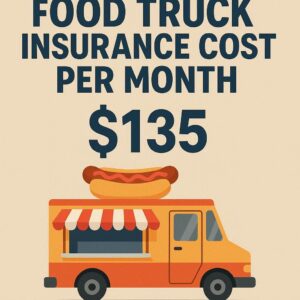
Food Truck Insurance Cost Per Month
What is the Average Monthly Cost for Food Truck Insurance?
Let’s address the central question head-on. Based on industry data and insurer quotes, most food truck owners can expect to pay between $250 and $700 per month for a robust insurance package. This translates to an annual premium of roughly $3,000 to $8,400.
However, this is a broad spectrum. A small, low-risk operation in a rural area might secure basic necessary coverage for closer to $150-$200 per month. Conversely, a large, multi-truck operation serving alcohol in a major metropolitan area could see costs exceeding $1,000 per month.
To visualize how different scenarios affect the bottom line, review the following table:
Estimated Monthly Insurance Cost Scenarios
| Food Truck Profile | Common Coverage Elements | Estimated Monthly Cost Range |
|---|---|---|
| New/Small Truck (Low-Risk) | Liability, Auto, Basic Property | $150 – $350 |
| Established, Standard Truck | Full Liability, Auto, Property, Spoilage, Equipment | $350 – $550 |
| Large/High-Risk Operation | All above + Liquor Liability, High Limits, Umbrella | $550 – $1,000+ |
Important Note: These figures are estimates for educational purposes. Your actual quote will vary. The only way to know your precise cost is to request personalized quotes from several insurers specializing in food truck or mobile food business coverage.
Breaking Down the Core Insurance Coverages and Their Cost Impact
Your monthly premium is the sum of parts—several individual coverage lines. Understanding what each one does and its relative cost helps you make informed decisions about your policy.
1. Commercial Auto Insurance
This is mandatory in virtually every state for any vehicle used for business. It covers accidents while you’re driving, similar to personal auto insurance but for your commercial asset.
-
What it Covers: Collision, bodily injury liability, property damage liability, comprehensive (theft, fire, vandalism).
-
Cost Factor: Typically a significant portion of your premium. A key driver is the driving records of all listed operators.
2. General Liability Insurance
This is your first line of defense against third-party claims of bodily injury or property damage that aren’t related to driving.
-
What it Covers: A customer slips on a greasy patch near your window, a hot menu board falls and damages property, or a child chokes on a sample. It also covers associated legal fees.
-
Cost Factor: A foundational and relatively standard cost. Limits (e.g., $1 million per occurrence) are a primary price variable.
3. Product Liability Insurance
Often included within or alongside General Liability, this is critical for any business serving food.
-
What it Covers: Illness or injury alleged to be caused by your food (e.g., food poisoning, an allergic reaction).
-
Cost Factor: Integrated into your liability premium. Menu items (e.g., raw oysters, high-risk meats) can influence cost.
4. Commercial Property Insurance (On-Wheels)
This protects the physical assets of your business that are on the truck.
-
What it Covers: Your grill, fryer, refrigeration unit, generator, and other equipment against perils like fire, theft, or collision damage. It also covers your inventory and supplies on the truck.
-
Cost Factor: Directly tied to the total value of your equipment and inventory you wish to insure. A truck with $50,000 in specialized equipment costs more to insure than one with $15,000 in basic gear.
5. Food Spoilage Coverage
An often-overlooked but vital add-on, especially for trucks with significant refrigeration.
-
What it Covers: Loss of perishable food due to a mechanical breakdown of your cooling system or a power failure from a generator issue.
-
Cost Factor: A relatively affordable addition that can save you from a massive, sudden loss.
6. Workers’ Compensation Insurance
Legally required in almost every state if you have employees (even part-time or family members).
-
What it Covers: Medical expenses and lost wages for an employee injured on the job, whether it’s a burn, slip, or driving accident.
-
Cost Factor: Based on your payroll and the risk classification of your employees (food service workers). Not having it when required carries severe penalties.
Key Factors That Directly Influence Your Monthly Premium
Now that you know the coverage pieces, what specific details do insurers evaluate to set your rate? Here are the primary levers:
-
Location, Location, Location: Operating in a densely populated city with high traffic, crime rates, and accident statistics will cost more than operating in a suburban or rural area. State insurance regulations also vary.
-
Revenue and Payroll: Your annual sales and total payroll are direct indicators of your business size and exposure. Higher numbers generally mean higher premiums.
-
Coverage Limits and Deductibles: Choosing a $2 million liability limit instead of $1 million will increase your cost. Conversely, opting for a higher deductible (the amount you pay out-of-pocket in a claim) can lower your monthly premium.
-
Your Menu: Are you serving pre-packaged goods or cooking with open flames, deep fryers, and exotic ingredients? Higher perceived risk can affect price. Serving alcohol significantly increases liability risk and cost.
-
Claims History: A history of past insurance claims (auto accidents, liability incidents) signals higher risk to insurers and leads to higher premiums.
-
Experience and Safety: A clean driving record for all operators and documented safety protocols for staff (like food handling certifications) can work in your favor.
Practical Strategies to Manage Your Food Truck Insurance Cost
You are not powerless in the face of these quotes. Proactive owners can take several steps to secure better rates.
-
Bundle Your Policies (BOP): Seek out a Business Owner’s Policy (BOP) designed for mobile businesses. A BOP bundles General Liability and Commercial Property coverages, often at a discount of 10-20% compared to buying them separately.
-
Shop Around Annually: Don’t auto-renew without checking the market. Get quotes from at least three different providers specializing in food service or food trucks. Consider independent insurance agents who can quote with multiple carriers.
-
Increase Your Deductible Wisely: If you have a healthy emergency fund, raising your deductible from $500 to $1,000 or $2,500 can meaningfully reduce your monthly premium. Just ensure you can cover that deductible if needed.
-
Invest in Prevention: Install safety and security features like commercial-grade fire suppression systems, anti-lock brakes, vehicle tracking devices, and alarm systems. Provide these details to your insurer; they may offer discounts.
-
Pay Annually if Possible: Many insurers charge a monthly installment fee. Paying the full annual premium upfront can save you those fees.
-
Review and Adjust Coverage Annually: As your business evolves, so should your policy. Did you sell an old truck? Remove it. Did you downgrade equipment values? Adjust your property coverage. An annual review prevents overpaying.
“Viewing insurance as a pure cost is a mistake for a food truck owner. It’s a strategic asset. The right policy is what allows you to recover from a setback that would otherwise end your dream.” – Financial Advisor for Small Food Businesses
Helpful List: What to Have Ready When Getting Quotes
To streamline the quoting process and ensure accuracy, have this information on hand:
-
Business name, legal structure (LLC, Sole Prop.), and start date.
-
Driver’s license numbers and motor vehicle reports for all operators.
-
Food truck VIN, make, model, year, and purchase value.
-
Estimated annual mileage and revenue.
-
Total payroll cost for all employees.
-
List of all equipment with approximate values.
-
Details of your menu and any alcohol service.
-
Current or desired coverage limits and deductibles.
Conclusion
Your monthly food truck insurance cost is a dynamic figure, typically ranging from $250 to $700, shaped by your specific business choices and risks. By understanding the essential coverages—from commercial auto and liability to property and spoilage—and actively managing factors like location, safety, and deductibles, you can secure essential protection that safeguards your investment without straining your budget. Remember, proactive comparison and bundling policies are your most effective tools for finding value.
Frequently Asked Questions (FAQ)
Q: Is food truck insurance legally required?
A: Yes, in several ways. Commercial auto insurance is a state mandate for any business vehicle. General Liability is often required by event organizers, landlords, and local permits. Workers’ Comp is legally required if you have employees. Operating without it risks massive fines, lawsuits, and business closure.
Q: Can I use my personal auto insurance for my food truck?
A: Absolutely not. Personal auto policies explicitly exclude vehicles used for commercial purposes. If you cause an accident while working, your claim will be denied, leaving you personally liable for all damages and injuries.
Q: How can I get insurance if I’m just starting out with no revenue history?
A: Insurers understand startups. You’ll provide a realistic projection of your first year’s revenue and payroll. Be prepared to explain your business plan and experience. Your initial quote will be based on these projections and adjusted at your first renewal based on actual numbers.
Q: Does insurance cover me when I’m parked and serving at a festival vs. driving?
A: A proper food truck policy provides continuous coverage. Your Commercial Auto covers the driving exposure. Your General Liability and Property coverages protect you while parked and serving. This is why a tailored package policy is crucial—it covers all operational phases.
Additional Resources
For further guidance on business structures and best practices, visit the U.S. Small Business Administration’s website at sba.gov. Their resources on writing a business plan and managing finances are invaluable for new food truck owners.