If you are reading this, chances are you are either starting your own home inspection business or you have been inspecting homes for a while and are confused by your latest insurance renewal quote.
You are not alone.
Insurance is one of the most confusing overhead costs we deal with. It is also the most important. You wouldn’t let a client buy a house without knowing what is behind the walls. So, why would you operate your business without knowing exactly what you are paying for and why?
Here is the honest truth: Home inspector insurance costs vary wildly. I have seen quotes as low as $500 a year and as high as $8,000 for what sounds like the same policy.
This guide is designed to clear up the fog. We are going to look at real numbers, break down the different types of coverage, and explain exactly why your neighbor pays less than you do.
Let’s strip away the jargon and get to the bottom line.
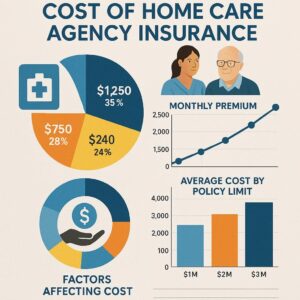
Cost of Home Care Agency Insurance
The Average Cost of Home Inspector Insurance (The Reality Check)
Before we dive into the nitty-gritty, let’s look at the big picture.
If you ask a general insurance agent, “How much is home inspector insurance?” they might give you a one-size-fits-all number. That number is usually wrong.
Based on current market data and feedback from hundreds of solo inspectors and franchise owners, here is the realistic breakdown of annual premiums:
| Policy Type | Typical Annual Cost | What It Covers |
|---|---|---|
| General Liability | $450 – $1,200 | Bodily injury (dog bites, slips), property damage (breaking a window), premises liability. |
| Errors & Omissions (E&O) | $750 – $2,500 | Missed defects, professional negligence, missed code violations. |
| Workers’ Compensation | $1,500 – $5,000+ | Medical bills and lost wages if you or an employee get hurt on the job. |
| Commercial Auto | $1,200 – $2,500 | Damage to your vehicle while driving to inspections. |
| Tool & Equipment | $150 – $400 | Theft or damage of your camera, moisture meter, or ladder. |
| Umbrella Policy | $350 – $800 | Extra liability limits above your base policies. |
Important Note: These are annual costs. Some new inspectors are tempted to pay month-to-month. While this helps cash flow, insurers usually charge a financing fee. Paying the full annual premium upfront typically saves you 10% to 15%.
Why “One Quote” Doesn’t Fit All
If you call three different insurance brokers, you will likely get three different prices. This isn’t necessarily a scam; it is underwriting.
Insurance companies evaluate risk using algorithms. Here are the factors that determine whether you pay $900 or $2,500 for your E&O policy.
1. Your Business Structure (Solo vs. Franchise)
A solo inspector working part-time in rural Montana poses a different risk than an inspector running a franchise in downtown Denver.
-
Solo Inspectors: Usually pay less because their volume of work is lower.
-
Franchise Groups: Often get preferred rates. National franchises like WIN Home Inspection or Pillar To Post often negotiate master policies, which can lower costs for individual franchisees.
2. Your Claims History
This is the elephant in the room.
-
Clean Record: No claims in the last 3–5 years? You get the preferred rate.
-
One Claim: Your premium might jump 30% to 50%.
-
Two or More Claims: You are now high-risk. Some carriers will non-renew you, forcing you into the “surplus lines” market, where premiums double.
3. Coverage Limits
Don’t just look at the price; look at the policy limit.
-
Standard Limits: $500,000 per claim / $500,000 aggregate.
-
Better Limits: $1,000,000 per claim / $1,000,000 aggregate.
-
Highest Limits: $1,000,000 per claim / $2,000,000 aggregate (or more).
Upgrading from a $500k limit to a $1M limit usually costs about 30% to 40% more. However, many realtors and lending institutions now require inspectors to carry at least $1M in coverage. Skimping here might save you $300 today, but it could cost you a major client tomorrow.
4. Your Deductible
Raising your deductible is the fastest way to lower your premium.
-
$1,000 Deductible: Higher premium.
-
$2,500 Deductible: Moderate savings.
-
$5,000 Deductible: Lowest premium.
My advice: Set your deductible at an amount you could actually pay out of pocket tomorrow. If a claim happens, you pay the deductible first. Don’t set it at $5,000 if you don’t have $5,000 in the bank.
Breaking Down the Essential Policies
Let’s zoom in on the three non-negotiable policies you need to understand before you even think about price shopping.
General Liability (GL) – The Bodyguard
General Liability is your first line of defense. It is usually the cheapest policy, but it is involved in the most frequent claims.
What it pays for:
-
A client slips on an icy step.
-
You lean your ladder against a brand new gutter and dent it.
-
You accidentally knock a valuable vase off a shelf.
Cost Drivers:
GL rates are largely based on your payroll and your gross receipts (revenue). An inspector making $200k a year will pay significantly more than an inspector making $50k a year.
Realistic Cost:
Expect to pay between $400 and $900 per year for a $1M/$2M occurrence form policy.
Errors & Omissions (E&O) – The Reputation Saver
This is the policy that keeps home inspectors in business. E&O covers you when a client says, “You missed the crack in the foundation,” or “Why didn’t you tell me the water heater was 25 years old?”
The Hard Truth:
Even if you are the best inspector in the world, you will eventually face a claim. You cannot see inside walls. You cannot predict future failures. E&O pays for your legal defense and any settlement.
Realistic Cost:
-
New Inspectors: $1,200 – $1,800 per year.
-
Experienced (Clean Record): $750 – $1,200 per year.
-
High-Risk States (CA, FL, NY): Add 20% to 30% to these figures due to higher litigation rates.
Workers’ Compensation – The Mandatory Shield
If you have any employees, this is legally required in almost every state. But what if you are a sole proprietor?
The Sole Proprietor Trap:
In many states, if you own the LLC or Corporation, you can exclude yourself from Workers’ Comp. This saves you a ton of money. However, if you exclude yourself and get hurt on the job, your health insurance covers you, but you do not get lost wages.
Cost Drivers:
Workers’ Comp is priced per $100 of payroll.
-
Inspection Class Code: Usually around $2.50 to $5.00 per $100 of payroll.
-
If you pay yourself a salary of $50,000, your premium might be $1,250 to $2,500.
The Hidden Costs (Don’t Forget These)
When budgeting, new inspectors often forget about the “small” policies. These are not actually small; they prevent massive headaches.
Commercial Auto
Do you need it?
If you use your personal car to drive to inspections, and you get into an accident, your personal auto insurance may deny the claim. They view driving to a job site as “business use.”
Cost:
Adding a commercial auto policy or a “business use” endorsement to your personal policy typically costs $600 to $1,500 extra per year.
Tools and Equipment
Your toolkit is worth thousands of dollars.
-
A basic policy covering $5,000 to $10,000 of gear costs about $150 to $250 per year.
-
This usually covers theft from your vehicle (subject to proof of forced entry).
How to Lower Your Home Inspector Insurance Costs (The Ethical Way)
You have options. Here is how to get the best rate without sacrificing the quality of your coverage.
Bundle Your Policies
Insurance companies love loyalty. If you buy your GL, E&O, and Auto from the same carrier, you will likely get a “multi-policy discount.” This can save you 10% to 20% on each policy.
Join a Professional Association
Organizations like ASHI (American Society of Home Inspectors) or InterNACHI (International Association of Certified Home Inspectors) often have endorsed insurance programs.
-
InterNACHI: Offers a benefit package that includes limited E&O and GL insurance with membership. Members can then “buy up” to higher limits at discounted group rates.
-
The Savings: Group rates can be 15% cheaper than going directly to a standard carrier.
Improve Your Contracts
This sounds odd, but insurers look at your contracts. If your contract has strong limitation of liability clauses and an “agreed value” limit (e.g., liability limited to the fee paid), you are less likely to be sued.
-
Result: Lower risk profile = Lower premium.
Pay Annually
As mentioned earlier, monthly payments include interest or administrative fees. Paying the full year in one shot is essentially an instant 10% discount.
Comparative Table: Solo Inspector vs. Small Firm Costs
To help you visualize the budget, here is a realistic annual comparison between a solo inspector and a small firm owner with one part-time employee.
| Coverage | Solo Inspector (No Employees) | Small Firm (1 Employee + Owner) |
|---|---|---|
| General Liability | $550 | $750 |
| E&O (1M/1M) | $1,100 | $1,400 |
| Workers’ Comp | $0 (Excluded) | $2,200 |
| Commercial Auto | $0 (Personal Use OK) | $1,500 |
| Tools | $150 | $250 |
| Umbrella | $0 | $400 |
| TOTAL ESTIMATE | $1,800 – $2,000 | $6,000 – $7,000 |
Note: These figures are estimates. Rates vary by state and individual risk factors.
When to Shop Around vs. When to Stay Put
Loyalty is rarely rewarded in the insurance world the way it used to be.
Shop around when:
-
Your premium increases by more than 15% with no claims filed.
-
You have purchased new equipment or hired new staff.
-
You have had a clean record for 3+ years.
Stay put when:
-
You had a claim last year. New carriers will see this and quote you very high rates.
-
You are mid-way through lawsuit season. Switching carriers while a claim is pending is messy.
Frequently Asked Questions (FAQ)
Q: Do I really need E&O insurance if I am a great inspector?
A: Yes. 100% yes. Being a great inspector does not prevent a client from suing you. The cost of defending a lawsuit (even a frivolous one) is $5,000 to $20,000. E&O pays for that defense.
Q: Can I write off insurance costs on my taxes?
A: Absolutely. General Liability, E&O, Bonding, and Workers’ Comp are 100% ordinary and necessary business expenses. Keep your declarations page for your CPA.
Q: What is the difference between “Claims Made” and “Occurrence” policies?
A:
-
Occurrence (GL): Covers events that happen during the policy period, even if the claim is filed years later.
-
Claims Made (E&O): Requires the policy to be active both when the inspection happened and when the claim is filed. This is why you need “Tail Coverage” if you retire.
Q: Is insurance more expensive in certain states?
A: Yes. Florida, California, Louisiana, and Texas generally have higher premiums due to weather risks (roof claims) and higher rates of litigation.
Q: What is a “BOP”?
A: A Business Owner’s Policy. This is a package that bundles General Liability and Property Insurance. It is common for office-based businesses, but less common for home inspectors because it usually lacks the specific E&O coverage you need.
Additional Resource: How to Find a Reputable Agent
You wouldn’t hire a home inspector based on price alone; you’d check reviews. Do the same for insurance.
Link Recommendation:
Visit the Trusted Choice website (www.trustedchoice.com). This is a directory of independent insurance agents. Look for an agent who specializes in “Real Estate Professionals” or “Small Business Trades.” They will know what a home inspector actually does.
Conclusion: Don’t Let Cost Be the Only Metric
Home inspector insurance costs can feel like a black hole for your revenue. It is tempting to buy the cheapest policy you can find just to satisfy your state requirements or a client’s request.
But here is the reality: Insurance is not a utility bill. It is a risk management tool.
The lowest price often comes with the worst service. When a claim hits—and statistically, it will—you want an insurer who answers the phone and assigns an adjuster who understands what a “load-bearing wall” is.
Summary:
Budget between $1,800 and $3,000 annually for a solo inspector with solid limits. Protect your reputation with strong E&O coverage. And always, always read the exclusions before you sign the check.