You pay your premiums every month, often without a second thought. It feels like a safety net, a promise that when things go wrong, your insurance company will be there to catch you. So, when you finally need to use that safety net, receiving a denial letter can feel like a punch to the gut. It’s easy to feel frustrated, confused, and even betrayed.
The immediate question that races through your mind is: Can they even do that?
The short, honest answer is yes. Insurance companies can and do refuse to pay claims. However, and this is a crucial distinction, they can’t just deny a claim on a whim or to protect their profits. They must have a valid, legally defensible reason rooted in the specifics of your policy and the details of the incident.
This guide is designed to pull back the curtain on the insurance claims process. We’ll walk through the legitimate reasons for claim denials, decode the confusing language of your policy, and, most importantly, arm you with the knowledge to fight back if you believe your claim has been wrongly refused. Think of this not as a story of frustration, but as a roadmap to protecting your rights.
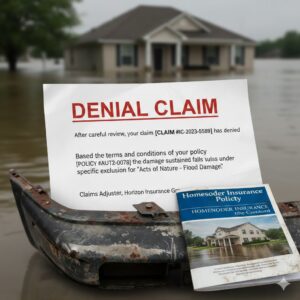
Can an Insurance Company Refuse to Pay a Claim?
Understanding the Contract: What You Actually Signed
To understand why a claim might be denied, you first have to understand the nature of an insurance policy. It’s not just a receipt; it’s a legally binding contract.
You enter into an agreement with the insurer. You promise to pay your premium and act in a certain way (like maintaining your home or driving safely). In return, the insurer promises to pay for specific losses outlined in the policy. A claim denial usually happens when the insurer believes the loss isn’t covered according to the terms of that contract, or that you didn’t uphold your end of the bargain.
Think of your policy as a rulebook. Your job is to prove that your loss follows the rules. The insurance company’s job is to verify it against that same rulebook.
The Top 10 Legitimate Reasons an Insurer Can Refuse to Pay
Let’s get into the specifics. Here are the most common, and legally valid, reasons an insurance company might deny your claim.
1. The Incident Isn’t Covered by Your Policy
This is the most fundamental reason for a denial. Insurance policies are not blanket guarantees. They cover specific “perils” or risks.
-
Named Peril Policies: These policies only cover the risks explicitly listed. For example, if your homeowners policy lists “fire,” “wind,” and “theft,” but your basement floods, the claim will be denied because “water damage” isn’t a named peril.
-
All-Risk Policies: These cover everything except what is specifically excluded. We’ll cover exclusions next.
2. A Specific Exclusion Applies
Exclusions are the fine print that outlines what the policy won’t cover. These are carefully worded to remove high-risk or uninsurable events. Common exclusions include:
-
Intentional Acts: Damage you cause on purpose.
-
Acts of War or Government Action: Seizure of property or damage from war.
-
Normal Wear and Tear: Insurance is for sudden and accidental damage, not for your roof leaking because it’s 20 years old.
-
Floods and Earthquakes: These are almost always excluded from standard homeowners policies and require separate, specialized coverage.
-
Business Use: If you have a personal auto policy and get into an accident while delivering pizzas or driving for a ride-share, your claim will likely be denied.
3. Non-Payment of Premiums
Your side of the contract requires you to pay for coverage. If your policy lapsed because you missed a payment, the “promise” is broken. If a loss occurs during this lapse period, the company has no obligation to pay. There is usually a grace period, but once that’s passed, you are uninsured.
4. Material Misrepresentation or Omissions on Your Application
When you apply for insurance, you are required to answer questions honestly. This is called “utmost good faith.” If you knowingly or unknowingly provide false information that would have changed the insurer’s decision to offer you a policy or set your premium, they can void the contract.
-
Example: You fail to mention that you have a vicious dog breed when applying for homeowners insurance. If that dog later bites someone, your claim could be denied for misrepresentation.
-
Example: You forget to list a speeding ticket on your auto application. If the insurer later discovers this, they could deny a claim or even cancel your policy retroactively.
5. Fraudulent Claims
This is a major red flag. If an insurer suspects you are exaggerating a loss or have fabricated an incident entirely, they will not only deny the claim but may also pursue legal action against you.
-
Inflating a Claim: Reporting a $500 stolen television as a $2,000 top-of-the-line model.
-
Staging an Incident: Purposefully causing an accident or faking a theft.
6. Failure to Cooperate with the Investigation
After you file a claim, the insurance company has a right to investigate. This is part of your duty under the contract. If you refuse to answer questions, provide requested documents, or sit for a recorded statement (as required by your policy), you are breaking your contract. The insurer can then deny the claim because you prevented them from properly assessing it.
7. Lack of Insurable Interest
To insure something, you must stand to suffer a genuine financial loss if it is damaged or destroyed. For example, you can insure your own car. You generally cannot insure your neighbor’s car. If you try to claim a loss for something you don’t truly own, the claim will be denied.
8. Late Reporting of the Claim
Most policies require you to notify the insurer of a loss “promptly” or “within a reasonable time.” This allows them to investigate the scene while evidence is fresh. Waiting months to report a car accident or a burglary can make it impossible to verify the facts, giving the insurer a valid reason to deny your claim.
9. The Claim is for an Amount Below Your Deductible
This isn’t a denial in the traditional sense, but it results in no payment. Your deductible is the amount you agree to pay out-of-pocket before your insurance kicks in. If the damage estimate is $800 and your deductible is $1,000, the insurance company owes you nothing. It’s your responsibility to cover the full cost.
10. Lack of Proper Licensing or Permits
This is a tricky one, often seen in home insurance. If you have a loss resulting from work done by an unlicensed contractor, or if you made major renovations to your home without the required permits, your insurer might deny the claim. They argue that unpermitted work increases the risk.
| Reason for Denial | Simple Explanation | Example |
|---|---|---|
| Not Covered | The event isn’t listed in your policy’s promises. | Windstorm damages your fence, but your basic policy only covers fire and theft. |
| Policy Exclusion | The event is specifically listed as something they won’t pay for. | Your basement floods, and your policy clearly excludes “water damage.” |
| Non-Payment | You didn’t keep your promise to pay for coverage. | Your car is stolen, but your premium payment was 45 days late and your policy was cancelled. |
| Misrepresentation | You gave incorrect information when you bought the policy. | You didn’t mention your teen driver when you got your auto quote, and they crash the car. |
| Fraud | You are trying to cheat the system. | You claim a 70-inch TV was stolen, but security footage shows you carrying it out yourself. |
| Late Reporting | You waited too long to tell them about the loss. | A tree falls on your shed in a storm, but you don’t report it until you decide to fix it 8 months later. |
Important Note: Just because you receive a denial letter doesn’t mean the story is over. Insurance companies make mistakes. Their adjusters might misinterpret your policy or overlook a key fact. A denial is often the beginning of a negotiation, not the final word.
Decoding the Denial Letter: What to Look For
When your claim is denied, the insurance company is legally required to send you a letter explaining why. This letter is your most important tool. Don’t just read it—dissect it.
The Explanation of Benefits (EOB) or Denial Letter
This document will state whether your claim is being paid in full, partially paid, or denied. Look for key phrases like:
-
“We have concluded our investigation…”
-
“This claim is being denied because…”
-
“The policy does not provide coverage for…”
The Policy Language Citation
A proper denial letter will reference the specific part of your policy contract that supports their decision. It might say something like, “As stated in Section I, Exclusion 2(b) of your policy…”
Your job: Find that section in your policy. Read it. See if the language truly applies to your situation. You might find that the adjuster misquoted or misinterpreted the clause.
The Facts of the Loss
The letter will summarize the incident as they understand it. Check this carefully. Do they have the date wrong? Did they incorrectly describe how the damage happened? A factual error on their part could be the key to your appeal.
Your Action Plan: What to Do When Your Claim is Denied
Receiving a denial can be disheartening, but it’s time to shift into action mode. Don’t accept it at face value. Here is a step-by-step guide to fighting back.
Step 1: Read the Denial Letter Carefully (Again)
Grab a highlighter. Mark the specific reasons for the denial and the policy clauses they are using. Write down anything you don’t understand. This creates your list of questions to answer.
Step 2: Review Your Policy
Get out your policy documents. Read the sections they cited. Also, read the general description of coverage for your loss. You need to become a temporary expert on the relevant part of your contract.
Step 3: Gather Your Evidence
Build a strong file to support your case.
-
Your Policy: Keep a copy handy.
-
The Denial Letter: Have the original and any notes you made.
-
Your Proof of Loss: Photos, videos, receipts for damaged items, police reports, witness statements. Anything that proves what happened and the value of your loss.
-
Communication Log: Start a document where you record every phone call (date, time, who you spoke to, what was said) and save every email.
Step 4: Contact Your Insurance Company or Agent
Start with a simple phone call to your insurance agent or the claims adjuster. Be polite and professional. Your goal is to gather information, not to argue.
-
Say: “I received the denial letter for claim #[Number] and I’m hoping you can help me understand it better. The letter cites [Policy Section], but my understanding was that [Your Situation] was covered. Can you walk me through the reasoning?”
This conversation might reveal a simple misunderstanding or a piece of evidence they were missing. Sometimes, a denial is triggered by an automated system or a preliminary review, and a human conversation can clear it up.
Step 5: File a Formal Appeal (The Internal Appeal)
If the phone call doesn’t resolve the issue, you must file a formal appeal. Your denial letter will have instructions on how to do this. It usually involves sending a letter to a specific address.
-
Be Professional: Type your letter. Keep it calm and factual.
-
State Your Case Clearly: Begin by stating your name, policy number, and claim number. Explain that you are appealing the denial decision.
-
Challenge Their Reasoning: Point by point, address the reasons they gave for the denial. Explain why you believe they are incorrect, using your policy language and evidence.
-
Include New Evidence: Attach any documentation that supports your side. Make sure to write “SEE ATTACHED” next to your arguments in the letter.
-
Request a Specific Outcome: Clearly state that you are requesting a full review of the claim and for the denial to be overturned.
-
Send it Certified Mail: Always send your appeal letter via certified mail with a return receipt requested. This proves the insurance company received it.
Step 6: Seek Outside Help
If your internal appeal is denied, you aren’t out of options. You can bring in a third party.
-
Your State’s Department of Insurance: This is a powerful, free resource. Every state has a regulatory body that oversees insurance companies. You can file a complaint with them. They will review your case and act as a mediator. Often, just the involvement of the state regulator can make an insurance company take a second, harder look. A quick online search for “[Your State] Department of Insurance” will lead you to their consumer complaint page.
-
Hire a Public Adjuster: A public adjuster works for you, not the insurance company. They will assess your loss, review your policy, and negotiate with the insurer on your behalf. They typically take a percentage (usually 5-15%) of the final settlement. This is a good option for large, complex claims.
-
Hire an Attorney: If the claim is substantial and involves bad faith on the part of the insurer, you may need a lawyer who specializes in insurance law. An attorney can file a lawsuit against the company.
Note on “Bad Faith”: Insurance companies have a legal duty to handle your claim fairly and promptly. If they unreasonably deny a claim, fail to conduct a proper investigation, or misrepresent the policy language to you, they may be acting in “bad faith.” If you can prove bad faith, you may be entitled to sue for the original claim amount plus additional damages.
Visualizing the Path to Resolution
To make the process clearer, here’s a simple flowchart of the appeals process.
Special Scenarios: When Denials Get Complicated
While the core principles remain the same, certain types of claims have their own unique pitfalls.
Homeowners Insurance Claims
-
Maintenance Issues: This is the #1 battle. If a pipe bursts because it froze, you’re likely covered. If a pipe bursts because it was old, rusty, and leaking for months, the claim will be denied as “wear and tear.” The burden is on you to show the damage was sudden and accidental.
-
Ordinance or Law: After a loss, you might be required to bring your home up to current building codes. For example, if you need to replace a roof, you may also be required to install new, stronger decking underneath. Basic policies often don’t cover this extra cost. You need specific “ordinance or law” coverage.
Auto Insurance Claims
-
Permissive Use: If you lend your car to a friend and they crash it, your insurance usually covers them. However, if that friend lives with you and you didn’t list them on your policy as a regular driver, the claim could be denied or coverage limited.
-
Excluded Drivers: In many states, you can sign a form to specifically exclude a driver (like a high-risk teenager) from your policy to lower your premium. If that excluded driver gets into an accident with your car, the claim will be categorically denied.
Health Insurance Claims
-
Medical Necessity: A common reason for health insurance denials is the insurer deeming a treatment, test, or medication “not medically necessary.” This means they don’t believe it’s required to diagnose or treat your condition according to their established guidelines.
-
Out-of-Network Providers: Even if you have an in-network hospital, some of the doctors treating you (like an anesthesiologist) might be out-of-network. This can lead to “balance billing” and claim denials for those specific services.
-
Prior Authorization: Many plans require you to get approval before having a procedure or filling a prescription. If you don’t, they can deny the claim even if it would have been approved.
FAQs: Answering Your Burning Questions
Q: Can an insurance company drop me after a claim?
A: Yes, in most cases, an insurance company can choose not to renew your policy after a claim, especially if you’ve filed multiple claims or the claim was for a significant amount (like a major accident or a house fire). This is separate from denying a single claim.
Q: What is the difference between a claim denial and a claim rejection?
A: While the terms are often used interchangeably, a rejection usually happens early on, often because of a technical issue like a missing form or a claim filed for a clearly non-covered event. A denial usually comes after a formal investigation has been completed.
Q: How long does an insurance company have to deny a claim?
A: This depends on your state’s laws and the type of insurance. Generally, they must act within a “reasonable” time, and many states have specific deadlines (e.g., 30 or 45 days) to acknowledge a claim and begin their investigation. After that, they must provide a decision promptly.
Q: Will my premiums go up if my claim is denied?
A: Possibly, yes. Even if a claim is denied, the fact that you filed one goes into a massive database called the Comprehensive Loss Underwriting Exchange (CLUE). Future insurers can see this. While a denied claim might be viewed more favorably than a paid one, it still signals that a loss occurred, which could lead to higher rates.
Q: What should I not say to an insurance adjuster?
A: Avoid guessing, speculating, or admitting fault. Don’t say “I’m sorry” as it can be construed as an admission of guilt. Stick to the facts you know for sure. It’s also wise not to give a recorded statement without first understanding your policy’s requirements and, in some cases, consulting an attorney.
Conclusion
Navigating the world of insurance claims can feel like learning a new language. While the question “can an insurance company refuse to pay a claim?” has a frighteningly simple “yes” for an answer, the reality is far more nuanced. They can only refuse for specific, contractually-valid reasons. Your power lies in understanding those reasons and knowing how to respond. By carefully reviewing your policy, documenting everything, and methodically following the appeals process, you transform from a passive claimant into an active advocate for your own rights.
Additional Resource
For more detailed information on consumer rights and the specific regulations in your state, the National Association of Insurance Commissioners (NAIC) is an invaluable resource. They provide tools and information to help consumers understand insurance.