So, you’re ready to start your pressure washing business—or maybe you’ve already been in business for a while, and you’re finally getting serious about protecting it. You have your machine, you have the detergent, and you have the clients. But there is one question lingering in the back of your mind: How much is this insurance actually going to cost me?
It is the question every business owner asks. You know you need it; after all, one errant spray through a window or water intrusion under vinyl siding could wipe out a year’s worth of profits. But you don’t want to pay a penny more than you have to.
Welcome to your deep dive into Pressure Washing Insurance Cost. We aren’t just going to throw out a random number and call it a day. We are going to dissect exactly what you are paying for, why prices vary so much from contractor to contractor, and how you can keep your premiums manageable while staying fully protected.
Whether you are a solo operator with a pickup truck or a growing fleet with multiple crews, this guide is designed to be your lasting reference.
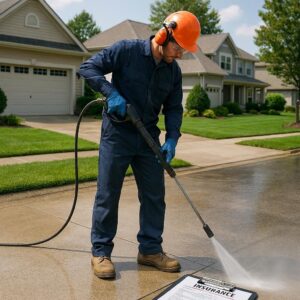
The Short Answer: What Does Pressure Washing Insurance Cost?
Let’s get the headline out of the way first. If you are looking for a quick average to plug into your business budget, here is the reality of the market right now:
-
General Liability Insurance: Most small pressure washing businesses pay between $500 and $1,500 per year. For those with a clean record, you might find premiums as low as $40 to $60 per month.
-
General Liability (High-Risk Operations): If you work on multi-story buildings or use hot water methods, expect to pay between $1,500 and $3,000 per year.
-
Business Owner’s Policy (BOP): Bundling liability with property insurance typically runs $1,200 to $2,500 per year.
Important Note: These are baseline figures. Insurance is not a “one-size-fits-all” product. The premium your competitor pays down the street might be completely different from yours, depending on the factors we are about to explore.
Why Pressure Washing Insurance Isn’t “Cheap” (And Why You Shouldn’t Skimp)
Before we start looking for ways to cut costs, we need to understand why this specific trade carries the premiums it does. You aren’t just washing cars; you are propelling water at over 3,000 PSI. Insurance companies classify pressure washing as a “high-risk” trade for several specific reasons.
1. The “Water Intrusion” Nightmare
This is the biggest bogeyman in the industry. If you blast water into siding, roofing, or window casings that aren’t properly sealed, that water goes inside the house. The result? Mold, rot, and thousands of dollars in interior damage. Insurance companies have paid out massive claims for this, and they factor that risk into your premium.
2. Property Damage
You are a professional. You know how to handle a wand. But accidents happen. A nozzle too close to wood can etch it permanently. A ladder leaning against a gutter can dent it. A surface cleaner can pick up a rock and turn it into a projectile through a window. Liability coverage pays for the damage you cause to other people’s property.
3. Bodily Injury
Slips, trips, and falls happen. If a client slips on the wet walkway you just left, or if your hose is a tripping hazard, you are liable. Furthermore, if an employee gets hurt on the job, Workers’ Compensation kicks in.
4. Chemicals and Runoff
Many cleaning solutions are potent. If your runoff kills a neighbor’s prized shrubbery or contaminates local storm drains, you could be facing legal action. Pollution liability is sometimes included in general liability, but often it requires an endorsement.
Breaking Down the Policies: What Are You Actually Paying For?
When you search for “Pressure Washing Insurance Cost,” you aren’t looking for one single number. You are looking for a bundle of protections. Understanding this breakdown helps you realize where your money is going.
General Liability Insurance (The Foundation)
This is the absolute minimum you need to operate professionally. It covers third-party bodily injury and property damage.
-
What it covers: A client slips on your wet driveway and breaks their wrist. You accidentally damage siding. Your wand slips and you spray a client’s expensive camera gear.
-
Cost Allocation: This usually makes up the bulk of your premium—roughly 60% to 70% of your total insurance spend.
Business Owner’s Policy (BOP) (The Smart Bundle)
This is general liability plus commercial property insurance. If you have a shed full of equipment, a trailer, or a small office, you need this.
-
What it covers: Your pressure washer is stolen from your locked trailer overnight. A fire damages your inventory of chemicals and nozzles.
-
Cost Allocation: Bundling saves you money compared to buying these policies separately.
Commercial Auto Insurance (The Often Forgotten)
If you use your personal pickup truck for business, your personal auto policy likely won’t cover you in an accident. You need a commercial policy, especially if you are hauling a trailer.
-
What it covers: You rear-end someone on the way to a job. Your trailer detaches and causes an accident.
-
Cost Allocation: This is highly variable based on your driving record and the vehicle, ranging from $800 to $2,500+ per year.
Workers’ Compensation (The Legal Requirement)
If you have even one employee (not a 1099 subcontractor, but an actual employee), most states legally require you to carry Workers’ Comp. This covers medical bills and lost wages if an employee gets hurt on the job.
-
What it covers: An employee’s back gives out while lifting a machine. A helper gets chemical burns on their arm.
-
Cost Allocation: Calculated per $100 of payroll. For pressure washing, rates are moderate due to the physical nature of the work.
Tools and Equipment Coverage (The Inland Marine)
Often part of a BOP or added as a rider, this covers your gear when it is away from your home base.
-
What it covers: Your machine is stolen from a job site. You drop a surface cleaner and break it.
-
Cost Allocation: Relatively cheap, often $100–$300 per year for significant coverage.
The “Cost Calculator”: 8 Factors That Influence Your Premium
Why can’t we just give you a flat rate and be done with it? Because insurance underwriters are essentially statisticians. They look at your specific profile and ask, “How likely is this person to cost us money?”
Here are the specific factors that will move the needle on your Pressure Washing Insurance Cost.
1. Your Annual Revenue and Payroll
Insurance companies often base your premium on your exposure. The logic is simple: The more money you make, the more jobs you are doing, and therefore, the more opportunities there are for something to go wrong.
-
Higher revenue generally equals a slightly higher premium.
-
Higher payroll (for Workers’ Comp) directly increases your cost.
2. The Services You Offer (The Biggest Variable)
Not all washing is created equal in the eyes of an insurer.
-
Low Risk: Residential house washing (ground level), driveway cleaning, sidewalk cleaning.
-
Medium Risk: Residential roof cleaning (soft wash), deck and fence cleaning/staining, commercial storefronts.
-
High Risk: Commercial fleet washing, industrial equipment cleaning, multi-story building washing (requiring lifts or scaffolding), using hot water.
3. Your Business Experience and History
Are you a fresh face or a seasoned pro?
-
New Businesses: You might pay slightly higher rates for the first year or two because you have no “loss history” (track record of claims).
-
Established Businesses: A clean claims history is your best friend. It tells insurers you are careful, which translates into lower premiums.
4. Your Location, Location, Location
Where you operate matters immensely.
-
State Laws: Some states have higher minimum coverage requirements or more litigious environments, driving up costs.
-
Crime Rates: If you park your rig in an area with high theft, your equipment insurance will be higher.
-
Weather Patterns: Insurers in hurricane or hail-prone areas may factor in the risk of damage to client property from the elements while you work.
5. The Coverage Limits You Choose
This is the volume knob on your insurance.
-
Lower Limits (e.g., $500,000): Cheaper premium, but leaves you exposed if a major claim exceeds that amount. Not usually recommended.
-
Higher Limits (e.g., $1,000,000 – $2,000,000): Most commercial clients and HOAs require a minimum of $1M. A higher limit increases your premium but protects your assets.
6. Deductible Amount
Just like your car or health insurance, a higher deductible lowers your premium.
-
Strategy: If you can afford to pay for small mishaps out of pocket (e.g., a broken $200 lawn ornament), raise your deductible to $1,000 or $2,500. Only use the insurance for the “catastrophic” events.
7. The Age and Maintenance of Your Equipment
Older, jury-rigged equipment is a red flag. Modern machines with safety shut-offs, pressure regulators, and proper hoses suggest a professional operation.
-
Some insurers may ask about your equipment. Having safety features can sometimes work in your favor.
8. Subcontractor vs. Employee Status
Misclassifying employees as independent contractors to save on Workers’ Comp is a dangerous game.
-
If you use legitimate 1099 subs, they need their own insurance. You need to collect a “Certificate of Insurance” (COI) from them. If you don’t, and they get hurt or cause damage, your insurance (or lack thereof) will be on the hook.
How to Get the Best Rate: A Step-by-Step Strategy
Finding affordable pressure washing insurance isn’t just about picking the cheapest quote. It’s about structuring your business to be a low risk in the eyes of the insurer.
Step 1: Separate Business from Personal
Get an LLC or corporation. It protects your personal assets, and it signals to insurers that you are a legitimate business. Personal names on policies can sometimes complicate claims.
Step 2: Master the “Soft Wash”
If you are doing residential work, emphasize that you use “Soft Wash” techniques (low pressure, high chemistry) for delicate surfaces like roofs and siding. Mentioning this to an agent can sometimes alleviate concerns about water intrusion claims.
Step 3: Invest in Safety Training
Even if it’s just you, create a safety checklist. Check your hoses, use wheel chocks on your trailer, and use warning signs (wet floor cones). Documenting this “safety culture” can be helpful if you ever need to defend a rate hike or a claim.
Step 4: Shop with Specialized Agencies
Do not go to a general consumer insurance website. Find an agent or agency that specializes in “contractor insurance” or specifically “power washing insurance.” They understand the nuances of the trade and can place you with the right underwriter.
Step 5: Bundle Everything (The BOP Strategy)
Always ask about the cost of a Business Owner’s Policy (BOP) compared to standalone liability. Bundling your general liability and property insurance usually results in a 10-15% discount.
Step 6: Ask About Professional Association Discounts
Are you a member of the United Association of Mobile Contract Cleaners (UAMCC) or a local Chamber of Commerce? Many insurers offer discounted rates to members of professional trade groups.
Real-World Cost Scenarios
To help you visualize where you might fall on the spectrum, let’s look at three hypothetical business profiles.
| Business Profile | Services Offered | Location | Est. Annual Cost (GL + BOP) |
|---|---|---|---|
| The Solo Startup | Residential driveways, patios, ground-floor vinyl siding. No employees. No trailer. | Rural Midwest | $500 – $750 |
| The Established Pro | Residential houses (including soft-wash roofs), decks, fences. Owns a trailer and $15k in equipment. | Suburban Southeast | $1,100 – $1,600 |
| The Commercial Operator | Fleet washing, multi-story buildings, industrial cleaning. Has 2 employees and a box truck. | Urban Northeast | $2,500 – $4,000+ |
Table: Estimated annual costs for General Liability and BOP. Does not include Workers’ Comp or Commercial Auto.
Red Flags: When “Cheap” Insurance Costs You Everything
In the race to secure your business, you might be tempted by a rock-bottom quote from an online aggregator. Be very, very careful.
The “Ghost” Policy
Some cut-rate insurers are not admitted in your state. If they go bankrupt (which happens), you are left holding the bag. Always check that the carrier is rated A- or higher by A.M. Best.
The Roofing Exclusion
This is a sneaky one. You buy a policy thinking you are covered, but buried in the fine print is an exclusion for “work performed at height” or “roof cleaning.” If you clean roofs (even with soft wash) and your policy excludes it, you are working naked.
The Mold Exclusion
Many standard policies exclude damage resulting from “mold, fungi, or bacteria.” If your water intrusion leads to mold, the insurance company might deny the claim based on this exclusion unless you have specifically endorsed it back onto the policy.
“Insurance is a contract of adhesion. That means the insurer writes the rules. It is your job to read them, or have a trusted agent read them for you, to ensure there are no gaping holes where your liabilities slip through.” — Anonymous Risk Manager
Frequently Asked Questions (FAQ)
Q: Is pressure washing insurance required by law?
A: General liability is not typically required by federal law, but it is almost always required by the cities you work in (for a business license) and by the clients you work for (HOAs, property managers). If you have employees, Workers’ Compensation is required by state law.
Q: How much does insurance cost per month for a pressure washer?
A: For a small, solo operation, you can expect to pay between $40 and $100 per month for a solid general liability policy. This is often less than the cost of a single tank of gas for your truck.
Q: Will my insurance cover me if I damage a car on the driveway?
A: Yes, your General Liability insurance should cover damage to a client’s personal property, including a vehicle, if you accidentally spray it with etching chemicals or knock something off the vehicle.
Q: Does pressure washing insurance cover my equipment if it breaks?
A: Not under a standard General Liability policy. You need Inland Marine or Tools and Equipment coverage. This covers theft, fire, and sometimes accidental breakage.
Q: I have a very small operation. Can I just rely on the client’s homeowner’s insurance?
A: No. Absolutely not. You are the professional. If you cause damage, the homeowner’s insurance will come after you to recover their costs. Without your own insurance, you would be personally liable for that repayment, which could lead to bankruptcy.
Q: Does it cost more to insure a gas pressure washer vs. an electric one?
A: Generally, no. Insurers care more about the application (the PSI and the surface being cleaned) than the power source. However, very large, trailer-mounted, diesel-powered rigs might represent a higher equipment value, increasing your property insurance slightly.
Conclusion: Protecting Your Stream of Revenue
Pressure washing insurance cost is not just an expense line on your profit and loss statement. It is the fee you pay to guarantee that one bad day doesn’t erase years of hard work. For the cost of a few extra jobs per year, you gain the peace of mind to operate boldly, take on larger commercial contracts, and sleep soundly after every rainstorm. Invest in the right coverage, work safely, and let your insurance policy be the unsung hero of your business’s longevity. The price is small; the protection is priceless.