If you are reading this, chances are you are either living the dream or about to live it. Running a charter boat business—whether it is a small center console for fishing trips or a luxury sailing catamaran for sunset cruises—is one of the most rewarding careers out there. You are the master of the sea, the architect of memories, and the reason people leave the office behind for a day.
But let’s talk about the least glamorous part of that dream: the insurance bill.
As we sail into 2026, the marine insurance market is anything but calm. Rates are fluctuating, requirements are tightening, and if you are relying on quotes from a few years ago, you might be in for a shock.
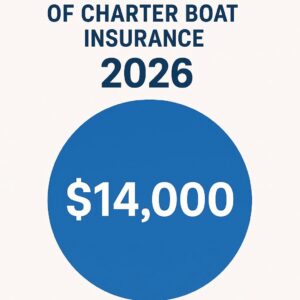
So, what is the Average Cost of Charter Boat Insurance 2026? While every policy is unique (and we will dive deep into the “why”), you can expect to pay anywhere from $2,500 to $8,500 per year for modest powerboats, while high-value vessels or luxury charters can easily see premiums ranging from $10,000 to over $30,000 annually.
But a number without context is just a number. In this guide, we aren’t just throwing out digits. We are going to break down exactly what influences that price, how to lower your costs, and what you need to look for in a policy to ensure your business stays afloat.
Let’s drop the anchor and get started.
Why 2026 is a Unique Year for Marine Insurance
Before we dive into the tables and lists, it is important to understand the landscape. Insurance isn’t static; it ebbs and flows just like the tide.
In 2026, we are seeing a “hard market” continue. This means insurers are being more cautious. Why? A few reasons:
-
Increased Vessel Values: New boats are more expensive to build, meaning if you total one, the payout is higher.
-
Supply Chain Issues: Parts and labor are still recovering globally, making repairs more costly.
-
Weather Events: Let’s be honest, hurricane seasons have been brutal. Insurers in high-risk areas (Florida, the Gulf, the Caribbean) are recalculating risk aggressively.
Understanding this context helps explain why the “average” might feel a bit higher than you remember.
The Real Numbers: Average Cost Breakdown for 2026
To give you a realistic picture, we have to segment the market. Insuring a 22-foot bay boat for six-pack fishing trips is a completely different ballgame than insuring a 50-foot Hatteras for overnight luxury charters.
Below is a table estimating annual premiums based on vessel type and operation. Please note these are averages based on market data for 2026. Your actual quote may vary.
| Vessel Type | Length | Charter Operation | Average Annual Premium (2026) | Key Underwriting Factors |
|---|---|---|---|---|
| Small Fishing Boat | Under 26 ft | 6-Pack (up to 6 passengers) | $2,500 – $4,000 | Outboard vs. Inboard, navigational area, captain’s experience. |
| Center Console | 26 – 35 ft | 6-Pack / Dive Charter | $3,800 – $6,500 | Speed of vessel, offshore vs. inshore, safety equipment. |
| Express Cruiser | 30 – 40 ft | Day Charters / Fishing | $5,000 – $9,000 | Horsepower, cruising radius, claims history. |
| Sailing Catamaran | 40 – 50 ft | Day / Overnight Charters | $7,000 – $15,000 | Charter crew experience, sailing grounds, passenger count. |
| Luxury Motor Yacht | 50+ ft | Overnight / Corporate | $12,000 – $30,000+ | High-value equipment, navigation and communication tech, security. |
Important Note: These figures generally include the core coverages: Hull (physical damage), Protection & Indemnity (P&I / liability), and usually some level of Charterholder’s Legal Liability. They do not include additional endorsements like crew medical or fishing equipment riders, which we will discuss later.
The Big Four: What Drives Your Insurance Cost?
So, why does one captain pay $3,000 and another pays $15,000 for similar boats? It boils down to how insurers perceive risk. Here are the main levers they pull when calculating your premium.
1. The Vessel Itself (The Hull)
This is the most obvious factor. Insurers look at:
-
Value: A boat insured for $500,000 costs more to replace than one insured for $100,000.
-
Age: A brand new boat might get a small discount for modern safety features, but a 20-year-old boat might cost more to insure because wooden structures or older wiring present a fire/sinking risk.
-
Type: Go-fast boats with 600 horsepower are statistically riskier than a trawler puttering along at 8 knots.
-
Propulsion: Outboards are generally cheaper to repair/replace than inboard engines or stern drives, which can positively influence premiums.
2. Your Operation (The Business)
This is where charter insurance differs significantly from private pleasure insurance.
-
Passenger Count: Carrying 6 passengers (a “6-pack” charter) is lower risk than carrying 20+ passengers (a “Subchapter T” vessel), which involves stricter Coast Guard regulations and higher liability limits.
-
Trade: Fishing charters often have higher rates than sightseeing tours. Why? Because fishing involves moving around a boat with hooks, gaffs, and heavy gear, increasing the chance of passenger injury.
-
Area of Operation: Staying in protected bays and inland waters is cheap. Running 50 miles offshore for bluewater fishing, or operating in known hurricane alleys, will increase your premium significantly.
3. The Captain and Crew (The Experience)
Insurance companies love proven experience. They are betting on you not having an accident.
-
Licensing: Holding a valid USCG Master’s License is non-negotiable for legal charters, and it lowers your rate compared to an unlicensed operator (who shouldn’t be chartering anyway).
-
Sea Time: An insurer will want to know how many years you have been on the water. A captain with 20 years of experience is a much safer bet than someone who just bought their first boat last year.
-
Claims History: This is a big one. One claim might not hurt you too badly, but two or three in five years? You are looking at a hefty surcharge, or even a denial of coverage.
4. The Coverage Limits (The Protection)
Simply put, the more protection you buy, the more it costs.
-
Liability Limits: Most charter operators carry at least $500,000 or $1,000,000 in liability. If you are running a large vessel or operate near high-value assets (like expensive dock infrastructure), you might need $2M or $3M. The jump from $500k to $1M is usually minimal, but going higher can add up.
-
Deductibles: This is your “skin in the game.” A higher deductible (say $2,500 or $5,000) lowers your premium. A lower deductible ($1,000 or $500) raises it.
Breaking Down the Policy: What Are You Actually Paying For?
When you pay that premium, you aren’t buying just one thing. You are buying a bundle of protections. Understanding this bundle helps you see where your money is going.
-
Hull Insurance: This is the physical damage coverage. If the boat sinks, burns, or hits a rock, this pays to fix or replace it (minus your deductible).
-
Protection & Indemnity (P&I): This is your liability coverage. If a passenger gets injured and sues you, this covers legal fees and settlements. It is arguably the most important part of your policy.
-
Charterholder’s Legal Liability: This is a specialized coverage. If a charter client (the person renting the boat) damages your vessel through negligence, this covers you. Without it, you might have to sue your own client to recover costs.
-
Medical Payments: This covers minor medical expenses for guests, regardless of fault. It is a small coverage that helps keep small incidents from becoming big lawsuits.
-
Uninsured Boater: If you are hit by a boater who has no insurance (or not enough), this covers your damages and injuries.
7 Smart Ways to Lower Your Premium in 2026
Nobody wants to overpay. Here are realistic, actionable tips to bring that Average Cost of Charter Boat Insurance 2026 down for your specific operation.
-
Invest in Continuing Education: Go beyond your license. Take courses like “Sea School” refreshers, radar certification, or first aid training. Send the certificates to your insurer—it shows you are a professional committed to safety.
-
Bundle Your Policies: Do you own the boat personally and use it for charter? Do you own your home or car? Often, using the same insurer for multiple policies (personal auto, home, and the charter boat) can unlock a multi-policy discount.
-
Increase Your Deductible: If you have cash reserves, this is the simplest way to save. Raising your deductible from $1,000 to $2,500 can sometimes reduce your premium by 10-15%.
-
Showcase Your Safety Gear: Does your boat have a brand new EPIRB, a liferaft, and a full safety kit? Does it have fire suppression in the engine room? Make sure your insurer knows this. It reduces their risk.
-
Maintain a Clean Record: This is obvious, but worth stating. Defensive driving (or rather, defensive boating) pays off. One small fender bender at the dock can cost you thousands in increased premiums over the next five years.
-
Restrict Your Navigation: Be honest about where you go. If you mostly stay within 5 miles of the coast, don’t ask for a policy that covers you 50 miles out. Limiting your range limits the insurer’s risk.
-
Shop Around (But Wisely): Don’t just go for the cheapest quote. Insurance is about security. Get quotes from 3-5 brokers who specialize in marine insurance. They have access to different markets and can find the best fit.
“The biggest mistake new charter operators make is treating insurance like a commodity. They buy the cheapest policy, and only realize their mistake when a claim is denied. In 2026, working with a specialized marine broker isn’t a luxury; it’s a necessity for protecting your livelihood.” — Captain Sarah Jenkins, Marine Insurance Advisor
Frequently Asked Questions (FAQ)
Q: Is charter boat insurance more expensive than regular boat insurance?
A: Yes, significantly. Charter insurance covers commercial risk. If a paying guest is injured, the liability exposure is much higher than if your friend falls on your private boat. Expect to pay roughly 30% to 100% more for a charter policy compared to a private policy on the same vessel.
Q: Does the average cost change based on location?
A: Absolutely. A charter operating in the protected waters of the Chesapeake Bay will generally have a lower average cost than one operating in South Florida or the Bahamas, where hurricane risk and running times are higher.
Q: I have a clean driving record, but the boat is old. Will that affect my rate?
A: Yes, the boat’s condition is just as important as your record. An insurer may require a marine survey (an inspection) for vessels over a certain age, typically 20-25 years. The surveyor will check the hull, machinery, and electrical systems. If they find issues, your rate will go up, or coverage may be denied until repairs are made.
Q: Can I get a discount if I only run charters for half the year?
A: Sometimes, yes. If you lay the boat up for the winter (out of the water) and have a “laying up” period in your policy, you can save money because the risk of a claim during those months is nearly zero.
Q: What is a “6-pack” license?
A: It refers to a USCG Operator of Uninspected Passenger Vessels (OUPV) license. It allows you to carry up to 6 paying passengers. This is the most common type of charter operation for small to medium-sized boats.
Additional Resource: Where to Find Help
Navigating the insurance market can be tricky. While I cannot endorse a specific company, I highly recommend seeking out a marine insurance broker rather than going directly to a single carrier.
-
Why a Broker? Brokers work for you. They shop your risk to dozens of insurance companies (underwriters) to find the best coverage at the best price. They also help you understand the fine print, which is invaluable when a claim happens.
-
How to find one: Search for “independent marine insurance broker” followed by your state or region. Look for members of the American Boat & Yacht Council (ABYC) or those who specialize in commercial marine.
Conclusion
Understanding the Average Cost of Charter Boat Insurance 2026 is about more than just finding a number; it is about understanding the value of your business. While rates are rising due to market pressures, knowledge is your best tool. By focusing on safety, experience, and working with a specialized broker, you can secure the coverage you need at a price that keeps your dream viable. Protect your asset, protect your guests, and get back to what matters most: creating unforgettable experiences on the water.