Owning a static caravan is a wonderful dream. It is your private escape. A place where family memories are made, weekend getaways are always on the calendar, and you have a home away from home nestled in nature or by the sea.
But just like your main house, your caravan needs protection. Storms, floods, fires, and even accidental damage can turn your happy place into a stressful problem. That is where static caravan insurance comes in.
However, finding the right policy can feel tricky. How much should you pay? What does “average” even mean? Why is my neighbor paying less than me?
Do not worry. This guide is here to help. We will break down the real average costs of static caravan insurance. We will explore the key factors that decide your final price. By the end, you will know exactly what to look for and how to get the best value for your money.
Let us get started.
What is Static Caravan Insurance?
First, let us be clear about what we are discussing. Static caravan insurance is a specialized type of policy. It is designed for holiday homes that stay in one place. You do not tow them around like a tourer.
This insurance covers the physical structure of your caravan. It also covers the contents inside. And most importantly, it covers you for specific risks that come with owning a holiday home.
These risks are unique. Your caravan might be empty for weeks during the winter. It might be located in a wooded area prone to falling branches. Or it might be near the coast, exposed to salty sea air and high winds.
A standard home insurance policy will not cover these things. You need a policy built for the job.
What Does It Typically Cover?
A good static caravan insurance policy usually includes several core protections. Let us look at the main ones:
-
The Structure: This covers the cost to repair or rebuild your caravan if it is damaged. This includes damage from fire, storms, floods, vandalism, or impact (like a tree falling on it).
-
Contents Insurance: This covers your belongings inside the caravan. Think of furniture, TVs, kitchen appliances, bedding, and personal items like clothes and books.
-
Public Liability: This is crucial. It covers you if someone else (a guest or a delivery person) has an accident while on your plot and decides to sue you. For example, if a visitor trips on your step and breaks their arm. Public liability covers your legal fees and compensation costs. Standard limits are usually around £1 million to £2 million.
-
Accidental Damage: This is often an optional extra. It covers unexpected mishaps like spilling red wine on the carpet, putting your foot through a window, or accidentally damaging the caravan while moving furniture.
-
Loss of Use: If your caravan is damaged and cannot be used, this covers your losses. It might pay for you to stay in alternative accommodation. It could also cover the loss of income if you rent your caravan out to holidaymakers.
-
Emergency Repairs: This covers the cost of urgent repairs to prevent further damage, like fixing a broken window or a leaking pipe quickly.
The Average Cost of Static Caravan Insurance
Now for the question everyone asks: “How much will it cost me?”
The honest answer is that it varies widely. There is no single price. However, we can look at industry averages to give you a realistic idea.
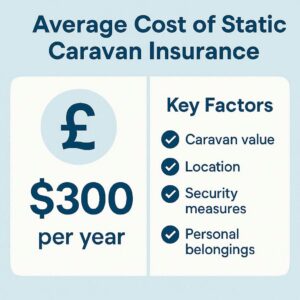
For a standard static caravan in the UK, you can expect to pay somewhere between £150 and £500 per year.
That is a broad range. Let us break it down further to show what you get for your money.
A Closer Look at the Numbers
To make this clearer, here is a table showing typical premium ranges based on different types of caravans and locations.
| Caravan Type / Scenario | Average Annual Premium | What This Usually Includes |
|---|---|---|
| Small, Older Caravan | £150 – £250 | Basic site location (low flood risk). Lower rebuild value. Standard cover with higher excess. No accidental damage. |
| Standard Family Caravan | £250 – £400 | Medium to high specification. Good park location. Contents cover included. Public liability (£2m). May include accidental damage. |
| Large, Luxury Caravan | £400 – £600+ | High rebuild value. Prime location (coastal, scenic). Extensive contents. Accidental damage included. Higher liability limits. |
| Caravan Used for Rentals | £500 – £1,000+ | Business use cover. Higher public liability. Loss of income protection. More comprehensive coverage for multiple guests. |
| High-Risk Location | £400 – £800+ | Located in a flood zone or an area prone to high winds. Older site with non-standard access. |
Important Note: These are average estimates based on market data. Your actual quote could be lower or higher. The best way to know the real cost is to get personalized quotes from multiple insurers.
Key Factors That Influence Your Insurance Cost
Why do prices vary so much? Insurers look at many details when calculating your risk. They want to know how likely it is that you will make a claim. Here are the most important factors they consider.
1. The Location of Your Caravan
This is often the biggest factor. Where your caravan is parked matters a great deal.
-
Flood Risk: Is your park in a flood plain? Near a river or the coast? If so, your premium will be higher. Insurers look at historical flood data very closely.
-
Crime Rate: What is the crime rate in the local area? Parks in areas with higher theft or vandalism rates may see higher premiums.
-
Exposure to Elements: Is your caravan on an exposed cliff top or in a sheltered valley? Coastal locations face salt spray and stronger winds, which can cause wear and tear. Wooded areas have risks from falling trees.
-
Park Management: The quality of the park itself matters. A well-managed park with security gates, CCTV, and on-site staff is seen as lower risk than a remote, unmanaged site.
Quote from an Industry Expert:
“We always tell owners that location is king. A caravan in a low-risk, well-managed park in the Midlands could cost half as much to insure as an identical model on a windy cliff in Cornwall. It is all about the probability of a claim.” — Sarah Jenkins, Insurance Underwriter.
2. The Value and Age of Your Caravan
This makes intuitive sense. The more your caravan is worth, the more it would cost to replace. Therefore, the premium is higher.
-
Rebuild Value: This is not the price you paid for it. It is the estimated cost to rebuild it from scratch if it were completely destroyed. Insurers need this figure to set your coverage limit.
-
Age of the Caravan: Older caravans are often cheaper to insure because their rebuild value is lower. However, some insurers may have age limits. They might refuse to insure a caravan over a certain age (like 15 or 20 years) or may only offer “fire and theft” cover. Newer caravans cost more to insure but are easier to get comprehensive cover for.
-
Make and Model: Some brands are known for better build quality. A well-built, sturdy caravan might be slightly cheaper to insure than a lesser-known brand with a reputation for issues.
3. The Type of Cover You Choose
The level of protection you want directly affects the price. A basic policy is cheaper. A comprehensive policy costs more.
-
Basic Cover (Fire, Theft, Storm): This is the minimum. It protects you against major perils but not smaller, day-to-day accidents.
-
Comprehensive Cover: This includes everything in the basic policy, plus accidental damage and sometimes more. It offers peace of mind but comes with a higher premium.
-
Contents Cover: The amount of cover you choose for your belongings will adjust the price. If you have expensive items, you will need higher cover limits.
-
Public Liability Limit: A standard policy might offer £1 million in liability cover. You can often increase this to £2 million or £5 million for an extra cost.
4. How You Use Your Caravan
Do you use the caravan just for yourself and your family? Or do you rent it out to strangers?
-
Private Use Only: This is the cheapest option. The insurer assumes you will take good care of the property because it is your personal space.
-
Rental / Holiday Let: This increases the risk significantly. More people using the caravan means a higher chance of accidental damage, theft, or claims. You must tell your insurer if you rent out your caravan. If you do not, any claim you make could be rejected. Specialist landlord insurance for caravans exists, but it costs more.
-
Sub-letting: Some insurers also want to know if you let friends or family use it for free when you are not there. This is usually lower risk than commercial renting, but it is still good to check your policy.
5. Security Features
Insurers love security. Anything you do to protect your caravan from theft or vandalism can lower your premium.
-
Alarms: Does your caravan have a built-in alarm? Is it a recognized type (like one approved by the NCC – National Caravan Council)?
-
Locks: Are there strong locks on all doors and windows? Wheel clamps and hitch locks are also good signs of security.
-
Park Security: Is the park secured? Features like gates with codes, security lighting, and CCTV cameras all help reduce the risk of crime.
6. Your Claims History
Just like with car or home insurance, your personal history matters. If you have made claims on previous insurance policies, you are seen as a higher risk. This can increase your premium. A clean claims history, on the other hand, helps you get a better price.
7. The Excess You Choose
The excess is the amount you agree to pay towards a claim. For example, if you have a £200 excess and a claim for £1,000, you pay the first £200 and the insurer pays the remaining £800.
-
Choosing a Higher Excess: If you agree to pay a higher excess (say £300 instead of £100), your annual premium will usually be lower. You are taking on more of the risk yourself.
-
Choosing a Lower Excess: This gives you a higher premium, but you pay less if you need to make a claim.
How to Save Money on Static Caravan Insurance
Insurance is a necessary cost, but that does not mean you have to overpay. Here are some practical, realistic ways to keep your premium down.
1. Shop Around and Compare
Do not just accept the first quote you get. Use comparison websites. Speak to specialist caravan brokers. Get at least three or four quotes. Policies can vary hugely in price and coverage.
2. Improve Your Security
Invest in good security measures. Fit an alarm. Use strong locks. If your park offers secure storage for items like bikes, use it. Tell your insurer about these measures. They may offer a discount.
3. Increase Your Excess
If you can afford to pay a bit more in the event of a claim, consider raising your voluntary excess. This can make a noticeable difference to your annual cost.
4. Pay Annually, Not Monthly
Insurers often charge interest if you pay monthly. If you can afford to pay the whole premium in one go, you will usually save money.
5. Avoid Unnecessary Claims
Think carefully before claiming for small amounts. If you have a minor issue that costs £150 to fix, but your excess is £100 and your premium will rise next year, it might be cheaper to pay for the repair yourself. Use your insurance for big, unexpected losses only.
6. Keep Your Caravan Well Maintained
A well-maintained caravan is less likely to suffer damage. Check for leaks regularly. Service the gas and electrical systems. Keep the exterior in good condition. This shows the insurer you are a responsible owner.
7. Check for Discounts
Some insurers offer discounts for certain groups. For example, members of the Caravan and Motorhome Club (CAMC) or the Caravan Club. If you belong to an organization, ask if they have a partnered insurer.
What Is Usually NOT Covered?
It is just as important to know what your policy will not pay for. Here are common exclusions.
-
General Wear and Tear: Insurers will not pay for things that have simply gotten old or worn out. Faded upholstery, rusty fittings, or a worn-out mattress are your responsibility.
-
Gradual Damage: Damage that happens slowly over time is not covered. This includes things like rot, damp, mildew, or corrosion.
-
Storm Damage to Fences or Awnings: Many policies have limits on what they pay for external items like awnings, windbreakers, or garden furniture.
-
Damage During Transit: This policy is for a static caravan. If you move it to a different site, you need separate transit insurance for the move itself.
-
Loss of Keys: Some policies may cover this, but many do not. Check your policy details.
-
Unoccupied Periods: Your policy may have clauses about the caravan being unoccupied, especially in winter. You might need to drain the water system or have someone check on it weekly. If you do not follow these rules and a claim happens (like a burst pipe), you may not be covered.
Winterization: A Crucial Step
In the UK, many static caravans are not used during the coldest winter months. Insurers are very concerned about this. An empty caravan with water in the pipes is a high risk for freezing and burst pipes.
Most insurance policies have specific winter conditions. These often include:
-
Draining Down: You must drain all water from the system, including the boiler, pipes, and toilet.
-
Turning Off: You must turn off the water supply at the main stopcock.
-
Regular Visits: You, or someone you trust, must visit the caravan every few weeks to check for any issues like leaks or vandalism.
-
Heating Settings: Some policies allow you to leave the heating on a low, frost-protection setting. Others require it to be completely off.
Important Note: Always read your policy’s “winterization” or “unoccupied” section carefully. Failing to follow these rules is one of the most common reasons for claims being rejected.
Understanding Policy Limits and Endorsements
Insurance documents can be full of confusing terms. Here are two you should always look for.
Policy Limits
These are the maximum amounts the insurer will pay for a specific type of claim.
-
Single Article Limit: This is the maximum they will pay for one single item. For example, your policy might cover contents up to £10,000, but with a “single article limit” of £1,000. If your £2,000 TV is stolen, you would only get £1,000 for it.
-
Alternative Accommodation Limit: This is the maximum they will pay if you need to stay somewhere else while your caravan is being repaired.
-
Loss of Rent Limit: If you rent your caravan out, this is the maximum income they will cover if you cannot rent it due to damage.
Endorsements
Endorsements are changes to the standard policy. They can add or remove cover.
-
Restrictive Endorsements: These remove cover for something specific. For example, they might exclude storm damage to the roof if your caravan is in a very exposed location.
-
Additional Cover Endorsements: These add extra protection. For example, you might add an endorsement to cover your valuable pedal bikes or fishing equipment stored in the caravan.
Always read the endorsements. They tell you the exact details of what is and is not covered for your specific situation.
The Claims Process: What to Expect
Hopefully, you will never need to claim. But if you do, it helps to know what happens.
-
Contact Your Insurer Immediately: As soon as it is safe, call your insurer. Most have a 24/7 helpline for emergencies.
-
Provide Details: They will ask you what happened, when it happened, and the extent of the damage. Have your policy number ready.
-
Mitigate Further Damage: You have a duty to protect your caravan from more harm. If a window is broken, you should board it up temporarily. Keep the receipts for any materials you buy, as you can claim these back.
-
Gather Evidence: Take clear photos and videos of the damage. If it was a break-in, get the crime reference number from the police. If it was storm damage, note the date and time of the storm.
-
Surveyor Visit: The insurer may send a surveyor to assess the damage in person.
-
Settlement: Once the claim is approved, the insurer will arrange payment. This might be paid directly to a repair company or to you, minus your excess.
Conclusion
Finding the right static caravan insurance is about balance. It is about balancing cost with the cover you truly need. The average cost falls between £150 and £500, but your final price depends on your unique situation. Location, the age of your caravan, how you use it, and the security you have in place all play a major role. By understanding these key factors, you can make smart choices. You can find a policy that protects your holiday home without breaking the bank, giving you true peace of mind for every visit.
Frequently Asked Questions (FAQ)
1. Is static caravan insurance a legal requirement?
No, it is not a legal requirement like car insurance. However, most caravan parks will insist you have it as a condition of your site agreement. It is also highly recommended to protect your investment.
2. Can I use my home insurance for my static caravan?
No, you cannot. Standard home insurance is not designed for the specific risks associated with a holiday home, such as being unoccupied for long periods or being in a high-risk location.
3. What is the difference between new-for-old and market value cover?
New-for-old means that if your belongings or caravan are destroyed, the insurer will pay for a brand new replacement. Market value cover only pays what the item was worth just before it was damaged, which is much less. Most good policies offer new-for-old for the caravan structure.
4. My caravan is very old. Can I still get insurance?
Yes, but your options may be limited. Some specialist insurers offer policies for older caravans, but they may only provide “fire and theft” cover rather than comprehensive protection. They may also have an upper age limit.
5. Do I need to insure the contents separately?
Most static caravan insurance policies include contents cover as standard or as an optional add-on. You do not usually need a separate policy. Just make sure the level of contents cover is enough for all your belongings.
6. Will my premium go up if I make a claim?
It can do. Making a claim tells the insurer you are a higher risk. When you renew your policy, your premium may increase. This is why it is sometimes better not to claim for very small losses.