There is something undeniably thrilling about owning a quad bike. Whether you use it for serious agricultural work, as an essential tool on a building site, or purely for recreational weekend adventures across rugged terrain, your quad is a significant investment. But just like a car or a motorcycle, it comes with risks. Theft, accidents, and damage are all too common, which is why having the right insurance isn’t just a legal box to tick for many—it’s a financial necessity.
However, if you are currently shopping around for a policy, you have probably noticed one thing: prices vary wildly. You might have heard a friend say they pay £150 a year, while another complains their premium is closer to £400. So, what is the reality? What is the average quad bike insurance cost?
This guide is designed to give you a realistic and honest breakdown of those costs. We aren’t going to throw a single number at you and call it a day. Instead, we will explore the factors that push prices up and pull them down, compare different types of coverage, and give you the tools you need to find a policy that protects both your machine and your wallet.
By the end of this article, you will have a crystal-clear understanding of where your quad fits into the insurance landscape and exactly what you can expect to pay.
What is the Average Quad Bike Insurance Cost in the UK?
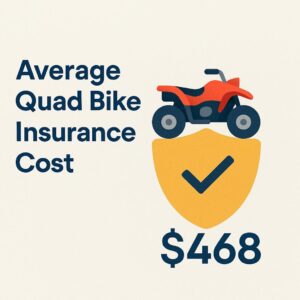
Let’s get straight to the point. If you were to blend every policy across the country—from a tiny 50cc youth quad locked in a shed to a high-performance 1000cc machine used for racing—the average quad bike insurance cost in the UK typically falls within the range of £150 to £350 per year.
However, relying on a single average figure can be misleading. It is much more useful to look at the cost based on how you use your vehicle. Your premium is directly tied to your risk profile, and usage is the biggest clue to that risk.
Here is a realistic breakdown of average annual premiums based on typical usage scenarios:
-
Agricultural Use (Low Risk): If your quad is used on a farm, has low annual mileage, and is kept in a secure barn, you represent a lower risk to insurers. Theft risk is lower if it is stored away from public roads, and damage risk is usually limited to the farm itself. You might be looking at the lower end of the scale, typically £120 – £200.
-
Agricultural Use (Standard Risk): This is the “standard” farmer. You use the quad for daily tasks like checking livestock or moving feed. It might be left in fields during the day but stored securely at night. You will likely pay in the £180 – £280 range.
-
Recreational / Leisure Use: This category is broad. It covers everyone from weekend hobbyists to hunting enthusiasts. Because these quads are often trailered to different locations and ridden in public areas (like forests or green lanes), the risk of accidents and theft can be slightly higher. Expect to pay between £200 and £350.
-
Commercial Use (Construction/Site Work): Using a quad on a building site or for estate management exposes it to different hazards, like falling debris or rough, debris-strewn terrain. This can push premiums into the £250 – £400 range.
-
High-Performance / Sports Quads: If you own a powerful machine designed for speed and you ride it hard, insurers see this as high risk. These bikes are more expensive to repair or replace, and the likelihood of a claim is higher. Premiums often start at £350 and can go well over £600.
Important Note: These figures are estimates. Your actual quote will depend on a unique combination of personal and vehicle-specific factors, which we will dive into next.
Key Factors That Influence Your Quad Bike Insurance Premium
Why do two people with seemingly similar quads get completely different insurance quotes? Insurers use a complex formula to assess risk. Understanding the ingredients in that formula is the first step to controlling your costs. Let’s break down the main factors that determine your final price.
1. Your Quad: The Machine Itself
The vehicle you own is the foundation of your insurance cost. Insurers look at it very closely.
-
Engine Size (CC): This is one of the biggest drivers of cost. A smaller engine (under 250cc) is cheaper to insure because it is less powerful and often used by younger or less experienced riders. As engine size increases, so does the potential for speed and therefore, the risk of a serious accident. A 500cc+ machine will command a significantly higher premium.
-
Value of the Quad: This is simple math. If your quad is worth £10,000, the insurer is on the hook for a lot more money if it is stolen or written off than if it is worth £2,000. The higher the value, the higher the premium to cover that potential payout.
-
Modifications: Have you added a powerful winch? Upgraded the suspension? Fitted aftermarket alloy wheels? Any modification that deviates from the manufacturer’s standard specification increases the bike’s value and potentially its performance or appeal to thieves. You must declare all modifications. Failure to do so could invalidate your policy. Modified quads almost always cost more to insure.
-
Age of the Quad: A brand-new quad will cost more to insure than a 15-year-old workhorse. This is because the cost of repair or replacement is much higher for a newer model. Depreciation works in your favor here, as an older quad has a lower market value.
2. Who You Are: The Rider’s Profile
Your personal details are just as important as the quad’s. Insurers build a profile of you to predict how likely you are to make a claim.
-
Your Age: Statistics show that younger riders (especially under 21) and younger drivers are involved in more accidents. Consequently, they face the highest premiums. As you gain experience and age, your insurance costs should gradually decrease. Riders over 50 with a clean record often enjoy the most competitive rates.
-
Your Driving and Riding Experience: A clean driving license is gold. Having years of no-claims bonus (NCB) on a car or motorcycle can sometimes be used to reduce your quad premium, though not all insurers offer this. If you have previous convictions for speeding or other driving offenses, be prepared for higher quotes.
-
Claims History: If you have made claims on any insurance policy in the past (car, home, etc.), you will be seen as a higher risk. Insurers will want to know about any claims in the last 3-5 years.
-
Where You Live: Your postcode is a powerful predictor of risk. If you live in a remote rural area with low crime, your premium will likely be lower than someone living in a suburban area with higher rates of vehicle theft. However, even within rural areas, postcodes with specific theft hotspots can see higher rates.
3. How and Where You Use It
This is about the “operational” risk associated with your quad.
-
Security and Storage: This is one of the few areas where you have direct, immediate control. Where do you keep your quad overnight?
-
Secure, Locked Garage/Barn: This is the best-case scenario and will lower your premium.
-
Locked Shed/Outbuilding: Good, as long as the building itself is secure.
-
Driveway with a Chain: Acceptable, but you will need a high-quality, Thatcham-approved ground anchor and chain.
-
Open Field: This is the highest risk. Insuring a quad that is not kept in a secure building overnight can be difficult and expensive. Some insurers may even refuse coverage.
-
-
Annual Mileage: The more you ride, the more opportunities there are for something to go wrong. A low annual mileage (e.g., under 1,000 miles) will generally result in a lower premium than an unlimited mileage policy.
-
Type of Use: As we saw in our average cost breakdown, declaring your quad for “social, domestic, and pleasure” use is different from “agricultural” or “commercial” use. Be honest about how you use the machine. Lying about usage to get a cheaper premium is a form of fraud called “fronting” and will lead to a claim being rejected.
Types of Quad Bike Insurance Coverage
Before you can understand the cost, you need to understand what you are buying. Not all policies are created equal. Here are the main levels of coverage available.
Third Party Only (TPO)
This is the minimum legal level of insurance if you use your quad on public roads. It covers you for damage or injury you cause to other people, their property, or their vehicles. It does not cover any damage to your own quad, no matter who is at fault. It also doesn’t cover fire or theft.
-
Cost: The cheapest option.
-
Best for: Very old quads with a low market value, where the cost of comprehensive insurance might be more than the bike is worth.
Third Party, Fire and Theft (TPFT)
This is a step up from TPO. It provides the same cover for damage you cause to others, but it also covers your quad if it is stolen or damaged by fire.
-
Cost: More expensive than TPO, but generally more affordable than fully comprehensive.
-
Best for: Riders who are worried about their quad being stolen, which is a very common risk for these vehicles, especially if stored in less secure locations.
Fully Comprehensive
This is the highest level of cover. It includes everything from TPFT plus it covers the cost of damage to your own quad, regardless of who caused the accident. It often includes additional benefits like personal accident cover, legal expenses, and cover for your protective clothing.
-
Cost: The most expensive upfront cost.
-
Best for: Most quad owners. The price difference between TPFT and Fully Comprehensive is often surprisingly small. Given the relatively low cost gap and the high value of a quad, it is usually the most sensible choice. It gives you total peace of mind.
Top Tip: Always get a quote for Fully Comprehensive. You might find it is only £20-£30 more than TPFT. For that small extra amount, you get total protection for your machine.
Quad Bike Insurance Comparison Table
To help you visualize how these factors interact, here is a comparative table showing how different scenarios might affect your premium.
| Rider Profile | The Quad | Usage & Security | Estimated Annual Premium |
|---|---|---|---|
| Young Farmer (Age 19) | 5-year-old 250cc Utility | Agricultural use. Stored in a secure farm building. 3 years no-claims on a tractor. | £280 – £400 |
| Recreational Rider (Age 45) | 2-year-old 500cc Sports Quad | Leisure use. Kept in a locked garage with an alarm. 1,500 miles/year. Clean driving license. | £220 – £300 |
| Estate Manager (Age 38) | New 800cc Utility with winch | Commercial use on sites. Stored in a locked compound. 5 years no-claims on a van. | £320 – £450 |
| Hobby Farmer (Age 60) | 12-year-old 300cc Utility | Agricultural use. Kept in an open barn. Low mileage. | £120 – £180 |
| Young Enthusiast (Age 22) | 450cc Sports Quad | Leisure use. Stored on a driveway with a chain. 1 speeding conviction. | £500 – £800+ |
Note: These are illustrative examples for comparison purposes only.
How to Get the Best Price on Your Quad Insurance
Armed with the knowledge of what affects your premium, you can now take proactive steps to get the best possible deal. Here is a practical checklist to follow.
1. Shop Around and Compare
Never, ever accept the first renewal quote you receive. The insurance market is competitive, and loyalty is rarely rewarded. Use comparison websites, but also go direct to specialist insurers who understand quads (like NFU Mutual, Carole Nash, or Adrian Flux). These specialists often have a better understanding of agricultural and leisure use than a standard high-street insurer.
2. Improve Your Security
This is your most powerful tool. If you don’t have a locked garage or barn, invest in one. If that’s not possible, buy the best security you can afford.
-
Invest in a Thatcham-approved ground anchor and a heavy-duty chain.
-
Use an approved disc lock.
-
Consider a trackable GPS device.
-
Tell your insurer about every security measure you take. It can directly lower your premium.
3. Increase Your Voluntary Excess
The excess is the amount you agree to pay towards a claim. The compulsory excess is set by the insurer. The voluntary excess is an amount you choose to add on top. By agreeing to pay a higher voluntary excess (e.g., £250 instead of £100), you are taking on more of the risk, which lowers the insurer’s risk and therefore lowers your premium.
-
Warning: Only set an excess that you could comfortably afford to pay if you had an accident tomorrow.
4. Consider Your No Claims Bonus (NCB) Protection
If you have built up several years of NCB, you can often pay a little extra to protect it. This means you can make one or two claims without losing your hard-earned discount. While this adds a small cost to your premium now, it can save you a fortune in the long run if you have an accident.
5. Pay Annually, Not Monthly
Insurers often charge interest (sometimes as high as 20-30% APR) if you spread the cost over monthly installments. If you can afford to pay for the whole year in one lump sum, you will almost always pay less overall.
Common Mistakes to Avoid When Buying Insurance
-
Underestimating Your Mileage: Be realistic. If you say you do 500 miles a year but actually do 1,500, you could have a problem if you need to claim.
-
Forgetting to Declare Mods: That winch you fitted last summer? It’s a modification. If you don’t tell your insurer and it’s involved in a claim (e.g., the winch causes damage in an accident), your entire policy could be void.
-
Lying About Storage: This is a big one. If you tell the insurer the quad is in a locked shed, but it’s actually parked in a field, and it gets stolen, your claim will be rejected immediately. You will lose your quad and your premium.
-
Assuming Road Use is Included: Many cheap policies only cover you for off-road use. If you ride on public roads, even for 100 meters, you must have road risk insurance. Check your policy document carefully.
Crucial Advice: Always read the policy wording, not just the summary. The summary tells you the good bits. The full wording tells you the exclusions and the small print. Know exactly what you are—and aren’t—covered for.
Frequently Asked Questions (FAQ)
Q: Is quad bike insurance a legal requirement?
A: Yes, if you use your quad on public roads, you are legally required to have at least Third Party insurance. If you only ride on private land with the landowner’s permission, insurance is not a legal requirement, but it is highly recommended to protect yourself financially.
Q: Can I ride a quad bike on a car licence?
A: It depends on your age and the type of quad. In the UK, if you have a full car driving licence (Category B) obtained before 2013, you can usually ride a quad bike that weighs more than 350kg. If you passed after 2013, you may need to take additional tests. Always check the DVLA guidelines.
Q: Does my car no-claims bonus count towards my quad insurance?
A: Some, but not all, insurers will honor a car or motorcycle no-claims bonus. Specialist insurers are more likely to do this. It is always worth asking, as it could significantly reduce your premium.
Q: What is the average cost to insure a quad bike for a 17-year-old?
A: Unfortunately, it is high. Due to their age and inexperience, a 17-year-old can expect to pay anywhere from £600 to over £1,200 per year for a basic quad, depending on the engine size and security. Adding a parent as a named rider can sometimes help reduce the cost.
Q: Does home insurance cover my quad bike?
A: Generally, no. Standard home insurance policies have very low limits for “personal possessions” away from the home, and they rarely cover vehicles. A quad bike requires a specific, dedicated vehicle insurance policy.
Additional Resources
For the most up-to-date legal requirements for driving a quad bike in the UK, you should always refer to the official government source.
-
[Link to the official .gov.uk guide on quad bikes / all-terrain vehicles]
Conclusion
Finding the right quad bike insurance doesn’t have to be a headache. The average cost ranges from £150 to £350, but your final price is a unique calculation based on your machine, your personal profile, and how you use it. By investing in good security, comparing quotes from specialist insurers, and being honest about your circumstances, you can secure the coverage you need at a price that fits your budget. Remember, the cheapest policy isn’t always the best—the right policy is the one that pays out when you need it most.