If you are reading this, chances are you either already enjoy the tranquility of park home living, or you are about to embark on that journey. Park homes, often called mobile homes or manufactured homes, offer a fantastic lifestyle. They provide a sense of community, lower maintenance living, and often place you in some of the most beautiful corners of the country.
However, insuring a park home is a little different from covering a standard brick-and-mortar house. It sits in a unique category, and the insurance market for it reacts to different trends. As we move through 2026, one of the biggest questions on everyone’s mind is: “What is this going to cost me?”
You want honest, realistic numbers, not just vague estimates. You want to know what drives those costs up and, more importantly, how to bring them down.
In this guide, we’re going to strip away the jargon. We’ll look at the average costs you can expect to see in 2026, the factors that influence your premium, and exactly what you should be looking for in a policy. Consider this your friendly, one-stop resource for making sure your home and your wallet are both protected.
Understanding Park Home Insurance in 2026
Before we dive into the dollars and cents, it helps to understand exactly what we’re talking about. Park home insurance isn’t just a standard home insurance policy with a different label. It is a specialized product designed for the specific risks associated with manufactured homes.
What Makes It Different from Standard Home Insurance?
Think of it this way: a standard house is usually built on-site and is designed to last for a century or more. A park home is typically built in a factory and transported to its location. This fundamental difference changes the risk profile.
-
Construction and Materials: Park homes are often built using different materials and methods compared to traditional houses. Insurers need to understand these specific builds to assess risk accurately.
-
Mobility: While most park homes are permanently sited, the fact that they could be moved (and sometimes are) introduces a different set of logistical considerations.
-
Location, Location, Location: Park homes are almost always located on managed parks. The quality of the park, its management, and its location (specifically regarding flood risk) are massive factors in your insurance cost. You aren’t just insuring a building; you are insuring a building in a specific environment.
-
Weather Vulnerability: Generally speaking, park homes can be more susceptible to certain types of weather damage, like high winds and storms, than a traditional brick house. This is a key factor insurers look at.
Why 2026 Costs Are Shifting
You might have noticed that prices for everything seem to be on the move, and insurance is no different. Several trends are shaping the market in 2026.
-
The Changing Climate: This is the big one. Insurers are paying very close attention to weather patterns. An increase in named storms and flooding events in recent years means that insurers are reassessing risk, particularly for homes in coastal or flood-prone areas. This directly influences premiums.
-
Material and Labor Costs: If your park home needs repairs after a storm, the cost of timber, specialist cladding, and the skilled labor to fit it has risen. Insurers factor the potential cost of rebuilding or repairing your home into your premium. If repairs are more expensive, premiums follow suit.
-
Build Standards: Modern park homes built to the latest British Standard (BS 3632) are often viewed more favorably by insurers because they are built for year-round habitation and are generally more robust. Older homes, while still charming, might carry a slightly higher premium due to their age and construction.
-
The Reinsurance Market: Behind the scenes, your insurance company buys its own insurance to cover the big risks (like a massive storm hitting hundreds of homes). The global cost of this “reinsurance” has been increasing, and those costs are passed down to you.
Average Cost of Park Home Insurance in 2026
Okay, let’s get to the heart of it. What are you actually likely to pay in 2026?
It is crucial to be honest here: there is no single price. Your premium will depend on a unique mix of your home, your location, and your circumstances. However, by looking at market data and speaking with industry insiders, we can paint a very realistic picture of the current landscape.
The National Picture: A Realistic Range
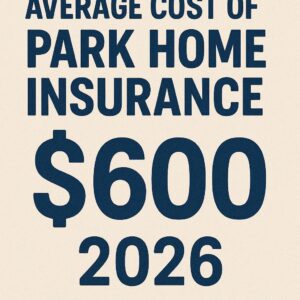
As a broad starting point, most park home owners in the UK can expect to pay somewhere between £250 and £800 per year for their insurance in 2026.
That is quite a wide range, so let’s break it down into more typical scenarios.
-
The “Lower Risk” Policy (£250 – £400):
This bracket is for park homes that tick all the right boxes. You likely own a newer home (less than 15-20 years old) built to a high standard. It is located on a well-managed, private park that is not in a high-risk flood zone. It is your permanent residence, and you have a good claims history. This is the baseline for a solid, competitively priced policy. -
The “Standard” Policy (£400 – £600):
This is where the majority of homeowners will likely find themselves. Your home might be a bit older but is still in great condition. The park is well-maintained, but perhaps it’s in an area with a moderate storm or flood risk. You have the standard level of contents cover. This is a realistic “middle ground” for a comprehensive policy with a reputable insurer. -
The “Higher Risk” or “Comprehensive” Policy (£600 – £1,000+):
This could apply for a few different reasons. Your home might be located in an area with a known, significant flood risk. It could be an older model that an insurer views as more susceptible to damage. Alternatively, you might simply be choosing a policy with extremely high sums insured for valuable contents, or one that includes extras like accidental damage cover as standard. This range reflects higher risk or higher coverage needs.
A Quick Look at the Numbers
To make this even clearer, let’s look at a table that puts these scenarios side-by-side. Remember, these are illustrative examples, not guaranteed quotes, but they represent what you might find in the 2026 market.
| Scenario | Park Home Type & Location | Typical Coverage | Estimated Annual Premium (2026) |
|---|---|---|---|
| The Prudent Owner | 5-year-old home on a well-managed, low-risk inland park. | Buildings & Contents (£40k/£30k), Public Liability. | £280 – £380 |
| The Average Family | 15-year-old home on a standard residential park. Slight flood risk from nearby river. | Buildings & Contents (£70k/£40k), Liability, Alternative Accommodation. | £450 – £550 |
| The Coastal Dweller | 10-year-old home on a popular seaside park, exposed to coastal winds. | Buildings & Contents (£60k/£35k), Liability, Storm & Flood cover. | £600 – £750 |
| The Vintage Model | 30-year-old home, lovingly maintained, on a scenic rural park. | Buildings & Contents (£35k/£20k), Liability. | £500 – £700 (due to age) |
| The All-Singing, All-Dancing | Newer, high-spec home with valuable contents, including accidental damage and legal expenses cover. | High-value Buildings & Contents (£100k/£60k), Accidental Damage, Legal Cover. | £750 – £1,000+ |
An Important Note: These figures are averages and estimates based on market trends for 2026. The best way to know the exact cost for you is to speak with specialist insurers and get personalized quotes. Do not rely solely on a table; use it as a guide for what to expect.
Key Factors That Influence Your Premium
So, why did the insurer come back with a quote of £350 when your neighbor in the park is paying £500? It all comes down to how the insurer views your specific risk. Let’s look at the main ingredients that go into that calculation.
1. Location, Location, Location
This is arguably the most important factor.
-
Flood Risk: If your park is near a river, the coast, or in an area with a history of flooding, your premium will be higher. Insurers use sophisticated flood maps to assess this.
-
Crime Rate: Parks in areas with higher local crime rates might see slightly higher premiums, though most parks are secure communities.
-
Exposure: Is your home sheltered by trees or other buildings, or is it sitting on an exposed hilltop where it bears the full force of the wind? Exposure matters.
2. The Age and Condition of Your Home
Just like with cars, newer often means cheaper to insure.
-
Build Standard: Homes built to the BS 3632 standard are built for permanent living and are generally more robust, which insurers like.
-
Wear and Tear: An older home might have older electrics, plumbing, or roofing. Insurers may view these as more likely to cause a problem (like a fire from faulty wiring).
-
Maintenance: A well-maintained home, with up-to-date fire alarms and in good structural condition, tells the insurer you are a responsible owner, which can be reflected in your price.
3. Sums Insured: Buildings and Contents
This is a big one. The “sum insured” is the maximum amount your insurer will pay out.
-
Buildings Cover: This is the cost to totally rebuild your home from scratch if it is destroyed. This is not the same as the market value you could sell it for. You need to ensure this figure is accurate. Underinsuring is a common and risky mistake.
-
Contents Cover: This is the value of everything inside your home—furniture, TV, clothes, kitchenware. Do a proper inventory. If you have high-value items like jewelry or expensive art, you may need to list them separately. The higher your sums insured, the higher your premium will be.
4. Security and Safety Measures
Insurers love a home that is hard to break into and less likely to have a fire.
-
Locks: Fitting high-quality British Standard locks on all doors and windows can make a difference.
-
Alarms: A monitored burglar alarm or a fire alarm system linked to a central monitoring station can lead to discounts.
-
Park Security: Is the park itself secure? Features like a locked gate with a code or fob entry system reduce the risk of casual crime.
5. Your Personal Claims History
This is about you as an individual.
-
Previous Claims: Have you made claims on previous insurance policies? A history of claims (especially for escape of water or storm damage) will suggest to a new insurer that you might be more likely to claim again, increasing your risk profile.
-
No Claims Discount: Many park home insurers offer a No Claims Discount (NCD). This can build up over time, sometimes to as much as 20-30% off your premium, if you remain claim-free.
What Does Park Home Insurance Actually Cover?
When you buy a policy, you are buying a package of protections. It is vital to know what is in that package so you aren’t surprised when you need to use it.
Core Cover: The Essentials
Most standard park home insurance policies will include these foundational elements.
-
Buildings Cover:
This is the backbone of the policy. It covers the physical structure of your home.-
What it covers: The walls, roof, floor, windows, doors, and permanent fixtures like your fitted kitchen and bathroom suite.
-
What it protects you from: It pays for repair or rebuilding costs if your home is damaged by insured events like fire, storm, flood, lightning, explosion, theft, or vandalism.
-
-
Contents Cover:
This covers the belongings you would take with you if you moved.-
What it covers: Your furniture, carpets, curtains, TVs, computers, clothing, kitchen appliances (like a microwave or kettle), and personal items.
-
What it protects you from: It covers the cost of replacing these items if they are damaged, destroyed, or stolen.
-
-
Public Liability Cover:
This is a crucial, often overlooked, part of the policy. It protects you financially if a visitor, such as a friend, a delivery driver, or a tradesperson, is injured while on your property and decides to sue you for compensation. It also covers you if you accidentally cause damage to someone else’s property. Legal defense costs can be huge, so this cover is essential.
Additional Covers: The “Nice to Haves”
These are optional extras or features often included in more comprehensive policies.
-
Accidental Damage:
This extends your cover to include “Oops!” moments. If you accidentally put your foot through the ceiling while in the loft, spill a can of paint on the carpet, or knock the TV off its stand, standard cover won’t pay out. Accidental damage cover adds this protection. -
Alternative Accommodation:
If your home is damaged so badly by an insured event (like a fire) that you cannot live in it, this cover pays for you to stay in a hotel, caravan, or rental property while repairs are carried out. This is a lifeline and prevents you from being left homeless and out of pocket. -
Loss of Rent:
If you rent out your park home and it becomes uninhabitable due to an insured event, this covers the loss of the rental income you would have received. -
Pedal Cycle Cover:
Many policies offer small sums for the theft of bicycles, either from your home or when you are out and about. This is handy for many park home residents who enjoy cycling. -
Home Emergency Cover:
This is for urgent situations that need fixing immediately. If your heating packs up in the middle of winter, your toilet blocks, or a pest infestation takes hold, you can call a 24/7 helpline to arrange for a tradesperson to come out. It often includes the cost of the initial repair or call-out.
How to Lower Your Park Home Insurance Costs
Nobody wants to pay more than they have to. The good news is that there are several practical steps you can take to make your premium more affordable. It’s about showing the insurer that you are a lower risk.
1. Shop Around and Compare Specialists
This is the single most effective thing you can do. Don’t just accept the first quote you get. Park home insurance is a niche market, so using a price comparison website might not show you the best deals.
-
Use a Specialist Broker: Find a broker who specializes in park homes. They have relationships with multiple insurers who understand the product and can shop around for you.
-
Get Multiple Quotes: Contact 2-3 different specialist insurers or brokers directly. Premiums can vary significantly for the exact same level of cover.
2. Increase Your Security
As mentioned earlier, this is a tangible way to reduce risk.
-
Fit Better Locks: Upgrade to mortice deadlocks or British Standard 5-lever locks on doors.
-
Light It Up: Install dusk-to-dawn security lights around your home. This is a great deterrent.
-
Alarms: Consider a Thatcham-approved burglar alarm. Even a visible alarm box can be a deterrent.
-
Park Security: If your park has security measures like a key-coded gate, make sure your insurer knows about it.
3. Consider a Higher Voluntary Excess
The “excess” is the amount you agree to pay towards a claim before the insurer pays the rest. The “voluntary excess” is an extra amount you choose to add on top of the standard compulsory excess.
-
How it works: If you choose a voluntary excess of £250, and you have a claim, you will pay that £250 first. Because you are taking on more of the financial risk, the insurer often rewards you with a lower annual premium.
-
The Catch: Make sure you can afford to pay the total excess (compulsory + voluntary) if you do have to make a claim. There is no point in saving £50 a year on your premium if you can’t afford the £500 excess when your shed blows over.
4. Pay Annually, Not Monthly
Most insurers will charge you interest if you choose to pay your premium in monthly installments. It is essentially a loan. If you can afford to pay the full amount for the year in one go, you will almost always save money compared to spreading the cost over 12 months.
5. Avoid Over-insuring (But Don’t Under-Insure!)
Get your sums insured right.
-
Don’t Over-insure: If the rebuild cost of your home is £80,000, don’t insure it for £120,000 just “to be safe.” You are paying for cover you cannot use. The insurer will only ever pay out the actual rebuild cost.
-
Don’t Under-insure: This is the dangerous one. If you insure your home for £50,000 but the actual rebuild cost is £100,000, the insurer may apply “average.” This means they might only pay half of any claim, leaving you with a massive bill. Get a professional rebuild assessment if you are unsure.
6. Be Claims Aware
Think carefully before claiming for very small issues. A small claim of a few hundred pounds could cause your premium to jump by a similar amount the next year, and you might lose your No Claims Discount. For very minor repairs, it is often cheaper to just pay for them yourself.
A Step-by-Step Guide to Getting a Quote
Ready to get insured? Here is a simple process to follow to make sure you get the right cover at the right price.
-
Take Inventory: Walk through your home room by room. Make a list of your contents and estimate their value. Don’t forget items in cupboards and lofts. This will give you your contents sum insured.
-
Calculate Rebuild Cost: Do not guess this. Use the rebuilding cost calculator provided by the Association of British Insurers (ABI) or ask a local surveyor or builder for a rough estimate based on square footage.
-
Gather Your Documents: Have the details of your park (name, address, management company), the age and make of your home, and details of any security features (alarms, locks) ready.
-
Contact Specialists: Go to a specialist broker or insurer. Be honest and accurate when answering their questions.
-
Compare Like with Like: When you get quotes, check that they all offer a similar level of cover. Does one include accidental damage? What is the level of alternative accommodation cover?
-
Read the Policy Wording: Before you buy, at least skim the policy document. It will tell you exactly what is and isn’t covered, so there are no surprises later.
Frequently Asked Questions (FAQ)
To round things off, let’s tackle some of the most common questions people have about insuring their park home.
Q: Is park home insurance a legal requirement?
A: No, it is not a legal requirement like car insurance. However, if you own your home, it is a very wise financial decision to protect your asset. Furthermore, the lease or license agreement for your park will almost certainly require you to have public liability insurance. Some parks may also require you to have buildings insurance.
Q: What is the difference between park home insurance and caravan insurance?
A: This is a key distinction. Touring caravans and motorhomes are designed to be moved and are insured for the road as well as for when they are parked. Park homes are generally static and are designed for permanent or semi-permanent living. Their insurance reflects this, focusing on the building itself, much like a house, rather than mobility.
Q: My park is in a flood zone. Can I still get insurance?
A: Yes, you can, but it will be more expensive. Specialist insurers who understand the flood risk are your best bet. They will look at your home’s individual flood resilience measures (like raised foundations or flood barriers). The government’s Flood Re scheme also helps people in high-risk areas get more affordable cover, and some park home insurers participate in this.
Q: Does my park home insurance cover my garden shed or garage?
A: It depends on the policy. Many policies include a small amount of cover for outbuildings, such as sheds and greenhouses. However, the sum insured for contents inside the shed (like your lawnmower or garden tools) is often limited. Check your policy wording or ask your insurer to be sure.
Q: What is a No Claims Discount and how do I get it?
A: A No Claims Discount (NCD) is a reduction in your premium for every year you go without making a claim. For example, after 5 claim-free years, you might get a 25% discount. You earn it by simply being careful and not claiming on your policy. If you have to claim, you will likely lose some or all of your built-up discount at renewal.
Q: Am I covered if my home is empty for a while?
A: Standard policies usually have a clause about this. If your home is left unoccupied for a certain period (often 30 or 60 days), your cover might be reduced. For example, theft cover might be removed. If you are going away for the winter, you must inform your insurer. They may offer extended unoccupancy cover, often for an additional premium or with specific conditions (like draining the water system).
Additional Resources
To ensure you have all the tools you need to make an informed decision, here is a link to a highly valuable resource.
-
Association of British Insurers (ABI) – Rebuilding Cost Calculator:
This is an essential tool for accurately calculating the rebuild cost of your home, not its market value. Accurate figures here prevent the risk of being underinsured.
Access the ABI Rebuilding Cost Calculator Here
Conclusion
Finding the right park home insurance in 2026 is about balancing cost with the right level of protection. While the average cost typically falls between £250 and £800, your individual premium will depend on your home’s location, age, and the cover levels you choose. By understanding the factors that influence price and taking proactive steps to improve security, you can secure a policy that offers both peace of mind and value for money, ensuring you can continue to enjoy your unique lifestyle without worry.
-
Understand your unique risk profile. Your home’s location, age, and construction are the primary drivers of your insurance cost.
-
Get the sums right. Accurately calculate your rebuild and contents values to avoid being underinsured or overpaying.
-
Shop around and compare. Use specialist brokers and insurers to find the best policy for your needs, and consider increasing security to lower your premium.