Finding out you need antibiotics is stressful enough. You are feeling sick, you just want to rest, and the last thing you need is a financial shock at the pharmacy counter.
If you are one of the millions of Americans without health insurance—or if you have a high-deductible plan that hasn’t kicked in yet—the price of medication can feel like a mystery. Sometimes it is surprisingly low, and other times, it makes your eyes water.
In this guide, we are going to pull back the curtain on the average cost of Amoxicillin without insurance in the United States. More importantly, we are going to give you the tools and knowledge to make sure you never overpay for this common antibiotic. We’ll look at national averages, why prices vary so much, and the best tricks to save money legally and safely.
Let’s dive in and make sure you get the medicine you need without breaking the bank.
What is Amoxicillin? A Quick Overview
Before we talk dollars and cents, let’s make sure we are on the same page about the medication itself. Amoxicillin is a penicillin-type antibiotic. It fights bacteria in the body.
Doctors prescribe it for a wide range of infections, including:
-
Bronchitis
-
Pneumonia
-
Ear infections
-
Sinus infections
-
Strep throat
-
Urinary tract infections (UTIs)
-
Skin infections
It is one of the most prescribed antibiotics in the country. Because it is so common and has been available as a generic medication for decades, it is usually one of the more affordable options out there. However, “affordable” is a relative term, and prices can still vary wildly depending on where you shop.
The Honest Truth: Average Cost of Amoxicillin Without Insurance
So, what are we actually looking at here? If you walk into a pharmacy with a prescription and tell them you are paying cash, what should you expect to pay?
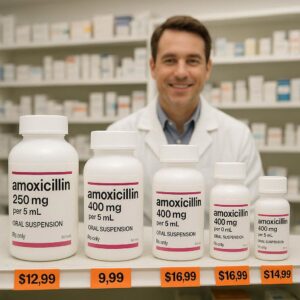
The short answer is: Between $15 and $50 for a standard 10-day course.
However, the “average” can be misleading because it depends heavily on two factors: the dosage and the quantity.
Let’s look at the most common prescriptions to give you a realistic picture.
Price by Dosage and Quantity
Amoxicillin usually comes in capsules or tablets. The standard strengths are 250 mg and 500 mg. A typical course of treatment lasts between 7 and 10 days, and you usually take it two to three times a day.
Here is a realistic breakdown of what you might pay at a major retail pharmacy chain without using any discounts:
| Prescription Details | Typical Use Case | Average Cash Price Range |
|---|---|---|
| 30 Capsules, 500mg | 10-day course (3x daily) | $25 – $45 |
| 20 Capsules, 500mg | 10-day course (2x daily) | $18 – $35 |
| 20 Capsules, 250mg | 7-10 day course for children | $15 – $30 |
| 15ml Bottle (Powder for Suspension) | Liquid form for children/infants | $20 – $50 |
Important Note: These prices are estimates based on national averages at brick-and-mortar pharmacies like CVS, Walgreens, and Rite Aid. They can vary by city and state. A pharmacy in downtown Manhattan will often have higher overhead and higher prices than a pharmacy in rural Ohio.
Why Does the Price Vary So Much?
You might be thinking, “It’s the same pill, made by the same generic manufacturer. Why would one place charge $20 and another $50?” That is an excellent question. The pricing of prescription drugs in the U.S. is famously complex. Here are the main reasons for the fluctuation.
1. The Pharmacy’s Pricing Strategy
Every pharmacy sets its own “cash price” (also known as the “Usual and Customary” price). Large chains have pricing algorithms that can change daily based on competition, their wholesale acquisition cost, and even the zip code of the store. An independent pharmacy might have a slightly higher base price because they don’t buy in the same massive bulk quantities as the big chains.
2. The Specific Manufacturer
Even though it is a generic drug, different companies manufacture it. One batch of amoxicillin might come from a manufacturer in India, another from a factory in the United States. The pharmacy pays a slightly different price for each, and that cost is passed on to you.
3. Your Location
Rural areas sometimes have higher prices due to less competition. Urban areas with a pharmacy on every corner might have lower prices because they are competing for your business.
4. Dosage and Quantity Oddities
Sometimes, a higher strength is actually cheaper than a lower strength. For example, it might cost the pharmacy the same to bottle 500mg pills as it does 250mg pills. This is why you should always check with your doctor if it is safe to take two 250mg pills instead of one 500mg pill—it could save you money.
The “Sticker Shock” Scenario: When Prices Spike
While $20 to $40 is the norm, horror stories exist. Why would someone pay $150 for amoxicillin?
This usually happens in specific situations:
-
Dispensing Fees: Some pharmacies charge a high “dispensing fee” on top of the medication cost.
-
Brand Name Dispensed: If the doctor writes “DAW” (Dispense As Written) or if the pharmacy is out of the generic and gives you the brand name (like Amoxil), the price can skyrocket. Always ask for the generic version.
-
Hospital Outpatient Pharmacies: If you get your prescription filled at a hospital pharmacy before being discharged, the markup can be significantly higher than at a retail pharmacy.
How to Save Money: Your Action Plan
Paying the cash price is almost never your best option. You have power as a consumer, even when you are sick. Here is your step-by-step guide to lowering the average cost of amoxicillin without insurance.
1. Use a Prescription Discount Card (The Easiest Way)
This is our number one recommendation. You do not need insurance to use these cards. They are essentially coupon clubs that negotiate lower rates with pharmacies.
Websites like GoodRx, SingleCare, WellRx, and Optum Perks are free to use. You simply go to their website, type in “amoxicillin,” the dosage, and your zip code. They will show you a list of prices at local pharmacies.
-
How it works: You look up the price, show the coupon on your phone or print it out, and hand it to the pharmacist.
-
The Savings: These cards can often drop the price of a 500mg prescription from $35 to $10 or $12.
-
The Catch: It is free to use. The card company makes money from the pharmacy, not from you. It is a win-win.
Important Note: Pharmacies are not required to accept these cards, but most do. It never hurts to ask. Also, you cannot combine a discount card with insurance, so it’s one or the other.
2. Try a Retail Club Pharmacy
If you have a membership or know someone who does, warehouse clubs can be goldmines for cheap prescriptions.
-
Costco: You do not need a membership to use the pharmacy. It is illegal to restrict access to the pharmacy based on membership. Costco is famous for having some of the lowest cash prices in the country.
-
Sam’s Club: Similarly, their pharmacy prices are often very competitive.
-
Amazon Pharmacy: If you are a Prime member, Amazon Pharmacy offers transparent and often very low pricing on generic meds like amoxicillin, delivered to your door.
3. Check Local Independent Pharmacies
While the big chains are convenient, your local “mom and pop” pharmacy can sometimes offer better service and better cash prices. They are more likely to work with you, and because they are part of smaller communities, they might have more flexibility in pricing. Give them a call and ask, “What is your cash price for 30 capsules of Amoxicillin 500mg?”
4. Ask About the “Cash Price” vs. the “Insurance Price”
This sounds strange, but it is true. Sometimes, the cash price is actually lower than what your insurance would charge you. This happens if you have a high-deductible health plan and haven’t met your deductible yet.
Always ask the pharmacist: “Can you run it both ways? Tell me the price with my insurance and the cash price (or the price with a discount card).” Pharmacists do this all day long; they are used to the question.
5. Ask for a Partial Fill
If the price seems too high, you can ask the pharmacy to fill only part of the prescription. For example, if you need a 10-day supply but can only afford 5 days, you can ask for that. Legally, the pharmacy can do this. However, you must communicate with your doctor, as stopping antibiotics early can be dangerous and lead to antibiotic resistance.
The Danger of Skipping or Buying Online Without a Prescription
We understand the temptation. You are sick, antibiotics are expensive, and you see ads for “Canadian Pharmacy” or “Overseas Meds” selling amoxicillin for a fraction of the price.
Please, proceed with extreme caution.
-
Counterfeit Drugs: The FDA estimates that a significant percentage of drugs sold by online pharmacies that hide their physical address are counterfeit. They might contain the wrong ingredient, the wrong dose, or dangerous fillers like chalk, paint, or even fentanyl.
-
No Doctor Oversight: Amoxicillin is not a candy. You need a diagnosis. Taking the wrong antibiotic for a viral infection (like the flu or a cold) does nothing but potentially harm your gut health and contribute to antibiotic resistance.
-
Legality: Importing prescription drugs for personal use is technically illegal in most cases, though enforcement varies.
Stick to licensed U.S.-based pharmacies. Your health is worth the extra few dollars.
Comparison Table: Amoxicillin Prices at Major Pharmacies
To give you a real-world idea, let’s look at a hypothetical price comparison for a common prescription: Amoxicillin 500mg, #30 capsules.
We used a discount card tool to estimate these prices. Remember, these are estimates and can change.
| Pharmacy Name | Estimated Cash Price | Estimated Price with Free Discount Card | Notes |
|---|---|---|---|
| CVS | $42.99 | $11.23 | Using a GoodRx coupon often yields the best price here. |
| Walgreens | $38.79 | $12.56 | Walgreens has its own savings club, but third-party cards usually beat it. |
| Walmart | $28.00 | $9.86 | Walmart’s cash price is already low; discount cards make it even lower. |
| Costco | $12.50 | $10.12 | The cash price at Costco is incredibly competitive; the card isn’t even needed. |
| Rite Aid | $41.50 | $13.01 | Similar to CVS and Walgreens, the discount is substantial. |
As you can see, the “Average Cost of Amoxicillin Without Insurance in the United States” can swing from $42 at a chain to under $10 at a warehouse club or with a simple coupon.
Frequently Asked Questions (FAQ)
We’ve compiled the most common questions we hear from readers about amoxicillin costs.
Q: Can I get amoxicillin for free?
A: It is rare, but possible. Some community health centers (Federally Qualified Health Centers or FQHCs) have programs that provide medications at a reduced cost or free to low-income patients based on a sliding scale. Additionally, some large grocery store chains occasionally run promotions offering free common antibiotics (like amoxicillin) with a prescription. It is worth asking at the pharmacy counter.
Q: Why is amoxicillin sometimes cheaper than my insurance copay?
A: This goes back to the deductible. If your insurance plan has a $50 copay for brand-name drugs but a $30 copay for generics, and you haven’t met your $2,000 deductible, you might pay the full $30. If the pharmacy’s cash price is $20, you pay the cash price. Insurance companies negotiate rates, but those rates are not always the lowest possible price for dirt-cheap generics.
Q: Does the liquid form cost more than pills?
A: Yes, generally. The liquid suspension requires special manufacturing, a bottle, and a longer shelf-life consideration. It also requires the pharmacist to mix it (reconstitute it) for you, which adds a compounding fee. It is not uncommon for the liquid to be double the price of the pills.
Q: Can I buy amoxicillin over the counter?
A: No. In the United States, amoxicillin is strictly a prescription-only medication. This is to prevent antibiotic misuse and ensure you are being treated for a bacterial infection by a medical professional. You cannot buy it off the shelf at a pharmacy.
Q: My doctor sent the prescription electronically. Can I still shop around for the best price?
A: Absolutely. Having the prescription sent to one pharmacy doesn’t chain you to it. You can call that pharmacy, get the price, and then call another pharmacy. If you decide to move the prescription, you can either ask the first pharmacy to transfer it to the new one, or you can call your doctor’s office and ask them to send a new prescription to the cheaper pharmacy.
Additional Resources
Navigating healthcare costs can be daunting. Here are some trusted resources to help you further:
-
Need help affording your medications? The Partnership for Prescription Assistance helps qualifying patients without drug coverage get free or nearly free medications.
-
Concerned about a medication you bought online? Visit the U.S. Food and Drug Administration (FDA) website to learn how to spot counterfeit drugs and buy medications safely.
Conclusion
The average cost of amoxicillin without insurance in the United States is generally manageable, typically falling between $15 and $50 for a standard course of treatment. However, the final price you pay is not set in stone. By taking a few simple steps—using a free prescription discount card, checking warehouse clubs like Costco, and simply asking your pharmacist for the best available rate—you can almost always secure your medication for under $15. Remember, your health is paramount, so always obtain your prescription legally through a licensed U.S. pharmacy and never skip doses to save money.