Walking out of the dentist’s office with a permanent, perfectly fitted crown in a single day sounds like a dream. For years, getting a dental crown meant multiple appointments, temporary crowns that could break, and weeks of waiting. Thanks to modern technology, that dream is now a reality with CEREC.
But if you don’t have dental insurance, that reality can come with a dose of sticker shock. You’re left wondering: How much is this convenience and technology actually going to cost me?
If you are searching for the cerec crown cost without insurance, you’ve come to the right place. This guide is designed to pull back the curtain on dental pricing. We aren’t here to give you a single number and send you on your way. We are here to provide a complete, honest, and realistic breakdown of what you should expect to pay, why the prices vary so much, and—most importantly—how to make it work for your budget.
Whether you’re dealing with a cracked tooth from a weekend accident or finally addressing that old filling that’s seen better days, understanding the true cost is the first step to a healthier smile.
CEREC Crown Cost Without Insurance
What Exactly is a CEREC Crown? (And Why is it Different?)
Before we dive into the numbers, it’s important to understand what you’re paying for. CEREC stands for Chairside Economical Restoration of Esthetic Ceramics. In plain English, it’s a system that allows a dentist to create a porcelain restoration right in the office while you wait.
Here is how a traditional crown works, versus a CEREC crown:
-
Traditional Crowns: You come in for a first appointment. The dentist numbs you, drills down the tooth, takes a goopy impression, and places a temporary crown made of acrylic. They send the impression to an external dental lab. You wait 2-3 weeks. You return for a second appointment, the temporary is removed, and the permanent crown is cemented in.
-
CEREC Crowns: You come in for a single appointment. The dentist preps the tooth, but instead of goopy impression material, they use a small camera to take a digital scan of your mouth. This 3D model is sent to an in-office milling machine. While you relax or read a magazine, the machine carves your crown out of a solid block of ceramic. About 60-90 minutes later, the dentist bonds the new crown to your tooth. You walk out done.
The convenience is obvious, but that technology—the scanner, the software, the milling machine, and the materials—is expensive for the dentist to purchase and maintain. That initial investment is a major reason why the cerec crown cost without insurance can sometimes be higher than traditional crowns, though often it is surprisingly competitive.
CEREC Crown Cost Without Insurance: The Real Numbers
Let’s get straight to the point. If you are paying out of pocket, with no insurance company chipping in, what are we talking about?
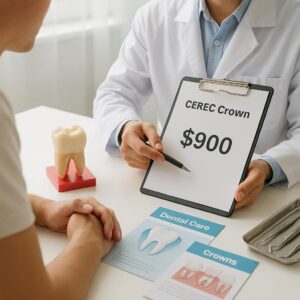
On average, across the United States, the cost of a single CEREC crown without insurance typically ranges from $800 to $3,000.
That is a wide range, and you likely want something more specific. To help you navigate, here is a breakdown based on typical geographical areas and dental practice types:
| Practice Type / Location | Average Cost Per Crown (Without Insurance) |
|---|---|
| Rural / Small Town General Dentist | $800 – $1,300 |
| Suburban General Dentist | $1,200 – $1,800 |
| Metropolitan Area / City Dentist | $1,500 – $2,300 |
| High-End Cosmetic / Specialist Practice | $2,200 – $3,000+ |
Important Note: These figures are estimates. The final price depends on the complexity of the case, the specific material used, and the dentist’s experience level. A simple molar crown in a low-cost area will be on the low end. A highly cosmetic front tooth crown done by a top prosthodontist in Manhattan will be on the high end.
Why the Price Varies: 7 Key Factors Influencing Your Final Bill
You might be wondering, “It’s just a crown, why can’t they give me a straight price?” In dentistry, much like medicine, one size does not fit all. Several variables contribute to the final cost of your CEREC crown.
1. The Geographic Location of the Dental Practice
This is often the biggest factor. Just like rent for an apartment costs more in San Francisco than it does in rural Kansas, the overhead for a dental office varies wildly by location. Dentists in major cities with high office rents, higher staff wages, and higher local taxes must charge more to stay in business. A crown in a major metropolitan area can easily cost double what it costs in a small town.
2. The Dentist’s Expertise and Practice Type
A general dentist who does a few CEREC cases a month will likely charge less than a prosthodontist—a specialist with three extra years of training in restoring and replacing teeth. Similarly, a dentist known for high-end cosmetic work and smile makeovers will charge a premium for their artistry and experience. You are paying for their skill in making the crown look not just functional, but completely natural and beautiful.
3. Material Quality and Aesthetics
CEREC crowns are milled from high-quality ceramic blocks, but not all blocks are the same.
-
Standard Blocks: These are often uniform in color. They are strong and great for back teeth where chewing force matters most.
-
Multi-layered Blocks: These have different layers of color and translucency, mimicking natural enamel and dentin. They are more expensive but provide a much more lifelike result, making them ideal for front teeth.
The type of ceramic your dentist uses will affect the price.
4. Complexity of the Tooth Preparation
Is the tooth already broken off at the gum line? Is there decay that needs to be removed first? Is it a root canal-treated tooth that requires a special post for support? Simple crown preps are straightforward. Complex ones require more skill, more time, and sometimes additional materials (like build-up material to rebuild part of the tooth), which adds to the cost.
5. The Need for a Core Build-Up
If a tooth is too damaged, there isn’t enough solid structure left to hold the new crown. In this case, the dentist must first build the tooth back up with a special filling material. This is called a core build-up or simply a “build-up.” This is a separate procedure with its own cost, typically ranging from $150 to $300 , added on top of the crown fee.
6. Additional Procedures
A crown is often just one part of a larger dental issue. Before a crown can be placed, you might need other work:
-
Root Canal Therapy: If the tooth nerve is infected or damaged. This can cost anywhere from $800 to $1,500+.
-
Periodontal Treatment: If there is active gum disease around the tooth, it must be treated first.
-
Extractions: If a neighboring tooth is beyond saving, it might need to come out.
7. The Technology in the Office
Not all CEREC systems are the same. There are newer models with faster milling times, more precise scanners, and better material integration. Dentists who invest in the latest technology often have higher overhead, which can be reflected in their fees, but you may benefit from a more comfortable experience and an even better-fitting crown.
CEREC vs. Traditional Crowns: A Cost Comparison
When you’re paying without insurance, it’s smart to compare your options. Is the convenience of a same-day crown worth a potential premium? Let’s look at a typical cost comparison for a single tooth without insurance.
| Feature | CEREC Crown | Traditional Crown |
|---|---|---|
| Number of Appointments | 1 | 2 |
| Total Time to Completion | 2-3 hours | 3-4 weeks |
| Temporary Crown | Not needed | Yes (risk of breakage) |
| Impressions | Digital (comfortable) | Goopy material (gag risk) |
| Average Cost (without insurance) | $800 – $3,000 | $700 – $2,500 |
| Material Strength | High (solid ceramic) | High (depends on lab) |
| Aesthetics | Excellent | Excellent |
As you can see, the cost ranges overlap significantly. While traditional crowns can be slightly cheaper on the low end, CEREC crowns are often very competitively priced when you factor in the value of your time and the convenience of a single visit.
“The beauty of CEREC isn’t just the technology; it’s the respect it shows for the patient’s time. When we quote a price for a CEREC crown, we are quoting for a complete experience—precision, comfort, and immediacy—not just a dental procedure.”
— Dr. Eleanor Vance, DDS (Fictional Quote for Illustration)
The Hidden Costs of “Cheaper” Dentistry
When facing a bill of over a thousand dollars, it’s tempting to shop around strictly for the lowest price. While being budget-conscious is wise, choosing a dentist based solely on the lowest quote for a CEREC crown can sometimes backfire.
A “cheaper” crown might come from an office that:
-
Uses lower-grade ceramic materials.
-
Has an older milling machine that produces less accurate crowns.
-
Rushes the bonding process, leading to premature failure.
-
Doesn’t invest in continuing education for the dentist and staff.
If a crown fails in a few years because it was poorly made, you’ll have to pay for a replacement all over again. A well-done CEREC crown, placed by an experienced dentist, can last 10 to 15 years or even longer. In the long run, paying a fair price for quality work is almost always more economical than chasing the absolute lowest upfront cost.
How to Pay for a CEREC Crown Without Insurance: Smart Financing Options
Okay, so you understand the costs. Now, how do you pay for it if insurance isn’t an option? You have several avenues to explore. The key is not to let the total price scare you away from getting the care you need.
1. In-House Dental Membership Plans
Many dental offices are moving away from the insurance model and offering their own “in-house” savings plans. For a yearly fee (often $300-$400), you become a “member” of the practice. This typically gives you:
-
Free or heavily discounted routine cleanings and exams.
-
A fixed percentage discount (e.g., 15-20%) on all other treatments, including crowns.
-
No waiting periods, no annual maximums, and no claim forms.
If you don’t have insurance, this can be an excellent way to manage costs, especially if you need more than just a single crown. Call the dental office and ask, “Do you offer an in-house membership or savings plan?”
2. Third-Party Healthcare Financing (CareCredit, etc.)
Companies like CareCredit, LendingClub, and Sunbit specialize in healthcare financing. They offer credit cards or loans specifically for medical and dental expenses.
-
How it works: You apply for a line of credit. If approved, you use it to pay for your crown.
-
Promotional Offers: Many of these plans offer “no interest if paid in full within 6, 12, or 18 months” promotions. This can be a great way to break a large $1,500 payment into manageable monthly chunks as long as you pay it off before the promotional period ends. If you don’t, you may be charged deferred interest from the original purchase date.
3. Dental Schools
If you live near a university with a dental school, this can be the most affordable option. Treatment is provided by dental students who are closely supervised by experienced faculty dentists.
-
Cost: The price for a crown can be 50-60% less than a private practice.
-
The Trade-Off: Appointments take much longer (sometimes 3-4 hours for a single procedure) and you may need multiple visits, as the process is educational. While many schools now have CEREC technology, availability varies. It’s worth a call to check if they offer same-day crown options.
4. Health Savings Account (HSA) or Flexible Spending Account (FSA)
If you have an HSA or FSA through your work, you can use these pre-tax dollars to pay for your dental crown. This doesn’t lower the price of the crown, but it lowers your overall cost because you’re paying with money that hasn’t been taxed by the government. It’s essentially an instant discount equal to your tax bracket.
5. Negotiating a Cash Discount
It never hurts to ask. Dental offices have costs associated with processing credit cards and dealing with insurance paperwork. Paying with cash, check, or a debit card saves them money. You can politely ask, “Is there a discount for paying in full today with cash?”
Is a CEREC Crown Worth the Investment?
Ultimately, the question you have to answer is whether the value matches the price. When you pay for a CEREC crown without insurance, you aren’t just paying for a hunk of ceramic. You are paying for:
-
Preservation of your natural tooth: Crowns protect cracked or broken teeth from further damage, preventing the need for more expensive extractions and implants later.
-
Restored function: You can eat, chew, and smile with confidence again.
-
Time savings: You complete treatment in one day, not over a month.
-
Durability: A high-quality crown is a long-term investment in your health.
Think of it less as an expense and more as an investment in your well-being and quality of life.
Questions to Ask Your Dentist Before Committing
To ensure there are no surprises on your final bill, have an open conversation with your dentist’s office before the work begins. Here is a checklist of questions to ask:
-
“What is the total all-inclusive cost for the CEREC crown?”
-
“Does that fee include the consultation, anesthesia, and the crown placement?”
-
“Is there a separate fee for a core build-up if it’s needed?”
-
“What type of ceramic material do you use, and is this the best option for my tooth?”
-
“Do you offer any in-house membership plans or discounts for uninsured patients?”
-
“What is your policy if something goes wrong with the crown shortly after placement?” (A good dentist will offer some type of warranty).
Conclusion: Navigating Your Path to a Same-Day Smile
Facing the cerec crown cost without insurance can feel overwhelming, but knowledge is your best tool. The price typically ranges from $800 to $3,000, influenced by location, dentist expertise, and the complexity of your case. While it’s a significant out-of-pocket expense, the value of same-day convenience, advanced technology, and durable materials is undeniable. By exploring financing options like dental savings plans or healthcare credit cards, you can make this investment in your oral health manageable and well worth the smile of confidence you’ll gain.
Frequently Asked Questions (FAQ)
1. How long does a CEREC crown last compared to a traditional one?
When properly cared for with good oral hygiene and regular dental checkups, a CEREC crown can last just as long as a traditional lab-made crown—typically 10 to 15 years, and often longer. The key factor is the quality of the fit and the dentist’s skill in bonding it to the tooth.
2. Is the CEREC crown procedure painful?
No. Your dentist will use local anesthesia to numb the tooth and surrounding gum tissue, so you shouldn’t feel any pain during the tooth preparation. Some patients experience mild soreness in the jaw from keeping their mouth open, but the procedure itself is designed to be comfortable.
3. Can a CEREC crown be done on any tooth?
Yes, CEREC crowns can be used on front teeth (incisors and canines) and back teeth (premolars and molars). The technology allows for different ceramic materials that offer the strength needed for chewing in the back and the translucency for a natural look in the front.
4. What happens if the CEREC crown breaks?
While modern dental ceramics are extremely strong, it is possible for a crown to chip or break under extreme force (like biting a popcorn kernel or using teeth as tools). If this happens, contact your dentist. In many cases, a new crown can be fabricated. Some dental practices offer a limited warranty on their work, so be sure to ask about their policy.
5. Is a temporary crown really not needed?
Correct. Because your permanent crown is milled and placed in the same appointment, there is no need for a temporary crown. This eliminates the common problems of temporaries falling off, feeling awkward, or leaking bacteria while you wait for the final restoration.
Additional Resource
For more information on the different types of dental crowns and materials available, the American Dental Association (ADA) provides an excellent patient resource. You can read their overview here: ADA – Crowns. (This link is provided for informational purposes and is not an endorsement of a specific provider.)