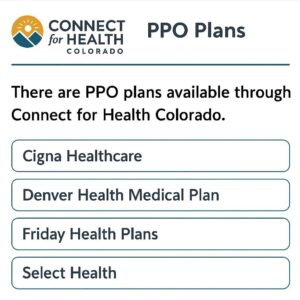
If you’ve landed on this page, you are likely in the middle of one of the most important tasks of the year: finding health insurance. You have probably heard the term “PPO” thrown around by friends or family, and you know it offers flexibility. Now, you are sitting at your computer, staring at the Colorado health insurance marketplace, and you have one pressing question: Are there any PPO plans in Connect for Health Co?
It is a great question, and the answer is a bit more nuanced than a simple “yes” or “no.” Over the past few years, the landscape of health insurance in Colorado has changed significantly. While PPO (Preferred Provider Organization) plans were once the dominant force on the marketplace, their availability has shifted.
This guide is designed to walk you through exactly what is available on Connect for Health Colorado (the state’s official Affordable Care Act (ACA) marketplace) regarding PPOs. We will look at what a PPO actually is, why it might be the right choice for you, which carriers currently offer them, and what your alternatives are if a traditional PPO isn’t available in your area. By the end, you will have a clear, realistic roadmap for finding the plan that fits your life.
Are There Any Ppo Plans In Coonect For Health Co?
Understanding the Basics: What Is a PPO?
Before we dive into the specifics of the Colorado marketplace, it is important to clarify what a PPO actually is. Health insurance comes in several “network types,” and the PPO is one of the most popular because of the freedom it offers.
The Flexibility of Preferred Provider Organizations
A PPO is a type of health plan that contracts with a network of preferred providers—doctors, hospitals, and specialists. The defining feature of a PPO is flexibility. You do not need to choose a primary care physician (PCP), and you do not need a referral to see a specialist.
If you stay within the plan’s network, your costs are lower. However, if you choose to see a doctor outside of the network, the plan will still cover a portion of the cost, though you will pay a higher coinsurance rate. This “out-of-network” coverage is the hallmark of a PPO. For people who travel frequently, see specialists in different cities, or simply want the peace of mind that they can see any doctor they choose, a PPO is often the preferred choice.
PPO vs. HMO vs. EPO
To understand why PPOs are in high demand—and sometimes harder to find—it helps to compare them to the other common plan types available on the marketplace. Most carriers today are moving toward EPOs and HMOs to control costs.
Here is a quick breakdown of the differences:
| Plan Type | Primary Care Physician Required? | Referrals for Specialists? | Out-of-Network Coverage? | Typical Premium |
|---|---|---|---|---|
| PPO | No | No | Yes (partial coverage) | Higher |
| HMO | Yes | Yes | No (except emergencies) | Lower |
| EPO | No | No | No (except emergencies) | Moderate |
As you can see, the PPO offers the most freedom. However, this freedom comes at a cost. Because insurance companies have less control over where members seek care, premiums for PPO plans are typically higher than for HMOs or EPOs. Over the last decade, many insurers have moved away from offering PPOs on the individual marketplace (like Connect for Health Colorado) because the costs were becoming unsustainable, leading to significant premium hikes.
The Current State of PPOs on Connect for Health Colorado
Now, let’s address the core of your question. Are there any PPO plans in Connect for Health Co?
The short answer is yes, but the availability is limited and highly dependent on where you live in Colorado.
Connect for Health Colorado is the official ACA marketplace where individuals and families can shop for private health insurance. The carriers offering plans change from year to year based on regulations, market stability, and state-level decisions.
Historically, many major carriers pulled their PPO products from the individual market in the mid-2010s due to financial losses. However, in recent years, Colorado has seen a stabilization and a slight resurgence of PPO options, though they are not as widespread as they once were.
Carriers Offering PPO Plans
As of the most recent open enrollment periods, there are two primary carriers offering true PPO plans on the marketplace:
-
Anthem Blue Cross and Blue Shield: Anthem is the primary carrier offering a wide network PPO in many counties across Colorado. Their “Pathway” plans are often structured as PPOs, offering both in-network and out-of-network benefits. However, it is crucial to check their “Pathway X” plans, as some of these are actually EPOs (which do not cover out-of-network care). You must look specifically for plans labeled “PPO.”
-
Cigna: Cigna offers PPO plans in certain regions of Colorado, particularly along the Front Range. Like Anthem, Cigna provides a national network, which is a major advantage for those who travel or have providers in other states.
The Geographic Reality
This is where we have to be honest and realistic. Not every county in Colorado has a PPO option.
If you live in a rural county in the Eastern Plains, the Western Slope, or the San Luis Valley, your options may be limited to HMOs or EPOs. Carriers like Kaiser Permanente (which is an HMO), Denver Health Medical Plan, and Rocky Mountain Health Plans (now part of Anthem) often dominate these areas with more restrictive network types.
Important Note: The health insurance market changes annually. A county that has a PPO option one year may not have it the next, and vice versa. Always verify the current year’s offerings directly on the Connect for Health Colorado website.
How to Search for PPO Plans on the Marketplace
If you want to find out definitively if a PPO is available in your zip code, you need to use the official marketplace tools. Guessing or relying on third-party advertisements can lead to confusion.
Here is a step-by-step guide to filtering your search effectively.
Step 1: Visit Connect for Health Colorado
Go to the official website. You do not need to create an account immediately to “window shop.” Use the “See Plans & Prices” tool. This allows you to enter basic information—your zip code, age, income, and household size—to see a list of available plans without committing to an application.
Step 2: Apply the Network Filter
Once the search results populate, look for a filter or sorting option labeled “Network Type,” “Plan Type,” or “Category.” Here, you can select “PPO.” If the filter shows zero results, then there are no PPO plans available in your specific county.
Step 3: Verify the “Plan Name”
Do not rely solely on the filter. Click into the plan details. Look for the words “PPO” explicitly in the plan name or the summary of benefits. Watch out for plans that sound like a PPO but are actually EPOs. An EPO (Exclusive Provider Organization) often has a similar structure—no referrals required—but it does not cover out-of-network care except for emergencies.
Step 4: Check the Provider Network
Before you fall in love with a plan, you must check the provider directory. Even if a plan is labeled a PPO, its network might still be narrow. Just because a plan offers out-of-network benefits does not mean it is financially wise to use them. You want to ensure your current doctors and preferred hospitals are listed as “in-network” to save money.
When a PPO Is the Right Choice
PPOs are not for everyone. While the flexibility is attractive, the higher premiums can be a dealbreaker for many individuals and families. Understanding when a PPO is necessary can help you justify the cost.
You should prioritize finding a PPO plan if:
-
You have a complex medical condition: If you see multiple specialists (cardiologists, endocrinologists, rheumatologists, etc.), the hassle of obtaining referrals in an HMO can be a significant barrier to care. A PPO allows you to go directly to your specialists.
-
You travel frequently: If you split your time between Colorado and another state, or if you travel often for work, a PPO’s out-of-network coverage offers a safety net. HMOs and EPOs generally do not cover routine care outside of their geographic area.
-
You want to keep a specific doctor: If your preferred primary care physician or specialist is not in the network of the cheaper HMO plans, a PPO might be the only way to keep seeing them. You must verify they are in-network for the PPO, though.
-
You do not want a gatekeeper: Some people simply dislike the administrative burden of having to get a referral from a PCP every time they need to see a dermatologist, orthopedist, or OB-GYN. A PPO removes that administrative step.
Realistic Alternatives if a PPO Isn’t Available
So, what happens if you run the search and discover that there are no PPO plans in your county? You are not out of options. While you may not get the exact structure you wanted, there are alternative plan types that can offer similar flexibility or financial protection.
1. EPO (Exclusive Provider Organization)
As mentioned earlier, an EPO is often the closest alternative to a PPO. Like a PPO, you generally do not need a referral to see a specialist. However, the critical difference is the lack of out-of-network coverage.
If you choose an EPO, you must stay within the network for all non-emergency care. If you go to an out-of-network doctor, you will likely pay the full cost of the visit. EPOs usually have lower premiums than PPOs. For someone who is healthy and has a good network of local providers, an EPO can be an excellent compromise.
2. HMO (Health Maintenance Organization)
HMOs are the most restrictive but often the most affordable. They require you to choose a primary care physician who acts as a gatekeeper. You cannot see a specialist without a referral from your PCP. However, HMOs often have very coordinated care, which can be beneficial for managing chronic conditions.
If you are on a tight budget and do not mind having a PCP manage your care, an HMO can save you a significant amount of money on monthly premiums and out-of-pocket costs.
3. Multi-State Plan Networks
Sometimes, carriers offer plans with “national networks” even if the plan type is technically an EPO. For example, while Anthem and Cigna may not offer a traditional PPO in your area, they might offer an EPO with a very broad network that includes providers across the state or region. This can mimic the flexibility of a PPO in terms of choice, even if it does not offer the out-of-network safety net.
Navigating Costs: Premiums vs. Out-of-Pocket Maximums
When looking for a PPO, it is easy to focus only on the monthly premium. However, to make a truly informed decision, you need to consider the total cost of the plan. PPOs generally have higher premiums, but they may also have different cost-sharing structures.
Here are the key financial terms to compare:
-
Premium: The monthly cost to have the plan.
-
Deductible: The amount you must pay out-of-pocket for services before the insurance starts paying its share. PPOs often have separate deductibles for in-network and out-of-network care.
-
Coinsurance: The percentage you pay after meeting the deductible (e.g., 20% for in-network, 40% for out-of-network).
-
Out-of-Pocket Maximum (OOPM): The most you will have to pay in a year. In PPOs, the OOPM is usually higher for out-of-network care.
If you are considering a PPO primarily for the out-of-network coverage, you must look at the out-of-network deductible and out-of-pocket maximum. These figures are often double the in-network limits. Using out-of-network providers can be expensive even with a PPO.
The Role of Subsidies and Cost-Sharing Reductions
One of the biggest factors in choosing a plan on Connect for Health Colorado is the financial assistance available. Depending on your income, you may qualify for:
-
Premium Tax Credits (Subsidies): These reduce your monthly premium. They can be applied to any metal tier (Bronze, Silver, Gold, Platinum), including PPOs. If you qualify for a large subsidy, the higher premium of a PPO may become very affordable.
-
Cost-Sharing Reductions (CSRs): These are only available if you choose a Silver-level plan and have a household income between 150% and 250% of the Federal Poverty Level. CSRs lower your deductible, copays, and out-of-pocket maximum. However, CSRs are not available on PPO plans in most cases unless the PPO is specifically a Silver plan. Historically, CSRs are most commonly applied to HMO and EPO Silver plans.
If your income qualifies for significant CSRs, choosing a Silver HMO or EPO might provide better financial protection (lower out-of-pocket costs) than a Bronze or Gold PPO.
Common Pitfalls When Shopping for a PPO
Shopping for health insurance can be stressful, and it is easy to make a mistake that costs you money or access to care. Here are some common pitfalls to avoid when searching for a PPO on the marketplace.
Assuming “Blue Card” Means PPO
If you see a plan from Anthem or another Blue Cross Blue Shield carrier, you might see the “Blue Card” logo. This indicates a national network. However, not all Blue Card plans are PPOs. Some are EPOs. Always read the plan details to confirm the network type.
Ignoring the Prescription Drug Formulary
A PPO might have a great doctor network, but if your expensive specialty medication is not on the plan’s formulary (list of covered drugs), you could face high costs. Before enrolling, search for your medications in the plan’s drug list.
Misunderstanding Out-of-Network Benefits
Just because a plan covers out-of-network care does not mean it covers it at a reasonable rate. If you see an out-of-network specialist, you may be subject to “balance billing.” This means if the doctor charges $500 and the insurance company says the allowed amount is $200, you might be responsible for the remaining $300 plus your coinsurance. Out-of-network benefits are a safety net for emergencies, not a cost-effective way to get routine care.
A Step-by-Step Decision Framework
If you are still unsure whether to hunt for a PPO or settle for an alternative, follow this decision framework. It helps to break the choice down into concrete priorities.
-
List Your Non-Negotiables: Write down the names of your top three doctors and the hospital you prefer. If you cannot live without them, you must find a plan where they are in-network.
-
Assess Your Travel Habits: Do you leave Colorado more than three months out of the year? If yes, a PPO might be essential for coverage outside the state. If not, a local HMO or EPO might suffice.
-
Calculate Total Cost: Use the marketplace tool to estimate your total annual cost. Add up the premiums plus the maximum out-of-pocket. Sometimes, a Gold HMO with a lower deductible is cheaper overall than a Bronze PPO with a high deductible.
-
Use the “Shop and Compare” Tool: This is the most reliable way to get a clear answer to “Are there any PPO plans in Connect for Health Co?” for your specific situation.
Looking Ahead: The Future of PPOs in Colorado
The health insurance market is dynamic. The Colorado Division of Insurance works diligently to ensure that consumers have options. In recent years, there has been a push to increase competition and bring more PPO options to rural areas through the Colorado Option—a state-led initiative to standardize plans and lower costs.
While the Colorado Option focuses on standardizing benefits across carriers, it does not mandate a specific network type. However, the increased competition has encouraged carriers to offer broader networks in some regions. It is possible that in the coming years, we will see a slow expansion of PPO availability, particularly as carriers adapt to consumer demand for flexibility.
For now, the advice remains the same: verify availability annually during Open Enrollment (typically November to January) or during a Special Enrollment Period if you have a qualifying life event.
Making the Final Choice
Ultimately, deciding whether a PPO is worth the search comes down to balancing freedom against cost. If you live in a Front Range county like Denver, Arapahoe, or Jefferson, you are likely to have at least one or two PPO options. If you live in a more remote area, you may need to work with the excellent HMO or EPO plans available.
Remember, the best plan is not always the one with the most freedom; it is the one that provides the most security for your specific health needs and financial situation.
Conclusion
Finding the right health insurance requires patience and a clear understanding of your own needs. To answer the central question directly: Yes, PPO plans do exist on Connect for Health Colorado, primarily through carriers like Anthem and Cigna. However, their availability depends entirely on your county of residence. If a PPO is not available in your area, robust alternatives like EPOs and HMOs can still provide excellent coverage, often at a lower cost. Your best strategy is to use the official marketplace tools, verify networks carefully, and compare total estimated costs to ensure you select a plan that offers both financial protection and access to the care you need.
Frequently Asked Questions (FAQ)
Q1: Why are PPO plans so hard to find on the marketplace?
A: Over the last decade, insurance carriers found that the cost of offering unlimited out-of-network coverage on the individual market led to unsustainable premium increases. To keep premiums manageable and stabilize the market, many carriers switched to EPOs and HMOs, which limit out-of-network costs.
Q2: Can I get a PPO if I qualify for Medicaid or Child Health Plan Plus (CHP+)?
A: No. Medicaid (Health First Colorado) and CHP+ are government programs with their own managed care networks. They are not PPOs, and they are not purchased through the marketplace in the same way private plans are. If you qualify for these programs, your plan type is predetermined.
Q3: If I buy a PPO, can I see any doctor in the country?
A: Not exactly. While PPOs offer out-of-network coverage, you will pay significantly more to see a doctor outside the network. To get the best rates, you should stick to the plan’s specific network of providers. Even with a PPO, always check if your doctor is “in-network” before scheduling an appointment.
Q4: What happens if I move to a different county in Colorado during the year?
A: Moving is a qualifying life event that allows you to change your plan outside of Open Enrollment. If you move to a county where your current PPO is not offered, you will need to select a new plan available in your new county.
Q5: Are PPO plans available for small businesses through Connect for Health Colorado?
A: Yes, the small business marketplace (SHOP) sometimes has different plan offerings than the individual marketplace. Small business owners may find PPO options available for their employees that are not available to individual consumers. It is best to consult with a broker or the SHOP marketplace directly.
Additional Resources
For further assistance and official information, please refer to the following trusted resources:
-
Connect for Health Colorado Official Website: The only place to apply for financial assistance and enroll in a qualified health plan. You can find certified brokers and assisters here.
-
Resource Link: https://connectforhealthco.com
-
-
Colorado Division of Insurance (DOI): The state regulatory body that oversees insurance companies. If you have a complaint or need help understanding your rights regarding network adequacy, the DOI is an invaluable resource.
-
Resource Link: https://doi.colorado.gov
-