Stepping into the world of being a driving instructor is an exciting career move. You get to be your own boss, set your own hours, and play a crucial role in shaping safe, confident drivers. But before you can even think about that first student getting behind the wheel, there’s one essential piece of the puzzle you need to get right: your insurance.
If you’ve started researching, you’ve probably noticed that the numbers can feel a bit all over the place. One quote might seem like a fantastic deal, while another makes you wonder if you’ve accidentally typed in the wrong details. It’s enough to make anyone’s head spin.
So, what is the actual average driving instructor insurance cost? Let’s cut through the confusion. This guide is designed to be your friendly, reliable roadmap. We’ll explore the real numbers, break down exactly what influences those figures, and give you the confidence to find the perfect policy for your business without paying a penny more than you need to.
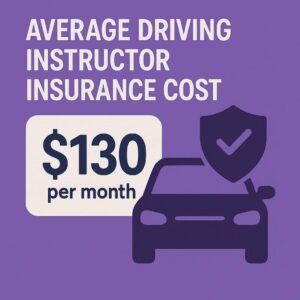
Average Driving Instructor Insurance Cost
Understanding the Basics: What is Driving Instructor Insurance?
Before we dive into the costs, it’s crucial to understand exactly what you’re paying for. This isn’t just standard car insurance. Driving instructor insurance is a specialized product designed to cover the unique risks of your profession.
Think of it this way: a standard personal car insurance policy assumes the driver is a friend or family member. Your policy assumes the driver is a learner. That’s a completely different level of risk.
Most policies for driving instructors are built around a core foundation: Hire and Reward Insurance.
Hire and Reward
This is the non-negotiable heart of your policy. If you are being paid to teach someone to drive, and that person is operating the vehicle, you are using your car for “hire and reward.” Standard social, domestic, and pleasure (SDP) or even standard commuting insurance will not cover you in this scenario.
Hire and reward coverage protects you financially if your student is involved in an accident while in control of your car. This is the primary reason why driving instructor insurance costs more than a regular car insurance policy.
What Does a Comprehensive Policy Typically Include?
A robust driving instructor insurance policy is usually a package that bundles several types of cover. When you’re comparing quotes, it’s essential to look beyond the price and see what’s included. Here’s what a typical comprehensive policy offers:
-
Third-Party Liability: This is the legal requirement. It covers damage you or your student cause to other people’s vehicles, property, or any injuries sustained by a third party. A good policy will offer a high level of cover, often in the millions.
-
Own Vehicle Damage: This covers the cost of repairing your own dual-controlled car if it’s damaged in an accident, whether you or a student is at the wheel.
-
Theft and Fire: Protects your vehicle if it’s stolen or damaged by fire.
-
Personal Accident Cover: This provides a payout for you, the instructor, if you are injured in an accident while working. This is a vital but sometimes overlooked part of the policy.
-
Uninsured Driver Protection: A fantastic feature to look for. This covers you if you or your student are involved in an accident with a driver who doesn’t have insurance.
-
Loss of Earnings: Some specialist policies offer this as an add-on or included feature. If your car is off the road due to an accident, this cover can provide a daily allowance to help replace your lost income.
-
Public Liability: This is different from third-party motor liability. Public liability covers you if a student, or a member of the public, has an accident on your premises (like tripping over a cone in a parking lot) and decides to sue you.
The Big Question: What is the Average Cost?
Okay, let’s get to the numbers you came here for. It’s important to remember that insurance is a highly personalized product. Your price will be unique to you. However, we can establish a realistic average based on market data and common scenarios.
For a full-time driving instructor operating a standard dual-controlled car (like a Ford Focus, Vauxhall Corsa, or Toyota Corolla) in a typical UK or US urban area, the average annual cost for a comprehensive Hire and Reward policy in 2026 falls between $1,800 and $3,500.
Wait, that’s a broad range, isn’t it? Yes, and that’s deliberate. To give you a clearer picture, let’s break it down further:
| Instructor Profile | Average Annual Cost (Estimate) | Key Characteristics |
|---|---|---|
| New, Part-Time Instructor | $1,500 – $2,500 | Low annual mileage, standard dual-control vehicle, clean driving record, limited teaching experience, no previous insurance claims. |
| Experienced, Full-Time Instructor | $2,000 – $3,200 | High annual mileage, potentially a newer or higher-value vehicle, extensive teaching experience, clean claims history, possibly multiple vehicles on one policy. |
| Instructor in a High-Risk Area | $2,500 – $4,000+ | Operating in a major city center with high traffic density and higher accident rates, or an area with elevated vehicle theft rates. |
| Specialist Instructor | $3,000 – $5,000+ | Teaches in specialist vehicles (e.g., large vans for HGV training, adapted vehicles for disabled learners), or offers intensive courses that involve higher daily risk. |
It’s also helpful to look at the average monthly cost. Many instructors prefer to pay monthly to manage cash flow. If you choose a monthly payment plan, you can expect to pay a little more overall due to interest or finance charges. Based on the annual averages, a monthly premium could range from $150 to $300+.
Important Note: These figures are averages. We’ve seen quotes as low as $1,200 for a highly experienced, low-mileage instructor in a rural area, and as high as $6,000 for a new instructor in a busy city center with a high-performance vehicle. The key is understanding what moves the needle on your quote.
7 Key Factors That Influence Your Insurance Premium
Insurance companies are in the business of assessing risk. They look at dozens of data points to decide how likely it is that you will make a claim. The higher they perceive the risk, the higher your premium will be. Understanding these factors puts you in the driver’s seat when it comes to managing your costs.
1. Your Experience Level
This is arguably the biggest factor, especially in your first few years. If you’re a new instructor, insurers have no historical data on your teaching career. They don’t know your teaching style, the areas you work in, or your claims history.
-
New Instructor (0-2 years): You will be in the highest risk category. Expect to pay a premium at the top end of the average range. The good news is that if you remain claim-free, your premiums will typically drop significantly after your first and second years.
-
Experienced Instructor (3+ years): You are the “low-risk” gold standard for insurers. A proven track record of safe teaching and no claims will unlock the most competitive rates.
2. Your Vehicle
The car you choose is a massive factor in your insurance cost. Insurers look at:
-
Value: A newer, more expensive car will cost more to repair or replace, leading to a higher premium.
-
Repair Costs: Some cars have cheaper, more readily available parts. Others have expensive, specialized parts that drive up the cost of a claim.
-
Performance: A car with a powerful engine is statistically more likely to be involved in a serious accident. Stick with a standard, modestly powered vehicle (e.g., a 1.0L to 1.6L engine) to keep costs down.
-
Safety Features: Cars with high safety ratings, automatic braking, and other advanced safety tech are often favored by insurers.
-
Dual Controls: This is mandatory, but the type and quality of the dual control installation can sometimes be a factor. Always use a certified, professional installer.
3. Your Location
Where you do most of your teaching has a huge impact.
-
Urban vs. Rural: A postcode in a major city center like New York, Los Angeles, London, or Manchester will have a much higher premium than a rural postcode. This is due to higher traffic density, increased risk of accidents, and higher rates of vehicle theft and vandalism.
-
Parking: Where the vehicle is parked overnight matters. A car kept in a locked garage overnight will generally be cheaper to insure than one parked on a public street.
4. Annual Mileage
The more miles you drive, the more time you and your students are on the road, which increases your statistical risk. A full-time instructor doing 20,000 miles a year will pay more than a part-time instructor doing 8,000 miles a year. Be honest about your estimated mileage. Underestimating can lead to a claim being reduced or rejected.
5. Your Personal Driving History
This is about you, the instructor. A clean personal driving license with no claims, accidents, or convictions in the last five years is your biggest asset.
-
No Claims Bonus (NCB): If you have a No Claims Bonus from a previous personal vehicle, some insurers may allow you to use it towards your instructor policy. This can provide a substantial discount. Always ask the question.
-
Convictions: Any points on your license (for speeding, etc.) will increase your premium. More serious convictions (like DUIs) will make it extremely difficult to find cover at any reasonable price.
6. The Type of Teaching You Do
Not all instructing is the same, and insurers categorize the risk differently.
-
Standard Car Instruction: This is the baseline.
-
Intensive Courses: If you specialize in “crash courses” where a student drives for 5-6 hours a day over a week, you are considered higher risk. A tired learner is more likely to make a mistake.
-
Pass Plus or Motorway Lessons: These often involve higher-speed driving, which also attracts a slightly higher premium.
-
Specialist Vehicles: Teaching in a minibus, van for HGV training, or a motorbike requires a completely different, and often more expensive, policy.
7. Optional Add-Ons and Policy Features
The base policy price is just the start. Adding extras will increase your premium, but they can provide invaluable peace of mind.
-
Loss of Earnings: A very popular add-on. If your car is in the shop for a month after an accident, this can pay you a daily rate to keep your business afloat.
-
Increased Liability Cover: Most policies include $1,000,000 or $2,000,000 in liability cover. You can often increase this to $5,000,000 or even $10,000,000 for an additional cost.
-
Legal Protection: This covers the legal fees if you are involved in a dispute following an accident.
How to Get the Best Price: A Practical Guide
Finding the right insurance isn’t just about accepting the first quote. It’s a process. By being proactive and strategic, you can often shave hundreds of dollars off your annual premium.
1. Shop Around, Don’t Just Renew
Loyalty is rarely rewarded in the insurance world. It’s common for insurers to offer a low “introductory” rate to new customers, then increase the renewal price, banking on you just accepting it out of convenience. Always get at least 5-6 quotes from specialist providers before your renewal date.
2. Use a Specialist Broker
This is one of the most important tips we can give. A specialist insurance broker who deals exclusively with the motor trade and driving instructors is worth their weight in gold. They have access to “panel” of insurers that don’t sell directly to the public. They can do the legwork for you, comparing policies from these specialist markets and finding a package that fits your exact needs and budget.
3. Consider Your Excess
The “excess” is the amount you agree to pay towards a claim. A standard policy might have a $250 compulsory excess. You can often choose to add a “voluntary excess” of, say, $500 or $1,000. This shows the insurer you are willing to take on more of the financial risk, which will lower your annual premium. The trade-off is that you must have that money available if you need to make a claim.
4. Build and Protect Your No Claims Bonus
Your No Claims Bonus (NCB) is your most valuable asset for getting lower premiums.
-
Start Protecting It Early: If you’ve had a clean personal driving record, check if a new insurer will accept it.
-
Protected NCB: Once you have built up a good NCB (e.g., 4 or 5 years), consider paying a little extra to “protect” it. This means you can have one or two minor claims in a policy year without it resetting your NCB to zero. It’s a valuable safeguard.
5. Bundle Your Policies
If you have more than one vehicle, or if you have a home or other business insurance, ask about a multi-policy discount. Insuring everything with one provider can often unlock a significant discount.
6. Be Smart About Your Vehicle Choice
If you haven’t yet purchased your dual-control car, do your research first. Call a few insurance providers and ask for indicative quotes on the models you are considering. You might find that a car that is $500 cheaper to buy ends up costing $800 more a year to insure. It’s a false economy.
7. Invest in Security
A Thatcham-approved alarm and immobilizer, or a professional tracking device, can demonstrably lower your risk of theft. Let your insurer know about these security features. Parking in a locked garage overnight is another simple way to reduce your quoted price.
A Realistic Breakdown: Cost vs. Value
It’s easy to look at an insurance quote and see it as just another business expense. And yes, it is a significant one. But it’s more helpful to think of it as an investment in the security and stability of your business.
Let’s look at a realistic scenario for a new, full-time instructor to understand the value they are getting for their money.
Scenario:
-
Instructor: Sarah, a new ADI (Approved Driving Instructor) in a suburban area.
-
Vehicle: 2023 Ford Focus, 1.5L, with professional dual controls.
-
Annual Premium: $2,400 (which is $200 per month or $46 per week).
What does Sarah get for her $2,400?
-
Financial Protection: If a student panics and drives her car into a brand-new Mercedes, she is protected from a liability claim that could easily run into tens of thousands of dollars.
-
Business Continuity: She has added “Loss of Earnings” cover. If her car is off the road for a month after an accident, she receives a daily payment of $100, giving her $3,000 to cover her living costs while she’s not working.
-
Peace of Mind: She knows she is legally compliant. She can work without the constant, gnawing fear of a catastrophic financial event ruining her business.
-
Professionalism: Being able to show her students that she has comprehensive, specialist insurance reinforces her credibility as a serious professional.
When you break it down like that, the cost of a coffee per day for total financial security seems like a pretty good deal.
Common Mistakes That Inflate Your Premium
Avoiding these common pitfalls can save you a significant amount of money and hassle.
-
Not Being Honest About Mileage: It’s tempting to underestimate your annual mileage to get a lower quote. Don’t do it. If you have a claim and the insurer investigates and finds you’ve driven 15,000 miles on a policy for 8,000 miles, they have grounds to void your policy and reject your claim.
-
Insuring in the Wrong Name: The policy must be in the name of the registered keeper and the main user of the vehicle. If you have a spouse or partner who is also an instructor, they must be listed as a named driver.
-
Forgetting to Declare Modifications: Have you added alloy wheels? A different stereo? A roof box? Any modification from the manufacturer’s standard specification must be declared. Failing to do so can invalidate your policy.
-
Assuming the Cheapest Policy is the Best: The cheapest policy often has the lowest level of cover, a very high excess, and lacks crucial features like loss of earnings or uninsured driver protection. Always compare the policy benefits, not just the price.
The Future of Driving Instructor Insurance
The insurance market is always evolving, and it’s helpful to be aware of trends that could affect your costs in the future.
-
Telematics (Black Box) Policies: While common for young drivers, telematics is slowly making its way into the commercial and motor trade space. A “black box” tracks your driving style, mileage, and the times you drive. For instructors, this could be a double-edged sword. It could reward very safe, low-risk instructors with lower premiums. However, it could also be challenging for instructors who operate in busy cities where controlled, safe driving can still involve frequent braking and acceleration.
-
Electric Vehicles (EVs): As more instructors switch to EVs for lower running costs, insurers are still getting to grips with them. EVs are often more expensive to repair (especially the batteries) and can have higher insurance premiums. However, as the market matures and repair networks improve, we expect EV insurance costs to stabilize and become more competitive.
-
Usage-Based Insurance: We may see more policies that offer a base rate plus a “per-lesson” or “per-mile” cost. This could be a great option for part-time instructors with highly variable workloads.
Conclusion
Navigating the world of driving instructor insurance doesn’t have to be a daunting task. The average cost typically falls between $1,800 and $3,500 annually, but this figure is a starting point, not a fixed rule. Your personal circumstances—from your experience level and vehicle choice to your location and claims history—will paint the final picture of your premium.
By understanding the factors that influence these costs, shopping around with specialist brokers, and focusing on the value of comprehensive protection rather than just the cheapest price, you can secure a policy that safeguards your business, your livelihood, and your peace of mind. Remember, this insurance is not just an expense; it’s the foundation upon which you can confidently build a successful and secure teaching career.
Frequently Asked Questions (FAQ)
Q1: Can I use my standard car insurance to teach friends and family for free?
A: No, almost certainly not. Standard car insurance policies specifically exclude “hire and reward.” Even if you are not charging a fee, if you are being paid in any way (even a “thank you” gift) or are a professional instructor using your car for business, you need the correct Hire and Reward policy. Teaching without it leaves you completely uninsured and liable for all costs in an accident.
Q2: How many years of No Claims Bonus (NCB) do I need for the best rates?
A: Typically, insurers see a significant drop in premiums after the first claim-free year, with the best rates usually available to instructors with 4 or more years of continuous, claim-free insurance. Protecting your NCB once you reach this level is a wise investment.
Q3: What should I do immediately after a student has an accident in my car?
A: First, ensure everyone is safe and call emergency services if needed. Exchange details with any third parties, just as you would in any accident. Take photos of the damage and the scene. Most importantly, do not admit fault. Contact your insurance provider as soon as possible to report the incident and follow their specific claims process. Your policy will outline the exact steps to take.
Q4: Does being an ADI (Approved Driving Instructor) lower my insurance cost?
A: Yes, it can. Being fully qualified and listed on the official ADI register demonstrates to insurers that you have passed rigorous checks and advanced driving tests. This professional status can help lower your premium compared to a trainee instructor (PDI) who is still working towards their full qualification.
Q5: Can I insure a car for instructing that I still have a loan on?
A: Yes, you can. You simply need to inform your insurer that the car is on finance. They will note the finance company as a “loss payee” on the policy. This means that in the event of a total loss (write-off), the insurer will pay the finance company first to settle the outstanding loan, and you would receive any remaining equity.
Additional Resources
For further reading and to verify the latest regulations and best practices for driving instructors, we recommend visiting the official website of your national governing body.
-
For UK Instructors: Visit the Driver and Vehicle Standards Agency (DVSA) official website for the latest news on ADI registration, standards checks, and code of practice.
-
For US Instructors: Check with your state’s Department of Motor Vehicles (DMV) or Department of Licensing for specific state requirements regarding driving school licensing and insurance mandates.