If you suffer from chronic nasal symptoms like a constantly runny nose, postnasal drip, or that annoying sensation of water dripping at the back of your throat, you have likely heard about Clarifix. This minimally invasive procedure has changed the lives of many people who did not respond to medications, sprays, or allergy shots.
But there is one big question that comes up again and again: how much does Clarifix cost without insurance?
Maybe your health plan does not cover the procedure. Maybe you have a high deductible. Or maybe you simply prefer to pay directly to avoid the usual insurance headaches. Whatever your reason, you need real, honest numbers.
This guide gives you exactly that. No fake discounts, no hidden fees, no unrealistic promises. Just clear, practical information to help you plan your budget.
Clarifix Cost Without Insurance
What Is Clarifix? A Quick Overview
Before diving into costs, let us briefly understand what Clarifix actually does. This will help you see why prices vary and why some clinics charge more than others.
Clarifix is a non-surgical, office-based treatment for chronic rhinitis. That is the medical term for persistent nasal inflammation that causes a runny nose, sneezing, congestion, and postnasal drip.
Using a small, hand-held device, your doctor applies controlled cooling energy (cryotherapy) to a specific nerve in your nose called the posterior nasal nerve. This nerve sends signals that trigger excessive nasal discharge. By gently freezing it, the nerve becomes less active. The result? Significantly less runny nose.
Key facts about Clarifix:
-
Performed in a doctor’s office
-
Takes about 30 seconds of actual treatment time
-
No incisions, no cutting, no general anesthesia
-
Most people return to normal activities immediately
-
Results can last 12 months or longer
Because it is so simple and effective, many people without insurance coverage still choose to pay out of pocket.
Average Clarifix Cost Without Insurance: The Real Numbers
Let us get straight to the point.
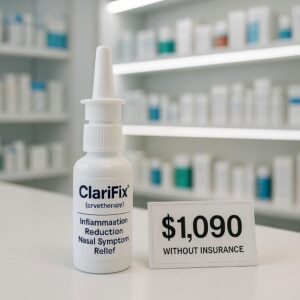
Based on current data from clinics across the United States, patient-reported figures, and industry pricing analysis, the average Clarifix cost without insurance ranges from $1,500 to $3,500 per session.
Most patients pay between $1,800 and $2,500.
A small number of clinics charge as low as $1,200, usually in areas with lower operating costs or during promotional events. High-end metropolitan clinics may charge up to $4,000, especially if they include additional services like imaging or follow-up visits.
What Does That Price Typically Include?
When you see a price quote, always ask what is included. A good transparent clinic will provide:
| Included Item | Typical Status |
|---|---|
| Initial consultation | Often included or discounted from total |
| The Clarifix procedure itself | Yes |
| Local anesthesia (numbing spray/pads) | Yes |
| Device/disposable fee | Yes |
| One follow-up visit (within 30 days) | Sometimes included |
| Additional treatments for both nostrils | Usually included as one session |
What Is Usually NOT Included
Be careful with clinics that quote a very low price, such as $900. They may add unexpected fees later:
-
Separate facility fee
-
Separate device fee
-
Extra charge for the second nostril
-
Post-procedure medications (saline sprays, pain relievers)
-
Additional follow-up visits beyond the first
Always ask for a written estimate before scheduling.
Why Does Clarifix Cost Vary So Much Without Insurance?
Several factors explain why one clinic charges $1,500 and another charges $3,500 for the exact same procedure. Understanding these will help you make a smarter decision.
Geographic Location
Prices in New York City or Los Angeles are generally 30 to 50 percent higher than in rural Texas or Ohio. Rent, staff salaries, and malpractice insurance all drive up costs in major cities.
Clinic Type
-
ENT private practice (single doctor): Often the most affordable option, between $1,500 and $2,200.
-
Multi-specialty clinic: $1,800 to $2,800.
-
Hospital outpatient department: $2,500 to $3,500. Hospitals have higher overhead.
-
Academic medical center: $2,800 to $4,000.
Doctor’s Experience and Reputation
A highly experienced rhinologist (nose specialist) who has performed hundreds of Clarifix procedures may charge more. That extra cost often translates to better outcomes and fewer complications.
Bundled Services
Some clinics offer a package deal. For example, Clarifix plus a nasal endoscopy or allergy testing might cost $2,800 instead of $2,200 + $800 separately.
Promotional Pricing
From time to time, device manufacturers offer patient savings programs. Clinics may pass those savings to you. These promotions are legitimate but usually last only a few months.
Is Clarifix Covered by Insurance? When Are You Paying Without Insurance?
This is a critical point.
Some health insurance plans cover Clarifix. Others do not. Many fall into a gray area.
When Insurance Typically Covers Clarifix
-
You have tried and failed at least two prescription medications (nasal sprays, antihistamines, ipratropium)
-
Your chronic rhinitis is well-documented in your medical records
-
You have seen an ENT specialist who recommends the procedure
-
Your plan specifically includes cryotherapy for nasal conditions
When You Pay Without Insurance
-
Your plan explicitly excludes Clarifix (check your policy)
-
You have a high-deductible plan and have not met your deductible (you may pay the full negotiated rate anyway)
-
You are uninsured
-
You choose a clinic that does not accept your insurance
-
You want to avoid insurance paperwork, pre-authorization delays, or denied claims
Important note: Even if your insurance covers Clarifix, you may still pay a significant amount out of pocket due to deductibles, copays, and coinsurance. In some cases, paying the cash price without using insurance is actually cheaper.
“I have a $3,000 deductible. My insurance’s negotiated rate for Clarifix was $2,200. Since I hadn’t met my deductible, I had to pay the full $2,200. The clinic’s cash price was $1,800. So I paid cash and saved $400.” — Real patient experience shared on a medical forum.
Comparing Clarifix Cost Without Insurance to Other Treatments
To understand if Clarifix is worth the out-of-pocket expense, compare it to the alternatives. Many people without insurance pay for these treatments repeatedly over many years.
| Treatment | Cost Without Insurance (Annual Estimate) | Frequency | Pros | Cons |
|---|---|---|---|---|
| Prescription nasal sprays (e.g., Ipratropium) | $600 – $1,200 per year | Daily | Low upfront cost | Ongoing expense; side effects |
| Antihistamines (prescription or OTC) | $300 – $900 per year | Daily or as needed | Easy to access | Sedation; incomplete relief |
| Allergy shots | $1,500 – $3,000 per year | Weekly to monthly | Addresses root cause | Only for allergic rhinitis; long commitment |
| Sinus surgery (turbinate reduction, etc.) | $8,000 – $15,000 (one-time) | Once (usually) | More permanent | Invasive; recovery time; higher risk |
| Clarifix (cash price) | $1,500 – $3,500 (one-time) | Every 12-18 months if needed | Non-invasive; fast | Temporary; not for everyone |
As the table shows, Clarifix often pays for itself within one to two years compared to daily medications.
Hidden Costs and Extra Fees to Watch For
When you request a Clarifix cash price, ask specifically about these potential extras. A trustworthy clinic will answer clearly.
Initial Consultation Fee
Many clinics charge $150 to $350 for the first visit. Some will apply that fee toward the procedure if you schedule on the same day or within a certain period. Always ask: “Is the consultation fee included in the cash price for Clarifix?”
Nasal Endoscopy
Before performing Clarifix, your doctor will likely want to look inside your nose with a small camera (nasal endoscopy). This is good medicine. But it can add $200 to $500 to your bill if not included.
CT Scan
Some doctors order a sinus CT scan to rule out other problems. This is not always necessary for Clarifix, but if ordered, a cash price for a sinus CT ranges from $400 to $1,200.
Bilateral Procedure
Clarifix is usually performed on both nostrils. Most quotes include both sides. But confirm this. Some older pricing models charged per nostril.
Follow-up Visits
A standard follow-up at 4 to 6 weeks may cost $100 to $250 if not included. Ask upfront.
Revision or Repeat Treatment
Clarifix effects wear off after 12 to 18 months for most people. If you need a second treatment, you will pay again. Some clinics offer a discounted repeat rate for cash-paying patients, typically 20 to 30 percent off the original price.
How to Find the Best Clarifix Cash Price Near You
Finding a fair, transparent price without insurance requires a little effort. Follow these steps.
Step 1: Identify Local ENT Clinics
Search for “ENT clinic near me” or “rhinologist [your city].” Make a list of at least five clinics.
Step 2: Call and Ask These Specific Questions
Use this script or something similar:
“Hello. I do not have insurance that covers Clarifix, or I prefer to pay cash. Can you tell me your all-inclusive cash price for the Clarifix procedure, including the consultation, the device, both nostrils, and one follow-up visit?”
Write down the answers. If they hesitate or give vague answers, move to the next clinic.
Step 3: Compare Written Estimates
Request a written cost estimate via email. A professional clinic will provide one without argument.
Step 4: Ask About Payment Plans
Many clinics offer in-house financing or payment plans for cash-paying patients. Common options include:
-
Pay in full discount: 5 to 15 percent off if paid on the day of service.
-
3 to 6 month payment plan: No interest or low interest.
-
Medical credit cards: CareCredit is the most common. It offers deferred interest if paid within 6, 12, or 18 months.
Step 5: Verify the Doctor’s Experience
Price is important, but experience matters more. Ask:
-
How many Clarifix procedures have you performed?
-
What is your success rate (percentage of patients satisfied after 6 months)?
-
What complications have you seen?
A slightly higher price at a very experienced clinic is often worth the peace of mind.
Financing Options for Clarifix Without Insurance
Paying $1,800 to $3,500 upfront is not possible for everyone. Here are realistic ways to manage the cost.
CareCredit
CareCredit is a healthcare credit card accepted at many ENT clinics. For Clarifix, you typically qualify for:
-
6, 12, or 18 months with no interest if paid in full by the end of the term
-
Longer terms (24, 36, 48 months) with interest
Important: If you do not pay the full balance before the promotional period ends, you may be charged deferred interest on the original amount. Read the fine print.
In-House Payment Plans
Some independent clinics offer their own payment plans. For example:
-
$500 deposit, then $200 per month for 10 months
-
No credit check
-
No interest, but the total price may be slightly higher
Health Savings Account (HSA) or Flexible Spending Account (FSA)
If you have an HSA or FSA through your employer, you can use those pre-tax dollars to pay for Clarifix. This effectively reduces your cost by 20 to 40 percent, depending on your tax bracket.
Confirm: Ask your plan administrator if Clarifix is an eligible expense. For most HSAs and FSAs, yes, because it treats a medical condition (chronic rhinitis).
Personal Loan
A small personal loan from a credit union or online lender (e.g., SoFi, Upgrade, LightStream) can cover the cost. Interest rates vary from 6 to 20 percent based on credit. This makes sense only if you cannot use CareCredit or an HSA.
Crowdfunding
Some patients use platforms like GoFundMe to raise money for medical procedures not covered by insurance. This is more common for very expensive treatments, but it works for some people. Share your story honestly.
Real Patient Examples: What People Actually Paid
Let us look at real-world examples from different situations. Names are changed, but the numbers are based on actual patient reports.
Example 1: Sarah in Houston, Texas
-
Clinic: Private ENT practice
-
Cash price: $1,650
-
Included: Consultation, bilateral procedure, 4-week follow-up
-
Not included: Nasal endoscopy ($250 extra – she paid it)
-
Total paid: $1,900
-
Result: Very satisfied. Symptoms reduced by 80 percent for 14 months.
Example 2: Michael in Chicago, Illinois
-
Clinic: Multi-specialty clinic
-
Cash price: $2,400
-
Included: Everything including endoscopy and one follow-up
-
Payment: CareCredit, 12 months no interest ($200/month)
-
Result: Satisfied. Wishes he had shopped around more, but convenience was important.
Example 3: Linda in rural Alabama
-
Clinic: Hospital outpatient department (only option within 60 miles)
-
Cash price: $3,100
-
Included: Consultation, procedure, follow-up
-
Payment: Paid in full from HSA
-
Result: Very satisfied. Says it was worth every dollar because she no longer uses tissues constantly.
Example 4: James in Portland, Oregon
-
Clinic: Academic medical center
-
Cash price: $3,800 (quoted)
-
Actual paid: $2,200 after asking for a discount
-
How: He explained he was paying cash and could not afford $3,800. The clinic offered a “self-pay discount” to $2,200.
-
Result: Happy he asked. Symptoms improved significantly.
Key takeaway: Always ask for a self-pay or cash discount. Many clinics have unpublished lower rates for patients without insurance.
Is Clarifix Worth the Cost Without Insurance?
This is the most important question. Let us be honest.
Clarifix is not a miracle cure. It does not work for everyone. And the effects are temporary, typically lasting 12 to 18 months.
But for the right person, it can be life-changing.
Clarifix is probably worth it if:
-
You have tried multiple medications without success
-
Your runny nose affects your sleep, work, or social life
-
You hate using sprays or taking pills every day
-
You can afford the cash price without going into significant debt
-
You understand that you may need a repeat treatment in 1 to 2 years
Clarifix may NOT be worth it if:
-
Your symptoms are mild and easily controlled with cheap OTC medications
-
You cannot afford the upfront cost without serious financial strain
-
You have a different cause for your symptoms (e.g., nasal polyps, deviated septum) that requires surgery
-
You are looking for a permanent one-time fix
What the Research Says
A 2020 study published in the journal Laryngoscope followed 154 patients who received Clarifix. At 12 months:
-
75 percent reported significant improvement
-
Average symptom reduction was 58 percent
-
Patient satisfaction rate was 82 percent
No serious complications occurred. The most common side effects were temporary headache, minor nosebleed, or facial discomfort lasting less than 48 hours.
These are realistic numbers. Clarifix is effective for most, but not all, patients.
How to Prepare for Your Clarifix Appointment (Paying Cash)
Once you have chosen a clinic and agreed on the cash price, follow these steps to ensure a smooth experience.
Before the Appointment
-
Get the written estimate. Keep it in your records.
-
Confirm what is included. Call one more time to verify no surprise fees.
-
Arrange payment. Bring your HSA card, CareCredit, or checkbook. Some clinics do not accept personal checks for cash-pay procedures.
-
Stop certain medications. Your doctor will advise. Typically, stop blood thinners (aspirin, ibuprofen, warfarin) 5 to 7 days before. Also stop nasal sprays 24 hours before.
-
Arrange a ride if needed. Most people drive themselves home, but some feel lightheaded. Better to be safe.
Day of the Procedure
-
Arrive 15 minutes early to complete paperwork
-
Bring a photo ID and your payment method
-
Expect to be in the clinic for 60 to 90 minutes total (procedure itself is very short)
-
You will receive numbing spray and possibly a numbing cotton pad inside your nose
-
The Clarifix device is inserted into each nostril for about 30 seconds
-
You may feel cold, pressure, or a mild pinch. Most patients report minimal discomfort.
After the Procedure
-
You can drive yourself home immediately
-
Return to work or normal activities the same day
-
You may have mild nasal congestion, a runny nose (temporarily worse), or a slight headache for 24 to 48 hours
-
Use saline spray to keep your nose moist
-
Avoid blowing your nose forcefully for 3 days
-
Avoid NSAIDs (ibuprofen, naproxen) for 3 days if advised
-
Results typically appear within 2 to 4 weeks, sometimes sooner
At the Follow-up (if included)
Your doctor will ask about your symptom improvement. Be honest. If you are not satisfied, they may discuss other options. Some patients need a second treatment.
Common Myths About Clarifix Cost Without Insurance
Let us clear up some false information circulating online.
Myth 1: “Clarifix costs $500 without insurance.”
Truth: This is unrealistic. The device itself has a significant cost. No legitimate clinic charges this little unless it is a loss leader to sell other services. Be very suspicious of prices under $1,200.
Myth 2: “Insurance always covers Clarifix.”
Truth: Many plans do not cover it yet because it is relatively new (FDA approved in 2017). Always check your specific policy.
Myth 3: “The cash price is always higher than the insurance price.”
Truth: Often the opposite is true. Insurance companies negotiate rates. But for patients with high deductibles, the cash price can be lower than the insurance-negotiated rate. Always compare.
Myth 4: “You only need Clarifix once in your life.”
Truth: Most people need a repeat treatment after 12 to 18 months because nerves can regenerate. Some patients get longer relief. A minority get permanent relief. Plan for possible repeat costs.
Myth 5: “Clarifix is experimental.”
Truth: No. It is FDA-approved, Medicare covers it in many regions, and it has been performed on over 100,000 patients worldwide. It is established, not experimental.
Discounts and Savings Programs for Clarifix
You may qualify for legitimate discounts even without insurance.
Manufacturer Patient Assistance
The manufacturer of the Clarifix device (Stryker) occasionally offers patient savings programs. These are not continuous, but when available, they can reduce your out-of-pocket cost by $500 to $1,000. Ask your clinic if any current programs exist.
Clinic Promotions
Some clinics run seasonal promotions. For example:
-
“January Clear Nose Event”: 15 percent off Clarifix for cash payers
-
“Summer Sinus Sale”: Free consultation with procedure purchase
These are real. Call clinics and ask directly: “Do you have any current promotions or discounts for cash-paying Clarifix patients?”
Bundled Service Discount
If you need another procedure, such as turbinate reduction or balloon sinuplasty, doing both at the same time may reduce the combined cost. Ask your ENT.
Referral Discount
Some clinics offer $100 to $200 off if you refer another cash-paying patient who completes the procedure.
What If Clarifix Does Not Work for You?
A responsible guide must address this possibility. Clarifix has a success rate of about 75 to 80 percent. That means 1 in 4 or 5 patients does not get meaningful relief.
If you pay cash and the procedure does not help, what then?
Before the procedure, ask about these policies:
-
Partial refund policy: Very few clinics offer this. But some will refund 50 percent if no improvement at 8 weeks.
-
Repeat treatment discount: Many clinics offer a reduced price for a second attempt (e.g., 50 percent off).
-
Credit toward another procedure: The clinic may apply your payment toward a different treatment, such as nasal spray or another in-office procedure.
Get these policies in writing before you pay.
Alternative options if Clarifix fails:
-
Rhinaer procedure: Similar concept but uses low-temperature plasma instead of cryotherapy. Cash cost: $2,000 to $4,000.
-
Nasal sprays: Back to medications, unfortunately.
-
Sinus surgery: More invasive, higher cost, but more permanent.
Frequently Asked Questions (FAQ)
1. Can I get Clarifix without a doctor’s referral?
Yes, if you pay cash. But any reputable ENT will want to evaluate you first to confirm you are a good candidate. The consultation is part of safe medical practice.
2. Does Clarifix hurt?
Most patients describe a cold sensation and mild pressure. No cutting or needles inside the nose. Pain is typically 1 to 2 on a 10-point scale.
3. How long does the procedure take?
The freezing part takes about 30 seconds per nostril. Total time in the exam room is 10 to 15 minutes. Total clinic visit is 60 to 90 minutes including check-in, numbing, and recovery.
4. Is Clarifix safe?
Yes. More than 100,000 procedures have been performed with a very low complication rate. Temporary side effects include mild nosebleed, headache, and facial discomfort. Serious complications are extremely rare.
5. Will my nose look different after Clarifix?
No. There is no external change. The device goes inside your nostril.
6. Can I use my HSA or FSA for Clarifix?
Yes, in almost all cases. Clarifix treats a medical condition (chronic rhinitis). Save your receipt and itemized bill.
7. What is the difference between Clarifix and Rhinaer?
Both treat chronic rhinitis. Clarifix uses freezing (cryotherapy). Rhinaer uses low-temperature plasma. Evidence suggests similar effectiveness. Cost is also similar. Your doctor’s preference often determines which is offered.
8. How soon do results appear?
Some patients notice improvement within a few days. For most, full benefit takes 2 to 4 weeks as inflammation subsides and nerves heal.
9. Can Clarifix help with postnasal drip?
Yes. Postnasal drip is often caused by the same overactive nerves. Many patients report significant reduction in that bothersome drip sensation.
10. What if I move to a different state? Will the new clinic honor my previous cash price?
No. Each clinic sets its own prices. You will need a new consultation and new cash price quote.
Additional Resource
For a deeper dive into patient experiences, current clinic pricing directories, and financial assistance programs, visit the American Rhinologic Society’s patient education page:
👉 https://www.american-rhinologic.org/patient_info (external link – opens new tab)
This site offers a “Find a Rhinologist” tool, fact sheets on Clarifix, and guidance on discussing costs with your doctor.
Final Conclusion
Clarifix without insurance typically costs between $1,500 and $3,500, with most patients paying around $1,800 to $2,500 for a complete treatment. This one-time expense often replaces years of daily medications and offers significant relief for chronic rhinitis. To get the best value, call multiple clinics, ask for a written cash price, and always request self-pay discounts before scheduling.
Disclaimer: This article is for informational purposes only and does not constitute medical advice. Prices and insurance coverage vary widely. Always consult a qualified ENT physician and verify costs directly with your chosen clinic.