There is nothing quite like a slow, sunny afternoon on a pontoon boat. You have the coolers packed, the music playing softly, and the kids laughing as you glide across the water. But before you enjoy that peace of mind on the lake, there is another kind of peace you need to secure. Financial peace.
Understanding the average pontoon boat insurance cost is the first step toward stress-free boating. Many new owners assume insurance is expensive. Others think their homeowners policy has them covered. Neither is entirely true.
In this guide, we will walk through everything you need to know. No confusing jargon. No unrealistic promises. Just honest numbers, practical tips, and clear examples to help you budget for the right protection.
Let’s dive in.
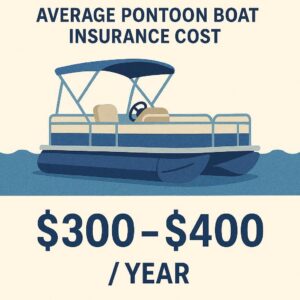
Average Pontoon Boat Insurance Cost
What Is the Real Average Pontoon Boat Insurance Cost?
Let us start with the number you came for.
For most pontoon boat owners in the United States, the average pontoon boat insurance cost falls between $250 and $700 per year. That is roughly $20 to $60 per month.
But here is the honest truth. That range is wide for a reason. Some owners pay as little as $150 annually for basic liability on an older, small pontoon. Others pay over $1,000 per year for a brand new, decked-out model with high coverage limits and extra endorsements.
To give you a clearer picture, let us break it down into three common scenarios.
| Boat Type & Age | Average Annual Premium | Typical Coverage |
|---|---|---|
| Older 18-ft pontoon (over 15 years old) | $150 – $300 | Liability only or basic agreed value |
| Standard 20-ft family pontoon (5–10 years old) | $300 – $500 | Liability, comprehensive, collision |
| New luxury 24-ft pontoon (under 3 years old) | $600 – $1,200 | Agreed value, high limits, towing, accessories |
Important note for readers: These numbers are estimates based on national averages from 2024–2025. Your actual rate will depend on where you live, how you use your boat, and your insurance history.
Why Does Pontoon Boat Insurance Cost Vary So Much?
You might be wondering why two similar pontoons can have very different insurance costs. The answer lies in risk. Insurers look at dozens of factors. Some you can control. Others you cannot.
Let us walk through the most important ones.
Boat Value and Age
This is the biggest driver of cost. A $10,000 used pontoon costs less to replace than a $60,000 tritoon with a premium stereo system and GPS. Newer boats also have higher repair costs. Parts are more expensive. Labor rates keep rising.
Older pontoons, especially those over 20 years old, can be harder to insure for physical damage. Some insurers will only offer liability coverage. Others will require a survey or inspection first.
Location and Storage
Where you keep your boat matters enormously. A pontoon stored on a lift in a quiet, gated community lake in Tennessee will cost less to insure than the same boat kept on a trailer in a hurricane-prone Florida coastal town.
Here is how location affects your rate:
-
Year-round navigation zones (Florida, Texas, California) → higher rates due to longer exposure
-
Seasonal lakes (Minnesota, Michigan, Wisconsin) → lower rates because you only boat 4–6 months a year
-
High-theft areas → higher comprehensive premiums
-
Hurricane or flood zones → significantly higher rates or separate windstorm deductibles
Your Boating Experience and Claims History
Insurers love experienced boaters with clean records. If you have completed a boating safety course (like those offered by the U.S. Coast Guard Auxiliary or America’s Boating Club), you may qualify for a discount.
On the other hand, if you have filed multiple claims in the past three years—even small ones—your rate will go up. Some insurers may even decline to renew your policy.
Horsepower and Speed
This surprises many pontoon owners. But modern pontoons are not slow. Some tritoons now come with 300 HP engines that can reach 50 mph or more. Faster boats mean higher accident risk. Higher risk means higher premiums.
A standard 90 HP pontoon will cost noticeably less to insure than a 250 HP performance model.
Coverage Limits and Deductibles
This is where you have the most control. Higher liability limits cost more. Lower deductibles cost more. Adding extra coverage for fishing gear, water skis, or personal effects adds a small amount.
We will cover specific coverage options in the next section.
What Does Pontoon Boat Insurance Actually Cover?
Before you shop for quotes, you need to know what you are buying. A cheap policy is not a good deal if it leaves you exposed after an accident.
Here are the standard parts of a pontoon boat insurance policy.
Liability Coverage
This pays for injuries or property damage you cause to others. For example, if you accidentally hit another boat or a swimmer gets hurt by your wake, liability coverage kicks in.
Most experts recommend at least $300,000 combined single limit for liability. Many pontoon owners choose $500,000 for extra peace of mind. Umbrella policies can go even higher.
Physical Damage (Comprehensive and Collision)
-
Collision: Pays to repair or replace your pontoon if you hit another boat, a dock, a log, or a submerged object.
-
Comprehensive: Pays for non-collision damage like theft, fire, vandalism, or falling trees.
For older pontoons, you might skip physical damage coverage if the annual premium exceeds 10% of the boat’s value. For newer boats, it is usually worth keeping.
Medical Payments
This covers medical bills for you and your passengers regardless of who caused an accident. Typical limits range from $1,000 to $10,000. It is not a substitute for health insurance, but it helps cover deductibles and co-pays.
Uninsured/Underinsured Boater Coverage
Not everyone on the water has insurance. If an uninsured boater hits you and causes injuries, this coverage steps in. It is relatively cheap and highly recommended.
Additional Coverage Options (Endorsements)
Many insurers offer add-ons for a small extra fee. Here are the most useful ones for pontoon owners.
| Endorsement | What It Does | Typical Annual Cost |
|---|---|---|
| Towing and assistance | Covers on-water towing, fuel delivery, jump-starts | $15 – $40 |
| Personal effects | Protects sunglasses, phones, clothing, fishing gear | $20 – $50 |
| Trailer coverage | Extends physical damage to your boat trailer | $30 – $60 |
| Fishing equipment | Higher limits for rods, reels, and tackle | $15 – $35 |
| Water sports liability | Covers injuries to skiers or tubers behind your boat | Often included or +$10 |
“I tell all my pontoon clients to add towing coverage. It costs less than a single tow bill, and trust me, you do not want to be stranded on a busy holiday weekend.” — Mike R., marine insurance agent, Lake of the Ozarks
Agreed Value vs. Actual Cash Value: Why This Matters
This is one of the most misunderstood parts of boat insurance. And it has a huge impact on your wallet if you ever file a claim.
Actual Cash Value (ACV)
ACV pays you what your boat is worth at the time of the loss, minus depreciation. A five-year-old pontoon might have depreciated 30-40%. If it is totaled, you get 60-70% of what you paid.
This keeps your premiums lower. But it can leave you with a shockingly small check after a total loss.
Agreed Value
You and the insurer agree on a fixed value for your pontoon when you buy the policy. If the boat is totaled, you receive that full amount. No depreciation deduction.
Agreed value costs more upfront. But for newer or customized pontoons, it is almost always the smarter choice.
Quick rule of thumb: If your pontoon is less than 10 years old or has significant upgrades (furniture, sound system, upgraded motor), choose agreed value.
How to Lower Your Pontoon Boat Insurance Cost Without Sacrificing Coverage
Nobody wants to overpay. But you also do not want to be underinsured. Here are legitimate ways to save money.
Take a Boating Safety Course
Many insurers offer discounts of 5% to 15% for completing an approved course. The courses are often free or low-cost. Plus, you become a safer boater. Win-win.
Bundle with Home or Auto Insurance
Most major insurers offer multi-policy discounts. If you insure your home and cars with the same company, adding your pontoon might cost less than going with a specialty marine insurer.
Increase Your Deductible
Raising your deductible from $250 to $1,000 can lower your annual premium by 15% to 30%. Just make sure you have that amount saved in an emergency fund.
Store Your Boat Properly
Storing your pontoon in a locked garage or a secure marina reduces theft and weather damage risk. Some insurers offer discounts for:
-
Indoor storage (best discount)
-
Boat lifts
-
GPS tracking devices
-
Engine cutoff switches
Limit Your Navigation Area
If you promise to keep your pontoon on a specific lake or within a certain distance from shore, some insurers offer lower rates. This is common for freshwater-only policies.
Pay Annually Instead of Monthly
Monthly payment plans often include small installment fees or interest charges. Paying the full annual premium can save you $20 to $50 per year.
Real-World Examples: What Do Pontoon Owners Actually Pay?
Let us look at three real-life scenarios. These are based on actual quotes from 2024.
Example 1: The Casual Lake Owner
-
Boat: 2008 20-ft Sun Tracker, 60 HP, stored on trailer in garage
-
Location: Central Minnesota (seasonal use, May–September)
-
Coverage: $300k liability, $1k medical, $500 deductible comprehensive, no collision
-
Annual premium: $212
Example 2: The Weekend Family Cruiser
-
Boat: 2019 22-ft Bennington, 150 HP, stored on lift with canopy
-
Location: Lake Murray, South Carolina
-
Coverage: $500k liability, $5k medical, $500 deductible agreed value ($35k), towing, personal effects
-
Annual premium: $487
Example 3: The Luxury Tritoon Owner
-
Boat: 2023 24-ft Manitou, 250 HP, GPS, premium sound, kept at marina
-
Location: Lake Norman, North Carolina
-
Coverage: $1M liability, $10k medical, $250 deductible agreed value ($85k), towing, trailer, water sports
-
Annual premium: $1,125
As you can see, the average pontoon boat insurance cost varies widely. But in every case, the owners felt their coverage matched their needs and budget.
Common Myths About Pontoon Boat Insurance
Let us clear up a few misunderstandings.
Myth 1: “My homeowners insurance covers my pontoon.”
False. Homeowners policies typically exclude watercraft. At best, they cover very small boats (under 14 feet or low horsepower) for liability only. Never assume you are covered.
Myth 2: “Pontoons are so safe that I don’t need insurance.”
Pontoons are stable and forgiving. But accidents happen. Propeller strikes, docking mishaps, fires, and storms do not care how stable your boat is. Liability lawsuits can easily exceed $100,000.
Myth 3: “Insurance is required by law everywhere.”
Boat insurance is not mandatory in every state. However, many marinas require it for slips. Many lenders require it for financed boats. And even if it is not legally required, boating without liability insurance is financially reckless.
Myth 4: “My credit score doesn’t affect boat insurance.”
In most states, insurers use credit-based insurance scores to predict risk. A better credit score often leads to lower premiums. Check your credit report regularly.
How to Get the Best Quotes for Pontoon Boat Insurance
Shopping for boat insurance is easier than you think. Follow these steps.
Step 1: Gather Your Boat’s Information
Have these details ready before you call or go online:
-
Year, make, model, length
-
Hull identification number (HIN)
-
Engine make, horsepower, year
-
Purchase price or current market value
-
Safety equipment (fire extinguisher, horn, life jackets)
-
Any upgrades or modifications
Step 2: Decide on Coverage Needs
Use the table below as a quick checklist.
| Coverage Type | Recommended for Most Pontoon Owners |
|---|---|
| Liability | $300k – $500k |
| Medical payments | $5,000 |
| Uninsured boater | Yes |
| Comprehensive | Yes (if boat worth over $5k) |
| Collision | Yes (if boat worth over $10k) |
| Towing | Yes |
| Personal effects | Optional |
Step 3: Get Quotes from Multiple Insurers
Do not just go with your auto insurer. Specialty marine insurers often have better coverage for pontoons.
Try these types of providers:
-
Major captive agents (State Farm, Allstate, Farmers)
-
Independent agents (can quote multiple carriers)
-
Specialty marine insurers (BoatUS, Progressive, Geico, Markel)
Step 4: Compare Apples to Apples
When you receive quotes, compare:
-
Coverage limits
-
Deductibles
-
Agreed value vs. ACV
-
Exclusions (some policies exclude certain lakes or months)
-
Discounts offered
Step 5: Ask About Discounts
Do not be shy. Ask every agent these questions:
-
“Do you offer a boating safety course discount?”
-
“Is there a multi-policy discount?”
-
“Do you have a discount for paid-in-full?”
-
“What about claims-free or renewal discounts?”
When Should You Update or Change Your Pontoon Insurance?
Your insurance needs will change over time. Review your policy at least once per year. Also update it when any of these happen:
-
You add a new motor or major upgrade
-
You install a new stereo, GPS, or fishing equipment
-
You change where you store or dock your boat
-
You let someone else use your pontoon regularly
-
The market value of your boat changes significantly
-
You add a trailer or second watercraft
“I see too many owners insure their pontoon for what they paid five years ago. But boat values have gone up. If you have an actual cash value policy, you could be seriously underinsured.” — Sarah L., marine claims adjuster
Frequently Asked Questions (FAQ)
1. Is pontoon boat insurance cheaper than other boat types?
Yes, generally. Pontoons are slower, more stable, and used more gently than speedboats or fishing boats. That lower risk profile translates to lower premiums compared to similar-sized bowriders or center consoles.
2. Do I need insurance if I only use my pontoon on a small private lake?
Even on private lakes, accidents can happen. You could still be held liable for injuries or property damage. Many private lake associations also require proof of insurance. It is a small price for major protection.
3. Does pontoon insurance cover my guests?
Yes, medical payments coverage applies to your passengers regardless of fault. Liability coverage protects you if a passenger sues you after an accident (rare, but possible).
4. Can I insure a homemade pontoon boat?
Some insurers will cover homemade pontoons, but only for liability. Physical damage coverage is very difficult to find. You will likely need a marine survey and photos before approval.
5. What is not covered by standard pontoon insurance?
Standard policies typically exclude:
-
Normal wear and tear
-
Mechanical breakdown (engine failure due to age or lack of maintenance)
-
Mold, mildew, or marine growth
-
Damage from animals (except collision with a large animal)
-
Racing or speed contests
-
Commercial use (rental or charter)
6. How does a pontoon insurance claim work?
You report the loss to your insurer. They assign an adjuster. For physical damage, they may inspect the boat. For a total loss with agreed value, you receive the agreed amount minus your deductible. For a repair, they pay the shop directly or reimburse you.
7. Can I get a refund if I sell my pontoon mid-policy?
Yes. Most insurers offer a pro-rated refund for the unused portion of your policy. Some charge a small cancellation fee ($25–$50). Check your policy terms.
Additional Resource
For official boating safety courses and state-specific requirements, visit the United States Coast Guard’s Boating Safety Division:
🔗 uscgboating.org – Find approved safety courses, check state laws, and access free educational materials.
Conclusion
The average pontoon boat insurance cost is surprisingly affordable for most owners—typically between $250 and $700 per year. Your actual price depends on your boat’s value, your location, your coverage choices, and your boating history. By understanding the difference between agreed value and actual cash value, shopping multiple quotes, and taking advantage of discounts, you can protect your pontoon without breaking the bank. Do not let a beautiful day on the water turn into a financial nightmare. Get covered, boat smart, and enjoy the ride.