If you own a home in an AE flood zone, you’ve likely discovered that standard homeowners insurance doesn’t cover flood damage. This realization brings you to a critical question: how much does flood insurance for an AE zone actually cost? The answer isn’t a single number, but understanding the factors at play can empower you to make informed decisions and potentially save thousands of dollars.
Flood insurance in high-risk areas like AE zones is primarily available through the National Flood Insurance Program (NFIP), though private flood insurance is becoming a more common alternative. While the cost can be significant, it is a crucial investment in protecting what is likely your most valuable asset. This guide will walk you through every aspect of AE flood zone insurance costs, from the basics of how premiums are calculated to practical steps for finding the best coverage for your situation.
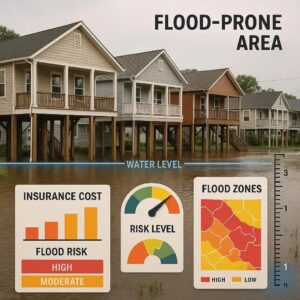
AE Flood Zone Insurance Costs
What is an AE Flood Zone?
Before diving into costs, it’s essential to understand what an AE zone designation means. Designated by the Federal Emergency Management Agency (FEMA), AE zones are Special Flood Hazard Areas (SFHAs) with a 1% annual chance of flooding—often referred to as the 100-year floodplain.
-
Base Flood Elevation (BFE): This is the key characteristic of an AE zone. FEMA has determined the expected height floodwaters will reach during a 1%-annual-chance flood event. Your insurance cost is heavily influenced by how your home’s elevation compares to this BFE.
-
Mandatory Purchase Requirement: If you have a federally backed mortgage on a property in an AE zone, your lender will require you to carry flood insurance.
Important Note: “100-year flood” is a common misnomer that leads to dangerous complacency. It does not mean a flood will only happen once every 100 years. It means there’s a 1-in-100 chance of flooding in any given year. Over the life of a 30-year mortgage, that translates to a roughly 26% chance of experiencing such a flood.
How is NFIP Flood Insurance Cost Calculated for AE Zones?
The NFIP uses a complex set of variables to determine your premium. Think of it as a formula where several factors are plugged in to arrive at your final cost. Here are the primary components:
1. Property Characteristics
-
Year of Construction: Homes built after the community’s first Flood Insurance Rate Map (FIRM) was adopted typically face higher rates if not properly elevated.
-
Building Occupancy: Single-family homes, duplexes, and other occupancy types have different rate calculations.
-
Number of Floors: The design and number of stories in your home affect risk.
-
Foundation Type: This is a major factor. Homes on crawl spaces, slabs, or with basements are rated differently, with basements often leading to higher costs.
-
Location of Utilities: The elevation of your heating, ventilation, air conditioning (HVAC), water heater, and electrical panel matters. Having these items elevated above the BFE can lead to significant discounts.
2. Elevation Factors (The Most Critical Element)
-
Elevation Certificate (EC): This is the most important document for determining your premium. A licensed surveyor prepares an EC, which details your property’s elevation relative to the BFE. The difference between your home’s “lowest adjacent grade” and the BFE results in an Elevation Difference.
-
Rate Tables: The NFIP uses specific rate tables based on your elevation difference. The higher your home is above the BFE, the lower your premium will be.
3. Coverage Choices
-
Building Coverage: The maximum from the NFIP is $250,000. The amount you choose directly impacts your premium.
-
Contents Coverage: The maximum is $100,000. You can choose to insure your belongings for less to lower your cost.
-
Deductible: As with other insurance, choosing a higher deductible will lower your annual premium.
4. Grandfathering and Pre-FIRM Status
-
Pre-FIRM: Properties built before the community’s first FIRM may qualify for subsidized rates, which are lower. However, these subsidies are being phased out under FEMA’s Risk Rating 2.0 initiative to reflect true risk.
-
Grandfathered Rates: If you maintained continuous coverage and your property was mapped into a higher-risk zone (like AE), you may be eligible for grandfathered rates, which can be lower.
Comparative Table: NFIP vs. Private Flood Insurance in AE Zones
| Feature | NFIP Flood Insurance | Private Flood Insurance |
|---|---|---|
| Availability | Guaranteed for most properties in participating communities. | Not guaranteed; underwriting is selective based on risk. |
| Coverage Limits | Max $250k building / $100k contents. | Often much higher limits available (e.g., $1M+). |
| Cost | Standardized, based on FEMA formulas. Can be high for high-risk properties. | Can be lower, similar, or higher than NFIP. Often competitive for newer, elevated homes. |
| Coverage Flexibility | Standardized policy. No additional living expenses or basement finishes coverage. | More flexible. May include additional living expenses, replacement cost for contents, and broader coverage. |
| Claims Process | Handled directly by FEMA or its write-your-own (WYO) partners. | Handled by the private insurer. |
| Best For | Properties that don’t qualify for private insurance, those with Pre-FIRM subsidies, or where private market is limited. | Properties that meet insurer criteria, owners needing higher limits, or those seeking lower premiums/broader coverage. |
FEMA’s Risk Rating 2.0: The New Cost Equation
As of October 2021, FEMA implemented Risk Rating 2.0: Equity in Action. This new pricing methodology fundamentally changed how NFIP premiums are calculated, moving away from a focus primarily on zones and BFE to a more individualized risk assessment.
Key changes under Risk Rating 2.0 for AE zones:
-
More Factors: Now considers replacement cost value, the specific types of flood risk (river overflow, storm surge, heavy rainfall), and distance to water.
-
Individualized Pricing: Two identical-looking homes on the same street can now have different premiums based on their specific elevation and rebuild cost.
-
Elimination of Subsidies: The goal is to have premiums reflect the true, full risk of a property. This means some Pre-FIRM subsidies are being phased out, leading to significant increases for some properties, while others may see decreases.
Quote from a FEMA spokesperson: “Risk Rating 2.0 enables FEMA to set rates that are fairer, ensuring policyholders with lower-value homes are not paying more than those with higher-value homes and reflecting the individual flood risk of each property.”
What Can You Expect to Pay? Realistic Cost Ranges
It is crucial to avoid citing misleading “average” costs, as they vary too widely. Instead, consider these realistic annual premium ranges for an NFIP policy in an AE zone as of 2023-2024:
-
Lower-Premium Scenario ($500 – $1,200/year): A newer, elevated home built several feet above the BFE, with utilities located above the expected flood level, and a moderate rebuild cost.
-
Mid-Range Premium Scenario ($1,200 – $2,500/year): A home built at or slightly above the BFE, with a standard foundation, and average rebuild value. This is a common range for many AE zone properties.
-
Higher-Premium Scenario ($2,500 – $5,000+/year): A home built below the BFE, with a basement, high replacement cost, or significant flood risk factors. Pre-FIRM homes losing subsidies may see premiums rise into this range.
Remember: These are estimates. The only way to know your exact cost is to get a quote.
How to Get an Accurate Quote and Purchase a Policy
-
Gather Information: Have your property address, year of construction, foundation type, square footage, and desired coverage amounts ready.
-
Obtain an Elevation Certificate (EC): If you don’t have one, contact your local floodplain manager or a licensed surveyor. An existing EC may be on file with your county or provided by the previous owner.
-
Contact Insurance Agents:
-
NFIP Policy: Reach out to a local property insurance agent who participates in the NFIP’s “Write-Your-Own” program. They can provide a precise NFIP quote.
-
Private Policy: Contact independent insurance agents who work with multiple private flood insurance carriers. They can shop your risk and compare NFIP vs. private options.
-
-
Compare and Decide: Review the coverage details, limits, exclusions, and cost from each option. Don’t choose on price alone—ensure the coverage meets your needs.
Proactive Strategies to Reduce Your AE Flood Zone Insurance Cost
You are not powerless against high premiums. Here are effective ways to lower your cost:
-
Elevate Your Home or Utilities: Mitigation is the most powerful tool. Raising your home or simply elevating your HVAC, water heater, and electrical panel above the BFE can lead to substantial NFIP premium discounts (40-60% or more).
-
Choose a Higher Deductible: Opting for a $5,000 or $10,000 deductible instead of $1,000 can significantly reduce your annual premium.
-
Maintain Continuous Coverage: Avoid lapsing your policy. Continuous coverage protects your eligibility for grandfathered rates and ensures you’re covered when a flood strikes.
-
Shop the Private Market Annually: The private flood insurance market is evolving. Even if you have an NFIP policy, get a comparison quote from the private market every year at renewal time.
-
Invest in Flood Openings (Vents): For homes with enclosures below the BFE (like crawlspaces or certain foundations), installing certified flood vents can equalize water pressure and may reduce premiums.
-
Advocate for Community Mitigation: Your community’s participation in FEMA’s Community Rating System (CRS) can earn discounts for all policyholders (up to 25%) by implementing floodplain management activities that exceed NFIP minimums.
Conclusion
Navigating AE flood zone insurance costs requires understanding that your premium is a personalized reflection of your property’s unique flood risk, influenced by elevation, construction, and FEMA’s new Risk Rating 2.0 system. While costs can be substantial, they are a vital investment in financial security. By obtaining an Elevation Certificate, shopping quotes from both the NFIP and private insurers, and investing in mitigation, you can secure the necessary protection and potentially achieve meaningful savings on your flood insurance.
Frequently Asked Questions (FAQ)
Q: Is flood insurance in an AE zone mandatory?
A: If you have a mortgage from a federally regulated or insured lender on a home in an AE zone, yes, it is mandatory. Even if you own your home outright, it is highly recommended.
Q: Can I get flood insurance if I’m renting in an AE zone?
A: Absolutely. Renters can purchase an NFIP policy to cover their personal belongings (contents) up to $100,000. The building itself would need to be insured by your landlord.
Q: Is there a waiting period for flood insurance?
A: Yes, typically 30 days from the date of purchase for NFIP policies, with few exceptions (e.g., if it’s required for a new loan closing). Private insurers may have shorter waiting periods.
Q: Does flood insurance cover basement flooding?
A: Coverage for basements and areas below the lowest elevated floor is very limited under NFIP policies. It generally covers structural elements and essential systems, but not finished walls, floors, or personal belongings stored there. Private policies may offer broader coverage.
Q: My home was just remapped into an AE zone. What should I do?
A: First, verify the map change with your local planning department. Then, contact your insurance agent immediately. You may be eligible for a lower-cost “Preferred Risk Policy” if you purchase coverage before the new map becomes effective.
Additional Resources
-
FEMA Flood Map Service Center: The official source to look up your property’s flood zone: https://msc.fema.gov/portal/home
-
NFIP Consumer Resource Center: Information on coverage, finding an agent, and the claims process: https://www.fema.gov/flood-insurance
-
The Association of State Floodplain Managers (ASFPM): A non-profit organization with educational resources for property owners: https://www.floods.org/