If you are reading this, you are likely one of two people. Either you are a seasoned automotive detailer looking to expand your skills into the lucrative world of aviation, or you are an existing aircraft detailer trying to figure out why your insurance renewal just went up.
Let’s be honest from the start: detailing a $50 million Gulfstream is not the same as waxing a family sedan. The risk is infinitely higher, and so is the cost of getting it wrong. One static discharge, one scratched canopy, or one fluid spill in a hangar can lead to claims that reach six figures.
This guide is designed to give you a realistic, honest look at aircraft detailing insurance cost. We aren’t going to throw out a single number and call it a day, because that isn’t how this industry works. Instead, we will break down the variables, the policy types, and the real-world numbers you can expect to pay based on your specific business model.
Whether you operate from a fixed location or travel with a mobile unit, understanding these costs is the first step toward protecting your livelihood.
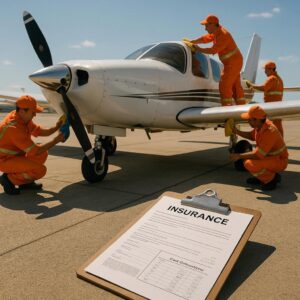
Aircraft Detailing Insurance Costs
Why Insurance for Aircraft Detailing is Different
Before we dive into the dollars and cents, we need to establish why this niche is treated differently by underwriters. If you approach an insurance broker with the same mindset as car detailing, you are in for sticker shock.
Aviation insurance is a specialized field. When you work on an aircraft, you are working on a highly regulated, complex piece of machinery. Insurers look at aircraft detailing not as “cosmetics,” but as “maintenance.”
-
Liability Exposure: If you scratch a car’s paint, you might pay for a repaint. If you scratch a plane’s fuselage, you might be paying for an engineering report, non-destructive testing, and downtime while the aircraft is grounded.
-
Product Liability: If the wax or cleaning agent you use reacts poorly with the aircraft’s skin or sensors, the liability falls on you.
-
Hangarkeepers Liability: This is the aviation equivalent of garage keepers insurance. If a plane is in your custody and it gets damaged (whether by you, a storm, or a third party), this coverage pays for it.
Because of these factors, you cannot simply add a rider to a standard business auto policy. You need aviation-specific coverage.
Breaking Down the Core Insurance Policies
To understand the total cost, you first need to understand the building blocks of your insurance package. Most professional aircraft detailers do not buy just one policy; they buy a bundle.
General Liability for the Ground Crew
This is your foundational coverage. It protects you if someone slips and falls near your operation or if you cause damage to the hangar itself. However, standard General Liability policies often have strict exclusions for “aviation activities.” You must ensure your policy explicitly includes ground handling and detailing services.
Hangarkeepers Liability: The Most Important Coverage
This is the policy you will hear about most often. It covers damage to the aircraft that is in your care, custody, or control.
-
What it covers: Fire, theft, windstorm, and importantly, damage caused by your detailing work (like a buffer gouging the paint).
-
What it doesn’t cover: It usually excludes wear and tear, and often has specific sub-limits for “hull scratching.”
Pollution Liability
Aircraft detailing involves chemicals. Even biodegradable soaps can be an issue if they wash into a storm drain. If you are working on a ramp or near a runway, environmental regulations are strict. Pollution liability covers the cost of cleanup if there is a spill.
Inland Marine (Tools and Equipment)
Your pressure washers, generators, polishers, and specialty vacuums are expensive. If your rig is in an accident or your tools are stolen from a hotel parking lot while you are on a cross-country job, Inland Marine coverage replaces them.
The Real Numbers: How Much Does It Cost?
Now, let’s get to the heart of the matter: the actual aircraft detailing insurance cost.
It is crucial to understand that aviation insurance is “underwritten,” not “rated.” In auto insurance, a computer spits out a rate based on your zip code and driving record. In aviation, a human underwriter looks at your application and decides how risky you are.
Here is a realistic breakdown based on the size and scale of your operation.
Scenario A: The Solo Operator (Part-Time)
You are just starting out. You have a van, some basic equipment, and you primarily wash small piston-engine planes (Cessnas, Pipers) at local municipal airports.
-
Estimated Annual Premium: $1,800 – $3,500
-
Typical Coverage:
-
General Liability: $1 Million
-
Hangarkeepers: $100,000 – $250,000 (per aircraft)
-
Tools: $5,000 – $10,000
-
-
Why the cost is lower? You are working on smaller, less expensive aircraft. The perceived risk is lower because the “hull value” (the plane’s worth) is lower. You also likely have no employees, which reduces workers’ compensation costs.
Scenario B: The Established Mobile Detailer
You have a dedicated truck or trailer. You travel to multiple airports, and your clientele includes turboprops (King Airs, Pilatus) and light jets (Citation, Phenom). You have one or two part-time employees.
-
Estimated Annual Premium: $4,500 – $8,500
-
Typical Coverage:
-
General Liability: $2 Million
-
Hangarkeepers: $500,000 – $1 Million (per aircraft)
-
Tools: $25,000 – $50,000
-
Workers’ Compensation: Included/Varies by state
-
-
Why the jump? The hull values are higher ($2M – $10M planes). Having employees introduces payroll audits and workers’ comp costs. The insurer knows you are working on more complex aircraft systems.
Scenario C: The Fixed-Base Operator (FBO) Partner or Large-Scale Shop
You have a contract with an FBO, or you run a shop that handles heavy jets (Gulfstream, Global Express, Falcon). You have a team of detailers and handle high-volume polishing and paint correction.
-
Estimated Annual Premium: $10,000 – $25,000+
-
Typical Coverage:
-
General Liability: $5 Million+ (Often an Aviation Umbrella)
-
Hangarkeepers: $2 Million – $10 Million (per aircraft)
-
Tools: $100,000+
-
Pollution Liability: Included
-
-
Why the high cost? You are touching planes worth $50M+. A single mistake could result in a massive claim. Underwriters will scrutinize your training programs, safety protocols, and chemical storage facilities heavily.
Comparative Table: Aircraft Detailing Insurance Cost by Business Size
| Business Profile | Average Hull Value Insured | Estimated Annual Premium | Key Coverage Focus |
|---|---|---|---|
| Solo / Piston Props | < $500,000 | $1,800 – $3,500 | Basic Hangarkeepers, Liability |
| Mobile / Light Jets | $500k – $3 Million | $4,500 – $8,500 | Higher Hangarkeepers Limits, Tools |
| Established / Heavy Jets | $3 Million – $50 Million+ | $10,000 – $25,000+ | Umbrella Liability, Pollution, high sub-limits |
Key Factors That Influence Your Premium
Why do two detailers with the exact same truck and equipment get different quotes? Insurance companies look at the “risk profile.” Here are the variables they weigh most heavily.
1. Experience and Training
This is the number one factor. If you are an automotive detailer with 10 years of experience, that matters. But if you have no aviation experience, you are a higher risk.
-
Insurers want to know: Have you taken an aviation-specific detailing course? Do you understand the dangers of static electricity and fluid ingress?
-
Cost Impact: Proven training can lower your premium by 10-20% in the first year.
2. The Types of Aircraft You Service
As mentioned above, the hull value drives the cost. Insuring a detailer who works on fabric-covered Piper Cubs is cheap. Insuring a detailer who works on composite-bodied Cirrus or all-aluminum jets is more expensive. Composite repairs are incredibly specialized and costly.
3. Geographic Location
If you work in Florida or Texas during hurricane season, your Hangarkeepers rates will be slightly higher to account for storm risk.
Similarly, if you work in urban areas with high crime rates, your tool and equipment theft premiums will go up.
4. Claims History
This one is simple. If you have a history of scratching paint or dropping equipment on wings, you are a liability. A single claim can double your premium for the next three to five years.
5. Deductible Selection
Just like your car or health insurance, choosing a higher deductible lowers your premium.
-
Low Deductible ($500 – $1,000): Higher premium, less out-of-pocket if you mess up.
-
High Deductible ($2,500 – $5,000): Lower premium, but you must have cash reserves to cover the first part of a claim.
Important Note for Mobile Detailers:
If you travel across state lines, your insurance must be portable. Some policies are territory-restricted. Always verify that your “aircraft detailing insurance cost” includes nationwide or international coverage if you plan to travel with clients.
Hidden Costs: Endorsements and Exclusions
When you get a quote, it is vital to read the fine print. The base price might look good, but it could be missing critical endorsements.
The “Scratch and Dent” Exclusion
This is the most common trap in the industry. Many standard aviation policies exclude “marring, scratching, or gradual deterioration.”
-
The Problem: If you accidentally swirl the paint with a dirty mitt, the claim might be denied.
-
The Solution: You need to find a policy that offers a “Scratch and Dent” endorsement or one that specifically covers detailing operations. This will increase your aircraft detailing insurance cost by roughly 10-15% , but it is essential.
Non-Owned / Hired Auto Coverage
If an employee runs to the store to get more towels in their own car and gets into an accident, are you covered? Non-owned auto coverage handles this. It is usually a cheap add-on ($200 – $400/year) but crucial for LLC protection.
The Cost of Going “Naked”: Why You Can’t Skip It
Every year, a new detailer asks the question: “Can’t I just get a cheap BOP policy and hope the airport doesn’t ask for my certificate?”
The short answer is no. And here is why the risk is not worth the “savings.”
Let’s look at the potential out-of-pocket costs for common mistakes if you are uninsured or underinsured.
-
Scenario A: The Static Shock.
You are wiping down a jet after a wash. The dry air and your synthetic mitt create static electricity, which discharges into the static wicks on the wing. Replacing and recalibrating static wicks on a Gulfstream can cost $5,000 – $15,000. -
Scenario B: The Buffer Slip.
You are polishing the horizontal stabilizer. The buffer catches an edge and digs into the composite material. Composite repair on an aircraft requires an engineering sign-off. Estimated repair cost: $20,000 – $50,000. -
Scenario C: The Hangar Door.
You taxi a plane out of the hangar (if you are insured to move aircraft) and clip the door frame. Wingtip damage plus hangar door repair: Easily $75,000+.
Without insurance, these costs come out of your pocket. With insurance, you pay your deductible, and the insurance company handles the rest (though your premium will likely go up next year).
How to Lower Your Premiums (Legitimately)
Insurance isn’t a fixed cost. You have control over it. Here are actionable steps to lower your aircraft detailing insurance cost without sacrificing coverage.
Invest in Formal Training
Certifications matter. Look for courses offered by industry bodies or manufacturers.
-
Mentioning a certified training course on your application tells the underwriter you are serious about risk management.
-
Some insurers offer a “safety credit” for documented training.
Implement a Written Safety Manual
Don’t just talk about safety; write it down.
-
Create a checklist for arriving on site (e.g., “Check aircraft for pre-existing damage with client”).
-
Write a procedure for chemical handling and spill cleanup.
-
Document your employee training process.
Having a manual makes you look professional and lowers the perceived risk of “careless” work.
Start Small and Build a Record
If you are brand new, you might not be able to insure a $20 million jet on day one. Start by working on smaller aircraft. Build a clean claims history for 2-3 years. Once you have an “aviation loss run” (a record of no claims), you can approach insurers to cover larger hulls at better rates.
Bundle Your Policies
Don’t buy General Liability from one company, Hangarkeepers from another, and Tools from a third.
-
Why? Aviation insurers offer “package policies.” Bundling everything with one carrier often results in a multi-policy discount of 5% to 15% .
-
It also makes filing a claim easier because there is no finger-pointing between different insurance companies.
Questions to Ask Your Insurance Broker
Before you write that check, sit down with your broker (or a prospective broker) and ask these specific questions. The answers will tell you everything you need to know about the value you are getting for your money.
-
“Does the Hangarkeepers policy include damage caused by my detailing processes, or does it exclude ‘surface marring’?”
-
“Is there a sub-limit for scratch and dent claims? If so, what is it?”
-
“Does the policy cover me if I am working at an airport that is not my home base?”
-
“Are my employees automatically covered, or do I need to list them specifically?”
-
“If a client’s aircraft is damaged and is out of service for repairs, does the policy cover ‘loss of use’ or ‘downtime’ for the owner?”
Conclusion
Understanding aircraft detailing insurance cost is about matching the coverage to the risk. While a solo operator might secure a policy for under $2,000, a team handling heavy jets should budget five times that amount. The key is not to find the cheapest policy, but the one that covers your specific liabilities—namely, Hangarkeepers with scratch endorsements. By investing in training and safety protocols, you can control these costs and protect your business from the financial turbulence of a six-figure claim.
Frequently Asked Questions (FAQ)
Q: Is aircraft detailing insurance more expensive than auto detailing insurance?
A: Yes, significantly. The cost is higher because the value of the asset you are working on (the aircraft hull) is exponentially higher, and the liability for mistakes is much greater.
Q: Do I need insurance if I am just washing my friend’s Cessna as a favor?
A: If you are not charging money, you might be covered under your friend’s hull insurance as a “permissive user.” However, if you charge a fee, you are operating a business and need your own liability coverage. If you cause damage while being paid, the owner’s insurance may deny the claim, leaving you responsible.
Q: Does my location affect my aircraft detailing insurance cost?
A: Absolutely. Insurers consider regional risks like hurricanes (impacting hangar storage), crime rates (impacting tool theft), and even state liability laws when calculating your premium.
Q: Can I insure a client’s plane for more than my policy limit?
A: No. Your policy has a “per occurrence” limit. If the plane is worth $5 million and you only have $1 million in Hangarkeepers coverage, you are personally responsible for the remaining $4 million if you total the aircraft. Always match your coverage limits to the highest value aircraft you service.
Q: What is an “aviation loss run”?
A: It is a detailed report from your insurance company that shows your claim history over the past 3-5 years. When you switch insurers, they will ask for this document to verify that you are a low-risk client.
Additional Resource
For a deeper dive into the regulatory side of aircraft maintenance and how it intersects with detailing, the Federal Aviation Administration (FAA) provides excellent resources. Understanding the legal definitions of “preventive maintenance” versus “major repair” can help you define your scope of work to insurers.
[Visit FAA.gov for Advisory Circulars on Ground Handling] (https://www.faa.gov/regulations_policies/advisory_circulars)