If you’re an ATV owner, you know the thrill of exploring off-road trails and open terrain. But alongside that adventure comes responsibility—and a key part of that is protecting your ride and yourself with insurance. One of the first questions every rider asks is: “How much will this cost?” The answer isn’t always straightforward, as the price you pay can vary dramatically. This guide will walk you through everything you need to know about ATV insurance premiums, helping you make an informed decision.
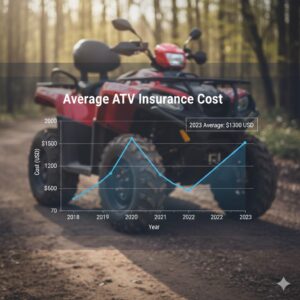
Average ATV Insurance Cost
What is the National Average Cost of ATV Insurance?
Let’s address the central question head-on. On a national level, you can expect to pay somewhere between $200 and $600 per year for a standard ATV insurance policy. That typically breaks down to $15 to $50 per month.
However, calling this an “average” is a bit misleading. It’s more accurate to think of it as a very broad starting range. For many riders with a clean record and a mid-range utility ATV, annual costs often settle comfortably in the $300 to $400 range. It’s crucial to understand that this is a highly variable figure, influenced by a tapestry of personal and regional factors, which we will explore in detail.
“Think of ATV insurance not as an optional expense, but as a critical part of your riding gear. It’s the financial helmet for your wallet,” notes Mike Tanner, a veteran off-road safety instructor.
Sample Annual Premium Ranges by Profile
The following table illustrates how different scenarios can impact your yearly insurance bill.
| Rider & ATV Profile | Estimated Annual Premium Range | Key Influencing Factors |
|---|---|---|
| Young Rider (Under 25), Sport Model | $500 – $900+ | Age, ATV type (higher performance risk), likely lower riding experience. |
| Experienced Rider (40s), Utility Model | $250 – $400 | Favorable age, safer ATV classification, potentially multi-policy discounts. |
| Rider with a Recent At-Fault Accident | $600 – $1,000+ | Claim history is a major rating factor, signaling higher risk to insurer. |
| New Rider (Any Age), Mid-Range ATV | $400 – $700 | Lack of riding experience increases perceived risk, even for older adults. |
Key Factors That Determine Your ATV Insurance Quote
Your premium is a personalized calculation. Insurers assess risk based on specific details about you, your vehicle, and how you use it. Here are the primary elements that shape your final cost.
1. Your Personal Demographic Details
-
Age and Riding Experience: Insurers statistically see younger riders (especially those under 25) as higher risk. Conversely, mature riders with years of accident-free experience often qualify for the best rates.
-
Driving Record: Your history on the road matters. A clean driving record with no tickets or accidents signals responsibility. DUIs, speeding tickets, or at-fault accidents will significantly increase your ATV insurance costs.
-
Location: Where you live and store your ATV affects your rate. Areas with higher rates of theft or vandalism will see higher premiums. Similarly, regions with more severe weather or challenging terrain might also impact costs.
2. Your ATV’s Specifications
-
Make, Model, and Engine Size (CCs): A high-performance 800cc sport quad will cost far more to insure than a 500cc utility model designed for farm work. Sport models are associated with higher speeds and greater risk of injury.
-
Age and Value of the ATV: The cost to repair or replace your machine is fundamental. A brand-new $12,000 side-by-side (SxS) will require more coverage than a used $3,000 quad. However, older ATVs might not qualify for certain coverages like collision or comprehensive if their value is low.
-
Safety Features: Machines equipped with factory-installed features like roll cages (for SxS), headlights, tail lights, and even anti-theft devices may be eligible for discounts.
3. Your Coverage Choices and Limits
This is where you have the most control. Choosing your coverage is a balance between protection and price.
-
Liability-Only vs. Full Coverage: A state-mandated liability-only policy is the absolute minimum and cheapest option. It covers damage or injuries you cause to others. Full coverage typically adds Collision (for your ATV in an accident) and Comprehensive (for theft, fire, vandalism), which increases the premium but protects your investment.
-
Deductible Amount: This is what you pay out-of-pocket before insurance kicks in on a claim. Choosing a higher deductible (e.g., $1,000 instead of $250) will lower your annual premium, but means you pay more if an incident occurs.
-
Coverage Limits: Higher limits for liability or accessory coverage mean higher premiums, but also greater financial protection.
4. How You Use Your ATV
-
Recreational vs. Commercial Use: Insuring an ATV used solely for weekend trail riding is standard. Using it for business purposes (e.g., farming, landscaping, snow plowing) requires a commercial policy, which will be priced differently.
-
Storage and Location of Use: An ATV stored in a locked garage in a rural area presents less risk than one kept on an open trailer in a city, affecting your comprehensive premium.
How to Save Money on Your ATV Insurance Policy
Don’t just accept the first quote you get. Proactive steps can lead to substantial savings.
-
Bundle Your Policies: The most powerful discount. Insuring your ATV with the same company that covers your auto, home, or motorcycle often yields savings of 10-20%.
-
Complete a Safety Course: Many insurers offer discounts for riders who complete an ATV safety course accredited by the Motorcycle Safety Foundation (MSF) or similar organizations.
-
Ask About Discounts: Inquire about all possible discounts: multi-vehicle (for multiple ATVs), claim-free, paid-in-full, or discounts for members of certain organizations or riding clubs.
-
Maintain a Clean Record: Safe riding and driving over time is the most reliable way to keep your premiums low.
-
Shop Around Annually: Get quotes from at least three different insurers. Rates and discounts change, and loyalty isn’t always rewarded with the best price.
Important Note for Readers: Never sacrifice essential coverage to save a few dollars. If you rely on your ATV for transportation in remote areas or could not afford to replace it if stolen, opting for only the minimum liability could be a financially devastating decision. Balance savings with smart protection.
Essential ATV Insurance Coverages Explained
Understanding the components of a policy helps you build the right one.
-
Bodily Injury & Property Damage Liability: Mandatory in most states. Covers injuries to others and damage to their property if you are at fault in an accident.
-
Collision Coverage: Pays for damage to your ATV resulting from a collision with another vehicle or object, regardless of fault.
-
Comprehensive Coverage: Covers non-collision losses like theft, fire, vandalism, hail, or falling objects.
-
Uninsured/Underinsured Motorist Coverage: Protects you if you’re hit by another rider who has no insurance or insufficient coverage.
-
Medical Payments (MedPay) or Personal Injury Protection (PIP): Helps pay for medical expenses for you and your passenger after an accident.
-
Accessory/Optional Equipment Coverage: Crucial for riders who have added winches, custom wheels, light bars, or storage boxes. Standard policies often have low limits for aftermarket parts.
Conclusion
The average ATV insurance cost is a flexible figure, generally falling between $200 and $600 annually, but is deeply personal to your situation. Your final premium is shaped by your age, record, ATV type, location, and most importantly, the coverage choices you make. By understanding these factors, shopping around, and leveraging discounts—especially bundling policies—you can secure robust protection that fits your budget, letting you focus on the adventure ahead.
Frequently Asked Questions (FAQ)
Q: Is ATV insurance legally required?
A: Laws vary by state. While most states do not require insurance for off-road use on private property, many require liability coverage if you ride on state-owned trails, forests, or public land. Even if it’s not required, it is highly recommended for financial protection.
Q: Does my auto insurance policy cover my ATV?
A: Almost always, no. Standard auto insurance policies typically exclude coverage for off-road vehicles like ATVs and UTVs. You need a separate, specific ATV insurance policy.
Q: Will my premium increase if I file a claim?
A: Typically, yes. Similar to auto insurance, an at-fault claim is likely to cause your premium to increase at renewal time, as you are now considered a higher risk.
Q: Can I get insurance for a youth or beginner model ATV?
A: Absolutely. Insuring smaller ATVs (like 90cc or 110cc models) is common and often less expensive. It provides crucial liability protection if your child causes damage while learning.
Q: What’s the difference between ATV and UTV/Side-by-Side insurance?
A: They are very similar, but UTV/SxS policies often account for the vehicle’s ability to carry passengers, which may affect liability limits. Always specify the exact vehicle type when getting a quote.
Additional Resources
For more information on safe riding practices and accredited training courses, visit the ATV Safety Institute’s official website: https://atvsafety.org/. They offer online courses and tips for riders of all ages and experience levels.