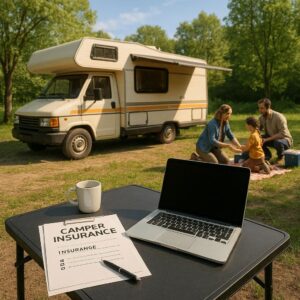
Hitting the open road in a camper is a dream for many, offering unparalleled freedom and adventure. But before you embark on your journey, securing the right insurance is a critical step. A common and crucial question for every prospective or current RV owner is: “What is the average camper insurance cost?”
The answer isn’t a single number. Much like your camper is unique, so too is your insurance premium. The average cost for camper insurance in the United States typically ranges from $1,000 to $2,500 per year for a full-time policy, with many part-time or seasonal owners paying between $300 and $800 annually for laid-up or storage coverage. However, these figures are just a starting point. Your actual cost can be significantly higher or lower based on a wide array of personal and vehicle-specific factors.
This guide is designed to be your comprehensive roadmap. We’ll dive deep into what shapes your premium, provide clear comparisons, and offer actionable strategies to help you find the best coverage at the most reasonable price. Think of this as your essential, one-stop reference for navigating the world of RV insurance with confidence.
Average Camper Insurance Cost
What Exactly Are You Insuring? Defining Your Camper
First, let’s clarify terminology, as “camper” can mean different things. Insurance companies categorize recreational vehicles (RVs) into distinct classes, and your premium is heavily influenced by which class your home-on-wheels falls into.
Class A Motorhomes
These are the largest, bus-like motorhomes. They offer the most space and luxury but also come with the highest average insurance costs due to their high value and repair complexity.
Class B Motorhomes (Camper Vans)
Often called camper vans, these are built on a standard van chassis. They are more maneuverable and fuel-efficient, and their insurance costs are generally lower than Class A or C models.
Class C Motorhomes
Identifiable by the bed over the cab, these are mid-sized motorhomes. They offer a balance of space and drivability, with insurance costs typically falling between Class A and Class B.
Travel Trailers & Fifth-Wheels
These are towable RVs. Since they are not self-propelled, insurance for the dwelling is separate from your tow vehicle’s auto policy. This often makes them the least expensive to insure from a liability perspective, though comprehensive coverage for the unit itself depends on its value.
Truck Campers & Pop-Up Campers
These are generally the smallest and most affordable options. Their insurance costs are usually the lowest, reflecting their lower market value and simpler repair profiles.
The Real Drivers of Your Camper Insurance Premium
The “average” is a blend of countless individual quotes. To understand your potential cost, you need to know what insurance providers evaluate. Here are the primary factors:
1. How You Use Your Camper: The Biggest Factor
-
Full-Timing: If your RV is your primary residence, you present a significantly higher risk. You’ll need a specialized full-timer policy, which includes additional liability coverage similar to homeowners insurance, driving up the cost.
-
Seasonal/Recreational Use: Using your camper for vacations and weekends is the standard model and results in lower premiums.
-
Storage: If the RV is in secure storage and not in use, you can often get a drastically reduced “laid-up” coverage that protects against fire, theft, and vandalism only.
2. The Value, Age, and Make of Your RV
A brand-new, high-end diesel pusher will cost far more to insure than a ten-year-old, moderately priced travel trailer. Newer models have higher replacement costs, and some makes/models have higher claims histories or repair costs.
3. Your Personal Profile
-
Driving Record: A clean record is your best ticket to a lower premium. Accidents, DUIs, or tickets will increase your cost.
-
Credit History: In most states, insurers use credit-based insurance scores as a risk indicator. Better credit often correlates with lower rates.
-
Age & Experience: Older, more experienced drivers typically see lower rates than young, new drivers.
-
Claims History: A history of frequent insurance claims suggests higher future risk.
4. Where You Live and Store Your RV
Rates vary by state due to local regulations, weather risks (like hurricanes or hail), theft rates, and even the density of repair facilities. Storing your RV in a secure, locked facility versus on a city street can also lead to discounts.
5. Your Coverage Choices and Deductibles
This is the part you control. Opting for state-minimum liability will be cheap but offers scant protection. A robust policy with low deductibles, full replacement cost, and extensive add-ons will be more expensive but provides peace of mind.
Breaking Down the Numbers: A Comparative Table
To visualize how these factors interplay, here’s a comparative table of estimated annual premium ranges. These are illustrative examples for a driver with a clean record.
| RV Type | Example Model | Primary Use | Estimated Annual Premium Range | Key Cost Influencers |
|---|---|---|---|---|
| Class A Motorhome | New 35ft Diesel Pusher | Full-Time | $2,500 – $4,500+ | High value, total loss risk, liability as a home |
| Class C Motorhome | 5-Year-Old 28ft Model | Recreational | $1,200 – $2,200 | Value, driving record, chosen deductibles |
| Camper Van (Class B) | New High-Top Conversion | Recreational/Weekend | $1,000 – $1,800 | Custom equipment, daily driver potential |
| Travel Trailer | 10-Year-Old 25ft Model | Seasonal Camping | $400 – $800 (Trailer only) | Actual Cash Value vs. agreed value, storage location |
| Pop-Up Camper | Older, Basic Model | Occasional Use | $200 – $500 | Very low value, minimal risk exposure |
Important Note: As industry expert Jane Reynolds from RV Insure Pro states, “The most expensive policy is the one that doesn’t cover your loss. While finding a good rate is important, ensuring you have the right coverage for your lifestyle is paramount. Don’t let price alone dictate this critical safety net.”
Key Coverages: What Are You Actually Paying For?
Understanding your policy’s components is essential.
-
Liability Coverage: Covers bodily injury and property damage you cause to others. Required by law if your RV is motorized.
-
Collision Coverage: Pays for damage to your RV from an accident, regardless of fault.
-
Comprehensive Coverage: Covers non-collision events: theft, fire, hail, vandalism, or falling objects.
-
Uninsured/Underinsured Motorist: Protects you if you’re hit by someone with no or insufficient insurance.
-
Medical Payments/Personal Injury Protection (PIP): Covers medical expenses for you and your passengers.
-
RV-Specific Endorsements (Critical Adds):
-
Personal Effects Coverage: For belongings inside your RV (e.g., camping gear, clothing).
-
Emergency Expenses/Loss of Use: Pays for lodging and travel if your RV is unusable due to a covered claim.
-
Total Loss Replacement/Agreed Value: Crucial! Ensures you get a brand-new equivalent or a pre-agreed amount if your RV is totaled, not just its depreciated “actual cash value.”
-
Roadside Assistance & Towing: A lifesaver, given an RV breakdown is more complex than a car breakdown.
-
Campsite/Vacation Liability: Extends liability coverage while you’re parked and set up at a site.
-
Actionable Strategies to Lower Your Premium
You don’t have to accept the first quote. Here’s how to save:
-
Bundle Your Policies: Insuring your RV, auto, and home with the same company almost always triggers a multi-policy discount.
-
Increase Your Deductible: Opting for a higher deductible (e.g., $1,000 instead of $250) can lower your annual premium substantially. Just ensure you have that amount saved.
-
Ask About Discounts: Inquire about all possible discounts:
-
Safe driver discount
-
Completion of an RV safety course (e.g., RV Driver Safety Course)
-
Anti-theft device discount
-
Professional or alumni association discounts
-
Paid-in-full discount
-
-
Choose the Right Usage Class: Be honest but precise. Don’t insure as “recreational” if you’re a full-timer, but if you truly only use it a few times a year, make sure your insurer knows.
-
Maintain a Clean Driving Record: This is the long-term, most effective strategy.
-
Shop Around Annually: Markets change. Get quotes from at least three specialized RV insurers every renewal period. Don’t just rely on your auto insurer.
Helpful List: What to Have Ready When Getting a Quote
Driver’s license numbers and birthdates for all drivers.
Your RV’s VIN, make, model, year, and purchase price.
An estimate of its current value or any custom additions.
Your annual mileage estimate and primary usage (full-time, recreational, etc.).
Your current coverage declarations page.
Information about where it is stored (garage, storage lot, driveway).
A Final Word on Full-Timers
If you live in your RV, standard insurance is inadequate. You must seek a full-timer policy. This will include Coverage E (Personal Liability), which acts like homeowner’s liability, and higher limits on personal effects. It costs more because it protects your entire livelihood.
Conclusion
The average camper insurance cost is a useful benchmark, but your personalized quote will be shaped by your vehicle, your profile, and your choices. By understanding the factors at play, from usage class to critical endorsements like total loss replacement, you can move from wondering about an average to securing a tailored policy. Invest time in comparing quotes from specialized RV insurers, ask detailed questions about coverage, and leverage every discount available. With the right knowledge, you can find affordable protection that lets you explore with true peace of mind, knowing your home-on-the-road is secure.
Frequently Asked Questions (FAQ)
Q: Is camper insurance cheaper than car insurance?
A: It can be, but often it’s not. For towable RVs like travel trailers, liability coverage is minimal, making it cheaper. For motorized RVs, insurance is typically more expensive due to the vehicle’s higher value, size, and complexity of repairs.
Q: Can I just add my RV to my existing auto insurance policy?
A: Sometimes, for very basic, low-value motorhomes or towables. However, most auto policies are not designed for the unique risks of an RV. A standalone policy or an endorsement from a specialist provider is strongly recommended for proper coverage.
Q: Do I need insurance if my camper is paid off and in storage?
A: If you own it outright, insurance is not legally required for a towable unit in storage. However, it is highly advisable to maintain at least comprehensive (“other than collision”) coverage to protect against fire, theft, or weather damage. Letting all coverage lapse is a major financial risk.
Q: What is the single most important coverage for an RV?
A: Beyond mandatory liability, Total Loss Replacement or Agreed Value coverage is arguably the most critical. It prevents you from being paid only the steeply depreciated “actual cash value” if your RV is totaled, which could leave you with a huge financial shortfall.
Additional Resource
For a deeper dive into evaluating your specific needs and understanding policy language, we recommend the comprehensive guide published by the National Association of Insurance Commissioners (NAIC): Consumer’s Guide to RV Insurance. This is an excellent, unbiased resource to further your research.