Living in Colorado Springs is pretty great. You’ve got the stunning views of Pikes Peak, the vibrant energy of downtown, and some of the best outdoor adventures right in your backyard. But if you own a car in this city, there is one unavoidable reality you have to deal with: car insurance.
If you’ve recently moved to the Springs, or you’re just shopping around during renewal, you’ve probably asked yourself, “What is the average car insurance cost Colorado Springs drivers are actually paying?”
The truth is, you might be shocked by the quotes you see. Colorado, as a state, has some of the highest insurance rates in the nation, and Colorado Springs is right in the middle of that trend. But don’t worry. This guide isn’t just going to throw a number at you. We are going to break down exactly why rates are what they are, how you compare to the average, and—most importantly—how you can lower your bill.
Let’s demystify the cost of peace of mind on the roads of the Olympic City.
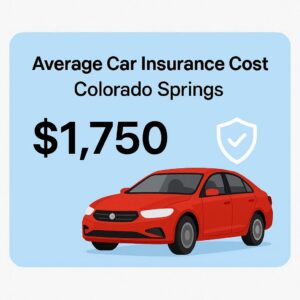
Average Car Insurance Cost Colorado Springs
The Bottom Line: What is the “Average”?
Before we dive into the weeds, let’s look at the raw numbers. When we talk about the average car insurance cost Colorado Springs residents face, it’s important to remember that “average” is a moving target. It depends entirely on who you are and what you drive.
However, based on current market data and rate analyses, here is a realistic snapshot of what you can expect to pay:
-
State Minimum Coverage: For a bare-bones policy that simply meets Colorado’s legal requirements, the average driver pays between $60 and $90 per month ($720 – $1,080 annually).
-
Full Coverage (Standard): For a standard policy with comprehensive and collision coverage (the kind you need if you have a loan or lease), the average monthly premium sits between $150 and $220 ($1,800 – $2,640 annually).
-
Full Coverage (Enhanced): For drivers who want higher liability limits and additional protections like rental reimbursement or roadside assistance, costs typically range from $230 to $300+ per month.
Important Note: These figures are estimates. Your specific rate will be unique to you, but this gives you a solid baseline for what “average” looks like in this market.
Why Is Car Insurance So Expensive in Colorado Springs?
If you feel like you’re paying more than your cousin in Arizona or your friend in rural Iowa, you’re not imagining things. Several factors conspire to make insurance costly in El Paso County.
1. The Colorado Weather Factor
We love our sunny days, but the weather here can be brutal on vehicles. Hailstorms are a major culprit. When a massive hailstorm rolls through the Springs, insurance companies are flooded with thousands of claims for totaled cars and shattered windshields. To recoup those losses, they raise rates across the board.
2. High Rate of Uninsured Drivers
Unfortunately, Colorado has a higher-than-average rate of uninsured motorists. This means that if you are in an accident caused by someone without insurance, your own policy has to cover the damages. Insurance companies factor this risk into your premium.
3. Population Density and Traffic
While it doesn’t have the gridlock of Denver, Colorado Springs is a growing city. More people on the roads—specifically on I-25, Powers Boulevard, and Academy Boulevard—means a higher chance of fender benders and major accidents. More claims equal higher costs for everyone.
4. Rising Cost of Repairs
Modern cars are computers on wheels. A minor bump that used to require a new bumper now might require recalibrating sensors and cameras. This drives up the cost of claims, and those costs are passed directly to you.
How We Compare: Colorado Springs vs. The State and Nation
To give you a better perspective, let’s look at how our local rates stack up against the broader market.
| Location | Average Annual Full Coverage Premium | Comparison |
|---|---|---|
| National Average | $1,700 | Baseline |
| Colorado State Average | $2,400 | +41% vs. National |
| Colorado Springs Average | $2,200 | Slightly below state avg |
| Denver Average | $2,650 | Higher due to density |
| Pueblo Average | $2,100 | Slightly lower than Springs |
As you can see, living in Colorado Springs is generally a bit cheaper than being in the heart of Denver, but it remains significantly higher than the national norm.
Breaking Down the Costs By Company
Not all insurance companies see Colorado Springs drivers the same way. One company might love your safe driving record, while another might penalize you for your credit score. Here is a realistic look at how major insurers typically price their policies in our area.
*Note: These are estimated average rates for a 35-year-old driver with a clean record for full coverage.*
| Insurance Company | Estimated Monthly Premium | Best For… |
|---|---|---|
| State Farm | $170 – $210 | Excellent customer service and local agents. |
| GEICO | $150 – $190 | Budget-conscious drivers who prefer digital management. |
| Progressive | $160 – $200 | Drivers with a less-than-perfect history (they are more lenient). |
| USAA | $140 – $180 | Military members and families (consistently low rates). |
| Farmers | $190 – $240 | Bundling home and auto for maximum discounts. |
| Allstate | $180 – $230 | Drivers who want lots of add-ons and perks. |
| The General | $200+ | High-risk drivers who struggle to get coverage elsewhere. |
A Word of Wisdom: Never choose an insurance company based solely on a TV commercial. The company that is cheapest for your neighbor might be the most expensive for you. You must shop around.
The “You” Factor: How Your Personal Profile Changes the Price
Insurance is personal. The industry uses a complex algorithm to determine how likely you are to file a claim. Here is how your specific situation impacts the average car insurance cost Colorado Springs insurers will quote you.
Age and Experience
-
Teen Drivers (16-19): Brace yourself. Adding a teenager to a policy in Colorado Springs can triple your rate. Expect to pay $400 to $600+ per month for a teen driver on their own policy.
-
Young Adults (20-25): Rates start high and gradually decrease. A 22-year-old might pay 20-30% more than a 30-year-old.
-
Middle-Aged Drivers (35-50): This is the “sweet spot.” You benefit from years of experience, and rates are at their lowest.
-
Seniors (65+): Rates may begin to creep up slightly again as you age, though many companies offer mature driver discounts for completing safe driving courses.
Driving Record
This is the biggest factor you can control.
-
Clean Record: You get the best rates.
-
One Speeding Ticket: Your rate could jump by 20-30% overnight.
-
At-Fault Accident: Expect a 40-50% increase, which will typically last for three to five years.
-
DUI/DWAI: In Colorado, this is a major offense. Your rate will likely double or even triple, and you may be relegated to high-risk insurers (SR-22 required).
Credit Score
In most states, including Colorado, insurers use something called an insurance-based credit score. Data shows a strong correlation between credit history and the likelihood of filing a claim.
-
Excellent Credit: You get the lowest rates.
-
Good Credit: You pay standard rates.
-
Poor Credit: You could pay up to twice as much as someone with excellent credit for the exact same coverage.
Vehicle Make and Model
-
Safe and Boring: A Honda CR-V or Subaru Outback is cheap to insure.
-
Sporty and Flashy: A Ford Mustang or Chevrolet Camaro will cost significantly more.
-
Expensive to Repair: Luxury European brands (BMW, Audi, Mercedes) cost more to fix, so they cost more to insure.
How to Lower Your Car Insurance Bill (Without Cutting Coverage)
Feeling the pinch? You don’t have to just accept the first quote you get. Here are actionable strategies to reduce your premium.
1. Raise Your Deductible
This is the fastest way to save money. If you increase your comprehensive and collision deductible from $500 to $1,000, you can often save 10-20% on your premium. Just make sure you have that $1,000 set aside in an emergency fund if you need it.
2. Bundle Your Policies
If you own a home or rent an apartment in Colorado Springs, get your homeowners or renters insurance from the same company as your auto insurance. This “multi-policy” discount can save you hundreds of dollars a year on the combined bill.
3. Ask About Discounts
You’d be surprised how many discounts go unclaimed. Always ask your agent about:
-
Good Student Discount: For full-time students with a B average or better.
-
Defensive Driving Course: For drivers over 55.
-
Paid-in-Full Discount: If you can pay for six months upfront rather than monthly.
-
Paperless/Autopay Discount: Small savings for going green and automating payments.
-
Low Mileage Discount: If you work from home or drive very little.
4. Shop Around at Every Renewal
Loyalty is rarely rewarded in the insurance world. Companies often offer the best rates to new customers. Set a reminder on your phone for every six months (right before your policy renews) to get three new quotes. It takes 15 minutes and could save you serious money.
5. Drop Unnecessary Coverage on Older Cars
This is crucial. If your car is worth less than $3,000-$4,000, it might be time to drop comprehensive and collision coverage. If you total the car, the insurance company will only pay you its actual cash value (minus your deductible). If that payout is low, it’s not worth paying a high premium for years. Switch to liability only.
Frequently Asked Questions (FAQ)
Q: What is the minimum car insurance required in Colorado Springs?
A: To drive legally in Colorado Springs and the rest of the state, you must carry:
-
Bodily Injury Liability: $25,000 per person / $50,000 per accident
-
Property Damage Liability: $15,000 per accident
You are also required to carry Uninsured/Underinsured Motorist coverage at the same limits ($25k/$50k) unless you reject it in writing.
Q: Does my credit score really affect my rate in Colorado?
A: Yes. Colorado law allows insurance companies to use credit-based insurance scores to determine rates. Maintaining good credit is one of the best ways to keep your premiums low.
Q: I just moved to Colorado Springs from another state. Do I need to switch my insurance?
A: Yes, immediately. You typically have 30 to 90 days to register your vehicle in Colorado and update your insurance. You need a Colorado policy with a local address to be compliant with state law.
Q: How do I get an SR-22 in Colorado Springs?
A: An SR-22 isn’t an insurance policy; it’s a certificate filed by your insurance company proving you have coverage. If you need one due to a DUI or driving without insurance, your current insurer can file it (often for a fee), or you may need to switch to a high-risk insurer.
Q: Does living near the Air Force Academy or Fort Carson affect my rates?
A: It can, indirectly. ZIP codes near military installations are often rated differently. However, being active duty or a veteran can get you access to specialty insurers like USAA, which consistently offers some of the lowest rates in the region.
Conclusion
Navigating the average car insurance cost Colorado Springs market can feel overwhelming, but knowledge is your best tool. Rates here are higher than the national average due to weather, traffic, and repair costs, but they vary wildly based on your age, vehicle, and driving history. The key takeaway is simple: never settle for your first quote. By understanding the factors at play and shopping around every six months, you can find the coverage you need at a price that fits your budget. Stay safe out there on the roads.