If you live in the Bay State or are planning to move there, you have probably asked yourself: What is the average car insurance cost in Massachusetts?
It is a fair question. Car insurance is not just a legal requirement. It is a financial safety net. But prices vary wildly depending on where you live, what you drive, and who you are.
In this guide, we will break down real numbers, explain why rates differ, and give you practical tips to lower your bill. No fluff. No fake data. Just honest, useful information.
Let’s get started.
Average Car Insurance Cost in Massachusetts
What Is the Actual Average Car Insurance Cost in Massachusetts?
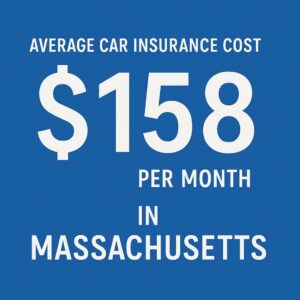
According to the most recent data from the Massachusetts Division of Insurance and independent market surveys, the average car insurance cost in Massachusetts is approximately $1,290 per year for a full-coverage policy.
That breaks down to around $108 per month.
For a state-minimum liability policy, the average drops to about $540 per year, or $45 per month.
But here is the truth: these numbers are just starting points. Your actual rate could be higher or lower based on several personal factors.
How Massachusetts Compares to the National Average
| Location | Average Annual Full Coverage | Average Monthly Full Coverage |
|---|---|---|
| Massachusetts | $1,290 | $108 |
| National Average | $1,765 | $147 |
| Difference | -$475 (27% lower) | -$39 |
Massachusetts drivers pay significantly less than the national average. That is good news. In fact, the state consistently ranks among the more affordable places for car insurance in the country.
Note for readers: These figures are based on a 30-year-old driver with a clean record and good credit. If you have accidents, tickets, or a lower credit score, your rates will likely be higher.
Why Is Car Insurance Cheaper in Massachusetts?
You might be wondering: Why is the average car insurance cost in Massachusetts lower than in Texas, Florida, or California?
There are three main reasons.
1. No-Fault System with Strict Oversight
Massachusetts operates under a no-fault insurance system. That means your own insurance pays for your medical bills after an accident, regardless of who caused it. This reduces lawsuits and legal costs, which keeps premiums lower.
The state also has a competitive market. Over 30 insurers actively write policies here. More competition usually means better prices.
2. Lower Uninsured Driver Rate
Only about 3.5% of Massachusetts drivers are uninsured. Compare that to Florida (over 20%) or Mississippi (near 30%). Fewer uninsured drivers means fewer claims that insurers have to cover. That savings gets passed down to you.
3. Strict Traffic Laws and Enforcement
Massachusetts has relatively tough enforcement of speeding, distracted driving, and DUI laws. Safer roads lead to fewer accidents. Fewer accidents lead to lower insurance costs.
What Factors Influence Your Personal Car Insurance Rate?
Even though the average car insurance cost in Massachusetts is affordable, your specific rate depends on many variables. Let us walk through them one by one.
Your Driving Record
This is the biggest factor. One speeding ticket can raise your rate by 20% to 30%. An at-fault accident can increase it by 40% to 50%. A DUI? Expect your premium to double or triple.
If you have a clean record for three to five years, you will likely qualify for the best rates.
Your Age
-
Teens (16–19): Highest rates. Average full coverage can exceed $3,500 per year.
-
20–24: Still high, but dropping. Around $2,200 per year.
-
25–34: Sweet spot. Rates drop significantly after age 25.
-
35–60: Lowest average rates.
-
65+: Rates start creeping up again, especially after age 75.
Your Location Within Massachusetts
Where you park your car at night matters a lot. Urban areas have more traffic, more theft, and more vandalism. Suburban and rural areas are safer and cheaper.
Here is a real comparison of average annual full-coverage rates in different Massachusetts cities:
| City | Average Annual Full Coverage |
|---|---|
| Boston | $1,650 |
| Worcester | $1,450 |
| Springfield | $1,500 |
| Cambridge | $1,580 |
| Lowell | $1,470 |
| Brockton | $1,520 |
| Quincy | $1,440 |
| Newton | $1,250 |
| Framingham | $1,380 |
| Pittsfield | $1,200 |
As you can see, living in Boston can cost you $400 more per year than living in Pittsfield.
Your Credit History
In Massachusetts, insurers are allowed to use credit-based insurance scores. Drivers with poor credit pay significantly more—sometimes 50% to 100% higher—than drivers with excellent credit.
This is controversial, but it is the law. Improving your credit can directly lower your insurance bill.
Your Vehicle
Expensive cars cost more to insure. Fast cars cost more. Cars with high theft rates cost more. Cars with poor safety ratings cost more.
On the flip side, family sedans, minivans, and SUVs with advanced safety features usually get lower rates.
| Vehicle Type | Average Annual Full Coverage in MA |
|---|---|
| Honda Civic | $1,200 |
| Toyota Camry | $1,180 |
| Ford F-150 | $1,350 |
| Tesla Model 3 | $2,100 |
| Subaru Outback | $1,150 |
| BMW 3 Series | $1,700 |
Your Annual Mileage
The less you drive, the less you pay. Many insurers offer low-mileage discounts if you drive fewer than 7,500 or 5,000 miles per year.
If you work from home or take public transit, tell your insurer. It could save you 10% to 20%.
Your Deductible
A higher deductible means a lower monthly premium. But it also means more out-of-pocket costs if you crash.
-
$500 deductible: Standard choice. Balanced.
-
$1,000 deductible: Saves about 10% to 15% on your premium.
-
$250 deductible: Costs more monthly but gives peace of mind.
Minimum Coverage vs. Full Coverage: What Do You Really Need?
This is one of the most important decisions you will make.
Massachusetts State Minimum Requirements
Massachusetts law requires:
-
$20,000 bodily injury per person
-
$40,000 bodily injury per accident
-
$5,000 property damage per accident
-
$8,000 Personal Injury Protection (PIP)
That is it. That is the legal minimum.
But here is the warning: these limits are very low. A single accident can easily exceed $20,000 in medical bills. If you cause a crash that injures someone seriously, you could be personally sued for everything you own.
What Full Coverage Adds
Full coverage typically includes:
-
Collision coverage: Pays for damage to your car from an accident.
-
Comprehensive coverage: Pays for theft, vandalism, fire, falling objects, and animal strikes.
-
Higher liability limits: Usually $100,000/$300,000 or more.
-
Uninsured/underinsured motorist coverage: Protects you if a hit-and-run driver or someone with no insurance hits you.
Which One Should You Choose?
| Situation | Recommended Coverage |
|---|---|
| You have an older car worth less than $3,000 | Minimum liability only |
| You have a car worth $3,000–$8,000 | Consider liability + comprehensive (skip collision) |
| You have a car worth over $8,000 | Full coverage with collision and comprehensive |
| You have a car loan or lease | Full coverage (required by lender) |
Important note: Even if you choose minimum coverage, buy higher liability limits if you can afford it. An extra $20 per month could save your savings account.
How to Find the Best Car Insurance Rate in Massachusetts
You do not have to overpay. Follow these steps to get a fair price.
Step 1: Shop Around Every Year
Loyalty does not pay in car insurance. Rates change. Your situation changes. Insurers change their pricing models.
Get quotes from at least three to five companies every 12 months.
Step 2: Compare Apples to Apples
Make sure each quote has the same:
-
Coverage limits
-
Deductibles
-
Optional coverages (rental, roadside assistance, etc.)
Otherwise, you are not really comparing.
Step 3: Ask for All Available Discounts
Most people leave money on the table. Common discounts in Massachusetts include:
-
Multi-policy (bundle home or renters insurance)
-
Multi-vehicle
-
Good driver (clean record for 3+ years)
-
Good student (B average or higher)
-
Defensive driving course
-
Anti-theft device
-
Paid in full (pay annually instead of monthly)
-
Paperless billing
-
Automatic payments
-
Low mileage
-
Telematics (usage-based tracking via an app or device)
Step 4: Check Your Credit Report
Errors on your credit report can hurt your insurance score. Fix them before shopping for quotes.
Step 5: Consider Raising Your Deductible
If you have $1,000 in savings, raise your collision and comprehensive deductible from $500 to $1,000. You could save 10% to 15% immediately.
Best Car Insurance Companies in Massachusetts for 2025
Based on customer satisfaction, claims handling, and average rates, these insurers stand out.
| Company | Average Annual Full Coverage | AM Best Rating | J.D. Power Score (New England) |
|---|---|---|---|
| MAPFRE (Commerce) | $1,210 | A | Above Average |
| Safety Insurance | $1,190 | A | Above Average |
| Arbella | $1,230 | A- | Average |
| Progressive | $1,350 | A+ | Average |
| Geico | $1,180 | A++ | Above Average |
| Liberty Mutual | $1,400 | A | Average |
| Travelers | $1,280 | A++ | Above Average |
Reader note: The cheapest company is not always the best. Check claims service reviews. A $50 savings is not worth a nightmare claims process.
How Accidents and Violations Affect Your Rates in Massachusetts
Massachusetts uses a point system called the Safe Driver Insurance Plan (SDIP) . Each at-fault accident or traffic violation adds points to your record. More points mean higher premiums.
Here is how much your rate could increase after a single incident:
| Incident | SDIP Points | Approximate Rate Increase |
|---|---|---|
| Minor speeding ticket (under 10 mph over) | 0 | 0% (first offense may be waived) |
| Major speeding ticket (over 10 mph) | 2 | +15% |
| At-fault accident with under $1,000 damage | 1 | +10% |
| At-fault accident with over $1,000 damage | 3 | +25% |
| DUI / OUI | 5 | +100% or more |
| Reckless driving | 4 | +75% |
Points stay on your record for three to six years, depending on the violation.
The good news? If you drive clean for three years, most points disappear, and your rates go back down.
Special Situations That Change the Average Car Insurance Cost in Massachusetts
Young Drivers
Adding a teen driver to your policy is expensive. The average increase is $1,800 to $2,500 per year.
But you can reduce this:
-
Add them to your policy instead of buying a separate one.
-
Ask for the good student discount (B average or higher).
-
Have them complete a state-approved driver education course.
-
Use a telematics app to monitor safe driving.
Senior Drivers
Once you pass age 65, rates start to rise again. By age 80, you might pay 15% to 25% more than a 60-year-old.
Some companies offer mature driver discounts after completing a defensive driving refresher course.
Drivers with a DUI
A DUI in Massachusetts stays on your driving record for 10 years. Most standard insurers will either refuse coverage or charge very high rates. You may need to use the Massachusetts Automobile Insurance Plan (MAIP) , which is the state’s assigned risk pool. Expect to pay $2,500 to $4,000 per year for minimum coverage.
Military Members
Active duty and veterans often qualify for discounts with companies like USAA, Geico, and Progressive. If you are stationed out of state but keep Massachusetts registration, tell your insurer. Some offer storage discounts while you are deployed.
How to Lower Your Car Insurance Cost in Massachusetts Right Now
You do not have to wait until renewal. Try these seven strategies today.
-
Increase your credit score. Pay down debt and fix errors. Even a 30-point bump can help.
-
Drop collision coverage on an old car. If your car is worth less than $3,000, collision coverage may not make financial sense.
-
Bundle policies. Call your home or renters insurer and ask for a bundle discount.
-
Ask about usage-based insurance. Programs like Progressive Snapshot or Liberty Mutual ByMile reward safe, low-mileage drivers.
-
Pay in full. If you can afford it, paying six or twelve months upfront saves installment fees.
-
Remove unnecessary drivers. If a child moved out or a spouse stopped driving, remove them from your policy.
-
Revisit your annual mileage estimate. If you overestimated, correct it.
Common Myths About Car Insurance in Massachusetts
Let us clear up a few misunderstandings.
Myth 1: Red cars cost more to insure.
False. Color does not matter. Make, model, and theft risk matter.
Myth 2: Your insurance follows the driver, not the car.
Mostly false. In Massachusetts, insurance typically follows the vehicle. If you lend your car, your policy is primary.
Myth 3: Minimum coverage is enough if you have health insurance.
Not true. Health insurance may not cover auto accident injuries fully. Plus, property damage liability is only $5,000. That barely covers a bumper repair.
Myth 4: Your rate cannot go up after a not-at-fault accident.
False. Even if you are not at fault, filing a claim can sometimes lead to a rate increase, especially if you have multiple claims.
Myth 5: All Massachusetts insurers use the same rates.
False. Each company files its own rates with the state. Shopping around almost always saves money.
Massachusetts Car Insurance Laws You Should Know
Understanding the law protects you from surprises.
No-Fault Rules
After an accident, you file a claim with your own insurance for medical bills under your Personal Injury Protection (PIP). You cannot sue the other driver unless your injuries are serious (permanent disfigurement, broken bones, or over $2,000 in medical costs).
Statute of Limitations
You have three years from the date of an accident to file a lawsuit for bodily injury. For property damage, you also have three years.
SR-22 Requirements
If you are convicted of a DUI or driving without insurance, you may need an SR-22 form. This is a certificate your insurer files with the state proving you have coverage. Not all companies offer SR-22s. Expect higher rates for three years.
Grace Period for Late Payment
Massachusetts law gives a 10-day grace period before your insurer can cancel your policy for non-payment. After that, they must send a written notice.
Real-Life Examples of Average Car Insurance Cost in Massachusetts
Let us put the numbers into real-world scenarios.
Example 1: Sarah, 32, Boston
Drives a 2020 Honda Civic. Clean record. Credit score 720. Full coverage with $500 deductible.
Annual premium: $1,480
Example 2: James, 45, Springfield
Drives a 2018 Ford F-150. One speeding ticket from two years ago. Credit score 650. Full coverage.
Annual premium: $1,650
Example 3: Linda, 28, Newton
Drives a 2022 Toyota Camry. Clean record. Excellent credit (780). Bundles with renters insurance.
Annual premium: $1,100
Example 4: Marcus, 22, Worcester
Drives a 2015 Nissan Altima. One at-fault accident last year. Credit score 600. State minimum only.
Annual premium: $1,050
Example 5: The Patel Family, Lowell
Two cars (2019 Subaru Outback, 2021 Honda CR-V). Two drivers, both clean records. Good credit. Homeowners bundle. Full coverage.
Annual premium total: $2,150 ($1,075 per car)
Seasonal and Life Changes That Affect Your Rate
Your car insurance is not static. Major life events should trigger a call to your agent.
-
Moving to a new city or ZIP code.
-
Getting married (married drivers pay less).
-
Turning 25 (rates often drop automatically).
-
Paying off your car loan (you can drop collision if you wish).
-
Retiring (lower annual mileage means lower rates).
-
Adding a teen driver (ask about all available discounts).
-
Getting a ticket or accident (ask if you can take a defensive driving course to offset points).
Conclusion
The average car insurance cost in Massachusetts is around $1,290 per year for full coverage and $540 for minimum liability. That is about 27% below the national average. But your personal rate depends on your driving record, age, location, credit, vehicle, and coverage choices.
To get the best rate, shop annually, ask for discounts, and consider raising your deductible. Avoid lapses in coverage and keep your credit healthy. And remember—cheapest is not always best. Choose a company that pays claims fairly and quickly.
Frequently Asked Questions (FAQ)
1. Is Massachusetts a no-fault state for car insurance?
Yes. Massachusetts has a no-fault system. Your own insurance pays your medical bills up to $8,000 under Personal Injury Protection (PIP), regardless of who caused the accident.
2. What is the minimum car insurance required in Massachusetts?
You need $20,000 bodily injury per person, $40,000 per accident, $5,000 property damage, and $8,000 PIP.
3. How can I get cheap car insurance in Massachusetts with a bad driving record?
Compare quotes from multiple companies. If standard insurers reject you, contact the Massachusetts Automobile Insurance Plan (MAIP) for high-risk coverage. Also, complete a defensive driving course to reduce points.
4. Does credit score affect car insurance in Massachusetts?
Yes. Insurers can use credit-based insurance scores. Poor credit often leads to significantly higher rates.
5. What is the best car insurance company in Massachusetts?
There is no single best company for everyone. Geico, MAPFRE, Safety, Arbella, and Travelers all receive strong marks for pricing and claims satisfaction. Get personalized quotes.
6. How much is car insurance per month in Boston?
For full coverage, the average monthly cost in Boston is around $138, or $1,650 annually. That is higher than the state average due to urban risks.
7. Can I drive legally in Massachusetts without car insurance?
No. Driving without insurance is illegal. Penalties include fines up to $5,000, license suspension, and potential jail time for repeat offenses.
8. Does Massachusetts require uninsured motorist coverage?
No, but it is highly recommended. Uninsured motorist coverage protects you if a driver without insurance hits you. Many insurers include it automatically.
9. How long does an accident stay on your insurance record in Massachusetts?
Typically three to six years, depending on the severity. Minor accidents fall off after three years with no further incidents.
10. Is pay-per-mile insurance available in Massachusetts?
Yes. Companies like Nationwide (SmartMiles) and Noblr offer usage-based insurance. These plans work well if you drive less than 10,000 miles per year.
Additional Resource
For official rate filings, consumer complaints, and insurance company comparisons, visit the Massachusetts Division of Insurance website:
🔗 www.mass.gov/orgs/division-of-insurance
You can also request a free Consumer Guide to Auto Insurance from the state. It explains your rights and provides up-to-date rate comparisons.