If you’re a Florida condo owner, you know that insurance isn’t just a line item—it’s a critical part of protecting your home and financial well-being. The average condo insurance cost in Florida is a complex topic, influenced by everything from coastal hurricanes to the specifics of your condominium association’s master policy. This guide will break down the costs, factors, and strategies to help you navigate the market with confidence.
Average Condo Insurance Cost in Florida
What is Condo Insurance (HO6) in Florida?
Condo insurance, often called an HO6 policy, is designed specifically for condominium unit owners. Unlike a standard homeowner’s policy, it fills the gaps left by your condominium association’s master policy, which typically covers the building’s exterior and common areas. Your personal HO6 policy covers everything inside your walls, your personal belongings, liability, and often interior structures like drywall and flooring, depending on your association’s bylaws.
As one Florida insurance agent puts it:
“Think of your condo association’s policy as the umbrella for the entire building. Your HO6 policy is the raincoat you wear personally. You need both to stay completely dry when a storm hits.”
Florida’s Unique Insurance Landscape
Florida’s insurance market is unlike any other in the United States. The state’s susceptibility to hurricanes, tropical storms, sinkholes, and even litigation challenges has created a dynamic and often expensive environment for insurers and policyholders alike. This directly impacts premiums for all property insurance, including condo policies.
Key Market Pressures:
-
Catastrophic Risk: High frequency of severe weather events.
-
Reinsurance Costs: Insurers themselves pay high premiums for their own backup coverage, costs which are passed down.
-
Claims Litigation: Historically high levels of roofing and water damage litigation have driven up insurer losses.
Breaking Down the Average Condo Insurance Cost in Florida
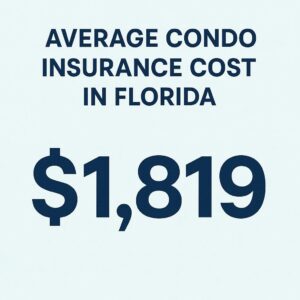
Providing a single “average” is challenging due to Florida’s diverse geography and risk levels. However, based on current industry data and market analysis, we can provide a realistic range.
Important Note: These are statewide estimates. Your actual premium will vary significantly based on the factors detailed in the next section.
| Coverage Component | Estimated Average Annual Cost in Florida | What It Typically Covers |
|---|---|---|
| Personal Property (Contents) | $250 – $500+ | Furniture, electronics, clothing, appliances (based on $30K-$60K+ in coverage). |
| Dwelling / Building Property | $400 – $1,200+ | Interior walls, floors, ceilings, built-in fixtures (based on $25K-$75K+ in coverage). |
| Liability Protection | $150 – $300+ | Legal fees & damages if someone is injured in your unit. |
| Loss Assessment | $50 – $200+ | Your share of a common area deductible or special assessment. |
| Deductibles | Varies | Your out-of-pocket cost per claim, significantly affects premium. |
| Total Estimated Annual Premium | $1,200 to $2,500+ | A realistic range for a typical policy with adequate coverage. |
Coastal condos in Miami-Dade, Broward, Monroe, or the Tampa Bay area often see premiums at the higher end of this range or even exceeding it. Inland condos in Central or North Florida may fall toward the lower end.
Factors That Determine Your Florida Condo Insurance Premium
Your premium is a personalized calculation of risk. Here are the primary factors insurers evaluate:
1. Location, Location, Location:
-
Proximity to Coast: Distance from the water is a major rating factor. Windstorm risk is highest in the “wind-borne debris region” (coastal areas).
-
County & ZIP Code: Historical claim data for your specific area.
-
Flood Zone: While flood insurance is separate, being in a high-risk zone (AE, VE) can indicate overall environmental risk.
2. The Condo Building Itself:
-
Year of Construction: Newer buildings often have modern, hurricane-resistant building codes (like post-2002 Miami-Dade codes).
-
Construction Type: Concrete and reinforced concrete buildings generally fare better than wood-frame in windstorms.
-
Roof Shape and Age: A hip roof is more wind-resistant than a gable roof. A roof older than 10-15 years can increase premiums.
-
Safety Features: Security gates, fire sprinklers, and updated common area electrical systems can lead to discounts.
3. Your Unit’s Specifics:
-
Floor Level: Ground-floor units may have higher theft or water intrusion risk. Upper floors may have slightly higher wind exposure.
-
Renovations: Updated plumbing and electrical systems reduce risk.
-
Claim History: Your personal claims history, and sometimes the building’s master policy claim history.
4. Your Association’s Master Policy & Bylaws:
This is crucial. You must know what the association’s policy covers to know what your HO6 must cover. The association’s deductible for common areas is especially important, as you could be assessed a portion of it.
-
Bare Walls-In: Association covers only the exterior building and common areas; you cover everything inside your unit, including interior walls, plumbing, and wiring. You need higher dwelling coverage.
-
Single Entity / All-In: Association covers the building structure, including standard interior finishes (cabinets, flooring, drywall). You cover your personal belongings and any upgrades. You need lower dwelling coverage.
5. Your Coverage Choices:
-
Coverage Limits: Higher limits for property, liability, or loss assessment mean higher premiums.
-
Deductibles: Choosing a higher deductible (e.g., $2,500 or 2% of your dwelling coverage instead of $1,000) lowers your premium.
-
Optional Coverages: Adding scheduled jewelry coverage, identity theft protection, or water backup coverage adds to the cost.
Essential Coverages for Every Florida Condo Owner
Beyond the basics, these coverages are non-negotiable in Florida:
-
Windstorm/Hurricane Deductible: This is often a percentage deductible (e.g., 2%, 5%, 10%) of your dwelling coverage limit, not a flat fee. Know your percentage and what it translates to in dollars.
-
Loss Assessment Coverage: Critically important. This covers your share if the association assesses all owners for a major repair deductible (like a $100,000 hurricane wind deductible) or a lawsuit. Carry at least $50,000, and consider more for large or coastal complexes.
-
Ordinance or Law Coverage: If your unit is damaged and new building codes require more expensive repairs, this coverage pays the difference.
-
Water Damage Coverage: Ensure your policy includes coverage for sudden and accidental water discharge (like a burst pipe). Note that long-term leaks or flood damage are typically excluded.
How to Save on Your Florida Condo Insurance Premium
-
Shop Around Annually: The Florida market changes rapidly. Get quotes from multiple insurers, including Florida-only specialists and national carriers.
-
Bundle Policies: Insuring your auto and condo with the same company often yields a significant discount (e.g., 10-20%).
-
Increase Your Deductible: Opting for a higher hurricane/wind deductible is one of the most effective ways to lower your annual premium.
-
Ask About Discounts:
-
Claims-free discount
-
Security system discount (central station alarm)
-
Wind mitigation discount (for upgraded features like hurricane shutters, impact-resistant windows, or a reinforced garage door)
-
Non-smoker discount
-
Loyalty discount
-
-
Maintain Good Credit: In Florida, insurers are allowed to use credit-based insurance scores to rate policies.
-
Review Your Master Policy Annually: Understand changes in the association’s coverage and deductible, and adjust your HO6 policy accordingly.
The Critical Separation: Condo Insurance vs. Flood Insurance
This cannot be overstated: Your standard HO6 condo policy does NOT cover damage from flooding.
-
Flooding is defined as water rising from the ground or overflowing from a body of water.
-
Flood insurance is a separate policy, typically purchased through the National Flood Insurance Program (NFIP) or a private flood insurer.
-
Mandatory Purchase: If your condo is in a FEMA-designated high-risk flood zone (Special Flood Hazard Area) and your mortgage is federally backed, you are required to carry flood insurance.
-
Recommended for Everyone: Over 20% of NFIP claims come from moderate- to low-risk areas. Flooding from heavy rains, storm surge, or plumbing failures can happen anywhere in Florida.
Actionable Steps Before You Buy or Renew
-
Obtain a copy of your condo association’s master policy declaration page and bylaws.
-
Conduct a detailed home inventory to accurately value your personal property.
-
Understand your association’s wind/hurricane and flood deductibles for common areas.
-
Get quotes from at least 3-5 different insurance providers.
-
Compare policies on coverage details, not just price. Ensure limits for loss assessment and ordinance/law coverage are adequate.
-
Consult with an independent insurance agent who specializes in Florida properties.
Conclusion
Navigating the average condo insurance cost in Florida requires understanding a blend of personal risk, building-specific factors, and the unique pressures of the state’s insurance market. By securing a comprehensive HO6 policy with robust loss assessment and windstorm coverage, and complementing it with a separate flood insurance policy, you can protect your Florida home against the unexpected. Regular review and comparison shopping are your best tools for maintaining adequate protection at the most reasonable cost.
Frequently Asked Questions (FAQ)
Q: Is condo insurance legally required in Florida?
A: While Florida state law does not mandate it, your condominium association’s bylaws almost certainly require you to carry an HO6 policy. Furthermore, if you have a mortgage, your lender will require proof of insurance.
Q: Why is my Florida condo insurance so much more expensive than my friend’s in another state?
A: Florida’s extreme exposure to hurricanes, tropical storms, and other weather-related perils leads to higher claim frequencies and costs. This results in higher premiums and deductibles across the board compared to most other states.
Q: Does my condo insurance cover hurricane damage?
A: Yes, but with a critical caveat. Wind damage from a hurricane is covered under the windstorm peril in your HO6 policy. However, you will be subject to a separate, higher hurricane or windstorm deductible, which is usually a percentage of your dwelling coverage. Damage from storm surge flooding is not covered and requires a separate flood insurance policy.
Q: What is a “wind mitigation inspection,” and can it save me money?
A: A wind mitigation inspection is a report done by a certified professional that details the hurricane-resistant features of your condo unit or building (e.g., roof shape, attachment type, shutter protection). Providing this report to your insurer can qualify you for significant discounts on the windstorm portion of your premium.
Q: My association has a master policy. Why do I need my own?
A: The master policy protects the common building and areas owned by the association. It does not cover your personal belongings, your personal liability if someone is injured in your unit, improvements you’ve made to the unit, or your share of a large deductible assessment. Your HO6 policy is for your personal financial protection.
Additional Resources
-
Florida Office of Insurance Regulation (OIR): For filing complaints, understanding regulations, and accessing consumer guides. Visit the Florida OIR Website
-
Florida Department of Financial Services: Provides tips on shopping for insurance and understanding your policy. Visit MyFloridaCFO.com
-
FEMA Flood Map Service Center: To determine your official flood zone and understand your risk. Visit the FEMA Flood Maps