Finding the perfect apartment in Chicago—whether it’s a high-rise in Streeterville with a lake view or a vintage walk-up in Logan Square—is a huge win. But once you’ve signed the lease, there’s one more crucial step to take before you pop the champagne: protecting your stuff.
If you’re a renter, you might think your landlord’s insurance has you covered. Unfortunately, that’s a common misconception. Your landlord’s policy covers the building—the roof, the walls, and the plumbing. It does absolutely nothing for your personal belongings.
That’s where renters insurance comes in. But how much does it cost in a major metropolitan hub like Chicago? Let’s dive into the real numbers, what affects them, and how you can get the best deal without sacrificing coverage.
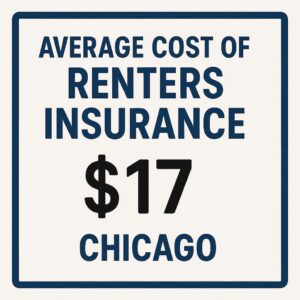
Average Cost of Renters Insurance in Chicago
What is the Actual Average Cost?
Let’s cut straight to the chase. When looking at the average cost of renters insurance in Chicago, the numbers are surprisingly affordable, especially compared to other major city expenses.
The Quick Answer:
On average, Chicago renters pay between $15 and $30 per month for a standard policy. This translates to roughly $180 to $360 per year.
To give you a more specific benchmark, the statewide average in Illinois hovers around $174 per year. However, because Chicago is a dense urban area with higher risks (like theft and liability claims), you can expect to pay slightly more than someone living in a rural part of the state.
Here is a breakdown of what you might expect to pay based on coverage levels:
| Coverage Level | Average Monthly Cost | Average Annual Cost | Typical Coverage (Personal Property) |
|---|---|---|---|
| Basic | $12 – $18 | $144 – $216 | $15,000 – $20,000 |
| Mid-Level | $18 – $25 | $216 – $300 | $30,000 – $40,000 |
| Comprehensive | $25 – $40+ | $300 – $480+ | $50,000 – $100,000 |
Important Note: These are estimates. The actual price you pay will depend on a variety of personal factors, which we will explore in the next section.
5 Key Factors That Influence Your Premium
Insurance companies don’t just pull a number out of a hat. They use complex algorithms to determine how much of a risk you are to insure. In Chicago, several specific factors come into play.
1. Location, Location, Location (Your Zip Code)
This is the biggest factor. Insurers look at crime statistics, fire protection ratings, and even the age of buildings in your specific neighborhood.
-
High-Cost Areas: Neighborhoods with higher rates of property crime, such as vehicle break-ins or package thefts, may see slightly higher premiums.
-
Low-Cost Areas: Areas with a strong fire department presence and lower crime statistics might get a discount.
2. Your Coverage Limits
Simply put, the more stuff you have to protect, the higher your premium will be.
-
Personal Property: Do you own a $5,000 bike and a closet full of designer clothes? You’ll need a higher coverage limit than a friend who just moved out of their dorm room.
-
Liability: This covers you if someone gets injured in your apartment. Standard policies usually offer $100,000 in liability, but you can increase it, which will raise your premium slightly.
3. The Deductible You Choose
Your deductible is the amount you pay out of pocket before your insurance kicks in.
-
Low Deductible (e.g., $500): You pay less if you file a claim, but your monthly premium will be higher.
-
High Deductible (e.g., $1,000 or $2,000): Your monthly premium drops significantly, but you’ll need to cover more costs upfront if something happens.
4. Your Building’s Features
Is your vintage apartment in a converted factory with outdated wiring? Or is it a brand-new building with a sprinkler system, security cameras, and a doorman? Newer buildings with modern safety features and on-site security are viewed as lower risk, often resulting in lower premiums for tenants.
5. Your Personal Claims History
Just like car insurance, if you have a history of filing claims on renters insurance, companies will see you as a higher risk and charge you more. A clean record is your best friend when it comes to getting a low rate.
What Does Renters Insurance Actually Cover?
It’s vital to know what you’re paying for. A standard renters insurance policy (often called an HO-4 policy) typically covers the “Big Three”:
1. Personal Property
This is the core of the policy. If your laptop, furniture, or clothing is damaged or destroyed by a “covered peril,” you’re protected.
Covered perils usually include:
-
Fire and smoke
-
Theft
-
Vandalism
-
Windstorms
-
Water damage from plumbing (but not floods)
What is NOT covered (usually):
-
Floods (rising water)
-
Earthquakes
-
Pest infestations (bed bugs, mice)
If you live in a flood-prone area near the lake or river, you may need a separate policy from the National Flood Insurance Program.
2. Liability Protection
This is often an overlooked gem. If your dog bites a guest, or someone slips on your wet floor and decides to sue you, liability coverage helps pay for their medical bills and your legal fees.
3. Additional Living Expenses (ALE)
This is a lifesaver. If your apartment burns down or is deemed uninhabitable due to a covered disaster (like a major fire), ALE pays for your hotel stay, restaurant meals, and other living costs while your place is being repaired.
Chicago-Specific Risks You Should Know About
Living in Chicago is amazing, but the local environment presents unique challenges that make renters insurance particularly important.
The “Chicago Winter” Clause
While standard policies cover water damage from a burst pipe, they may not cover the negligence that leads to it. If you leave for a weekend in January and turn off the heat, causing your pipes to freeze and burst, an insurance company might deny your claim. Always maintain adequate heat in your apartment during those brutal winter months.
Package Theft (“Porch Piracy”)
With the rise of online shopping, package theft is rampant in dense cities. The good news is that if a package is delivered to your door and stolen, it is generally covered under your personal property theft protection, minus your deductible.
Sewer Backup
In older Chicago neighborhoods with combined sewer systems, heavy rains can cause water to back up into basement apartments. Important: Standard policies do NOT cover sewer backup. You usually have to purchase an endorsement (an add-on) to your policy to cover this. If you live in a garden unit, this is a must-ask question for your insurer.
How to Lower Your Renters Insurance Premium
Insurance doesn’t have to break the bank. Here are some practical, Chicago-friendly ways to save money:
-
Bundle Your Policies: If you have a car, the single best way to save is to get your renters insurance from the same company as your auto insurance. This can save you 10-25% on both policies.
-
Shop Around and Compare: Don’t just accept the first quote. Get quotes from at least three different companies. Rates can vary wildly for the same coverage.
-
Pay Annually: Insurance companies hate sending monthly bills. If you can pay for the entire year upfront, you’ll often save on installment fees.
-
Increase Your Security: Ask your insurer if they offer discounts for having a doorman building, a burglar alarm, or deadbolt locks.
-
Raise Your Deductible: If you have a healthy emergency fund, opting for a higher deductible can significantly lower your monthly payment.
Frequently Asked Questions (FAQ)
Q: My landlord requires renters insurance. Is that legal?
A: Yes, absolutely. Landlords in Chicago can legally require tenants to carry a renters insurance policy. It protects them by ensuring you have liability coverage, and it protects you by covering your belongings, reducing the chance of conflict if a disaster occurs.
Q: Does renters insurance cover my roommate’s stuff?
A: Usually, no. A standard policy covers you and your family members who live with you, but it typically does not cover a roommate who is not related to you. They need to get their own separate policy to protect their belongings.
Q: I live in a studio with very little stuff. Do I really need it?
A: Think about it this way: Can you afford to replace your phone, laptop, clothes, and bed all at once? Even a modest collection of belongings adds up to thousands of dollars. Plus, the liability protection is invaluable. For the price of two restaurant meals a month, it offers incredible peace of mind.
Q: How is the value of my belongings determined?
A: There are two types of payout:
-
Actual Cash Value: This pays you the value of your items minus depreciation. That 5-year-old laptop will only get you what it’s worth today.
-
Replacement Cost Value: This pays you the actual cost to buy a new laptop of similar kind and quality today. This costs a bit more in premiums but is almost always worth the upgrade.
Conclusion
Renters insurance in Chicago is a small investment that provides massive protection. While the average cost of renters insurance in Chicago hovers around $20 to $25 per month, the peace of mind knowing you are covered against theft, fire, and liability is invaluable. Don’t wait until a moving truck backs into your living room or a fire breaks out next door to wish you had a policy.
Additional Resource
For more detailed information on what standard policies cover and to check consumer complaint ratios for different insurance companies, visit your state’s regulatory body: The Illinois Department of Insurance Website