Dreaming of hitting the open road, from the Panhandle to the Keys, with your home on wheels? Whether you’re a full-time RVer or a weekend warrior, understanding your insurance costs is a critical part of the journey. In Florida, with its unique blend of weather risks, tourist traffic, and insurance landscape, securing the right coverage for your Recreational Vehicle (RV) is especially important. You’re likely asking: what’s the average cost of RV insurance in Florida?
The short answer is that it varies widely, but most RV owners in the Sunshine State can expect to pay between $1,200 and $2,500 per year for a standard policy. However, that’s just the starting point. Your actual premium could be as low as $800 for basic coverage on a small travel trailer or soar well over $4,000 for a luxury motorhome with full-timer benefits in a coastal area.
This guide will navigate you through every factor that influences your premium, provide clear cost breakdowns by RV type, and offer practical strategies to manage your expenses without sacrificing essential protection. Let’s demystify RV insurance in Florida together.
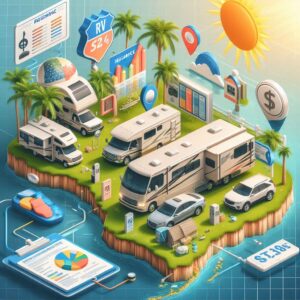
Average Cost of RV Insurance in Florida
Why RV Insurance in Florida is Unique
Insuring an RV in Florida isn’t the same as insuring one in, say, Arizona or Michigan. The state presents a distinct set of challenges and considerations that directly impact insurance underwriting and, consequently, your costs.
The Florida Risk Landscape
Florida’s environment is a key driver of insurance premiums. Insurers must account for higher probabilities of costly claims due to:
-
Severe Weather & Hurricanes: Florida leads the nation in hurricane risk. The potential for wind damage, flooding, and hail is a primary factor in pricing.
-
High Traffic & Tourist Density: Congested roads in metro areas and seasonal tourist influxes increase the likelihood of accidents and collisions.
-
High Rate of Uninsured Motorists: Florida has one of the highest percentages of uninsured drivers in the country, making Uninsured Motorist coverage particularly valuable.
-
Insurance Market Volatility: The home insurance crisis in Florida has ripple effects across all property insurance lines, including RVs, as companies adjust to market conditions.
Legal Requirements vs. Lender Requirements
Florida law does not require you to carry insurance on a trailer or motorhome if you own it outright. However, this is a dangerous gamble. The moment you finance your RV, your lender will require you to carry comprehensive and collision coverage to protect their asset. More importantly, liability coverage is mandatory if your RV is a motorhome (Class A, B, or C) driven on public roads. The state minimum for auto liability applies:
-
$10,000 Personal Injury Protection (PIP)
-
$10,000 Property Damage Liability (PDL)
Important Note: These state minimums are notoriously low. A single accident could result in costs far exceeding these limits, leaving you personally responsible for the difference. Sufficient liability coverage is one of the most critical parts of your policy.
Breaking Down the Average Cost of RV Insurance in Florida
Let’s move from general averages to more specific figures. The type of RV you own is the single biggest determinant of your insurance cost.
Cost by Type of RV
| RV Type | Description | Average Annual Premium Range (Florida) | Key Cost Drivers |
|---|---|---|---|
| Travel Trailer / Fifth-Wheel | Towable RVs (e.g., camper trailers) | $500 – $1,200 | Valued lower; liability often falls under tow vehicle. Physical damage coverage is optional for owners. |
| Class B Motorhome (Camper Van) | Van-based, smaller motorhomes (e.g., Roadtrek, Winnebago Solis) | $1,000 – $1,800 | Higher liability due to being drivable. Compact size can lead to slightly lower comp/collision costs. |
| Class C Motorhome | Cab-over chassis, mid-size (e.g., Thor Axis) | $1,400 – $2,400 | Balance of size and drivability. Common among families, moderate repair costs. |
| Class A Motorhome | Large, bus-like motorhomes (e.g., Newmar, Tiffin) | $2,000 – $4,000+ | High value, high repair costs, increased liability risk. Luxury models can push premiums higher. |
What’s Included in a Typical RV Policy?
An RV policy is more akin to a hybrid of auto and home insurance. Beyond standard auto coverages, it includes protections designed for your living space.
-
Liability Coverage: Covers injuries and property damage you cause to others.
-
Collision Coverage: Pays for damage to your RV from an accident.
-
Comprehensive Coverage: Covers non-collision events (theft, fire, vandalism, windstorm, hail, and falling objects).
-
Uninsured/Underinsured Motorist: Protects you if you’re hit by a driver with little or no insurance.
-
Medical Payments/PIP: Covers medical expenses for you and your passengers.
-
Personal Belongings Coverage: Protects items inside your RV (e.g., clothing, kitchenware).
-
Emergency Expense Allowance: Pays for lodging and food if your RV is rendered unusable due to a covered loss.
-
RV Liability (Campsite/Vacation Liability): Extends liability coverage for when you’re using the RV as a temporary residence.
Key Factors That Determine Your Florida RV Insurance Premium
Your premium is a personal calculation. Insurers evaluate these factors to assess risk:
1. Your RV’s Profile:
-
Make, Model, Year, and Value: A new $300,000 Class A will cost far more to insure than a used $15,000 travel trailer.
-
RV Type: As detailed in the table above.
-
Primary Use: Rates are lowest for recreational/part-time use, higher for full-time living, and highest if used for business.
2. Your Personal Profile:
-
Driving Record: A clean record is the best way to secure lower rates. Accidents, DUIs, or tickets will increase premiums significantly.
-
Age & Experience: Older, more experienced drivers typically see lower rates than younger, new RV drivers.
-
Credit-Based Insurance Score: In Florida, insurers can use your credit history as a factor in determining premiums, with a higher score generally leading to lower rates.
3. Your Location and Storage:
-
Garaging ZIP Code: This is massive in Florida. Coastal ZIP codes with high hurricane risk (e.g., Miami, Tampa, Naples) will have higher comprehensive premiums than inland, northern areas (e.g., Gainesville, Ocala).
-
Storage Method: An RV stored in a secure, hurricane-rated facility during off-seasons is less risky than one parked in a driveway year-round.
4. Your Coverage Choices:
-
Deductibles: Choosing a higher deductible (e.g., $1,000 vs. $250) will lower your premium, but means you pay more out-of-pocket if you file a claim.
-
Coverage Limits: Higher liability and property damage limits increase your premium but provide crucial protection.
-
Additional Endorsements: Adding riders for total loss replacement, personal effects replacement, or custom equipment will add to the cost.
How to Save on RV Insurance in Florida
Don’t just accept the first quote. Be proactive to find affordable coverage.
1. Bundle Your Policies: The most effective discount. Insuring your RV, auto, and home (or renter’s insurance) with the same company can save 15-25%.
2. Shop Around Annually: The market changes. Get quotes from at least 3-5 insurers specializing in RVs (e.g., Progressive, Good Sam, National General, GEICO).
3. Maximize Discounts: Ask about every possible discount:
* Safe driver discount
* Paid-in-full discount
* Claims-free discount
* Motor club membership discount (e.g., FMCA)
* Driver safety course completion
* Anti-theft device discount
4. Adjust Your Coverage Smartly: If you have an older, low-value RV, consider dropping comprehensive and collision coverage. Increase your deductibles to a comfortable level.
5. Maintain a Good Driving Record and Credit Score: This is a long-term strategy that pays dividends across all insurance lines.
6. Choose Your Garaging Address Wisely: If you have flexibility, using an address in a lower-risk area of Florida can reduce your premium.
Helpful List: Must-Ask Questions When Getting a Quote
Do you offer “full-timer” coverage if I live in my RV?
Are there any mileage restrictions on the policy?
How does the policy handle “disappearing deductibles” (reductions for claim-free years)?
Is roadside assistance specific to RVs included or available?
What is the claims process, and do you have a dedicated RV claims team?
Special Considerations for Florida RV Owners
Full-Time RV Insurance: If your RV is your primary residence, a standard policy is insufficient. You need a Full-Timer Policy. This provides enhanced liability (similar to homeowner’s) and broader coverage for your belongings. Expect to pay 20-40% more than a recreational policy.
Hurricane and Flood Preparedness: Your comprehensive coverage includes wind damage from hurricanes. However, damage from flooding (storm surge, rising water) is NOT covered under a standard auto/RV policy. You must purchase a separate Flood Insurance Policy through the National Flood Insurance Program (NFIP) or a private carrier. Have a solid hurricane plan: know where to evacuate your RV and how to secure it.
Seasonal Coverage (Lay-Up Periods): If you only use your RV for a few months of the year, you may qualify for a “lay-up” policy. During months of storage, you suspend liability and collision but keep comprehensive coverage active, which can lead to significant savings.
Conclusion
Navigating the average cost of RV insurance in Florida requires understanding the interplay between your vehicle type, personal profile, location, and coverage choices. While annual premiums typically range from $1,200 to $2,500, investing time to shop around, bundle policies, and tailor your coverage can lead to substantial savings without compromising the protection you need for your home on wheels. By being an informed consumer and proactively managing your risk, you can focus on what matters most—enjoying the freedom and adventure of the RV lifestyle in the Sunshine State.
Frequently Asked Questions (FAQ)
Q: Is RV insurance cheaper than car insurance in Florida?
A: It can be, but not always. While towable trailers are generally cheaper to insure than cars, drivable motorhomes (Class A, B, C) often have higher premiums due to their high value and repair costs. The coverage is also more extensive.
Q: Can I register my RV in Florida without insurance?
A: For a motorhome (drivable RV), you must show proof of the state-mandated PIP and PDL liability insurance to register it. For a travel trailer or fifth-wheel (towable), Florida does not require insurance for registration, but your lender will, and it is highly recommended.
Q: Does my auto policy cover me when towing a travel trailer?
A: Your auto liability coverage typically extends to the trailer while it’s being towed. However, damage to the trailer itself (collision, theft, weather) is NOT covered under your auto policy. You need a separate RV insurance policy for physical damage coverage on the trailer.
Q: How can I get flood insurance for my RV?
A: Contact your insurance agent. Flood insurance for RVs is available through specialty providers and some companies participating in the NFIP’s “Write-Your-Own” program. It is a separate policy from your comprehensive RV insurance.
Additional Resources
-
Florida Department of Highway Safety and Motor Vehicles (FLHSMV): Official source for registration and mandatory insurance requirements. https://www.flhsmv.gov/
-
Florida Association of Insurance Agents (FAIA): Can help you locate a local, independent agent who specializes in RV insurance. https://www.faia.com/
-
Federal Emergency Management Agency (FEMA) – Flood Insurance: Information on the National Flood Insurance Program. https://www.fema.gov/flood-insurance
-
Family Motor Coach Association (FMCA): A large RV association that offers member-only insurance programs and discounts. https://www.fmca.com/