Planning a trip is exciting. You book the flights, hunt for the best hotel deals, and create a detailed itinerary of all the places you want to see. But there is one crucial step many travelers overlook until the last minute: protecting themselves with travel medical insurance.
We get it. Adding another expense to a already costly vacation isn’t fun. However, a medical emergency abroad can quickly turn a dream vacation into a financial nightmare. So, the big question everyone asks is: how much is this going to cost me?
If you are looking for a quick, one-size-fits-all number, you will be disappointed. The truth is, the cost of travel medical insurance varies wildly. But don’t worry, we are here to demystify the pricing.
In this guide, we will break down the average cost of travel medical insurance, explain exactly what influences the price, and give you the tools to find a plan that fits your trip and your wallet perfectly.
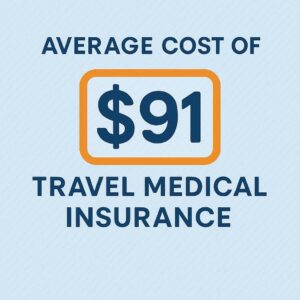
Average Cost of Travel Medical Insurance
What is Travel Medical Insurance, and Why Do You Need It?
Before we dive into the numbers, let’s be clear about what we are talking about. Travel medical insurance is a specific type of short-term health insurance designed to cover you while you are away from your home country.
Your regular health insurance plan likely offers very limited, if any, coverage outside your home country. Medicare, for example, generally does not cover health care outside the United States.
Travel medical insurance fills this gap. It typically covers:
-
Emergency medical expenses: Hospital stays, doctor visits, ambulance services, and emergency dental work.
-
Emergency medical evacuation: Transporting you to the nearest adequate medical facility or back home if you are seriously injured or become critically ill.
-
Accidental death and dismemberment: A benefit paid to your beneficiaries in the tragic event of your death or severe injury.
Without it, a simple case of appendicitis in a foreign country could cost you tens of thousands of dollars. With it, you have peace of mind knowing you are protected.
So, What is the Average Cost of Travel Medical Insurance?
Now, for the number you came here for. While it’s an average, it gives you a solid baseline for your budget.
For a single, healthy traveler under the age of 50, you can expect to pay between $30 and $150 per week for a standard travel medical insurance policy with coverage limits of $50,000 to $100,000.
To put it another way, the average cost is typically between 4% and 10% of your total pre-paid, non-refundable trip cost. If your trip costs $3,000, your insurance might cost between $120 and $300 for the entire duration.
Important Note: This price is for a comprehensive travel medical plan. If you purchase a “Cancel for Any Reason” (CFAR) upgrade or a policy with very high coverage limits, the price will be on the higher end of this spectrum.
To make this clearer, here is a quick breakdown by trip length for a 30-year-old traveler seeking $100,000 in medical coverage with a $250 deductible.
Average Cost by Trip Duration
| Trip Duration | Average Cost Range | Typical Use Case |
|---|---|---|
| Single Trip (1 Week) | $30 – $80 | Weekend getaway, short vacation |
| Single Trip (2 Weeks) | $60 – $150 | Standard vacation, business trip |
| Single Trip (1 Month) | $90 – $250 | Extended holiday, study abroad |
| Annual Multi-Trip | $200 – $500 (per year) | Frequent business travelers, digital nomads |
Note: These are estimates. Your actual quote will depend on the specific factors detailed below.
The 5 Key Factors That Influence Your Insurance Cost
Why does the price vary so much? Insurance companies use a process called underwriting to determine your specific risk level. The higher the perceived risk, the higher the premium. Here are the main factors they consider.
1. Your Age (The Biggest Factor)
This is the single most important factor in determining your premium. It’s simple statistics: older travelers are more likely to have a medical event than younger travelers.
-
Travelers under 30: Enjoy the lowest rates. You are in the lowest risk category.
-
Travelers in their 30s and 40s: Rates begin to climb steadily, but remain quite affordable.
-
Travelers in their 50s and 60s: You will see a significant jump in price compared to younger travelers. The cost can easily double or triple.
-
Travelers over 70: This is the highest-cost bracket. Many standard plans have age limits, and specialized coverage for seniors can be substantially more expensive, sometimes costing hundreds of dollars per week.
2. Trip Duration and Cost
Insurance is priced per day, so the longer you are away, the more you will pay. Furthermore, many comprehensive travel insurance plans include “Trip Cancellation” and “Trip Interruption” benefits. The premium for these benefits is calculated as a percentage of your total trip cost. If you are insuring a non-refundable $10,000 safari, the premium for that portion of the policy will be higher than if you are insuring a $500 backpacking trip.
3. Your Destination
Where you are going matters a great deal to insurers.
-
High Medical Costs: Destinations like the United States, Canada, Japan, Switzerland, and the UK have very expensive healthcare systems. A simple hospital visit can cost thousands, so insurance for trips to these countries is more expensive.
-
Moderate/Low Medical Costs: Traveling to countries in Southeast Asia, Central America, or parts of Eastern Europe, where medical care is more affordable, will generally result in a lower premium.
-
Remote or High-Risk Areas: If you are trekking in the Himalayas or going on an African safari, accessing medical care is logistically challenging and expensive. Insurers charge more to cover the cost of potential evacuation from these remote locations.
4. Coverage Limits and Deductible
This is where you have the most control over the price.
-
Coverage Limits: A policy that offers $50,000 in medical coverage will be cheaper than one offering $1,000,000. For most travelers, a policy with $100,000 to $250,000 in coverage is a good balance between cost and security. For travel to the USA, experts often recommend limits of $500,000 or more.
-
Deductible: This is the amount you pay out of pocket before your insurance kicks in. Choosing a higher deductible (e.g., $500 instead of $100) will significantly lower your premium. It’s a trade-off between upfront cost and potential out-of-pocket expenses if you need to file a claim.
5. Pre-Existing Medical Conditions
This is a complex area. If you have a pre-existing condition, you have two main options:
-
Standard Policies: These usually exclude coverage for any claim related to a pre-existing condition. They are the most affordable option for travelers without such conditions.
-
Pre-Existing Condition Waivers: Many comprehensive plans offer a “pre-existing medical condition exclusion waiver.” If you meet certain conditions (usually purchasing the policy within a short window, like 14-21 days, of your initial trip deposit), the insurer will waive the exclusion and cover your stable, pre-existing condition. This adds a layer of security but will increase the cost of the policy.
Comparing Different Types of Travel Insurance
Not all travel insurance is created equal. Understanding the different “flavors” will help you understand the price tags attached to them.
Travel Medical Insurance vs. Comprehensive Travel Insurance
It’s vital to distinguish between these two.
| Feature | Travel Medical Insurance | Comprehensive Travel Insurance |
|---|---|---|
| Primary Focus | Emergency medical expenses and evacuation. | Medical + Trip Cancellation/Interruption. |
| Typical Cost | Lower (4-6% of trip cost) | Higher (5-10% of trip cost) |
| Best For | Travelers with minimal pre-paid costs (e.g., backpackers, digital nomads). | Travelers with expensive, pre-paid, non-refundable trips (e.g., cruises, tours). |
| Key Benefits | Hospital stays, doctor visits, evacuation. | Everything in medical plan + baggage loss, flight delays, and trip cancellation. |
Single-Trip vs. Annual Multi-Trip Plans
-
Single-Trip Plans: You buy one policy for one specific journey. It ends when you return home. This is the most common type of policy and the price is calculated based on the factors above for that specific trip.
-
Annual Multi-Trip Plans: You buy one policy that covers you for an unlimited number of trips throughout an entire year, with each trip usually capped at a certain duration (e.g., 30, 60, or 90 days maximum per trip).
-
Who it’s for: Frequent travelers (3+ trips a year) or business professionals who travel regularly.
-
Cost: While the upfront cost seems high ($200-$600+), it is almost always cheaper than buying separate policies for each trip.
-
Real-World Scenarios: What Different Travelers Pay
Let’s look at some hypothetical examples to see how these factors come together to determine the final price. These are estimates based on a standard comprehensive policy.
Scenario 1: The Budget Backpacker
-
Traveler: Liam, age 24.
-
Trip: 3-month backpacking trip through Thailand and Vietnam.
-
Trip Cost: $3,000 (mostly flights and a budget for expenses).
-
Coverage Needs: Focus on medical and evacuation. Minimal need for trip cancellation.
-
Estimated Cost: He might opt for a good travel medical plan for around $150 – $220 for the entire 3 months.
Scenario 2: The Family Vacation
-
Travelers: The Patel family: parents (age 38 and 40) and two children (age 7 and 10).
-
Trip: 2-week trip to Disney World in Orlando, Florida, USA.
-
Trip Cost: $8,000 (flights, park tickets, hotel).
-
Coverage Needs: High medical limits (USA is expensive!) and strong trip cancellation protection in case a child gets sick before the trip.
-
Estimated Cost: A comprehensive family policy will likely cost between $400 and $700 for the two weeks.
Scenario 3: The Active Senior
-
Traveler: Margaret, age 68.
-
Trip: A 10-day cruise to Alaska.
-
Trip Cost: $4,500.
-
Coverage Needs: High medical limits, medical evacuation from the ship, and coverage for her stable high blood pressure.
-
Estimated Cost: Due to her age, the cost will be higher. A policy with a pre-existing condition waiver might cost $350 – $550 for the 10-day trip.
Scenario 4: The Frequent Flyer
-
Traveler: David, age 45, consultant who takes 8-10 short business trips a year to Europe.
-
Trip Cost: Varies, but each trip has low non-refundable costs.
-
Coverage Needs: Reliable medical and evacuation coverage for each trip, without the hassle of buying insurance 10 times a year.
-
Estimated Cost: An annual multi-trip plan with good medical limits would be ideal, costing around $350 – $500 for the entire year.
5 Smart Ways to Lower Your Premium
Travel insurance is an investment in your peace of mind, but that doesn’t mean you have to break the bank. Here are five legitimate ways to keep your costs down.
-
Shop Around and Compare: This is the golden rule. Don’t just buy the first policy you see from an airline or booking site. Use comparison websites to see quotes from multiple, reputable insurers. You will be amazed at the price difference for similar coverage.
-
Choose a Higher Deductible: Just like with your car or home insurance, opting for a higher deductible will lower your premium. Ask yourself if you can afford a $500 out-of-pocket expense for a minor medical issue in exchange for saving money on the policy cost.
-
Look into Group Plans: Are you a member of a professional organization, alumni association, or even a loyal member of a travel club like AAA? These groups often have negotiated discounted rates with travel insurance providers. Check their member benefits page.
-
Check Your Credit Card Benefits: Before you buy a policy, carefully review the travel insurance benefits offered by the credit card you used to book your trip. Many premium cards offer decent trip cancellation/interruption and even some medical coverage. Just be sure to read the fine print to understand the limits and exclusions. This can sometimes eliminate the need for a separate comprehensive plan.
-
Buy an Annual Multi-Trip Plan: If you travel more than twice a year, this is almost always the most cost-effective solution. It simplifies your life and saves you money compared to purchasing individual policies for each journey.
Common Mistakes That Cost You Money
Avoid these pitfalls to ensure you get the right coverage without wasting money.
-
Assuming All Policies Are the Same: This is the biggest mistake. A cheap policy might have very low coverage limits or a long list of exclusions. Always compare the coverage details, not just the price tag.
-
Lying About Your Age or Health: It might be tempting to shave a few years off your age to get a better rate, but this is a form of fraud. If you need to make a claim, the insurance company will investigate, and they will deny your claim if they find you misrepresented yourself. You will have paid for nothing.
-
Waiting Until the Last Minute: You often lose valuable benefits by waiting. Many of the best policies require you to purchase them within a specific time frame (e.g., 15 days of your first trip deposit) to qualify for a pre-existing condition waiver or the “Cancel for Any Reason” upgrade.
-
Only Focusing on Trip Cost: If you are a young, healthy backpacker with a cheap flight, you might think you don’t need insurance because you have “nothing to cancel.” This ignores the primary purpose of the insurance: medical emergencies. A broken leg in a foreign country can cost tens of thousands of dollars, regardless of your flight cost.
Conclusion
Understanding the average cost of travel medical insurance is the first step in becoming a smart and prepared traveler. While you can expect to pay between $30 and $150 per week for a standard policy, remember that this is just an estimate. Your unique profile—your age, destination, trip length, and chosen coverage—will ultimately determine your final price.
Think of travel medical insurance not as an optional extra, but as an essential part of your travel budget. It is a small price to pay for the immense peace of mind that comes with knowing you are protected against the unexpected. By using the tips in this guide, you can find a policy that provides excellent value, fits your budget, and lets you focus on what really matters: enjoying your journey.
To summarize: Expect to pay 4-10% of your trip cost for solid coverage. Your age and destination are the two biggest factors influencing the final price. Always compare policies to find the best balance of coverage and cost for your specific needs.
Frequently Asked Questions (FAQ)
1. Is travel medical insurance the same as health insurance?
No. Travel medical insurance is short-term coverage designed for emergencies while you are traveling outside your home country. It is not a substitute for regular health insurance, which covers routine and preventive care.
2. Does travel insurance cover COVID-19?
Many travel insurance policies now include coverage for COVID-19, treating it like any other illness. However, you must check the specific policy details. Some may cover medical expenses if you get sick, while others may also cover trip cancellation if you test positive before your trip.
3. Can I get travel insurance if I am already traveling?
Yes, but it is much harder and more expensive. Most insurers require you to purchase a policy before your departure date. If you are already abroad, you will have fewer options, and policies will likely exclude any medical conditions or issues that have already arisen.
4. What is not covered by travel medical insurance?
Common exclusions include: injuries from extreme sports (often require a “dangerous activities” rider), self-inflicted injuries, injuries from drug or alcohol abuse, routine check-ups, and pre-existing conditions (unless you have a waiver).
5. How do I choose the right coverage limit?
A good rule of thumb is $100,000 for travel outside the US. If you are traveling to the USA, Canada, or other countries with very high healthcare costs, consider at least $250,000 to $500,000. For medical evacuation, look for a limit of at least $250,000 to $500,000, as air ambulances can be incredibly expensive.
6. Is the cheapest travel insurance worth it?
It can be, but only if it meets your needs. A very cheap policy with a $10,000 coverage limit is almost useless in a country where a single night in the hospital costs $15,000. Focus on value—getting adequate coverage for a reasonable price—rather than just the lowest price.
Additional Resource
To help you on your journey, we recommend using a reliable comparison tool to see real-time quotes from top-rated insurers.
👉 Click here to compare travel medical insurance quotes from multiple providers.
(Note: This is a placeholder link for a reputable comparison site like Squaremouth, InsureMyTrip, or TravelInsurance.com)