Navigating the world of commercial trucking insurance can feel like driving through a dense fog. As an owner-operator or fleet manager, you know insurance isn’t just a line-item expense; it’s a critical safety net for your business and livelihood. One of the most common and pressing questions is: What should I budget for semi truck insurance each month?
Pinpointing a single, universal monthly premium is impossible, as costs are as variable as the freight you haul. However, by understanding the averages and the factors that influence them, you can move from uncertainty to informed confidence. This guide will provide you with a realistic, detailed breakdown of what to expect and how to manage this essential cost.
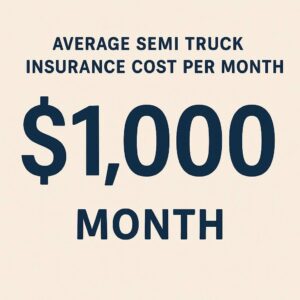
Average Semi Truck Insurance Cost Per Month
What is the Average Semi Truck Insurance Cost Per Month?
Let’s address the central question directly. For a well-established owner-operator with a clean driving record and standard hauling operations, you can generally expect a baseline range. Most industry data and insurance providers suggest that the average semi truck insurance cost per month falls between $800 and $2,000.
Annually, this translates to roughly $9,500 to $24,000. It’s a broad range because the final premium is a highly personalized calculation. A new authority owner-operator might see premiums on the higher end, even exceeding $2,500 monthly initially, while a veteran hauler with a million accident-free miles could secure rates near the lower bound.
“Thinking of insurance purely as a monthly cost is a mistake. It’s an investment in your business’s resilience. The right policy doesn’t just protect your assets; it protects your ability to earn.” – Industry Risk Advisor
To visualize how different scenarios affect your bottom line, consider this comparative table:
Monthly Premium Estimates Based on Operator Profile
| Operator Profile | Estimated Monthly Cost Range | Key Influencing Factors |
|---|---|---|
| New Authority Owner-Operator | $1,200 – $2,500+ | Lack of proven safety history, new DOT number, higher perceived risk. |
| Established Owner-Operator (3+ years, clean record) | $800 – $1,500 | Proven track record, established authority, potentially lower-risk freight. |
| Fleet of 5 Trucks (Long-haul, general freight) | $4,000 – $10,000+ | Aggregate of all driver records, fleet safety programs, volume discounts. |
| Specialized Hauler (e.g., Hazmat, Oversized) | $1,500 – $3,000+ | Elevated risk of cargo and liability, need for specialized endorsements. |
The 7 Key Factors That Determine Your Premium
Your insurance provider isn’t pulling numbers from thin air. They use specific data points to assess risk. Understanding these levers empowers you to control what you can.
1. Your Driving and Safety Record
This is the single most significant personal factor. Insurers see past violations and accidents as predictors of future claims.
-
Clean Record: Your biggest asset for lower rates.
-
Violations: Moving violations, especially serious ones like reckless driving or DUIs, cause premiums to skyrocket.
-
Accidents: At-fault accidents are major red flags and can lead to significantly higher costs for 3-5 years.
2. Years of Experience and Operating Authority
Time in business matters. A new MC/DOT number has no operational history for insurers to evaluate, making it a higher risk. Premiums often decrease significantly after the first 12-36 months of incident-free operation.
3. Type of Cargo and Radius of Operation
-
Cargo: Hauling general dry van freight is standard risk. Hauling hazardous materials (Hazmat), high-value electronics, or refrigerated goods increases liability and cargo insurance costs.
-
Radius: Local or regional routes (e.g., under 500 miles) are often viewed as lower risk than long-haul or cross-country operations, which involve more miles and varied road conditions.
4. Coverage Types and Limits You Choose
Your premium is a direct reflection of the coverage you select.
-
Primary Liability: Legally required minimum. Higher state-mandated limits (e.g., $750k or $1 million) cost more than the federal minimum but offer crucial protection.
-
Physical Damage: Covers repair/replacement of your truck. A $150,000 rig costs more to insure than a $80,000 one. Your deductible ($1,000, $2,500, etc.) directly impacts this premium.
-
Cargo Insurance: Protects the freight you’re hauling. Value and risk level of the cargo determine cost.
-
Non-Trucking Liability (Bobtail): Essential for owner-operators when driving without a trailer or under dispatch.
5. Your Deductible Amount
This is your share of a claim. Opting for a higher deductible (e.g., $2,500 instead of $1,000) lowers your monthly premium. It’s a calculated risk—ensure you can comfortably cover the deductible if a claim occurs.
6. Your Truck’s Value, Age, and Safety Features
A brand-new $200,000 tractor costs more to insure than a paid-off 2015 model. However, newer trucks with advanced safety technology (automatic emergency braking, lane departure warnings, video telematics) may qualify for discounts that offset the higher value.
7. Your Credit-Based Insurance Score (in most states)
In many states, insurers use a credit-based insurance score as a statistical indicator of risk. Maintaining good personal credit can positively influence your commercial insurance rates.
A Practical Breakdown of Insurance Coverage Costs
To build an accurate budget, let’s dissect what makes up the total premium. These figures are illustrative estimates for an established owner-operator.
Annual & Monthly Cost Breakdown (Estimated)
| Coverage Type | Purpose | Approx. Annual Cost | Approx. Monthly Equivalent | |
|---|---|---|---|---|
| Primary Liability | Covers damage/injury you cause to others. | $4,000 – $8,000 | $335 – $665 | |
| Physical Damage | Covers repairs to your own truck. | $2,500 – $6,000 | $210 – $500 | |
| Cargo Insurance | Covers the freight you carry. | $800 – $2,500 | $65 – $210 | |
| Bobtail Insurance | Covers you when not under dispatch. | $300 – $600 | $25 – $50 | |
| General Liability | Covers non-trucking business risks. | $500 – $1,000 | $40 – $85 | |
| ** | TOTAL ESTIMATE | $8,100 – $18,100+ | $675 – $1,510+ |
Proactive Strategies to Lower Your Monthly Insurance Bill
You are not powerless against high premiums. Implementing these strategies can lead to substantial savings.
-
Prioritize Safety Above All: A clean record is your best long-term discount. Practice defensive driving, adhere strictly to HOS rules, and ensure all pre-trip inspections are thorough.
-
Increase Your Deductible Wisely: If you have a healthy emergency fund, raising your physical damage deductible can lower your monthly payment significantly.
-
Shop Around at Every Renewal: Don’t auto-renew blindly. Get quotes from 3-5 reputable commercial trucking insurers annually. The market changes.
-
Bundle Policies (if possible): Some insurers offer discounts if you purchase multiple policies, like general liability or occupational accident coverage, with them.
-
Invest in Safety Technology: Equip your truck with approved dash cams (especially forward-facing event recorders), ELDs, and other telematics. Many carriers offer discounts of 5-10% for these.
-
Complete Recognized Training Courses: Certifications from the National Safety Council or other approved defensive driving courses can demonstrate your commitment to safety.
-
Pay Annually if Feasible: Most insurers charge a “payment plan fee” for monthly installments. Paying the annual premium upfront can save 3-8%.
Important Note: While minimizing cost is crucial, never sacrifice essential coverage for a lower price. Being underinsured can bankrupt your business in the event of a major accident. Always ensure your liability limits are adequate for the freight you haul.
Navigating Your First Year: Insurance for New Authority
Your first year is the most expensive for insurance. Without a proven track record, insurers mitigate their risk with higher premiums. Here’s how to navigate it:
-
Budget Realistically: Expect to be in the higher end of the cost spectrum ($1,500-$2,500/month).
-
Consider a Smaller, Older Truck: Lowering the value of your insured asset (the truck) reduces your physical damage premium.
-
Explore “Rental” Programs: Some insurers offer programs where you’re essentially “renting” coverage from a larger carrier’s policy for the first year, which can be slightly more affordable.
-
Plan for the Drop: If you maintain a clean record, you can often see a 20-35% decrease at your first renewal after 12 months.
Conclusion
The average semi truck insurance cost per month is a moving target, shaped by your experience, record, cargo, and choices. While figures typically range from $800 to $2,000, the true cost is personalized. By understanding the factors at play, shopping strategically, and investing in safety, you can secure the vital protection your business needs at the most sustainable price. View this expense not just as a mandate, but as a foundational component of your operation’s long-term stability and success.
Frequently Asked Questions (FAQ)
Q: Can I get insurance for under $500 a month?
A: It is highly unlikely for a standard, full-coverage policy on a working semi-truck. While minimum liability-only coverage on a very old, low-value truck for a perfect-risk driver might approach this in rare cases, it is not typical or advisable for a professional operation. Comprehensive coverage will almost always exceed this threshold.
Q: How much should I budget for insurance as a new owner-operator?
A: Prudently budget for the higher end: between $1,800 and $2,500 per month for your first year. This ensures you are not caught off guard and can shop from a position of strength rather than desperation.
Q: Does the type of trailer affect my insurance cost?
A: Yes, indirectly. While the trailer itself is often covered under cargo or a specific trailer interchange policy, what you pull affects your cargo risk. A flatbed hauling machinery has different risks than a reefer hauling pharmaceuticals, which is factored into your cargo insurance premium.
Q: How often should I shop for new insurance quotes?
A: It’s wise to get comparative quotes every 12-24 months, especially for your first few years in business as your safety record solidifies. However, avoid switching insurers frivolously, as longevity with a single provider can sometimes lead to loyalty discounts.
Additional Resources
For the most current information on federal insurance requirements and safety regulations, visit the Federal Motor Carrier Safety Administration (FMCSA) website: https://www.fmcsa.dot.gov/. This is an essential resource for all professional truck drivers and carriers.