If you are reading this, chances are you have recently experienced a significant milestone in your aviation journey. Perhaps you have just purchased your first aircraft, or maybe you are finally ready to start that charter company you have been dreaming about. Alternatively, you might be a flight instructor looking to understand your personal liability.
Whatever path brought you here, you have arrived at the same question: What is this going to cost to insure?
Let’s be honest right from the start: aviation insurance is not cheap. It is a specialized field, and the risks associated with flying are unique. However, understanding how insurance companies calculate your rates is the first step toward controlling your expenses. You wouldn’t take off without a pre-flight inspection, so you shouldn’t sign a check without understanding your premiums.
In this guide, we are going to strip away the mystery. We will look at the specific factors that drive your premiums up and, more importantly, the steps you can take to bring them down. Whether you are a student pilot or a seasoned corporate flight department manager, there is something here for you.
Let’s get started.
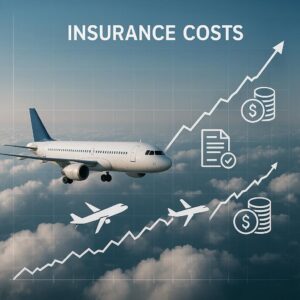
Aviation Insurance Cost
The Foundation: What Drives Your Premium?
Before we look at specific dollar amounts—which, as you will see, vary wildly—we need to understand the logic behind the numbers. Insurance is essentially a risk transfer. You pay a company to take on the financial risk of an accident. Therefore, the cost of your insurance is a direct reflection of how risky the insurer perceives you and your operation to be.
Underwriters look at your application and essentially ask one question: “How likely is this pilot to file a claim, and how expensive will that claim be?”
Here are the core components that answer that question.
The “Big Three” Factors
1. The Pilot’s Experience and Qualifications
This is arguably the single most important factor. Insurers want to know that you are competent. They look at:
-
Total Flight Time: More hours generally equal lower risk. A pilot with 5,000 hours is statistically less likely to make a mistake than a pilot with 100 hours.
-
Time in Type: This is even more critical. How many hours do you have specifically in the make and model you want to insure? Transitioning to a new, more complex aircraft is a high-risk period.
-
Certificates and Ratings: Do you have an instrument rating? If you are insuring a high-performance aircraft, you will almost certainly need one. Commercial and ATP (Airline Transport Pilot) certificates demonstrate a higher level of training and currency.
-
Claims History: Just like with your car insurance, a recent accident or violation on your record will significantly impact your cost.
2. The Aircraft Itself
The machine you fly plays a massive role in determining cost.
-
Hull Value: This is the market value of your aircraft. If you total the plane, this is the maximum amount the insurer will pay. Naturally, insuring a $100,000 Cessna 172 is far cheaper than insuring a $4 million Pilatus PC-12.
-
Performance and Complexity: High-performance singles, complex aircraft (with retractable gear and constant-speed props), and turbines (jet and turboprop) are more expensive to insure. They require more skill to fly and are more expensive to repair.
-
Model-Specific History: Does your specific model of aircraft have a poor safety record or a history of specific mechanical issues? This can drive rates up.
3. The Type of Operation
How you use the aircraft dramatically changes the risk profile.
-
Private Pleasure: This is generally the lowest risk and, therefore, the cheapest category. It covers you for personal flying, not for any kind of compensation or hire.
-
Business and Corporate: Using the aircraft for business purposes (e.g., flying to meet clients) increases exposure slightly, but is still relatively low-risk if the pilots are experienced.
-
Instructional: Using the plane for flight training introduces constant risk. Student pilots are, by definition, unproven, and the takeoffs and landings are hard on the aircraft. This is a high-risk category.
-
Commercial (Charter/Aerial Work): This is the highest risk category. Flying passengers for hire, banner towing, or pipeline patrol involves frequent takeoffs and landings, challenging environments, and high public liability exposure. The premiums reflect this.
Beyond the Basics: Other Key Influences
While the “Big Three” are the foundation, the devil is in the details. Underwriters will dig much deeper.
-
Hangaring vs. Tie-Down: Where do you keep the plane? An aircraft stored in a secure hangar is protected from weather (hail, wind) and vandalism. Insurers love hangars and will reward you with a lower premium. Leaving it tied down outside increases the risk, and the cost.
-
Annual Flight Hours: How much do you plan to fly? The more you are in the air, the higher the statistical chance of an incident. You will typically be quoted based on an estimate (e.g., 100 hours per year). If you fly significantly more, the insurer may seek an additional premium at renewal.
-
Deductible Amount: This is the amount you agree to pay out-of-pocket before the insurance kicks in. Choosing a higher deductible is a direct way to lower your annual premium. It signals to the insurer that you are willing to take on more of the small-risk burden.
Important Note for New Owners: If you are a low-time pilot buying a high-performance aircraft, be prepared for sticker shock, or even a denial. You may need to work with a broker to find a “transition” policy, which might come with restrictions, such as a requirement to fly with a qualified instructor for the first 25 to 50 hours.
A Closer Look at Cost by Category
Now, let’s get into the numbers. Please remember that these are estimates based on current market trends. Your actual quote may be higher or lower. Think of these as general benchmarks to help you budget.
The aviation insurance market is “cyclical” and “hard.” At the time of writing, it is a hard market, meaning rates are generally increasing due to higher claims costs and economic factors.
General Aviation: Private Owners and Pleasure Flyers
This is the segment most people think of. It includes single-engine piston aircraft used for weekend trips and personal flying.
| Aircraft Type | Typical Hull Value | Estimated Annual Premium Range | Notes |
|---|---|---|---|
| Cessna 172 Skyhawk | $80,000 – $150,000 | $1,200 – $2,500 | The “Honda Civic” of the sky. Very affordable to insure, especially for high-time pilots. |
| Piper PA-28 Cherokee/Archer | $70,000 – $140,000 | $1,200 – $2,400 | Similar to the Cessna. A very stable, low-risk platform. |
| Cessna 182 Skylane | $180,000 – $300,000 | $1,800 – $3,500 | A step up in performance and power. Requires more experience. |
| Beechcraft Bonanza (V-tail) | $150,000 – $350,000 | $2,500 – $5,000+ | Historically nicknamed the “Doctor Killer” due to high-performance demands. Underwriters scrutinize pilot experience heavily here. |
| Cirrus SR22 | $350,000 – $700,000 | $3,500 – $8,000+ | High-performance composite aircraft with a parachute. While the parachute (CAPS) is a safety feature, the high hull value and complex systems lead to higher premiums. |
Flight Schools and Training Operations
Insuring a flight school is a completely different ballgame. The risk is continuous. Premiums are often calculated per aircraft or as a fleet program.
| Operation Type | Typical Coverage | Estimated Annual Premium Range | Notes |
|---|---|---|---|
| Small Flight School (2-4 aircraft) | Hull + Liability | $10,000 – $25,000+ per aircraft | This depends heavily on the experience of the Chief Instructor and the school’s training syllabus. |
| Medium Fleet (5-15 aircraft) | Hull + Liability | $40,000 – $150,000+ (Fleet total) | Insurers will look at the ratio of students to instructors, maintenance procedures, and solo student policies. |
| Glider/Towplane Operation | Liability Focused | $3,000 – $8,000 per towplane | While the aircraft are simpler, the unique risks of towing and aerotowing require specialized coverage. |
Commercial Operations: Charter, Corporate, and Cargo
This is where the numbers can become quite substantial. The liability limits required are much higher because you are carrying passengers or goods for hire.
| Operation Type | Typical Hull Value | Estimated Annual Premium Range | Notes |
|---|---|---|---|
| Single-Engine Charter (e.g., Caravan) | $1.5M – $2.5M | $15,000 – $30,000+ | Used for cargo or passenger flights in remote areas. High utilization drives costs. |
| Light Jet (e.g., Citation CJ series) | $3M – $6M | $25,000 – $60,000+ | Used for corporate charter. Pilot experience (especially turbine time) is paramount. |
| Midsize Jet (e.g., Hawker 800) | $4M – $8M | $40,000 – $90,000+ | Higher hull value and typically higher utilization in corporate environments. |
| Helicopter Operations | Highly Variable | Significantly Higher | Helicopter underwriting is a specialized field. External load work, EMS, and offshore transport carry the highest premiums in the industry. |
The Art of the “Wet” vs. “Dry” Rate
When looking at commercial operations or even renting aircraft, you will hear the terms “wet rate” and “dry rate.” This is a helpful distinction to understand where insurance fits into the operational cost.
-
Dry Rate: This is the cost to rent the aircraft only. You pay for the fuel separately.
-
Wet Rate: This is an all-inclusive hourly cost, which typically includes fuel, oil, and often, the aircraft’s insurance and maintenance reserves.
As an operator, understanding your “wet” cost is crucial. You must calculate your fixed costs—including your annual insurance premium—and divide them by your expected flight hours to see how much insurance is costing you per hour in the air.
10 Practical Strategies to Lower Your Aviation Insurance Cost
Nobody wants to pay more than they have to. Here are actionable strategies you can use to become a more attractive risk to insurers.
-
Get (and Keep) Your Instrument Rating: This is non-negotiable for most high-performance aircraft. It shows a commitment to professional standards and significantly reduces the risk of a weather-related accident.
-
Fly Consistently: Insurers love currency. A pilot who flies 100 hours a year is much safer than one who flies 20. If you don’t fly often, the risk of being rusty increases.
-
Invest in Recurrent Training: Don’t just do the bare minimum. Attend a reputable training program like those offered by FlightSafety International or SimCom, especially for complex aircraft. Provide the certificate to your insurer.
-
Talk to a Specialized Broker: This is the most important tip. A good aviation insurance broker is worth their weight in gold. They know which markets (insurance companies) are currently competitive for your specific profile. They can advocate for you and shop your application around.
-
Join a Type Club: Organizations like the American Bonanza Society or the Cirrus Owners and Pilots Association often have relationships with insurers or offer educational programs that can lead to premium credits.
-
Increase Your Deductible: If you have the cash reserves to cover a larger deductible (e.g., raising it from $5,000 to $10,000), this is the quickest and most direct way to lower your premium.
-
Keep Your Aircraft in a Hangar: If you are currently on a tie-down, find a hangar. The reduction in premium might even help offset the cost of the hangar itself.
-
Be Honest and Accurate on Your Application: Never exaggerate your hours or hide incidents. Insurers will find out. If they deny a claim based on misrepresentation, you are left with nothing.
-
Bundle Your Policies: Sometimes, you can get a discount if you insure multiple aircraft with the same carrier, or even if you bundle your aviation policy with your home and auto (though this is less common).
-
Start Early, Especially for Renewals: Don’t wait until the last minute. Start the renewal process 60 to 90 days before your policy expires. This gives your broker time to find the best deal and gives you time to address any potential issues the underwriters raise.
Frequently Asked Questions (FAQ)
Here are answers to some of the most common questions we hear from pilots and aircraft owners.
Is aviation insurance mandatory?
It depends on where and how you operate. For a loan on an aircraft, the bank will absolutely require hull and liability insurance to protect their asset. For leased hangars or tiedowns, the airport authority may require proof of liability coverage. For private owners who own their aircraft outright, it is not legally required by the FAA to fly, but it is highly reckless to operate without it. You are personally liable for any damage or injury you cause.
Why is my insurance going up if I haven’t had an accident?
The insurance market is a pool. If there are several high-profile, expensive claims involving your type of aircraft in a given year, the cost is spread across all policyholders. This is called a “hard market.” Inflation also increases the cost of parts and labor, meaning repairs are more expensive, which drives up premiums for everyone.
What is “Hull” vs. “Liability” insurance?
-
Hull: This is physical damage coverage for your aircraft. If you bend it, prang it, or it’s stolen, hull insurance pays to repair or replace it (minus your deductible). It is optional if you own the plane outright, but required by lenders.
-
Liability: This covers you if you injure someone or damage their property with your aircraft. This includes passengers, people on the ground, and damage to another aircraft or structure. This is the most important coverage to have.
Can I insure a plane I am building myself (Homebuilt/Experimental)?
Yes, absolutely. However, it is a specialized process. You can usually buy “hull insurance” while building to protect the materials. Once you start flying, you will need a standard policy, but insurers will want to see detailed logs, photos, and evidence of the build quality and the pilot’s experience in experimental aircraft.
What is a “Smooth” vs. “Named Pilot” policy?
-
Named Pilot (or “Named Pilot Warranty”): The policy only covers the specific pilots listed on the declarations page. If an unlisted pilot flies the plane, there is no coverage. This is very common in private aviation.
-
Open Pilot Warranty (or “Smooth”): The policy extends coverage to any pilot who meets a specific set of qualifications listed in the policy (e.g., “Any pilot with a private pilot certificate and 500 total hours, including 25 hours in type”). This is more flexible but usually more expensive.
Conclusion
Navigating the world of aviation insurance cost can feel like flying through a cloud layer—disorienting at first, but manageable with the right instruments. Remember that your premium is not just a random number; it is a calculated reflection of your experience, your aircraft, and how you use it.
A reliable strategy is to focus on what you can control. By committing to ongoing training, maintaining currency, and working closely with a specialized broker, you can present the best possible version of yourself to the underwriters. Fly safe, and the savings will follow.
Additional Resource
For further reading and to stay updated on market trends, we highly recommend visiting the Insurance Information Institute’s page on aviation. It provides a broader economic context for the factors influencing your premiums.