So, you’ve got your eye on a C6 Corvette. Maybe it’s the aggressive lines of the 2005 model, the iconic pop-up headlights of the earlier C6, or the thunderous LS3 engine that’s calling your name. You’ve budgeted for the car, you’ve felt the leather seats, and you’ve imagined yourself cruising down the highway. But there’s one number you need to pin down before you hand over the cash: the insurance cost.
Let’s be real. Insuring a Corvette isn’t the same as insuring a family sedan. It’s a high-performance sports car. It has a powerful engine, expensive parts, and let’s face it—a reputation for speed. But here’s the good news: insuring a C6 isn’t necessarily the wallet-crushing expense you might fear. In fact, for many drivers, it’s surprisingly reasonable.
In this guide, we’re going to break down everything that affects your C6 Corvette insurance cost. No jargon, no fluff. Just honest, practical information to help you understand what you’ll pay and why.
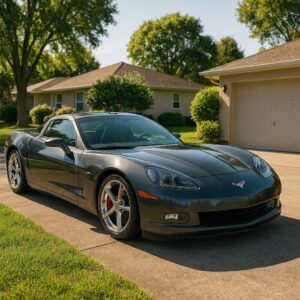
C6 Corvette Insurance Cost
Why the C6 Corvette is a Sweet Spot for Insurance
Before we dive into the numbers, it helps to understand where the C6 sits in the Corvette family tree. Produced between 2005 and 2013, the C6 is a unique blend of modern performance and relative practicality.
Unlike the brand-new C8 with its exotic mid-engine layout and sky-high repair bills, the C6 is older and more established. Parts are widely available, and many mechanics know how to work on them. This maturity in the market often works in your favor when it comes to insurance.
Insurers look at risk. A C6 is less expensive to replace than a new European supercar, and because it’s been around for a while, the data on repair costs is stable. This often translates to more competitive premiums compared to newer, untested models.
Average C6 Corvette Insurance Costs: What to Expect
Let’s talk dollars and cents. We need to start with a disclaimer: every driver is different. Your age, location, driving record, and the specific model of C6 you choose will swing the price up or down.
However, we can look at industry averages to give you a ballpark figure.
For a standard C6 coupe or convertible (non-Z06, non-ZR1), with a driver in their 40s who has a clean record and good credit, you might expect to pay somewhere between $80 and $150 per month for full coverage. That translates to roughly $960 to $1,800 per year.
For a high-performance model like the C6 Z06 or the legendary C6 ZR1, the story changes. These cars are significantly more powerful and valuable. Insuring a Z06 might push you into the $150 to $250 per month range, and a ZR1 could be even higher.
| C6 Model | Average Annual Premium (Estimate) | Typical Driver Profile |
|---|---|---|
| Base C6 (LS2/LS3) | $900 – $1,500 | Daily driver, weekend cruiser |
| Grand Sport | $1,200 – $1,800 | Enthusiast, occasional track day |
| C6 Z06 | $1,500 – $2,500 | Performance-focused owner |
| C6 ZR1 | $2,000+ | Collector, low-mileage usage |
A Quick Note: These are broad estimates. A 22-year-old with a speeding ticket will pay significantly more than these figures. A 55-year-old with a multi-car and multi-policy discount will likely pay less. Always get personalized quotes.
The 7 Key Factors That Influence Your C6 Insurance Rate
Why does your neighbor pay less than you for a similar car? Insurance companies are in the business of predicting risk. They look at dozens of data points to decide how likely you are to file a claim. Here are the big ones for a C6 Corvette.
1. Your Age and Driving Experience
This is one of the biggest factors. Statistically, younger drivers (under 25) are involved in more accidents. Combine that with the power of a Corvette, and the risk multiplies. If you’re under 25, expect higher premiums. Once you hit 25 and then again around 30-35, rates typically start to drop as you gain more experience.
2. Your Driving Record
This one is straightforward. A clean record with no accidents or tickets tells the insurer you’re a safe bet. A single speeding ticket—especially one for going well over the limit—can raise your rates for years. Since the Corvette is a performance car, insurers pay extra close attention to moving violations.
3. Where You Live (Garaging Address)
Your zip code matters a lot.
-
Urban vs. Rural: If you live in a dense city center, your risk of theft, vandalism, and collision is higher, so your premiums will be higher. If you live in a quiet rural or suburban area, your rates will likely be lower.
-
Weather: Living in an area prone to hail, floods, or hurricanes can also increase your comprehensive coverage costs.
4. The Specific Model Year and Trim
Insurers don’t just see “Corvette.” They see a VIN number that tells them everything.
-
2005-2007 (LS2): These are generally the cheapest to insure, as their value is lower.
-
2008-2013 (LS3): Slightly more power and value, leading to a modest increase.
-
Grand Sport: Combines the Z06 wide-body look with the LS3 engine. A fantastic car, but its higher performance and wider tires (more prone to damage) can nudge the price up.
-
Z06: A completely different beast with a massive 7.0L LS7 engine. It’s a track-focused machine. Insurers know this, and they price the risk accordingly.
-
ZR1: The supercharged king of the C6 hill. With a supercar price tag comes supercar insurance costs.
5. Annual Mileage and Usage
How often do you drive the car? This is a massive lever you can pull.
-
Daily Driver (12,000+ miles/year): More time on the road equals more risk. This will be the most expensive way to insure your C6.
-
Occasional/Weekend Driver (5,000 – 7,000 miles/year): You’ll see a noticeable drop in price. You’re telling the insurer the car isn’t exposed to commuter traffic every day.
-
Low Mileage/Collector (Under 3,000 miles/year): If you have a pristine Z06 or ZR1 and only drive it to Cars & Coffee on sunny Sundays, you might qualify for a specialized collector car insurance policy (like Grundy, Hagerty, or Heacock). These policies can be surprisingly affordable.
6. Your Credit Score
In most states, insurance companies use something called an insurance-based credit score. Studies have shown a correlation between credit history and the likelihood of filing a claim. Maintaining good credit can help you secure a better rate. If your credit needs work, improving it can lead to insurance savings down the road.
7. The Coverage You Choose
This is the part you control directly.
-
Liability: Covers damage you cause to others. State minimums are usually too low. It’s wise to carry higher limits (like 100/300/100) to protect your assets.
-
Collision: Covers damage to your Corvette from an accident, regardless of fault.
-
Comprehensive: Covers non-collision events like theft, vandalism, fire, or hitting a deer.
-
Uninsured/Underinsured Motorist: Protects you if you’re hit by someone with no insurance or not enough insurance.
Higher deductibles (the amount you pay out-of-pocket before insurance kicks in) will lower your premium. If you can afford a $1,000 or $2,500 deductible, you’ll save money each month compared to a $500 deductible.
Specialized vs. Standard Insurance: A Crucial Choice
When you start shopping for C6 Corvette insurance, you’ll quickly realize you have two distinct paths. Choosing the right one is critical.
Standard Insurance (Progressive, Geico, State Farm, Allstate)
This is your everyday car insurance.
-
Best for: Daily drivers, weekend cruisers, owners who finance their car.
-
Pros: Convenient, easy to bundle with your other cars and home, flexible mileage limits.
-
Cons: If your car is modified or has become a valuable classic, a standard policy might not cover its true value. They typically use Actual Cash Value (ACV), which means depreciation hits hard.
Collector/Classic Car Insurance (Hagerty, Grundy, Heacock)
These companies specialize in enthusiast vehicles.
-
Best for: Low-mileage drivers (usually under 2,500-5,000 miles per year), owners of pristine or modified cars, owners of high-value models like the ZR1.
-
Pros: They offer Agreed Value policies. You and the insurer agree on the car’s worth upfront. If it’s totaled, you get that full amount, not a depreciated market value. They are often much cheaper than standard policies for limited-use cars.
-
Cons: Strict mileage limits. They usually require you to have another car for daily use and a secure place to store the Corvette (like a locked garage).
Important Note: If you use a collector car policy to insure a daily-driven C6 and get into an accident during your commute, the insurer may deny your claim. Be honest about your usage.
Smart Strategies to Lower Your C6 Corvette Insurance Cost
You don’t have to just accept the first quote you get. Here are proven ways to save money without sacrificing coverage.
1. Shop Around and Compare Quotes
This is rule number one. Insurance companies use different formulas. One might love your profile, while another might see you as a risk. Get quotes from at least three to five different companies, including both standard and collector specialists.
2. Bundle Your Policies
If you have home insurance, renters insurance, or insurance on another vehicle, bundle them with the same company. Most insurers offer a significant multi-policy discount that can save you 10% to 25%.
3. Take a Defensive Driving Course
Some insurance companies offer a discount for completing an approved defensive driving or mature driver course. It’s a few hours of your time that can pay off for years.
4. Join a National Corvette Club
Being a member of a recognized club like the National Corvette Museum or a local Corvette club can sometimes qualify you for discounts with certain insurers, especially collector car insurers. They see club members as more responsible, passionate owners.
5. Explore Usage-Based Programs
Companies like Progressive (with Snapshot) or Allstate (with Drivewise) offer programs where a device or your smartphone tracks your driving habits. If you prove to be a safe, low-mileage driver, you can earn a discount. For a weekend cruiser, this could be a great fit.
6. Increase Your Deductible
If you have an emergency fund, consider raising your collision and comprehensive deductibles. Moving from $500 to $1,000 can lower your premium by a meaningful amount. Just make sure you can cover that $1,000 if you need to.
7. Check for Affiliation Discounts
Do you work for a large company? Are you a member of a credit union, AAA, or AARP? These groups often have negotiated discounts with specific insurance carriers. It’s always worth asking.
Modifications: A Double-Edged Sword
One of the best parts of C6 ownership is making it your own. Maybe you want long-tube headers, a camshaft, or a supercharger. Perhaps it’s just a new set of wheels and a stereo. But how do mods affect insurance?
You must tell your insurer about modifications.
If you don’t, and you get into an accident, they may only pay to fix the car back to stock condition, leaving you with a huge bill for your custom parts. Or, in a worst-case scenario, they could deny your claim entirely for misrepresenting the vehicle.
-
Performance Mods (Engine, Tuning, Suspension): These will almost always increase your premium because they increase the car’s performance potential and risk.
-
Aesthetic Mods (Wheels, Body Kits, Paint): These may increase your premium slightly because the car is more expensive to repair or replace.
-
Collector/Agreed Value Policies: If you have a heavily modified car, a collector policy with an agreed value is often the best way to insure it. You and the insurer agree on a value that includes the cost of all your modifications.
The Bottom Line: Is a C6 Corvette Expensive to Insure?
Compared to a standard car like a Honda Accord or Toyota Camry? Yes, it will likely be more expensive. It’s a high-performance two-seater.
But compared to other sports cars? The C6 is often a fantastic value. Its insurance costs are generally lower than a comparable Porsche 911 or a Nissan GT-R. The parts are common, the aftermarket is huge, and repair costs are manageable.
For the enthusiast who wants a legitimate piece of American performance history, the C6 represents a sweet spot where purchase price and running costs, including insurance, align beautifully.
Conclusion
The cost to insure a C6 Corvette isn’t a fixed number. It’s a personal number shaped by who you are, where you live, and how you drive. By understanding the factors at play—from the specific model (LS3 vs. Z06) to your annual mileage and coverage choices—you take control of the process.
Remember the golden rules: get multiple quotes, be honest about how you use the car, and don’t be afraid to ask about discounts. Whether it’s a weekend cruiser or a future collector piece, there’s an insurance solution out there that fits your budget. Now, go enjoy that legendary V8 rumble.
Frequently Asked Questions (FAQ)
1. Is a C6 Corvette expensive to insure for a 19-year-old?
Yes, unfortunately, it likely will be. A 19-year-old driver combined with a high-performance sports car represents a high risk to insurers. Premiums could be several thousand dollars per year. It’s a tough reality, but it’s based on statistical data. Getting quotes and perhaps adding the car to a parent’s policy (if possible) might help, but expect a significant cost.
2. What is the cheapest C6 Corvette to insure?
Generally, the earliest base models (2005-2007) with the LS2 engine are the cheapest. They have the lowest market value and are seen as less risky than the more powerful Z06 or ZR1 models. A coupe is typically slightly cheaper to insure than a convertible.
3. Do I need special insurance if I install a supercharger?
Yes, absolutely. You must inform your insurance company. A supercharger is a major performance modification that significantly increases the car’s power and value. Your standard policy may not cover the added cost of the modification. You should explore specialty insurers who understand modified cars and can offer an “agreed value” policy that covers the total worth of your build.
4. Will my insurance cover me on a race track?
Probably not. Most standard auto insurance policies explicitly exclude coverage for any accidents that occur on a racetrack, including high-performance driving events (HPDE) and timed competitions. If you plan to track your C6, you will need to look into track day insurance, which provides coverage specifically for on-track incidents.
5. Does the color of my Corvette affect insurance?
This is a common myth. The color of your car has absolutely no impact on your insurance premium. Insurers care about the make, model, engine size, safety ratings, and theft rates of the car, but not whether it’s red, black, or yellow.
Additional Resource
For more detailed information on protecting your vehicle and understanding different coverage types, the Insurance Information Institute (III) is an excellent, unbiased resource. You can find helpful articles and explanations at their website: www.iii.org