The Ford F-150 isn’t just a vehicle; it’s an American icon and the best-selling truck for decades. Its reputation for capability, durability, and versatility is unmatched. But when it comes to protecting your investment, one critical question arises: what does it cost to insure? If you’re searching for the “average insurance cost for a Ford F-150,” you’ve likely found a wide and confusing range of numbers. That’s because an “average” is just the starting point. Your actual premium is a personal calculation, influenced by a unique blend of factors from your driving history to your F-150’s specific trim level.
This guide cuts through the noise. We’ll provide you with realistic national averages, then dive deep into every element that shapes your final insurance quote. More importantly, we’ll equip you with actionable strategies to secure the best possible rate without sacrificing the coverage you need. Think of this as your essential owner’s manual for F-150 insurance.
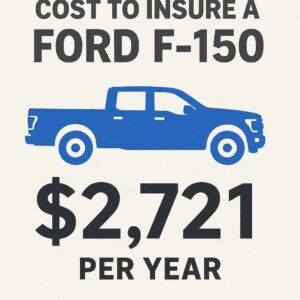
Cost to Insure a Ford F-150
What Is the National Average Insurance Cost for a Ford F-150?
Let’s address the headline figure first. Based on aggregated industry data from major insurers and reporting agencies, the national average annual insurance premium for a Ford F-150 falls between $1,400 and $1,800. This translates to roughly $115 to $150 per month.
“It’s a common misconception that all trucks are expensive to insure. While the F-150’s size and power can influence rates, its excellent safety ratings and widespread parts availability often work in the owner’s favor, helping to moderate costs compared to some high-performance vehicles,” notes a veteran insurance analyst.
However, this average is a broad benchmark. It’s crucial to understand that it blends rates for:
-
Brand-new, top-trim Raptors and Platinum models.
-
Mid-range XLT models from recent years.
-
Well-maintained, older base-model trucks.
-
Drivers with perfect records and those with violations.
-
Rates from high-cost urban areas and affordable rural regions.
Important Note for Readers: The single most effective way to know your cost is to get personalized quotes. Use the averages here as a guidepost, not a guarantee. Your individual rate could be significantly lower or higher.
Breaking Down the Average: A Comparative Table
To add clarity, here’s how the average F-150 insurance cost often compares to other popular vehicles in its class and beyond. These figures assume a single driver with a clean record and standard coverage limits.
| Vehicle Type & Model | Estimated Annual Premium | Key Influencing Factors |
|---|---|---|
| Ford F-150 (Full-Size Pickup) | $1,400 – $1,800 | Vehicle value, safety features, high theft rates for certain model years, common use for work. |
| Toyota RAV4 (Compact SUV) | $1,200 – $1,500 | Lower repair costs, excellent safety scores, high popularity. |
| Chevrolet Silverado 1500 | $1,450 – $1,850 | Very similar risk profile to the F-150, with minor variations by model year. |
| Ford Mustang GT (Sports Car) | $1,800 – $2,400 | High-performance engine, higher risk of aggressive driving and accidents, attractive to thieves. |
| Ram 1500 | $1,430 – $1,830 | Comparable to F-150 and Silverado; certain trims (e.g., TRX) can command much higher rates. |
| Honda Civic (Sedan) | $1,100 – $1,400 | Low repair costs, strong safety, but high theft rates for some models. |
As you can see, the F-150 sits in a moderate range—more than a standard sedan or compact SUV due to its size and capability, but often less than a dedicated sports car.
The 6 Major Factors That Determine Your F-150’s Insurance Premium
Your insurance company isn’t just pricing the truck; they’re assessing risk. Here are the six pillars that form the foundation of your quote.
1. Driver Profile: The Human Element
This is about you. Insurers statistically weigh:
-
Age & Experience: Drivers under 25, especially males, typically face the highest rates due to statistical risk. Premiums generally decrease with a long, clean driving history.
-
Driving Record: This is non-negotiable. At-fault accidents, speeding tickets, DUIs, and other violations signal higher risk and lead to substantial surcharges for 3-5 years.
-
Credit History (in most states): Insurers use credit-based insurance scores, which correlate with claim risk. Maintaining good credit can significantly lower your premiums.
-
Location: Your ZIP code is a major factor. Urban areas with higher traffic density, crime rates, and claim frequency cost more than rural areas.
2. Vehicle Specifications: Not All F-150s Are Created Equal
The exact truck you drive sends clear signals to insurers.
-
Trim Level & MSRP: A base-model F-150 XL with a V6 is far less expensive to repair or replace than a fully-loaded F-150 Limited with a twin-turbo V6. Higher trim = higher cost.
-
Model Year: Newer models have higher vehicle values and more complex (expensive) technology, leading to higher comprehensive and collision coverage costs. However, they also have newer safety features.
-
Engine & Performance: The powerful 3.5L EcoBoost or the high-output V8 in the Raptor pose a different (perceived) risk profile than the standard 2.7L EcoBoost or hybrid, often leading to a slight premium increase.
-
Safety & Anti-Theft Features: This is where your F-150 can work for you. Standard features like the Ford Co-Pilot360™ suite (automatic emergency braking, lane-keeping), airbags, and factory alarm systems can qualify you for discounts.
3. Coverage Selection: Building Your Policy
The choices you make here directly impact your bill.
-
Coverage Types: A state-minimum liability-only policy is the cheapest but offers no protection for your own truck. Adding Collision (for accidents) and Comprehensive (for theft, fire, hail) increases your premium but protects your asset.
-
Deductible Amount: This is your out-of-pocket cost per claim. Choosing a $1,000 deductible instead of a $500 deductible can lower your premium, sometimes by 10% or more.
-
Coverage Limits: Higher liability limits (e.g., 250/500/250 vs. state minimums) cost more but provide crucial financial protection.
4. Usage Patterns: How You Use Your Truck
-
Annual Mileage: Driving 5,000 miles a year presents less risk than driving 20,000 miles. Be accurate when reporting this.
-
Primary Use: Is it for pleasure, commuting (and how far?), or business? Business use, especially with hauling or towing, typically increases premiums.
-
Garaging: Parking your F-150 in a locked garage overnight versus on a city street can lower your comprehensive premium due to reduced theft and vandalism risk.
5. Discounts: The Key to Unlocking Savings
Never pay the sticker price for insurance. Always ask about these common discounts:
-
Multi-vehicle, multi-policy (bundling with home insurance).
-
Paid-in-full, paperless billing, and automatic payment.
-
Defensive driving course completion (especially for seniors).
-
Affiliation discounts (through employers, alumni groups, etc.).
-
Telematics or usage-based insurance programs (like Ford’s own connected services or insurer apps that monitor driving).
6. Insurance Company & Underwriting Model
Rates vary wildly between companies. One insurer may heavily weight credit, while another prioritizes driving history. Some have more appetite for truck drivers than others. This is why comparison shopping is non-optional.
How Specific F-150 Trims and Generations Affect Insurance Costs
Let’s get granular. Here’s a realistic breakdown of how different F-150 configurations can influence your rate, all else being equal.
High-Insurance-Cost Trims:
-
Ford F-150 Raptor: As the high-performance off-road variant, it commands the highest premiums. Its powerful engine, specialized suspension, and the type of driving it’s designed for place it in a higher-risk category.
-
F-150 Limited & Platinum: These luxury-oriented trims have the highest MSRPs and are loaded with expensive-to-replace technology (massaging seats, premium audio, advanced lighting), leading to higher comprehensive and collision costs.
Moderate-Insurance-Cost Trims:
-
F-150 Lariat, King Ranch, XLT: These popular mid-range trims represent the “average” cost. The Lariat and King Ranch have more features than the XLT, so premiums may be slightly elevated.
Lower-Insurance-Cost Trims:
-
F-150 XL & STX: The workhorse models. Their lower purchase price and simpler features generally result in the most affordable insurance rates within the F-150 lineup.
Note on Generations: The current 14th generation (2021-present) has outstanding safety tech as standard, which can help offset its higher vehicle value. Older generations (13th gen: 2015-2020) may be cheaper to insure for collision/comprehensive but might lack some modern safety discount eligibilities. Be aware that certain older model years (e.g., early 2000s) appear on “most stolen” lists, which can raise comprehensive premiums.
Pro Strategies: How to Lower Your Ford F-150 Insurance Bill
You are not powerless against your premium. Implement these tactics:
-
The Golden Rule: Shop Around Annually. Get at least three quotes from different insurers every year before your policy renews. Loyalty is rarely rewarded.
-
Maximize Your Discounts. Go through the list in Section 5 with your agent. Are you getting every discount you qualify for?
-
Raise Your Deductible Wisely. If you have a healthy emergency fund, opting for a higher deductible ($1,000+) can yield meaningful savings. Just ensure you can afford it if you need to file a claim.
-
Optimize Your Coverage. For an older F-150 with low market value, consider dropping collision and/or comprehensive coverage. If your truck’s value is less than 10x the annual cost of those coverages, it may not be cost-effective.
-
Maintain a Clean Driving Record. This is the single most powerful long-term strategy. Avoid tickets and accidents.
-
Consider Usage-Based Insurance (UBI). If you’re a safe, low-mileage driver, programs like Allstate’s Drivewise, Progressive’s Snapshot, or State Farm’s Drive Safe & Save can provide significant discounts based on your actual driving behavior.
-
Improve Your Credit Score. Pay bills on time, reduce debt, and check your credit report for errors.
-
Re-evaluate Your Annual Mileage. If your commute has changed (e.g., working from home more), update your insurer.
Final Checklist Before You Buy or Renew
-
I have obtained quotes from at least 3-5 different insurers.
-
I have compared identical coverage limits, deductibles, and terms.
-
I have asked my current insurer to review all applicable discounts.
-
I have chosen a deductible that balances savings with financial comfort.
-
I have confirmed my policy accurately reflects my annual mileage and primary use.
-
I understand what is and isn’t covered (e.g., aftermarket modifications).
Conclusion
The average cost to insure a Ford F-150 provides a helpful benchmark, but your personal rate is a tailored calculation based on your driver profile, specific truck, coverage choices, and location. By understanding these factors—from the premium impact of a Raptor trim to the savings unlocked by bundling policies—you can move from being a passive consumer to an informed buyer. Proactive steps like comparison shopping, leveraging discounts, and maintaining a clean record are the most effective tools for securing affordable, reliable protection for your truck.
Frequently Asked Questions (FAQ)
Q: Is the Ford F-150 more expensive to insure than a car?
A: Generally, yes, but not drastically. Its higher value, size, and repair costs often lead to premiums 10-20% higher than a mid-size sedan. However, its strong safety ratings can help mitigate this increase.
Q: Which is cheaper to insure: a Ford F-150 or a Chevrolet Silverado?
A: Rates are typically very close, often within a 5% margin. The difference will come down to the specific model years, trim levels, and the individual insurer’s pricing models for each vehicle. The only way to know is to get quotes for both.
Q: Do I need special insurance if I use my F-150 for towing or business?
A: Possibly. Standard personal auto policies usually cover occasional towing for personal use. However, if you tow for business, frequently tow heavy loads, or use the truck for commercial purposes (like deliveries or contracting), you likely need a commercial auto policy to ensure proper coverage.
Q: Will adding aftermarket parts (lift kit, custom wheels) raise my rate?
A: Yes, if you want them covered. You must declare these additions and add an “aftermarket parts and equipment” endorsement (or similar) to your comprehensive/collision coverage. This increases your premium because they increase the truck’s insured value. If not declared, they will not be covered in a claim.
Additional Resources
-
For an objective comparison of safety ratings and features that can affect your insurance, visit the Insurance Institute for Highway Safety (IIHS) website for their latest evaluations on the Ford F-150: https://www.iihs.org