Finding the right dental insurance can sometimes feel like a puzzle. You know you need it to keep your smile healthy and to avoid surprise bills, but the terms like “deductibles,” “maximums,” and “networks” can be overwhelming. If you live in Topeka, Kansas, you are in a unique position with a variety of options, from national carriers to local providers.
This guide is designed to be your roadmap. We will walk through everything you need to know about securing dental insurance in Topeka. Whether you are looking for an individual plan, coverage for your growing family, or benefits through an employer, we are here to help you make a confident, informed decision.
Let’s take the confusion out of the equation and focus on what really matters: getting you the care you need for a healthy, happy smile.
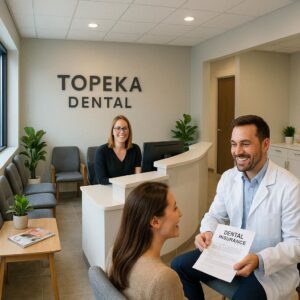
Dental Insurance in Topeka KS
Why Dental Insurance Matters for Topeka Residents
It is easy to put off dental care. Life gets busy, and for many, the cost of a check-up seems like an unnecessary expense. However, skipping routine care often leads to much larger (and more expensive) problems down the road.
Dental insurance is not just about saving money on cleanings; it is about investing in your overall health. Research has consistently linked oral health to conditions like heart disease, diabetes, and even pregnancy complications.
For residents of Topeka, having a solid dental plan means:
-
Preventive Care is Affordable: Most plans cover 100% of routine cleanings and exams. This encourages you to visit the dentist regularly, catching small issues like cavities before they turn into root canals.
-
Predictable Costs: Insurance puts a cap on your out-of-pocket expenses. Instead of facing an unexpected bill for a thousand dollars, you know your copay or coinsurance amount upfront.
-
Access to a Network: Insurance companies negotiate discounted rates with local dentists. By choosing an in-network provider in Topeka, you pay those lower, pre-negotiated rates.
Understanding the Landscape of Dental Insurance in Topeka, KS
Before diving into specific companies, it helps to understand the different types of dental plans available. Not all insurance is created equal, and knowing the difference will help you spot a good deal from a bad one.
1. Dental Health Maintenance Organization (DHMO)
Sometimes called “DHMO” or “HMO” dental plans, these operate on a network model.
-
How it works: You choose a primary dentist from a network of providers in Topeka. There is no deductible, and you pay a set copay for specific services.
-
Pros: These plans typically have the lowest monthly premiums. There are no annual maximums, meaning your benefits don’t run out.
-
Cons: You must stay within the network to receive coverage. If your current dentist isn’t in the network, you may need to switch.
2. Dental Preferred Provider Organization (DPPO)
This is the most common type of dental insurance, often offered by employers.
-
How it works: You can see any dentist you want, but you save the most money by choosing a dentist within the plan’s network.
-
Pros: You have the flexibility to see specialists without a referral, and you can go out-of-network if you are willing to pay a higher percentage of the cost.
-
Cons: These plans usually have an annual maximum (typically $1,000 to $2,000) and a deductible you must meet before the plan pays its share.
3. Dental Indemnity Plans
Sometimes called “fee-for-service” plans, these are the most traditional.
-
How it works: The insurance company pays a set percentage of the cost for your dental work, regardless of which dentist you see.
-
Pros: Maximum flexibility. You can go to any dentist in Topeka, and you don’t have to worry about network restrictions.
-
Cons: You usually have to pay the dentist upfront and then file paperwork to get reimbursed. Premiums tend to be higher, and you are responsible for any difference between the dentist’s fee and what the insurance company allows.
4. Discount Dental Plans
These are technically not insurance, but a membership program.
-
How it works: You pay a low annual fee to join a network. You then receive 10% to 60% off all dental services from participating Topeka dentists.
-
Pros: Very affordable, no waiting periods, no annual maximums, and no claim forms.
-
Cons: You pay for the service at the time of the visit (at a discounted rate), rather than having an insurance company pay for a portion of it.
Major Dental Insurance Providers Serving Topeka
The Topeka market includes a mix of national giants and regional players. Here is a look at some of the most common carriers you will encounter when searching for “dental insurance topeka ks.”
Delta Dental of Kansas
Delta Dental is a giant in the industry, and their Kansas branch is a dominant player in Topeka. They have a vast network of dentists across the state, giving you plenty of choices.
-
What to expect: They offer a range of plans, from PPOs to more budget-friendly options. Their “DeltaCare” program is a DHMO option available in some areas.
-
The Local Advantage: Because they are specific to Kansas, their customer service and provider directories are highly tailored to cities like Topeka.
Blue Cross Blue Shield of Kansas (BCBSKS)
BCBS is a name trusted by Kansans for medical insurance, and they also offer solid dental products.
-
What to expect: Their “Blue Dental” plans are often bundled with medical coverage, which can save you money if you get both from them. They primarily offer PPO plans with a strong network in Shawnee County.
Cigna
Cigna is a global health service company with a significant presence in the Midwest.
-
What to expect: Cigna is known for its large network of dentists and transparent pricing tools. They offer both individual and family plans that are popular in the Topeka area. They also have a strong focus on preventive care, often covering 100% of diagnostic and preventive services.
Humana
Humana is another major player that offers standalone dental insurance in Kansas.
-
What to expect: Humana is often praised for having plans with no waiting periods for preventive care, and sometimes even for basic procedures. They offer a variety of plan types, including PPO, HMO, and even preventive-only plans that are very low cost.
MetLife
While you might know MetLife for life insurance or auto insurance, they are also a major provider of dental benefits.
-
What to expect: MetLife is famous for its “TakeAlong Dental” PPO plans, which are popular with individuals and families. Their network, called the MetLife Preferred Dentist Program, is extensive in Topeka.
Important Note: Availability of specific plans (like HMOs vs. PPOs) can change. It is always best to visit the provider’s website and enter your specific zip code in Topeka to see exactly what is for sale right now.
How to Compare Dental Plans: A Practical Guide
When you look at different policies side-by-side, you need to look beyond just the monthly premium. A plan that costs $20 a month might end up costing you more in the long run if you need extensive work. Here is a checklist of what to look for.
1. The Monthly Premium
This is the amount you pay each month to keep the insurance active. It is your fixed cost. While a lower premium seems attractive, it often comes with higher out-of-pocket costs when you actually go to the dentist.
2. The Annual Deductible
This is the amount you must pay out-of-pocket before your insurance starts to pay its share.
-
Individual vs. Family: Most plans have an individual deductible and a family deductible (usually two or three times the individual amount).
-
What counts: Preventive care (cleanings, exams) is often covered before you meet your deductible. Basic and major work usually requires the deductible to be met first.
3. The Annual Maximum
This is the total dollar amount the insurance company will pay for your care within a year. Common maximums range from $1,000 to $2,500.
-
The Risk: If you need expensive work like crowns, bridges, or dentures, you can hit this maximum quickly. After that, you are responsible for 100% of the costs until the plan year resets.
4. Coinsurance and Coverage Levels
Dental plans usually divide services into three categories, with the insurance company paying a set percentage (the coinsurance) and you paying the rest.
| Service Category | Typical Procedures | Typical Insurance Pays | You Pay |
|---|---|---|---|
| Preventive | Cleanings, exams, x-rays | 80% – 100% | 0% – 20% |
| Basic | Fillings, simple extractions | 70% – 80% | 20% – 30% |
| Major | Crowns, bridges, dentures, root canals | 50% | 50% |
5. The Waiting Period
This is a crucial detail. A waiting period is the time you must wait after buying a policy before the insurance will cover certain procedures.
-
Common Rule: Many plans have no waiting period for preventive care. However, they may have a 6-month waiting period for basic care and a 12-month waiting period for major care. This is to prevent people from buying insurance only when they need a expensive procedure done.
A Closer Look: Individual vs. Family vs. Employer Plans
Where you get your insurance from matters just as much as what is in the policy.
Employer-Sponsored Insurance
If your employer in Topeka offers dental insurance, this is often the most cost-effective route.
-
The Advantage: Employers usually subsidize the premium, meaning you pay less than you would on the open market. The plans are also “guaranteed issue,” meaning you cannot be turned down or charged more due to pre-existing conditions.
-
The Disadvantage: You are limited to the plans your employer has chosen. You don’t have the flexibility to shop around for a different plan that might suit your needs better.
Individual and Family Plans
If you are self-employed, work part-time, or your employer doesn’t offer benefits, you will need to buy an individual plan.
-
The Advantage: You have total control. You can choose the exact coverage you want and pick a plan that includes your favorite dentist in Topeka.
-
The Disadvantage: You pay the full premium yourself, and you may be subject to medical underwriting or waiting periods. However, many states (including Kansas) have a robust individual market with many options.
Family Plans
When covering a spouse or children, you need to look for a family plan.
-
Coverage for Kids: Most family plans are a great value for children, as pediatric dental care is an essential health benefit under the Affordable Care Act, though it is often bundled into medical plans for kids.
-
Orthodontia: If you have teenagers, check if the plan covers orthodontia (braces). This is often a separate benefit with a lifetime maximum (e.g., $1,500 per person) rather than an annual maximum.
Tips for Choosing a Dentist in Topeka With Your Insurance
Once you have an idea of which insurance plan you want, the next step is making sure you can use it where you want. The relationship with your dentist is personal, and convenience matters.
1. Check the Network First
Before you sign up for a plan, visit the insurance company’s website and use their “Find a Dentist” tool. Filter by your zip code (try 66603, 66604, 66605, 66611, etc., to cover Topeka).
-
Proximity: Look for offices near your home or work.
-
New Patients: Check if the dentist is accepting new patients.
2. Don’t Be Afraid to Call the Office
The online directory is a great start, but it can sometimes be outdated. Once you find a few candidates, give them a call.
-
The Question to Ask: “Hi, I am considering signing up for a [Delta Dental / Cigna / etc.] PPO plan. Do you participate with this insurance?”
-
The Vibe Check: Pay attention to how the front desk staff treats you. Are they helpful and friendly? This is often a reflection of the entire practice.
3. Consider the “Vibe” of the Office
Dentist offices have personalities. Some are high-tech and fast-paced. Others are more traditional and quiet. Some specialize in anxious patients and offer sedation options. Think about what makes you comfortable.
The Affordable Care Act (ACA) and Dental Insurance in Kansas
There is often confusion about how the Affordable Care Act (Marketplace) affects dental insurance.
-
For Adults: Dental insurance is not mandatory for adults. You are not required to have it, and you will not face a penalty for going without it. However, you can purchase a standalone dental plan through the Marketplace or directly from an insurance company.
-
For Children: Pediatric dental coverage is one of the ten essential health benefits. This means that any health insurance plan offered through the Marketplace must include dental coverage for kids. This coverage can be embedded in the health plan or purchased as a separate, standalone dental plan.
If you are shopping on the Kansas Health Insurance Marketplace (healthcare.gov), you will have the option to add a dental plan for your family during the enrollment period.
How to Maximize Your Dental Insurance Benefits
Once you have your policy, you want to get the most out of it. Here are some pro-tips for Topeka residents.
-
Use It or Lose It: Dental insurance is not like medical insurance. You generally cannot roll over your unused benefits to the next year (unless you have a specific rollover rider). If you have paid your premium and have cleanings available, use them.
-
Timing is Everything: If you need major work done (like a crown) and you have already met your deductible for the year, try to schedule it before the end of the year. Conversely, if you are close to your annual maximum, you might want to push a non-emergency procedure into the next calendar year to get a fresh maximum.
-
Double Check Your X-Rays: Most plans cover a full set of x-rays once every three to five years, and “bitewing” x-rays (the ones that check for cavities between teeth) once a year. Make sure your dentist isn’t recommending x-rays more frequently than your insurance will cover, or you could get a surprise bill.
-
Flexible Spending Accounts (FSAs): If your employer offers a Flexible Spending Account, use it. You can set aside pre-tax dollars to pay for your dental copays, deductibles, and even procedures not covered by insurance, like teeth whitening.
Common Mistakes to Avoid When Buying Dental Insurance
Navigating the market for “dental insurance topeka ks” can be tricky. Here are some pitfalls to watch out for.
1. Only Looking at the Premium
That $15/month plan might seem like a steal, but look closer. It might have a $100 deductible, a $1,000 annual maximum, and only pay 50% for a filling after a 12-month waiting period. You often get what you pay for.
2. Ignoring the Provider Network
You find a great plan online, sign up, and then call your dentist only to find out they don’t accept it. Always verify the network before you buy. Many insurers have a “preview” function on their websites that lets you search dentists before you commit.
3. Forgetting About the Annual Maximum
If you need a root canal and a crown, the cost can easily exceed $2,000. If your plan only pays $1,500 per year, you will be responsible for the rest. If you anticipate needing significant work, look for a plan with a higher annual maximum (sometimes you can pay a slightly higher premium for a $2,500 or $3,500 max).
4. Not Reading the Fine Print on Waiting Periods
You buy a plan because you know you need a bridge. You go to the dentist the next week, and the insurance denies the claim because the plan has a 12-month waiting period for major work. If you know you have immediate needs, look for plans that specifically advertise “no waiting periods for major services,” though these usually have higher premiums.
The Future of Dental Care in Topeka
The dental industry is always evolving. For consumers in Topeka, this is good news.
-
Teledentistry: Many insurance plans now offer teledentistry options. You can have a virtual consultation with a dentist for minor issues or to determine if an in-person visit is necessary. This is a great way to save time and money.
-
Preventive Focus: Insurance companies are increasingly focused on preventive care because it saves them money in the long run. Expect to see more plans that reward you for regular check-ups, sometimes with lower premiums or increased benefits.
-
Technology Integration: More dental offices in Topeka are using modern technology like digital scanners (which replace the goopy impression material) and 3D imaging. Insurance companies are adapting to cover these modern diagnostic tools.
Additional Resources for Topeka Residents
Navigating healthcare can be complex, but you don’t have to do it alone. Here are some resources that can help you.
-
Kansas Insurance Department: This is your state resource for understanding insurance regulations, filing complaints against companies, and getting unbiased help. Their website is a treasure trove of information.
-
Link: insurance.kansas.gov
-
-
Healthcare.gov: The official Marketplace for the Affordable Care Act. You can see if you qualify for subsidies and compare qualified dental plans side-by-side.
-
Link: healthcare.gov
-
-
Kansas Dental Association: This professional organization can help you understand the standards of care and sometimes offers resources for finding a dentist.
-
Link: ksdental.org
-
Conclusion
Finding the right dental insurance in Topeka, KS, is a balance of cost, coverage, and convenience. By understanding the basic types of plans, comparing the major providers like Delta Dental and Blue Cross, and knowing what to look for in the fine print, you can confidently choose a policy that protects both your smile and your wallet. Remember, the best plan is the one you will actually use, so prioritize preventive care and choose a local dentist who makes you feel at ease.
Frequently Asked Questions (FAQ)
1. What is the average cost of dental insurance in Topeka, KS?
For an individual PPO plan, you can expect to pay between $25 and $55 per month. Family plans typically range from $65 to $150 per month, depending on the level of coverage and the deductible.
2. Is there a waiting period for dental insurance in Kansas?
It depends on the plan. Many plans have no waiting period for preventive care. However, waiting periods of 4 to 12 months are common for basic and major restorative work. Some higher-tier plans offer no waiting periods for all services.
3. Can I get dental insurance if I am self-employed in Topeka?
Absolutely. Most major carriers like Humana, Cigna, and Delta Dental of Kansas offer individual plans that are perfect for self-employed individuals, freelancers, and small business owners.
4. Does Medicare cover dental insurance in Topeka?
Original Medicare (Parts A and B) does not cover routine dental care like cleanings, fillings, or dentures. However, you can purchase a standalone dental insurance plan, or you might find dental coverage through a Medicare Advantage (Part C) plan offered in Shawnee County.
5. What is the best dental insurance for braces in Topeka?
If you need orthodontia for yourself or a child, look for plans that explicitly list “orthodontic coverage.” This is often an optional rider or a feature of more comprehensive (and expensive) plans. It’s common for these plans to cover 50% of the cost of braces, up to a lifetime maximum (e.g., $1,500).
6. Can I use my Topeka dental insurance immediately after buying it?
For preventive care (cleanings and exams), yes, usually immediately. For other services, you may need to wait for the waiting period to pass, unless you purchase a plan that specifically waives waiting periods.