Thinking about owning your own business in the stable and essential insurance industry? A Freeway Insurance franchise presents a compelling opportunity. As one of the largest independently owned insurance agencies in the U.S., Freeway offers a recognized brand and a proven system for selling auto, home, and other insurance products. But before you embark on this entrepreneurial journey, understanding the full financial picture is critical. This guide will provide a detailed, realistic breakdown of the Freeway Insurance franchise cost, helping you determine if it aligns with your goals and resources.
Our goal is to give you a clear, honest look at the investment, from the initial fees to the ongoing costs and potential returns. We’ll navigate beyond the headline figures to explore what your money actually goes toward and what you can realistically expect.
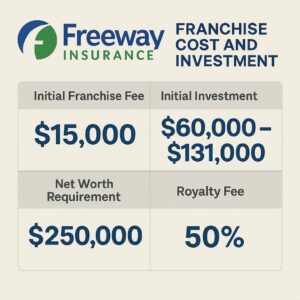
Freeway Insurance Franchise Cost and Investment
TABLE OF CONTENTS
ToggleWhat is a Freeway Insurance Franchise?
Freeway Insurance Services, Inc. operates a franchise model that allows individuals to own and run their own insurance agency under the Freeway brand. Franchisees benefit from the company’s national marketing, established carrier relationships, proprietary technology, and training programs. Unlike starting an independent agency from scratch, a franchise provides a roadmap and support system designed to accelerate your path to profitability.
The core business involves connecting customers with insurance policies from various providers, earning commissions on sales and renewals. It’s a sales and customer service-oriented business that thrives on building local relationships and providing value to the community.
Breaking Down the Freeway Insurance Franchise Cost
The total initial investment to open a Freeway Insurance franchise is a combination of several fees and startup expenses. It’s crucial to look at each component to understand where your capital is being allocated.
Initial Franchise Fee
This is the upfront cost paid to Freeway Insurance for the right to use their brand name, business model, and support systems. This fee typically covers initial training and the setup of your franchise in their system.
-
Estimated Cost: $50,000
-
Note: This fee is generally non-refundable and is standard across most new franchise agreements.
Estimated Total Initial Investment
The Federal Trade Commission (FTC) requires franchisors to provide an Item 7 in their Franchise Disclosure Document (FDD), which outlines the estimated initial investment range. Based on historical FDD data for Freeway Insurance, the total initial investment can vary significantly based on location, size, and build-out requirements.
Here’s a realistic breakdown of where these costs come from:
| Expense Category | Low-End Estimate | High-End Estimate | Purpose & Notes |
|---|---|---|---|
| Initial Franchise Fee | $50,000 | $50,000 | Brand licensing & initial training. |
| Real Estate & Leasehold Improvements | $15,000 | $75,000 | Security deposit, first month’s rent, and building out the office space to brand standards. |
| Technology & Office Setup | $10,000 | $25,000 | Computers, phones, printers, furniture, signage, and initial software/licenses. |
| Initial Marketing & Grand Opening | $5,000 | $15,000 | Local advertising campaigns to launch your business. |
| Insurance, Licenses, & Professional Fees | $2,000 | $7,000 | Business insurance, state licensing fees, legal/accounting setup. |
| Additional Funds (3-6 months) | $15,000 | $40,000 | Working capital to cover salaries, rent, and expenses until revenue stabilizes. |
| TOTAL ESTIMATED INVESTMENT | ~$97,000 | ~$212,000 | Varies greatly by market and site specifics. |
Important Note for Readers: “The numbers in the table are estimates based on available data and typical franchise startup scenarios. The only official source for current fees is the Freeway Insurance Franchise Disclosure Document (FDD). You must review this document carefully with a qualified franchise attorney before making any financial commitment.”
Ongoing Fees and Royalties
Your financial relationship with Freeway doesn’t end with the initial investment. Franchisees are responsible for ongoing fees that support the continued use of the brand and systems.
-
Royalty Fee: This is a recurring fee, typically calculated as a percentage of your gross commission revenue. It funds ongoing corporate support, technology updates, and national brand initiatives. Industry standards for insurance franchises often range from 6% to 10%.
-
National Advertising Fund (Ad Fund): Franchisees usually contribute a smaller percentage (e.g., 1-2%) of revenue to a collective fund for national marketing and advertising campaigns.
-
Technology Fees: There may be monthly or annual fees for access to the proprietary agency management systems, customer relationship management (CRM) tools, and comparative rating software.
Is a Freeway Insurance Franchise Profitable? Understanding the Potential
Investment is only one side of the coin; the other is potential income. Profitability isn’t guaranteed and depends heavily on the franchisee’s effort, location, market saturation, and operational efficiency.
Revenue Streams
Franchisees earn money primarily through:
-
New Policy Commissions: A percentage of the premium from each new auto, home, or commercial policy you sell.
-
Renewal Commissions: A (typically smaller) percentage of the premium when a customer renews their policy. This builds a valuable, recurring income stream over time.
-
Other Financial Products: Many agencies increase revenue by offering ancillary products like roadside assistance, payment processing, or life insurance.
Key Factors Influencing Profitability
-
Location & Demographics: High-traffic visibility in a community with a strong need for insurance is paramount.
-
Agent Performance: This is a sales business. Your ability to build relationships, convert leads, and retain customers directly impacts earnings.
-
Operational Costs: Managing rent, staff salaries, and local marketing within budget is essential for healthy margins.
-
Renewal Book Growth: The long-term value of an agency is in its “book of business”—the cumulative recurring revenue from renewals. A growing, stable book is the hallmark of a successful agency.
The Franchise Agreement: What You’re Committing To
Before focusing solely on cost, understand the legal framework. The Franchise Agreement outlines the terms of your partnership, including:
-
Term Length: Typically 10 years, with options to renew.
-
Territory: Defines your exclusive or non-exclusive operating area.
-
Training & Support: Details the initial and ongoing training provided.
-
Brand Standards: Requirements for maintaining office appearance, marketing materials, and customer service protocols.
-
Renewal & Termination Terms: The conditions under which the agreement can be ended or extended.
This document is complex. Consulting with a franchise-specialized lawyer is not just recommended; it is essential.
Freeway Insurance vs. Starting an Independent Agency
How does franchising compare to the DIY route?
| Consideration | Freeway Insurance Franchise | Independent Agency |
|---|---|---|
| Initial Cost | Higher due to franchise fee and potential build-out standards. | Lower startup costs, but more legwork to establish everything. |
| Brand Recognition | Immediate benefit of a national brand and marketing. | You must build your own brand reputation from zero. |
| Carrier Access | Access to Freeway’s established network of insurance carriers. | Must individually contract with each carrier, which can be difficult for new agents. |
| Training & Systems | Structured training and proven operational systems provided. | You must develop your own processes or source training independently. |
| Autonomy | Must adhere to franchise rules and brand standards. | Complete freedom to run the business as you see fit. |
Steps to Owning a Freeway Insurance Franchise
If the costs and model seem like a fit, here is a likely pathway:
-
Initial Research & Self-Assessment: Honestly evaluate your financial capacity, sales aptitude, and commitment.
-
Submit Inquiry & Pre-Qualify: Contact Freeway Insurance franchise development and complete their preliminary application.
-
Review the FDD: Receive and meticulously review the Franchise Disclosure Document with legal and financial advisors.
-
Meet with Franchise Leadership: Participate in discovery days or meetings with corporate representatives.
-
Secure Financing: Arrange your funding through savings, loans, or investors.
-
Sign Agreement & Pay Fee: Execute the Franchise Agreement and pay the initial franchise fee.
-
Complete Training & Setup: Undergo training, secure a location, build out your office, and hire staff.
-
Grand Opening: Launch your agency with corporate support.
Conclusion
Investing in a Freeway Insurance franchise involves a significant initial outlay, typically ranging from approximately $100,000 to over $200,000, which covers the franchise fee, location setup, technology, and vital working capital. Success hinges not just on securing the funds but on a franchisee’s dedication to sales, customer service, and effectively managing ongoing royalties and operational costs. The most critical step for any prospective buyer is to obtain and professionally review the official Franchise Disclosure Document to base this major life decision on complete and current facts.
Frequently Asked Questions (FAQ)
Q: What is the net worth or liquidity requirement to qualify for a Freeway franchise?
A: Franchisors typically have financial requirements to ensure candidates can sustain the business. While specific figures change, expect to demonstrate a minimum net worth (e.g., $300,000 – $500,000) and liquid capital available for the investment (e.g., $100,000+). This will be clearly stated in the FDD.
Q: Does Freeway offer financing for the franchise fee or startup costs?
A: Franchisors rarely provide direct financing. However, they may have relationships with third-party lenders who offer franchise-specific loans. Most franchisees use a combination of personal savings, Small Business Administration (SBA) loans, and traditional bank financing.
Q: How long does it take to break even or become profitable?
A: There is no universal timeline. Profitability can take 18 to 36 months, depending on how quickly you build your customer base and renewal book. A solid business plan with conservative projections is key to managing cash flow during this build-up phase.
Q: Can I run the franchise from home or does it require a retail location?
A: Freeway Insurance primarily operates a retail, community-based model requiring a commercial office location with high visibility and walk-in traffic. A home-based operation is unlikely to be approved under their standard franchise agreement.
Q: Where can I get the official Franchise Disclosure Document (FDD)?
A: The official FDD can only be provided by Freeway Insurance’s franchise development department after you have completed their qualification process. It is a legal document delivered in a specific manner, not available for public download.
Additional Resources
For further independent research on franchising and small business financing, we recommend visiting the U.S. Small Business Administration (SBA) website at www.sba.gov. The SBA offers guides on writing business plans, understanding franchise agreements, and exploring loan options.