For contractors, builders, farmers, and anyone whose livelihood depends on heavy machinery, insurance isn’t just a line item—it’s a critical shield against financial disaster. A single uninsured loss can cripple a business. But when you start shopping for coverage, one question looms large: What does heavy equipment insurance cost?
The truth is, there’s no one-size-fits-all answer. You won’t find a standard price tag for a bulldozer or an excavator. Instead, the cost is a unique calculation, a reflection of your specific risk profile. This guide will demystify that calculation. We’ll walk through every factor that influences your premium, provide realistic price frameworks, and give you actionable strategies to secure the best possible coverage at a sensible cost. Think of this as your essential field manual for navigating the world of equipment insurance.
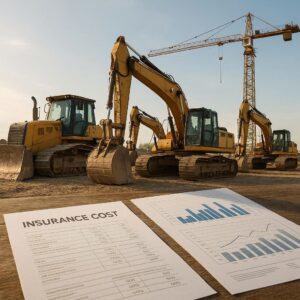
Heavy Equipment Insurance Cost
What is Heavy Equipment Insurance?
Before we break down costs, let’s define the product. Heavy equipment insurance is a specialized form of property and liability coverage designed for mobile machinery. Unlike standard commercial auto insurance (which covers vehicles licensed for public roads), this insurance protects equipment that primarily works on-site, such as excavators, backhoes, loaders, cranes, bulldozers, skid-steers, and large tractors.
At its core, it typically combines several key coverages:
-
Physical Damage: This is like “comprehensive and collision” for your equipment. It covers repairs or replacement if your machinery is damaged by theft, vandalism, fire, collision, or overturn.
-
Liability Coverage: This protects you if your equipment operation causes bodily injury or property damage to a third party. For example, if a crane boom swings into a power line or a backhoe accidentally damages a client’s underground utility.
-
Additional Coverages: Policies can often be extended to include things like rented equipment, on-site tools, and loss of income if a key piece of machinery is down.
As one industry risk manager notes, “Insuring heavy equipment isn’t about protecting an asset that depreciates—it’s about protecting the revenue engine that your entire project schedule depends on. The cost of downtime often far exceeds the repair bill.”
Key Factors That Determine Your Heavy Equipment Insurance Cost
Your premium is built from the ground up based on risk. Insurers assess these variables to determine how likely you are to file a claim. Understanding them is the first step to managing your costs.
1. Equipment Type, Value, and Age
This is the most straightforward factor. A brand-new $350,000 crawler crane will cost significantly more to insure than a used $25,000 skid-steer loader. Higher value means a larger potential payout for the insurer. Newer equipment might have lower repair costs due to availability of parts, while older machines might be more prone to breakdowns or be worth less than the cost to repair them, leading to a total loss settlement.
2. Coverage Limits and Deductibles
You directly control this trade-off. Higher coverage limits (the maximum an insurer will pay) mean higher premiums. Conversely, choosing a higher deductible (the amount you pay out-of-pocket per claim) lowers your premium. It’s a balance between upfront cost and potential financial strain later.
3. Usage and Operational Radius
How and where you use the equipment is crucial. A mini-excavator used for quiet, residential landscaping poses a much different risk than the same model used in dense urban demolition. Insurers will ask:
-
Job Type: Earthmoving, demolition, lifting, forestry?
-
Operational Radius: Is the equipment used only locally (e.g., within 100 miles), statewide, or nationwide? A wider radius increases exposure to theft, transport accidents, and varying job site risks.
-
Operator Experience: Are operators certified, trained, and have a clean safety record?
4. Business Location and Storage
Where your business is based and, more importantly, where the equipment is stored overnight has a major impact. Rates are typically higher in areas with:
-
High theft rates for equipment.
-
Severe weather exposure (hurricane zones, tornado alleys).
-
High costs of living (which translates to higher repair labor costs).
Secure, fenced, and lit storage yards with locked compartments can lead to meaningful discounts.
5. Claim History and Safety Record
Your past is the best predictor of your future in the eyes of an insurer. A business with multiple at-fault claims or safety violations will pay a higher premium. A clean record over several years is your strongest bargaining chip for lower rates.
Important Note: Always be completely transparent with your insurer about your equipment’s use and history. Misrepresentation can void your policy when you need it most.
Average Cost Ranges: What Can You Expect to Pay?
While we stress that every quote is unique, it’s helpful to have a frame of reference. Heavy equipment insurance is often quoted as an annual premium, and it’s commonly expressed as a percentage of the equipment’s value or as a rough annual cost range.
Typical Annual Premium Ranges by Equipment Type
The table below provides a general estimate. These are illustrative ranges and can vary widely based on the factors previously discussed.
| Equipment Type | Example Model | Approximate Value Range | Estimated Annual Premium Range |
|---|---|---|---|
| Skid-Steer Loader | Compact, versatile loader | $25,000 – $50,000 | $750 – $2,000 |
| Mini-Excavator | Small 3-5 ton excavator | $35,000 – $70,000 | $1,000 – $2,500 |
| Backhoe Loader | Common multi-use machine | $50,000 – $100,000 | $1,500 – $4,000 |
| Wheel Loader | Medium-sized loader | $150,000 – $300,000 | $4,000 – $9,000 |
| Crawler Excavator | Large 20-ton+ excavator | $200,000 – $500,000 | $6,000 – $15,000 |
| Bulldozer | Medium dozer | $250,000 – $400,000 | $7,000 – $14,000 |
| Mobile Crane | 50-ton truck-mounted crane | $400,000 – $1,000,000+ | $12,000 – $30,000+ |
Remember: These figures often include combined Physical Damage and Liability coverage. Liability-only policies will be cheaper, but they leave your valuable asset exposed.
The Percentage-of-Value Rule of Thumb
As a very general industry rule of thumb, annual premiums for well-managed risks often fall between 1% and 5% of the equipment’s insured value. For example, a $100,000 backhoe with a clean risk profile might see a premium around $2,000 (2%). A higher-risk scenario could push it toward $5,000 (5%).
How to Get the Best Price on Your Insurance
Being a savvy buyer can save you thousands without sacrificing necessary protection. Here’s your action plan.
1. Bundle Your Policies (Package Discounts)
Insuring all your equipment, general liability, and other commercial policies (like commercial auto) with the same carrier is the single most effective way to save. This “packaging” creates efficiency for the insurer and loyalty for you, translating into significant discounts.
2. Implement a Robust Safety Program
Demonstrate you’re a low risk. This includes:
-
Formal operator training and certification programs.
-
Regular documented equipment maintenance logs.
-
Mandatory site safety meetings.
-
Clear protocols for transport and securing equipment.
Present this documentation to your agent. It can make a compelling case for a lower rate.
3. Shop Around and Compare Quotes
Don’t settle for the first quote you receive. The market for equipment insurance varies. Get quotes from:
-
Independent insurance agents (who work with multiple carriers).
-
Brokers specializing in construction or agriculture.
-
Direct writers (insurance companies you contact directly).
Compare not just price, but the scope of coverage, exclusions, and the insurer’s reputation for claims handling.
4. Optimize Your Deductible Strategy
Consider raising your deductible. If you can comfortably afford a $2,500 deductible instead of a $1,000 deductible, your annual premium will drop. This is a calculated bet on your own loss prevention. The savings over several claim-free years can outweigh the higher out-of-pocket cost if a rare claim occurs.
5. Ask About Specific Discounts
Inquire directly about discounts you may qualify for:
-
Paid-in-Full Discount: Pay your annual premium upfront instead of monthly.
-
Security Discount: For GPS tracking systems, immobilizers, or secure storage.
-
Renewal/Loyalty Discount: For staying with the same insurer claim-free.
-
Association Discount: Through membership in trade groups like the Associated General Contractors (AGC) or Associated Builders and Contractors (ABC).
Beyond the Basics: Specialized Coverages and Considerations
Sometimes, the standard policy isn’t enough. Be aware of these additional coverage options and their potential cost impact.
Rented or Leased Equipment Coverage
If you frequently rent equipment, a “Rental Reimbursement” or “Hired Equipment” endorsement is crucial. It covers damage to equipment you don’t own. The cost is typically a small addition to your base policy but is far cheaper than the penalty fees a rental company will charge you for damage.
Inland Marine vs. Commercial Auto Insurance
This is a critical distinction. Your heavy equipment likely needs an Inland Marine (equipment floater) policy.
-
Commercial Auto Insurance: Covers vehicles licensed for public roads (dump trucks, service trucks).
-
Inland Marine Insurance: Covers mobile machinery not licensed for road use (excavators, bulldozers, cranes on carriers).
Using the wrong policy can result in a denied claim. A proper inland marine policy is “all-risk,” covering a broader range of perils than a standard auto policy.
Off-Road Use and Transportation Coverage
Ensure your policy clearly covers two key phases:
-
Transit: When the equipment is being towed or transported on a trailer between job sites.
-
Operation: When it’s being used at the job site.
Many losses occur during loading, unloading, or transport. Verify this coverage is included and understand its limits.
Creating a Cost-Effective Insurance Strategy: A Practical Checklist
Let’s turn this knowledge into a step-by-step plan. Use this checklist when reviewing or purchasing your coverage.
-
Conduct a full equipment inventory. List every unit, its serial number, year, make, model, and current fair market value.
-
Assess your peak risk exposures. Are you in a high-theft area? Do you work in tight, urban spaces? Do you operate high-value cranes?
-
Gather your safety and maintenance records. Have them organized and ready to present.
-
Determine your risk tolerance for deductibles. What’s the highest out-of-pocket cost you could absorb per incident without harming operations?
-
Contact at least three different insurance providers (agents, brokers, or direct companies) for quotes.
-
Compare quotes line-by-line, ensuring coverage limits and terms are identical. Don’t just compare the bottom-line price.
-
Review all policy exclusions and limitations with your agent. Ask “What’s NOT covered?” Pay special attention to wear-and-tear, mechanical breakdown, and pollution exclusions.
-
Finalize your policy and schedule an annual review date to reassess your needs and shop the market again.
Conclusion
The cost of heavy equipment insurance is a dynamic figure shaped by your equipment’s value, its use, your business practices, and your choices in coverage. By understanding the rating factors, employing strategic discounts, and comparing quotes with a keen eye on coverage details, you can secure robust financial protection that safeguards your assets without overburdening your budget. Remember, the goal is not merely the lowest price, but the most reliable value—ensuring your business can withstand a loss and continue operating.
Frequently Asked Questions (FAQ)
Q: Is heavy equipment insurance legally required?
A: While not always mandated by law like auto insurance, it is almost always required by contract. Nearly every project owner, general contractor, or leasing company will require you to carry specific levels of liability and physical damage insurance before you can set foot on a job site or take possession of leased equipment.
Q: Can I just add my equipment to my business owner’s policy (BOP)?
A: Typically, no. A standard Business Owner’s Policy (BOP) is designed for small retail or service businesses and has very limited coverage for mobile equipment. Heavy machinery requires a specialized inland marine or equipment floater policy.
Q: How is the value of my equipment determined in a claim?
A: This is a critical policy detail. Most policies use one of two methods: Actual Cash Value (ACV), which pays the replacement cost minus depreciation, or Agreed Value/Stated Amount, where you and the insurer agree on the value upfront. ACV is more common but can lead to disputes. Understand which method your policy uses.
Q: Does my policy cover me if I send an operator to work in another state?
A: You must notify your insurer. Your policy is typically written for a “primary operational radius.” Working outside that radius, especially in another state with different regulations, may require a policy endorsement or adjustment, which could affect your premium.