Congratulations! The thought of getting behind the wheel of a new 2026 Honda Civic is exciting. Known for its reliability, fuel efficiency, and tech-forward features, the Civic remains a top choice for drivers. But before you finalize your purchase, there’s one critical piece of the puzzle to solve: understanding your insurance costs.
You’re asking the right question. The price to insure your 2026 Civic isn’t a single number; it’s a personal equation. This guide is designed to demystify that equation. We’ll walk you through everything that influences your premium, provide realistic cost frameworks, and give you powerful strategies to secure the best possible rate. Think of this as your essential financial co-pilot for your new car journey.
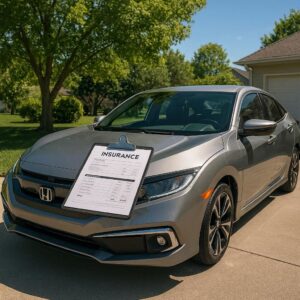
Honda Civic Insurance Costs
Key Factors That Determine Your 2026 Civic Insurance Premium
Insurance companies use a sophisticated blend of data to calculate your rate. While the car itself is important, you are the most significant variable. Let’s break down the primary factors.
Your Personal Driver Profile
This is where your unique story impacts your wallet. Insurers assess risk based on decades of statistical trends.
-
Age and Driving Experience: Inexperienced drivers, typically those under 25, face higher premiums. Statistics simply show a higher risk of accidents. Conversely, drivers with a long, clean record often enjoy the lowest rates.
-
Driving Record: This is paramount. At-fault accidents, speeding tickets, and serious violations like DUIs signal high risk and lead to substantial premium increases for years.
-
Credit History: In most states, insurers use credit-based insurance scores. The logic is that individuals who manage their financial responsibilities responsibly are statistically less likely to file claims.
-
Location: Where you garage your car nightly is a huge factor. Urban areas with higher traffic density, theft rates, and claim frequency cost more to insure than rural or suburban areas.
The 2026 Honda Civic Itself: Trim Level and Safety
The Civic’s cost to insure is generally reasonable, but it varies by trim. Insurers consider repair costs, theft rates, and safety performance.
-
Trim Level Impact: A base LX sedan with a standard engine will be cheaper to insure than a high-performance Civic Si or Type R. More horsepower and higher replacement/repair costs for specialized parts equal higher risk.
-
Safety Technology: The good news is that the 2026 Civic will be loaded with Honda Sensing® as standard. Features like Automatic Emergency Braking, Lane Keeping Assist, and Adaptive Cruise Control are proven to reduce the frequency and severity of accidents. Many insurers now offer discounts for these verifiable safety features.
-
Theft and Repair Data: The Civic has historically had moderate theft rates, and its repair costs are generally in line with other compact cars. Its strong safety ratings from the IIHS and NHTSA help keep rates competitive.
Your Coverage Choices and Deductibles
You are in direct control here. The coverage you choose is the single biggest lever you can pull to change your premium.
-
State Minimums vs. Full Coverage: Only purchasing your state’s bare minimum liability coverage will give you the lowest premium but also the least protection. If you finance or lease your 2026 Civic, your lender will require full coverage (comprehensive and collision).
-
Deductible Amount: This is the amount you pay out-of-pocket before insurance kicks in on a claim. Choosing a higher deductible (e.g., $1,000 instead of $500) will lower your monthly premium, but you must be prepared to pay that amount if an incident occurs.
-
Coverage Limits: Higher limits for liability (e.g., 100/300/100 instead of 25/50/25) provide much better protection but come at a higher cost.
Realistic 2026 Honda Civic Insurance Cost Estimates
Since the 2026 model isn’t yet on the road, we must project based on current Civic data, insurance trends, and the expected evolution of the vehicle. These are national annual estimate ranges. Your actual quote could be lower or significantly higher.
Estimated Average Annual Premium by Driver Profile
The table below illustrates how your personal profile shapes the cost. These estimates assume a 2026 Civic EX Sedan, full coverage with good limits, for a single driver.
| Driver Profile | Estimated Annual Insurance Cost | Key Reasons |
|---|---|---|
| Excellent Record (40-year-old) | $1,200 – $1,800 | Peak driving experience, clean record, highest credit tier. The baseline “best case” scenario. |
| Good Record (25-year-old) | $1,800 – $2,600 | Good history but less experience than older drivers. Gender may still be a rating factor in some states. |
| New Driver (18-year-old) | $3,000 – $5,000+ | The highest-risk category due to severe lack of experience. Adding to a parent’s policy is often cheapest. |
| Driver with One At-Fault Accident | $2,200 – $3,400 | The accident surcharge can last 3-5 years, significantly raising premiums regardless of age. |
Important Note: “These estimates are informed projections. The only way to know your true cost is to get personalized quotes. The variation between companies for the same driver can be hundreds of dollars,” reminds Sarah Chen, a certified insurance analyst.
Cost Comparison: 2026 Civic Trim Levels
The car you choose matters. Here’s how different trims are likely to stack up. Estimates are for a 35-year-old driver with a clean record.
| 2026 Honda Civic Trim | Relative Insurance Cost | Why the Difference? |
|---|---|---|
| LX, Sport Sedan | Baseline ($$) | Standard engine, lower repair/replacement cost. |
| EX, EX-L Sedan/Hatch | Slightly Above Baseline ($$+) | Higher value, more tech features to repair. |
| Sport Touring Hatch | Moderate Increase ($$$) | More powerful engine (turbo), higher MSRP. |
| Civic Si / Type R | Highest Premium ($$$$) | High-performance engines, targeted by enthusiasts, costly specialized parts. |
Actionable Strategies to Lower Your Insurance Costs
You don’t have to accept the first quote. Be an active shopper.
Shopping and Comparison Tactics
-
Get Quotes Early: Start shopping before you buy. You can get quotes using the Vehicle Identification Number (VIN) of the specific car you’re considering.
-
Compare, Compare, Compare: Rates vary wildly. Get at least three to five quotes from a mix of national insurers, regional companies, and direct-to-consumer providers.
-
Ask About Discounts: Proactively inquire. Common ones include:
-
Multi-policy (bundling auto & home/renters)
-
Multi-vehicle
-
Paid-in-full
-
Paperless billing and autopay
-
Defensive driving course completion
-
Good student (for drivers under 25)
-
Affiliation discounts (alumni, employer, professional groups)
-
Policy and Lifestyle Adjustments
-
Review Your Coverage Annually: Life changes. Your policy should too. A clean year of driving or moving to a safer ZIP code could merit a re-shop.
-
Consider Usage-Based Insurance: Programs like Allstate’s Drivewise, Progressive’s Snapshot, or State Farm’s Drive Safe & Save monitor your driving (via app or plug-in device). Safe drivers can see significant discounts.
-
Maintain a Clean Driving Record: This is the most powerful long-term strategy. Avoid tickets and accidents.
-
Choose Your Deductible Wisely: Opt for the highest deductible you can comfortably afford to pay in an emergency.
Conclusion
The cost to insure your 2026 Honda Civic is a personalized blend of your driver profile, chosen trim level, coverage selections, and shopping diligence. While generally affordable, your specific rate hinges on factors from your credit history to your ZIP code. By understanding these variables, gathering multiple quotes, and leveraging every available discount, you can secure the right protection for your new Civic at a competitive and fair price.
Frequently Asked Questions (FAQ)
Q1: Is the 2026 Honda Civic expensive to insure?
A: No, it is typically considered affordable to insure relative to its class. Its strong safety ratings, widespread availability of parts, and generally low theft rates help keep premiums reasonable, especially for lower trims. High-performance trims (Si, Type R) will cost more.
Q2: What is the single best way to lower my premium?
A: Shopping around and comparing quotes from different companies is consistently the most effective action. Loyalty to one insurer is rarely rewarded as much as switching to a competitor offering a lower introductory rate.
Q3: Will the standard Honda Sensing® safety features lower my rate?
A: Yes, but not automatically. You must inform your insurance agent that the vehicle is equipped with these features. Many companies offer specific discounts for verified anti-collision technology.
Q4: Should I get insurance before or after buying the car?
A: Before. In fact, you cannot legally drive a financed car off the lot without proof of insurance. Contact your insurer with the car’s VIN ahead of time to bind coverage effective the day of purchase.
Q5: How much should I increase my liability limits from the state minimum?
A: State minimums are often dangerously low (e.g., $25,000). Most financial advisors recommend carrying at least 100/300/100 ($100,000 per person, $300,000 per accident, $100,000 property damage) to protect your assets in a serious at-fault accident.
Additional Resources
-
For an independent review of safety features and ratings that insurers use, visit the Insurance Institute for Highway Safety (IIHS) website at www.iihs.org. Checking the 2026 Civic’s rating once it’s released will give you valuable insight.