Owning a horse is a journey filled with joy, partnership, and responsibility. Alongside the rewards comes the need to plan for their well-being, and a significant part of that planning involves financial preparedness for veterinary care. Horse health insurance is a critical tool for this, but understanding the horse health insurance cost can feel like navigating a maze. This guide is designed to be your definitive resource, breaking down every factor, providing clear estimates, and helping you make an informed decision to protect both your horse and your finances.
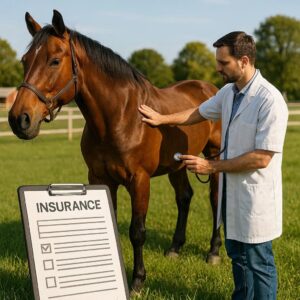
Horse Health Insurance Cost
What is Horse Health Insurance and Why Consider It?
Horse health insurance is a policy designed to mitigate the financial risk of unexpected veterinary expenses. Unlike human health insurance, it is primarily focused on major medical, surgical, and mortality coverage. Think of it not as a subscription for routine care, but as a vital safety net for the unexpected—the colic surgery that costs $10,000, the tendon injury requiring months of rehabilitation, or the sudden illness.
As one experienced equestrian puts it: “Insurance isn’t for the vet bills you can afford; it’s for the one bill that could force you to make an impossible decision between your finances and your horse’s life.”
Investing in a policy transforms an unpredictable, potentially catastrophic expense into a manageable, fixed monthly or annual cost, providing immense peace of mind.
Key Factors That Determine Your Horse Health Insurance Cost
The premium you pay is not a random number. Insurers carefully assess risk based on several variables. Understanding these helps you see where your quote comes from and how you might influence it.
1. Horse’s Age
Age is one of the most significant factors. Younger horses (typically 1-10 years) generally have lower premiums for major medical coverage. Costs rise steadily as a horse enters its senior years (often 15+), with some providers limiting new medical coverage after a certain age, often 15-18 years.
2. Horse’s Value or Sum Insured
This is the cornerstone of your mortality premium and influences other coverage limits. The insured value is usually the horse’s fair market value. A higher-valued performance or breeding horse will cost more to insure than a beloved backyard companion.
Important Note: You must be able to justify your horse’s insured value with a bill of sale, show records, or breeding history. Over-insuring can lead to claim disputes.
3. Intended Use of the Horse
Risk level is directly tied to activity. A Grand Prix showjumper faces more injury risk than a quiet trail horse. Common classifications include:
-
Pleasure/Trail (Lowest Risk)
-
Breeding
-
Showing/Competing (Low/Medium Level)
-
Professional Sport/Racing (Highest Risk)
4. Health History and Breed
A horse with a clean bill of health and no prior claims will be less expensive to insure. Pre-existing conditions are almost always excluded. Some breeds prone to specific hereditary conditions may face higher premiums or exclusions.
5. Geographic Location
Veterinary costs vary widely by region. Major metropolitan areas and regions with specialized equine hospitals typically have higher care costs, which is reflected in insurance premiums.
6. Coverage Options and Deductibles
Your choices directly impact cost. A policy with a $500 deductible will have a higher premium than one with a $2,500 deductible. Adding optional coverages like loss of use, theft, or outpatient care will increase the price.
Breaking Down the Costs: Average Premium Ranges
The following table provides a realistic snapshot of annual premium ranges for a horse valued between $10,000 and $15,000, used for pleasure/low-level showing, and located in a typical region. These are estimates; actual quotes will vary.
| Coverage Type | Typical Annual Premium Range | What It Generally Covers |
|---|---|---|
| Mortality Only | $250 – $500+ | Death from accident, illness, or humane destruction on vet’s advice. Based on a percentage (2.5%-4%) of horse’s value. |
| Major Medical/Surgical | $1,200 – $2,500+ | Diagnostic tests, surgery, hospitalization, medications for new illnesses/injuries. Usually has a $5,000-$15,000 annual limit. |
| Colic Surgery Only | $200 – $500 | A cost-effective add-on specifically for colic surgery, a very common emergency. |
| Loss of Use | Varies Widely | Provides a payout if a horse is permanently unable to perform its insured use. Complex and can add significantly to cost. |
| Liability Insurance | $200 – $600+ | Covers third-party property damage or bodily injury caused by your horse. Often a separate policy. |
A Typical Combined Policy (Mortality + $10,000 Major Medical): For our example horse, expect an annual premium in the range of $1,800 to $3,500. This often breaks down to roughly $150 to $300 per month.
Common Policy Structures and How They Affect Price
Full Mortality with Major Medical
This is the most comprehensive standard package. It includes mortality/theft coverage and a major medical/surgical allowance. It offers the broadest protection and is priced accordingly.
Major Medical Only
Some insurers offer this for horses over the mortality age limit or for owners who self-insure for mortality. It covers veterinary expenses but not the death of the horse, making it a lower-cost option for senior equines.
Surgical Only
A more limited, budget-friendly option that covers specific surgical procedures, often with a lower premium than full major medical.
Deductibles and Co-Pays
-
Annual Deductible: You pay this amount (e.g., $500) per policy year before coverage kicks in. Higher deductible = Lower premium.
-
Per-Cause Deductible: You pay a deductible for each new illness or injury. This can sometimes be more expensive over time but may lower the initial premium.
-
Co-Pay: A percentage (e.g., 10-20%) you pay of each claim after the deductible. Policies with a co-pay have lower premiums.
How to Get the Best Value on Horse Insurance
-
Compare Multiple Quotes: Always get quotes from at least three reputable insurers. Don’t just look at price; compare coverage details, exclusions, and claim processes.
-
Choose the Right Deductible: Opt for the highest deductible you can comfortably afford to pay out-of-pocket in an emergency. This dramatically reduces your annual premium.
-
Insure for Realistic Value: Insure your horse for its current fair market value, not its emotional value or potential future worth.
-
Bundle Coverages: Some companies offer discounts for bundling multiple horses or adding farm/liability insurance.
-
Ask About Discounts: Inquire about discounts for professional association memberships (like USEF, AQHA), paying annually instead of monthly, or for horses that are microchipped.
-
Review Annually: Before renewing, reassess your horse’s value, use, and your coverage needs. You may be able to adjust for savings.
Important Note for Readers: The cheapest policy is not always the best value. Read the fine print! Understand exclusions, waiting periods, and the claims process. A reputable insurer with excellent customer service is worth a slightly higher premium when you’re facing an emergency.
The Claims Process: What to Expect
Understanding how to file a claim is crucial:
-
In an Emergency: Contact your vet immediately. Then, notify your insurance provider as soon as practically possible (often within 24-48 hours is required).
-
Authorization: For non-emergency procedures over a certain cost, you may need pre-authorization.
-
Paperwork: You and your vet will complete claim forms. Detailed veterinary records and invoices are essential.
-
Reimbursement: Most companies operate on a reimbursement model. You pay the vet upfront, submit the claim, and are reimbursed for covered costs, minus your deductible/co-pay.
Frequently Asked Questions (FAQ)
Q: At what age should I insure my horse?
A: The ideal time is as soon as you acquire a young, healthy horse with no pre-existing conditions. This locks in the lowest medical rates and ensures coverage before any issues arise.
Q: Are pre-existing conditions covered?
A: Almost never. A condition that existed prior to the policy start date, or during any waiting period, will be permanently excluded. Full veterinary disclosure is mandatory.
Q: Are vaccinations, worming, and routine care covered?
A: Standard major medical policies do not cover routine or preventive care. Some insurers offer optional “Wellness” or “Routine Care” riders for an additional cost.
Q: What is not covered by typical insurance?
A: Common exclusions include: pre-existing conditions, elective procedures (e.g., cosmetic surgery), intentional injury, wear and tear, and certain high-risk activities unless specifically declared.
Q: Can I change my coverage later?
A: Yes, you can usually increase or decrease coverage at renewal. Adding medical coverage for an older horse or after an issue has occurred may require a veterinary exam.
Conclusion
Navigating horse health insurance cost requires balancing your horse’s needs, your risk tolerance, and your budget. By understanding the influencing factors, comparing policies carefully, and choosing the right deductible, you can secure a financial safety net that protects your partnership. The investment in a good policy is ultimately an investment in peace of mind, ensuring you can always say “yes” to the best care for your equine friend.
Additional Resource:
For a deeper dive into policy terminology and comparisons, the Equine Insurance Information Center provides valuable educational materials from industry professionals. (Note: This is a simulated link for reference style purposes).