If you run a lawn care or landscaping business, you know that keeping things running smoothly involves more than just a reliable mower and a happy client. There is one question that every lawn care professional asks at some point: “How much is this going to cost me?” Specifically, how much does lawn service insurance cost?
It is one of the most important investments you will make. But finding a straight answer on pricing can feel impossible. You might see quotes ranging from a few hundred dollars to several thousand, and it is easy to get confused.
This guide is designed to change that. We are going to break down the real costs of lawn service insurance. We will look at why prices vary, what specific coverage you actually need, and how you can save money while staying fully protected. Whether you are a solo operator with a truck and a trailer or you run a large crew, this is your go-to resource for understanding insurance costs.
Let’s dig in.
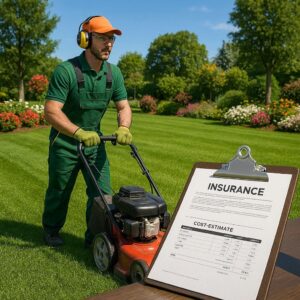
Lawn Service Insurance Cost
Why Lawn Service Insurance Is Non-Negotiable
Before we look at the numbers, it helps to understand why this cost is so important. Many new business owners see insurance as just another bill. In reality, it is the shield that protects everything you have worked for.
Imagine a piece of debris flies up from your weed trimmer and shatters a client’s expensive window. Or, one of your employees injures their back lifting a bag of mulch. Without the right insurance, these incidents could lead to lawsuits or medical bills that could shut your business down for good.
Having insurance isn’t just a legal requirement in many places; it is a sign of professionalism. Clients feel safer hiring you when they know you are insured. It builds trust.
Average Lawn Service Insurance Costs
So, what is the magic number? Because every business is different, insurance costs fall into a range rather than a single fixed price. However, we can look at industry averages to give you a solid starting point.
Here is a general breakdown of what you might expect to pay for a General Liability policy, which is the foundation of most lawn service insurance plans.
-
Small / Solo Operations: For a sole proprietor with no employees, working on residential properties, general liability insurance usually costs between $40 and $70 per month. That translates to roughly $500 to $850 per year.
-
Medium Operations (1-5 Employees): Once you hire employees and start taking on larger commercial accounts or using heavier equipment, your risk profile changes. Monthly premiums often range from $80 to $200 per month ($950 to $2,400 per year).
-
Large Operations (5+ Employees): Businesses with multiple crews, complex equipment, and high-value commercial contracts will pay significantly more. Premiums can easily start at $300 per month and go up to $1,000+ per month depending on your specific payroll and scope of work.
Important Note: These are average estimates. Your actual quote will be customized based on your unique situation. It is always best to get multiple quotes to compare.
Types of Coverage and Their Costs
General Liability is just one piece of the puzzle. A comprehensive insurance package usually includes several different types of coverage. Understanding each one helps you see where your money is going.
1. General Liability Insurance
This is your primary coverage. It protects you from third-party claims of bodily injury or property damage.
-
What it covers: A client trips over your hose and breaks their wrist. You accidentally damage a patio while edging. A customer claims your work damaged their foundation.
-
Typical Cost: As outlined above, this is the baseline cost for your policy.
2. Commercial Property Insurance
This covers the physical assets of your business. If your equipment is stolen or damaged, this coverage helps you replace it.
-
What it covers: Theft of your mowers and trimmers. Damage to your tools in a vehicle accident. A fire in your storage shed.
-
Typical Cost: Adding property coverage can increase your premium by $20 to $100+ per month, depending on the total value of your equipment.
3. Commercial Auto Insurance
If you use a truck or trailer for your business, your personal auto policy likely won’t cover you in an accident. You need a commercial auto policy.
-
What it covers: Accidents while driving to a job site. Damage to your work vehicle. Theft of equipment from your truck.
-
Typical Cost: Commercial auto can vary wildly based on your driving record and the vehicle. It can range from $100 to $300+ per month.
4. Workers’ Compensation Insurance
If you have employees, this is not optional in most states. It covers medical expenses and lost wages if a worker gets hurt on the job.
-
What it covers: An employee cuts their hand on a blade. A worker suffers heatstroke. A crew member slips on a wet lawn.
-
Typical Cost: Workers’ comp is usually priced per $100 of payroll. For lawn care, rates typically fall between $5 and $15 per $100 of payroll. This means if you pay an employee $1,000, you might pay $50 to $150 in premium for that period.
5. Tools and Equipment Coverage (Inland Marine)
This is often an endorsement to your general liability or property policy. It covers your tools when they are away from your primary location.
-
What it covers: Tools stolen from a job site. Equipment damaged in the back of your truck.
-
Typical Cost: A relatively affordable add-on, often $10 to $30 per month.
Cost Comparison Table
To make this easier to visualize, here is a simple table comparing the average monthly costs for different coverage types for a small, established lawn service.
| Coverage Type | What It Protects | Average Monthly Cost (Estimate) |
|---|---|---|
| General Liability | Customer injuries & property damage | $50 – $150 |
| Commercial Property | Your shed, office, or stored equipment | $25 – $80 |
| Tools & Equipment | Gear stolen or damaged on-site | $15 – $40 |
| Commercial Auto | Your work truck or trailer | $120 – $300 |
| Workers’ Compensation | Your employees’ on-job injuries | Varies by payroll |
| Business Owner’s Policy (BGP) | Bundled Liability + Property (Best Value) | $70 – $200 |
Key Factors That Influence Your Premium
Insurance companies don’t pull numbers out of thin air. They use specific data about your business to calculate risk. The higher the perceived risk, the higher the cost. Here are the main factors they look at.
Your Location
Where you live and work matters. Insurance in a state prone to natural disasters or with high litigation rates will cost more than in a quiet, low-risk area. Urban areas might also have higher premiums due to increased traffic and theft risk.
Your Services Offered
Are you just mowing lawns? Or do you offer tree removal, pesticide application, or snow removal? Services like using chemicals (herbicides/pesticides) or working at heights (tree trimming) are considered higher risk and will increase your costs.
Business Experience
New businesses are often seen as riskier. If you have been in operation for five or ten years without any claims, you are likely to get better rates. Insurers love stability.
Claims History
This is a big one. If you have filed insurance claims in the past, insurers will view you as a higher risk. Your premiums will be higher as a result. A clean history helps you secure lower rates.
Payroll and Revenue
For workers’ compensation, your total payroll is the primary factor. For general liability, your total annual revenue can also influence your premium. More revenue and more employees generally mean more exposure to risk.
Deductible Amount
Your deductible is the amount you pay out of pocket before insurance kicks in. Choosing a higher deductible (e.g., $1,000 instead of $500) will lower your monthly premium. Just make sure you can afford the deductible if you need to file a claim.
Smart Ways to Reduce Your Insurance Costs
Nobody wants to overpay. Here are realistic, honest ways to keep your premiums manageable without sacrificing the protection you need.
Bundle Your Policies
This is the number one way to save. Instead of buying General Liability, Property, and Crime insurance separately, ask about a Business Owner’s Policy (BOP) . A BOP bundles these essential coverages together at a discounted rate. It simplifies your bill and saves you money.
Maintain a Clean Record
Safety first. Implement safety training for yourself and your employees. Make sure everyone knows how to use equipment properly. Fewer accidents and injuries mean fewer claims, which keeps your insurance history clean and your renewal rates low.
Pay Annually
Insurance companies often charge administrative fees for monthly payment plans. If you can afford to pay your entire premium upfront for the year, you can usually avoid these fees and save 10% to 15%.
Review Your Coverage Annually
Don’t just auto-renew your policy. Sit down with your agent once a year. Maybe you sold an old truck, or your equipment value has gone down. Adjusting your coverage limits to match your current needs prevents you from paying for coverage you no longer require.
Ask About Associations
Sometimes, being a member of a professional landscaping association or a local business group can unlock discounted rates with certain insurance providers. It is always worth asking.
Real-Life Scenarios: Why You Need the Right Coverage
To understand the true value of insurance, it helps to look at what can happen without it. These scenarios highlight why skimping on coverage is a false economy.
The Broken Window
*A solo operator in Florida was weed-whacking around a flower bed. A small rock, unseen in the grass, shot out from the trimmer line and put a large crack in a sliding glass door. The repair cost $800. Because he had general liability with a $500 deductible, he paid the $500 and his insurance covered the rest. Without it, he would have had to pay the full $800 out of his own pocket, wiping out a week’s profit.*
The Allergic Reaction
A larger company in Ohio applied a weed treatment to a lawn. The homeowner’s child, who had a severe allergy, played on the grass a few hours earlier than the recommended wait time. The child had a serious reaction requiring a hospital visit. The parents sued for medical bills and distress. The company’s general liability policy covered the legal defense and settlement, saving the business from bankruptcy.
The Trailer Theft
A crew in Texas parked their truck and trailer behind the shop overnight. In the morning, the trailer and all the mowers were gone. The total loss was over $30,000. Because the owner had opted for Inland Marine coverage on his tools, he was able to replace his equipment and get back to work within a week.
FAQ: Lawn Service Insurance Cost
Q: Is lawn care insurance expensive?
A: It is more affordable than most people think, especially for small operations. For a solo operator, it can cost as little as a dollar or two a day. When you compare that to the risk of a lawsuit or major equipment loss, it is a very small price for significant peace of mind.
Q: Do I need insurance if I am just mowing lawns for a few neighbors?
A: Legally, it depends on your location. But ethically and professionally, yes. Even a small job can lead to an accident. If you cause damage, you are personally responsible. A small general liability policy protects your personal savings and assets.
Q: How is the cost of workers’ comp calculated?
A: It is based on your employee payroll and the classification code for your type of work. The insurance company will ask for your estimated annual payroll. At the end of the policy year, they will audit your actual payroll and adjust your premium (either billing you for more or refunding the difference).
Q: Can I get insurance if I have a bad driving record?
A: Yes, you can still get coverage, but it will likely cost more. Insurers view a poor driving record as a higher risk, especially for commercial auto policies.
Q: How quickly can I get insured?
A: Very quickly. Many specialized insurance providers for lawn care can issue a certificate of insurance instantly online or over the phone. You can often be covered within 24 hours.
Additional Resources
Navigating insurance can be complex, but you don’t have to do it alone. Here are some helpful resources to continue your research.
-
The International Association of Landscaping Professionals (NALP): A great resource for industry standards, safety tips, and sometimes member insurance programs. Visit their website for educational materials.
Conclusion
Understanding lawn service insurance cost is the first step to building a resilient and professional business. While the price varies based on your location, services, and team size, the investment is consistently worthwhile. From general liability protecting you against accidents to workers’ comp safeguarding your employees, each coverage type plays a vital role. By shopping around, bundling your policies, and maintaining a clean safety record, you can find affordable protection that fits your budget. Remember, the right insurance isn’t an expense—it’s the foundation for confident, long-term growth.