Securing your goods in transit is not just a prudent business decision; it’s a cornerstone of financial risk management in international trade. At the heart of this protection lies marine cargo insurance, a specialized policy designed to cover physical loss or damage to goods while they are transported by sea, air, rail, or road. Yet, for many businesses, the marine cargo insurance cost remains a variable and sometimes confusing line item. It’s not a flat fee or a simple percentage plucked from thin air. Instead, it’s a carefully calculated premium that reflects the unique risk profile of each and every shipment.
This guide will demystify that calculation. We’ll move beyond generic estimates and delve into the precise mechanics that underwriters use to determine your price. Our objective is to equip you with the knowledge to not only understand your quotes but also to actively manage the factors within your control, ultimately securing robust coverage at the most competitive rate possible. Think of this as your strategic playbook for navigating the world of cargo insurance premiums.
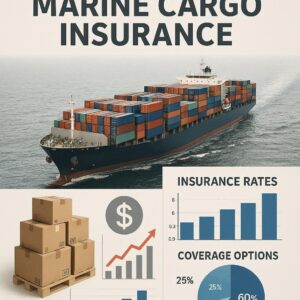
Marine Cargo Insurance Cost
How Marine Cargo Insurance Premiums Are Calculated: The Core Formula
At its most fundamental level, the premium you pay is a function of risk. Insurers assess how likely your cargo is to suffer damage or loss and how severe that financial impact would be. This assessment translates into a basic formula, though its application is nuanced:
Premium = (Value of Goods + Freight Cost + Insurance Cost + 10%) x Insurance Rate
Let’s break down each component:
-
Insured Value: This is typically the Commercial Invoice Value + Freight Cost + Insurance Cost + 10%. The extra 10% represents a “profit margin” for the buyer, acknowledging that the loss isn’t just the cost of the goods but also the lost business opportunity.
-
Insurance Rate: This is the critical variable, expressed as a percentage. It is determined by the insurer based on a multifaceted risk assessment.
The insurance rate is where the real evaluation happens. A rate of 0.25% (or 25 “cents” per $100 insured) on a $100,000 shipment means a premium of $250. But why might your neighbor’s rate be 0.15% and yours 0.40%? The answer lies in the following factors.
The Key Factors That Directly Influence Your Insurance Cost
Your final quote is a portrait of your shipment’s journey and characteristics. Underwriters paint this portrait by examining several key elements.
1. Nature and Value of the Cargo (What You’re Shipping)
This is the starting point. High-value, fragile, or hazardous goods inherently present a greater risk.
-
General/Non-Hazardous Goods: Finished products like furniture, clothing, or machinery parts generally attract the lowest rates.
-
Fragile or Perishable Goods: Electronics, glassware, fresh produce, or pharmaceuticals are more susceptible to damage from shock, temperature changes, or delay, leading to higher rates.
-
Hazardous/Dangerous Goods: Chemicals, batteries, or flammable materials require special handling and pose a greater liability, significantly increasing the premium.
2. Packaging and Preparation
Proper packaging is your first line of defense and insurers take note. Goods packed according to international standards (e.g., ISPM 15 for wood) in seaworthy containers with adequate dunnage and blocking will be viewed more favorably than those poorly packed. Demonstrating robust packaging can help lower your perceived risk.
3. Transit Route and Journey Duration (Where and How Long)
The path from A to B is fraught with varying levels of peril.
-
Geographical Routes: Routes with well-established infrastructure, stable political climates, and low historical loss ratios (e.g., Northern Europe to North America) are cheaper to insure. Routes known for piracy (certain areas off the coast of West Africa, the Gulf of Aden), extreme weather, political instability, or poor port facilities will see higher rates.
-
Mode of Transport: All-water sea freight is generally cheaper to insure than air freight, but the longer transit time increases exposure. Multimodal transport (ship, truck, rail) introduces more handling points and potential for loss, which is factored in.
-
Duration: Longer transit times mean a longer window for potential incidents, slightly elevating the risk.
4. Coverage Type and Extent (What You’re Covered For)
The breadth of your policy is a major cost driver.
-
Institute Cargo Clauses: These are the global standards.
-
C (Restricted): Covers only major casualties like fire, explosion, vessel sinking, collision, and jettison. Lowest cost.
-
B (Intermediate): Adds coverage for physical damage from earthquakes, lightning, derailment, water damage from heavy weather, and theft. Moderate cost.
-
A (All Risk): The broadest coverage, protecting against all risks of physical loss or damage except for specific exclusions like war, inherent vice, or ordinary leakage. Highest cost.
-
-
Additional Endorsements: Adding specific riders for risks like War, Strikes, Riots, and Civil Commotions (SRCC), or Theft, Pilferage, and Non-Delivery (TPND) will increase the premium.
5. Claims History
Both the shipper’s and the route’s historical loss data play a role. A business with frequent claims will be seen as a higher risk. Similarly, a trade lane with a high frequency of losses will have a higher base rate.
6. Deductible (Excess)
This is the amount you agree to pay out-of-pocket on a claim before the insurance kicks in. Opting for a higher deductible (e.g., $1,000 instead of $100) significantly reduces your premium, as you are assuming more of the initial risk.
Comparative How Choices Impact Marine Cargo Insurance Cost
| Factor | Lower Cost Scenario | Higher Cost Scenario | Why? |
|---|---|---|---|
| Cargo Type | Durable industrial parts | Lithium-ion batteries | Hazardous materials require special care and pose greater liability. |
| Coverage Level | Institute Cargo Clause C | Institute Cargo Clause A + War Risks | “All Risk” + additional perils equals a much broader scope of coverage. |
| Transit Route | Rotterdam to Halifax | Mombasa to Lagos | Risk profiles differ due to piracy, political stability, and port infrastructure. |
| Packaging | ISPM 15 pallets, crated | Carton boxes only | Professional packaging prevents damage, reducing the insurer’s expected loss. |
| Deductible | $2,500 per claim | $250 per claim | A higher deductible means the insurer pays out less frequently, lowering your premium. |
| Claims History | Clean record for 5 years | 3 claims in the past 2 years | Past claims are a strong predictor of future claims. |
Practical Strategies to Manage and Reduce Your Insurance Costs
Understanding the factors is step one. Actively managing them is step two. Here’s how you can exert control over your premiums.
-
Invest in Superior Packaging: It’s not an expense; it’s a risk mitigation investment. Use certified materials and document your packing process. This can be presented to insurers to argue for a better rate.
-
Choose Your Routes Wisely: When possible, opt for stable, direct routes. If a problematic transit point is unavoidable, understand that the insurance cost is part of the total landed cost calculation.
-
Select the Right Coverage: Don’t automatically choose “All Risk.” Analyze your cargo’s real vulnerabilities. Is theft a major concern at the destination port? Do your goods need temperature control? Match the coverage to the genuine risks to avoid paying for unnecessary protections.
-
Implement a Risk Management Program: Demonstrate to insurers that you are a professional partner. This can include:
-
Using reputable carriers and freight forwarders.
-
Having a documented process for cargo handling.
-
Conducting pre-shipment inspections.
-
Training staff on Incoterms and risk allocation.
-
-
Consider a Higher Deductible: If you have the financial resilience to absorb a higher upfront cost in the event of a claim, increasing your deductible is the most straightforward way to lower your annual premium outlay.
-
Bundle with an Open Cover Policy: For businesses with regular shipments, a single, annual “Open Cover” policy is almost always more cost-effective than buying single, voyage-based policies. It simplifies administration and often comes with a preferential rate due to the volume of business.
-
Shop Around and Negotiate: Obtain quotes from multiple reputable marine insurers or brokers. Use your knowledge of the factors above to ask informed questions and negotiate terms. A long-term relationship with a broker can yield benefits.
Expert Insight: “The most common mistake importers make is viewing cargo insurance as a commodity. It’s not. It’s a tailored risk transfer tool. A skilled broker doesn’t just sell you a policy; they analyze your supply chain, identify the critical risk points, and structure coverage that protects you where you’re truly vulnerable, often for a lower overall cost than a generic, off-the-shelf solution.” – Senior Maritime Insurance Broker.
Helpful Checklist Before You Request a Quote
Gather this information to get accurate, comparable quotes quickly:
-
Complete commercial invoice with exact goods description and value.
-
Incoterms (e.g., CIF, FOB, EXW) defining liability points.
-
Full routing details (origin, destination, transshipment ports).
-
Mode(s) of transport and vessel/truck/airline details if known.
-
Packing specifications (type of containers, palletization, crating).
-
Desired coverage level (Clause A, B, C) and any necessary extensions.
-
Your preferred deductible amount.
-
Your company’s recent claims history (if any).
Important Note for Readers: The cheapest premium is not always the best value. A policy with glaring exclusions, a sub-limits on certain types of loss, or from an insurer with a poor claims payment reputation can end up costing you far more in the long run. Always read the policy wording, focusing on the exclusions and claims procedure sections.
Beyond the Premium: The Total Cost of Risk
When evaluating marine cargo insurance cost, it’s crucial to look beyond the premium to the “Total Cost of Risk.” This includes:
-
The Premium: The upfront insurance cost.
-
The Deductible: Your out-of-pocket cost per claim.
-
Uninsured Losses: Losses from perils not covered (e.g., inherent vice, delay due to market fluctuations).
-
Risk Mitigation Expenses: Costs of better packaging, security, or reliable partners.
-
Administrative Costs: Time spent managing policies and claims.
A slightly higher premium with a responsive insurer and comprehensive coverage often results in a lower total cost of risk than a bare-bones, cheap policy that fails when you need it most.
Conclusion
Navigating marine cargo insurance cost requires a blend of knowledge and strategy. By understanding how insurers calculate risk through factors like cargo type, transit route, coverage level, and deductible, you can make informed decisions. Proactive measures such as improving packaging, selecting appropriate coverage, and opting for an annual Open Cover policy can optimize your premiums without sacrificing essential protection. Ultimately, effective cargo insurance is about smart risk management, ensuring that your goods—and your bottom line—are secure throughout their journey.
FAQ
Q: What is a typical percentage for marine cargo insurance?
A: There is no universal “typical” percentage. Rates can range from as low as 0.1% (for low-risk, durable goods on safe routes) to over 2% (for high-risk, sensitive cargo on problematic routes). The average often cited is between 0.25% and 0.75% of the insured value, but your specific quote will depend entirely on the factors outlined in this guide.
Q: Is marine cargo insurance worth the cost?
A: Absolutely. For most businesses, the total loss of even a single container shipment could be devastating. The premium is a small, predictable cost that protects against a large, catastrophic financial loss. It is a fundamental component of responsible international trade.
Q: Who is responsible for buying marine cargo insurance?
A: Responsibility is determined by the Incoterms® rule in the sales contract. For example, under CIF (Cost, Insurance, and Freight), the seller is obligated to obtain insurance. Under FOB (Free on Board) or EXW (Ex Works), the buyer is typically responsible for arranging coverage from the point where risk transfers to them. Always clarify the Incoterms.
Q: Can I get insurance if I’m a small business or a first-time shipper?
A: Yes. Many insurers and brokers cater to SMEs and first-time shippers. Using a freight forwarder who can arrange insurance on your behalf or speaking with a specialized marine insurance broker are excellent starting points.
Q: What should I do if I need to make a claim?
A: Notify your insurer or broker immediately upon discovering damage or loss. Do not wait. Document everything with photos and videos. Secure the original shipping documents (Bill of Lading, Invoice, Packing List, Insurance Certificate) and obtain a survey report from an independent agent at the destination port if possible. Your insurer will guide you through their specific claims process.