Navigating the world of addiction treatment or pain management is challenging enough without the added stress of confusing medical bills and pharmacy prices. If you or a loved one has been prescribed methadone, you are likely focused on recovery and well-being. The last thing you need is a financial surprise.
Understanding methadone cost with insurance can feel like trying to read a map in a foreign language. Deductibles, copays, formularies—the terms can be overwhelming. But don’t worry. This guide is designed to walk you through everything you need to know. We will break down how insurance works with methadone, what you might expect to pay, and how to navigate the system to get the most affordable care.
Whether you are visiting a specialized Opioid Treatment Program (OTP) or picking up a prescription from a retail pharmacy for pain, we’ve got you covered.
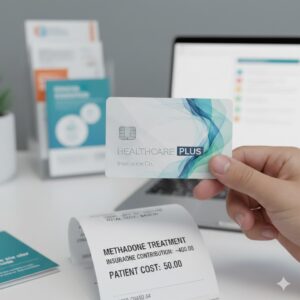
Methadone Cost with Insurance
Why Methadone Costs Vary So Much
Before we dive into the specific numbers, it is important to understand that methadone is a unique medication. Unlike a common antibiotic where you simply pay a flat copay, the cost of methadone depends heavily on where you get it and why you are taking it.
There are generally two scenarios for methadone users:
-
Methadone for Opioid Use Disorder (OUD): This requires daily visits to a federally regulated Opioid Treatment Program (OTP) clinic. Here, you receive a dose under supervision.
-
Methadone for Pain Management: This is prescribed by a doctor and filled at a standard retail pharmacy (like CVS, Walgreens, or a local independent pharmacy), just like any other pain medication.
The pricing structure, and how your insurance applies, is drastically different in these two settings.
How Insurance Coverage Works for Methadone
Health insurance in the United States can be complicated, but understanding a few key terms will help you decipher your bill. Most insurance plans, including private insurance, Medicaid, and Medicare, offer some level of coverage for methadone, especially for opioid use disorder thanks to the Mental Health Parity and Addiction Equity Act (MHPAEA). This law essentially says that insurance companies can’t make it harder to get mental health or addiction treatment than it is to get medical/surgical treatment.
Here are the main factors that influence your cost:
Deductibles: The First Hurdle
A deductible is the amount you must pay out-of-pocket for covered services before your insurance plan starts to pay.
-
If you haven’t met your deductible: You might be responsible for 100% of the clinic fees or the medication cost until you hit that limit. This can be expensive initially.
-
If you have met your deductible: Your insurance will begin to share the cost, and you will only pay a copay or coinsurance.
Copays vs. Coinsurance
These are the two main ways you share costs with your insurance company after your deductible is met.
-
Copay: A fixed amount you pay for a service. For example, you might have a $20 copay for every visit to the OTP clinic or a $10 copay for a 30-day supply at the pharmacy.
-
Coinsurance: A percentage of the cost you pay. If your clinic visit costs $150 and you have 20% coinsurance, you would pay $30.
H3: Formularies and Prior Authorization
Insurance companies have a list of preferred drugs they cover, called a “formulary.”
-
Methadone Status: Methadone is almost always covered, but it is often a “preferred” generic drug, which is the cheapest tier for you.
-
Prior Authorization (PA): Sometimes, the insurance company needs your doctor to prove that methadone is medically necessary before they will agree to pay for it. This is common for pain management prescriptions. Don’t panic if this happens—it’s a routine paperwork step, but it can cause a delay.
Important Note: Always check with your specific insurance provider. Call the number on the back of your card and ask, “Is methadone covered under my plan? What is my copay for an OTP clinic visit? What is my copay for a prescription at a pharmacy?”
Scenario 1: Methadone Cost with Insurance at a Clinic (OTP)
For individuals in recovery from opioid addiction, methadone is administered through Opioid Treatment Programs. These are specialized clinics that provide medication, counseling, and other support services.
In this setting, you aren’t just paying for the liquid or wafer form of methadone. You are paying for a bundle of services: the nursing staff to supervise your dose, the counseling sessions, and the drug testing required by federal law.
Typical Insurance Coverage for OTP Services
Most commercial insurance plans, as well as Medicare and Medicaid, now cover OTP services, especially after the COVID-19 pandemic expanded telehealth and access to care.
-
In-Network vs. Out-of-Network: This is the biggest factor. If the clinic is “in-network” with your insurance, they have negotiated rates, and your costs will be lower. If it is “out-of-network,” you may have to pay the full bill upfront and seek partial reimbursement, or it may not be covered at all.
-
The Billing Structure: Clinics often bill insurance in two ways:
-
A bundled weekly or monthly rate for all services.
-
Separate billing for medication administration and counseling.
-
What You Pay: A Cost Breakdown Table
To give you a realistic idea of what “methadone cost with insurance” looks like in a clinic setting, here is a hypothetical breakdown based on common plan structures. Remember, these are estimates.
| Insurance Scenario | Deductible Status | Typical Cost Structure | Estimated Weekly Out-of-Pocket Cost |
|---|---|---|---|
| Private Insurance (PPO/HMO) | Met | Fixed copay per week | $10 – $30 per week |
| Private Insurance (PPO/HMO) | Not Met | Full negotiated rate | $70 – $125 per week |
| Medicaid (State-Specific) | Usually $0 | $0 copay (in most states) | $0 |
| Medicare Part B (with supplement) | Met | 20% coinsurance after deductible | $15 – $40 per week |
| High-Deductible Health Plan (HDHP) | Not Met | Full cost until deductible is met | $70 – $125+ per week |
Hidden Clinic Fees to Watch For
Even with insurance, some clinics may have additional fees. It is always smart to ask the intake coordinator:
-
Is there a one-time intake or admission fee? Some clinics charge an initial fee to cover the paperwork and physical exam required to start treatment.
-
Are there fees for take-home doses? If you earn the privilege of taking doses home (instead of coming every day), some clinics may charge a small preparation fee, though many bundle this into the weekly rate.
-
What about drug screens? While often covered, if you go over the number of tests allowed by your insurance in a month, you might receive a separate bill.
Reader Tip: Don’t let cost stop you from seeking help. Many clinics have “sliding fee scales” based on your income if you are uninsured or underinsured. Ask about financial assistance programs immediately.
Scenario 2: Methadone Cost with Insurance at a Pharmacy (For Pain)
If you are prescribed methadone in pill or tablet form for chronic pain management, the process looks very different. You will receive a written or electronic prescription from your doctor, which you will take to a retail pharmacy.
The Pharmacy Benefit
Your health insurance plan has a separate “pharmacy benefit” managed by a Pharmacy Benefit Manager (PBM). This is different from your medical benefit.
-
Tiered Pricing: Generic methadone is almost always on the lowest tier of your drug formulary. This means you will pay the lowest possible price.
-
Supply Limits: Insurance companies often have strict limits on pain medications. You might only be allowed to fill a 30-day supply at a time. You cannot fill it early.
Retail Pharmacy Costs Explained
Because methadone is a generic medication, the cash price without insurance is relatively low compared to brand-name drugs. However, insurance usually makes it even cheaper.
Let’s look at a comparison of what you might pay for a 30-day supply of generic methadone tablets (assuming a common dose like 10mg taken multiple times a day).
| Pharmacy Scenario | Cost Without Insurance (Cash Price) | Cost With Insurance |
|---|---|---|
| Standard Copay Plan | $45 – $90 | $5 – $15 (flat copay) |
| Coinsurance Plan | $45 – $90 | $9 – $18 (20% coinsurance) |
| Deductible Not Met | $45 – $90 | $45 – $90 (full price until deductible met) |
The “Coupon” Loophole
Here is a little-known secret: Sometimes, using a discount card (like GoodRx or SingleCare) can be cheaper than using your insurance.
-
Why? If your insurance deductible is very high, you are paying full price anyway. Discount cards negotiate lower cash prices with pharmacies, often beating the uninsured rate.
-
The Catch: You cannot combine them. You must choose either your insurance or the discount card. Also, using the discount card usually does not count toward your insurance deductible.
-
Important for Controlled Substances: Not all pharmacies accept discount cards for controlled substances like methadone due to their own internal policies. Always call ahead and ask, “Do you accept GoodRx for methadone?”
H2: Comparing Methadone Costs: Clinic vs. Pharmacy
It is easy to get confused between these two pathways. Here is a simple list to help you distinguish the costs and coverage.
-
Clinic (OTUUD Treatment):
-
What you pay for: Medication + Counseling + Lab Tests + Nursing Supervision.
-
Billing: Comes from your Medical Benefit.
-
Cost Structure: Often a weekly copay or coinsurance.
-
Insurance Complexity: Medium to High (requires prior auth for the service).
-
-
Pharmacy (Pain Management):
-
What you pay for: The pills or liquid only.
-
Billing: Comes from your Pharmacy Benefit.
-
Cost Structure: Tiered copay based on formulary.
-
Insurance Complexity: Low (standard prescription fill).
-
What If You Don’t Have Insurance? (Self-Pay Options)
We know that not everyone reading this will have active health insurance. Perhaps you are between jobs, your plan doesn’t start for another month, or you are unfortunately underinsured. While this article focuses on “methadone cost with insurance,” it is crucial to address the reality of self-pay.
Cash Pay at Clinics
Opioid Treatment Programs are required to provide care, and many are accustomed to working with uninsured patients.
-
Weekly Rates: Self-pay rates at clinics can range widely, typically from $70 to $140 per week. This varies significantly by state and region. Urban areas tend to be more expensive than rural ones.
-
Sliding Fee Scales: As mentioned earlier, many non-profit and community-based clinics operate on a sliding fee scale. This means your payment is based on your ability to pay. Do not be embarrassed to ask for this. It is a standard part of their operation.
Cash Pay at Pharmacies
For pain patients, paying cash for generic methadone is often surprisingly affordable.
-
Cost: A 30-day supply of generic methadone can be as low as $20 to $40 at pharmacies like Walmart or Costco (you do not need a membership for the pharmacy).
-
Discount Cards: Even without insurance, you can use a free discount card like GoodRx, NeedyMeds, or RxSaver to bring the price down further, often to around $15-$25.
Warning: Buying methadone online from unverified sources or foreign pharmacies is extremely dangerous and illegal. The medication could be fake, contaminated, or incorrectly dosed. Always use a licensed US pharmacy.
5 Tips to Minimize Your Methadone Costs
Whether you are insured or not, there are proactive steps you can take to ensure you are paying the lowest possible price for your treatment.
-
Verify Coverage Before Your First Visit
Don’t assume the clinic is in-network. Call your insurance company and get a list of in-network OTP providers. Then, call the clinic and confirm they accept your specific plan. This 30-minute phone call can save you thousands of dollars. -
Ask About Patient Assistance Programs (PAPs)
Pharmaceutical companies rarely make assistance programs for generics, but many large hospital systems and non-profits offer grants or assistance specifically for addiction treatment. Ask your clinic’s social worker or billing department if they know of any local or national funds available to help cover copays. -
Consider a Health Savings Account (HSA) or Flexible Spending Account (FSA)
If you have a high-deductible health plan, you likely have access to an HSA. If you get insurance through your employer, you might have an FSA. These accounts let you set aside pre-tax dollars to pay for medical expenses, including clinic copays and prescription drugs. It’s like getting a discount equal to your tax bracket. -
Appeal a Denial
If your insurance denies coverage for methadone treatment, you have the right to appeal. This is a formal request for them to review their decision. Often, denials happen because of a clerical error or missing paperwork. Your clinic’s billing department can be a powerful ally in this process. -
Talk to Your Provider
If money is tight, be honest with your treatment team. They may be able to adjust your visit schedule (if clinically appropriate) to reduce transportation costs, or they might have samples of other medications if you are using methadone for pain (though they cannot give away controlled substances). For OUD, they are your best resource for navigating financial hardship within the clinic.
Frequently Asked Questions (FAQ)
Q1: Is methadone treatment usually covered by insurance?
Yes, most private insurance plans, Medicaid, and Medicare now cover methadone treatment for opioid use disorder. However, the extent of coverage varies. You must check if the specific clinic is in-network and what your cost-sharing (copay/coinsurance) looks like.
Q2: Why is my methadone copay so high at the clinic?
High copays usually mean you haven’t met your annual deductible yet, or the clinic is out-of-network. If the clinic is in-network and you have met your deductible, your copay should be a manageable flat fee. If it’s still high, call your insurance to verify how OTP services are classified on your plan.
Q3: Does Medicare cover methadone for addiction?
Yes. As of 2020, Medicare Part B covers methadone for opioid use disorder when provided by an Opioid Treatment Program. You typically pay 20% of the Medicare-approved amount for the services, and the Part B deductible applies.
Q4: Does Medicaid cover methadone?
Yes, Medicaid covers methadone treatment in all states. In fact, it is one of the largest payers for substance use disorder treatment. In many states, there is zero cost to the patient for OTP services. However, you must attend a clinic that accepts your state’s Medicaid plan.
Q5: Why did my pharmacy charge me more than usual for my methadone prescription?
There are a few common reasons for this:
-
You might have filled it at the beginning of the year before meeting your new deductible.
-
Your insurance formulary might have changed.
-
The pharmacy might have run the prescription through your insurance but forgot to apply a prior authorization, resulting in a rejection and a cash price. Always check the receipt and ask the pharmacist if the price “went through insurance.”
Q6: Can I use my HSA card to pay for methadone?
Absolutely. You can use your Health Savings Account (HSA) or Flexible Spending Account (FSA) debit card to pay for clinic copays and pharmacy prescriptions. It is a pre-tax benefit specifically for qualified medical expenses.
Q7: Is methadone more expensive than Suboxone?
Generally, generic methadone is significantly cheaper than Suboxone (buprenorphine/naloxone), especially if paying cash. However, with insurance, your copay for either medication depends entirely on your plan’s drug tiers. Suboxone is often a brand-name drug with a higher copay, while methadone is generic and usually the lowest cost.
Conclusion: Navigating Your Path to Affordable Treatment
Understanding methadone cost with insurance doesn’t have to be a barrier to getting the help you need. While the system involves navigating deductibles, copays, and network restrictions, the reality is that insurance significantly reduces the financial burden for the vast majority of patients—often bringing costs down to a manageable weekly copay. Whether you are seeking recovery from addiction at a clinic or managing chronic pain, the key is to be proactive: verify your benefits, communicate openly with your providers about costs, and explore all available assistance programs. Affordable treatment is not a myth; it is often just a few phone calls away.
Additional Resource
For unbiased, official help understanding your rights and coverage regarding addiction treatment, the Substance Abuse and Mental Health Services Administration (SAMHSA) is an invaluable resource.
-
Website: www.samhsa.gov
-
National Helpline: 1-800-662-HELP (4357) – A free, confidential, 24/7 treatment referral and information service (in English and Spanish) for individuals and families facing mental and/or substance use disorders.