Navigating the world of insurance is a critical task for any non-profit organization. While your mission drives your work, managing risk is what ensures your mission can continue, no matter what challenges arise. A common and pressing question for board members, executive directors, and financial officers is: “What will insurance cost our non-profit?”
The answer, while not simple, is knowable. The cost of insurance for a non-profit is not a one-size-fits-all figure; it’s a variable investment in your organization’s stability and longevity. This guide will demystify non-profit insurance costs, breaking down the factors that influence your premiums, the types of coverage you likely need, and proven strategies to manage these expenses responsibly. Think of this not as just another operational cost, but as a strategic component of your sustainable growth.
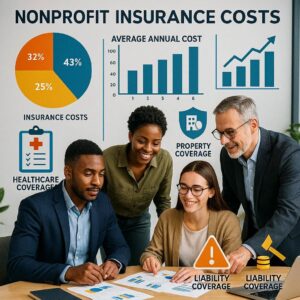
Non-Profit Insurance Costs
What Exactly is “Non-Profit Insurance”?
First, let’s clarify the term. “Non-profit insurance” isn’t a single, specific policy. Instead, it refers to a suite of insurance products designed to address the unique risks faced by charitable, educational, religious, and other mission-driven organizations. These policies protect your assets, your people (staff, volunteers, and clients), your leadership, and your reputation.
“Insurance for a non-profit is less about compliance and more about stewardship. It’s a tangible commitment to protecting the community’s investment in your mission,” notes Michael Chen, a risk management consultant specializing in the non-profit sector.
Unlike for-profit businesses focused on product liability or business interruption from profit loss, non-profits must consider risks like volunteer accidents, allegations of misconduct during program delivery, or special event liabilities.
Core Insurance Lines for Most Non-Profits
Your specific needs will vary, but most organizations require some combination of the following:
-
General Liability Insurance: The foundational coverage. It protects against third-party claims of bodily injury (e.g., a visitor slips and falls in your office), property damage, and personal/advertising injury (e.g., libel or slander).
-
Directors and Officers (D&O) Liability Insurance: Arguably the most critical coverage for attracting and retaining a skilled board. It protects the personal assets of your board members and officers if they are sued for alleged wrongful acts in their governance role, such as mismanagement of funds or employment practices disputes.
-
Professional Liability (Errors & Omissions): Essential for non-profits that give advice, provide counseling, or manage client cases. It covers claims of negligence, errors, or omissions in the professional services you provide.
-
Commercial Property Insurance: Covers your physical assets—your building (if you own it), office equipment, computers, and program supplies—against fire, theft, vandalism, and certain weather events.
-
Accident Medical Insurance for Volunteers: Provides medical expense coverage for volunteers injured while performing their duties. This is both a risk management tool and a sign of good faith towards your volunteer corps.
-
Non-Profit Auto Insurance: Needed if your organization owns, rents, or leases vehicles. If employees or volunteers use their personal vehicles for organization business, you need Hired & Non-Owned Auto Liability (HNOA) coverage.
Key Factors That Determine Your Non-Profit’s Insurance Cost
Insurance providers use a detailed assessment to price your policy. Understanding these levers helps you present your organization in the best light and identify areas for potential savings.
1. Your Organization’s Operations & Services (The Biggest Driver)
What you do directly determines your risk profile. A non-profit that runs a quiet research library will have vastly different costs than one operating a wilderness adventure program for youth or providing hot meals from a commercial kitchen.
-
Low-Risk Examples: Grant-making foundations, advocacy groups with no direct client service, historical societies.
-
High-Risk Examples: Homeless shelters, addiction counseling centers, youth sports leagues, organizations working with vulnerable populations.
2. Annual Revenue & Budget Size
Larger budgets often correlate with higher activity levels, more assets, and greater exposure. Insurers see revenue as a proxy for the scale of operations and potential loss severity.
3. Number of Employees & Volunteers
More people mean more exposure to employment practices claims (like wrongful termination) and general liability claims. The ratio of volunteers to staff is also scrutinized, as volunteer management carries its own risks.
4. Claims History
Just like personal auto insurance, a history of past claims suggests a higher future risk. A clean claims history is one of your strongest assets in securing favorable rates.
5. Coverage Limits, Deductibles, and Policy Terms
You control some of the cost directly through your choices:
-
Higher Deductibles: Choosing to pay more out-of-pocket if a claim occurs (a higher deductible) will lower your annual premium.
-
Coverage Limits: Opting for $1 million vs. $2 million in liability limits will affect the price. Don’t underinsure to save money; the gap in protection can be catastrophic.
-
Policy Inclusions/Exclusions: Adding special endorsements (e.g., for cyber liability, sexual abuse & molestation coverage) increases cost but is often necessary.
6. Location
Your geographic location affects costs related to property insurance (crime rates, weather risks) and can influence liability premiums due to local litigation trends.
Breaking Down the Costs: What Can You Expect to Pay?
It’s crucial to move beyond generalities. While we cannot quote a price, we can provide realistic frameworks. These are illustrative ranges; your actual quote will depend on the factors above.
Typical Annual Premium Ranges for Core Coverages
| Coverage Type | Low-Risk Org. (e.g., Arts Council) | Medium-Risk Org. (e.g., Community Food Bank) | High-Risk Org. (e.g., Youth Mentoring with Transportation) |
|---|---|---|---|
| General Liability | $400 – $800 | $800 – $2,500 | $2,500 – $5,000+ |
| Directors & Officers (D&O) | $800 – $1,500 | $1,500 – $3,500 | $3,500 – $7,000+ |
| Professional Liability | $500 – $1,200 | $1,200 – $3,000 | $3,000 – $6,000+ |
| Commercial Property | Varies widely by asset value. For $100,000 in contents, perhaps $300 – $700. | ||
| Accident Medical (Volunteers) | $100 – $300 | $200 – $500 | $300 – $800 |
| Hired & Non-Owned Auto | $200 – $400 | $400 – $800 | $800 – $1,500 |
Important Note: Many non-profits purchase a Business Owner’s Policy (BOP) tailored for their sector, which bundles General Liability and Property insurance at a discount. D&O and other lines are typically separate policies.
The Total Cost Picture
A small, low-risk advocacy group with a few volunteers might secure essential coverage for $1,500 to $3,000 annually. A mid-sized social services agency with staff, vehicles, and professional counseling could see a total insurance budget of $10,000 to $25,000+ per year.
7 Proactive Strategies to Manage and Reduce Insurance Costs
Cost management isn’t about finding the cheapest policy; it’s about demonstrating your organization is a responsible, high-quality risk.
1. Implement a Formal Risk Management Program
This is your most powerful tool. Documented procedures show insurers you’re proactive.
-
Create Safety Manuals: For offices, events, and programs.
-
Conduct Regular Training: For staff and volunteers on safety, harassment prevention, and incident reporting.
-
Perform Background Checks: Especially for staff/volunteers working with vulnerable populations.
2. Shop Smart and Work with a Specialist
-
Use a Broker Specializing in Non-Profits: They understand your unique needs and have access to insurance carriers who focus on the non-profit market.
-
Compare Quotes, Not Just Price: Ensure you are comparing equivalent coverage terms, limits, and exclusions.
-
Ask About Bundling: Inquire about a BOP or other package discounts.
3. Optimize Your Coverage Structure
-
Review Deductibles Annually: As your cash reserves grow, consider increasing deductibles to lower premiums.
-
Audit Your Policies: Ensure you’re not over-insuring old equipment or paying for coverage you no longer need (e.g., property at a former location).
4. Prioritize a Strong Claims History
-
Report Claims Promptly and Accurately: Delays can complicate matters and increase costs.
-
Investigate Incidents Internally: Use every incident as a learning opportunity to prevent recurrence.
5. Demonstrate Strong Governance
-
Maintain Meticulous Financial Records: Transparency reduces perceived D&O risk.
-
Document Board Meetings & Decisions: Show that governance is taken seriously.
6. Inquire About Specific Discounts
-
Association Memberships: Many state or national non-profit associations offer group insurance programs with preferred rates.
-
Claims-Free Discount: Ask if it’s available.
-
Safety Features Discount: For property insurance (alarms, sprinkler systems).
7. Consider Alternative Risk Financing
For very large or mature organizations, methods like captives or large deductibles paired with loss funding can be explored with a expert broker.
Building an Insurance Budget: A Practical Approach
Don’t let insurance be a surprise expense. Integrate it into your financial planning.
-
Inventory Your Risks: Annually, review your activities, assets, and operations. What’s new? What has stopped?
-
Request Renewal Quotes 90 Days Early: This gives you ample time to negotiate and shop around without being pressured by an impending expiration date.
-
Allocate Funds in Your Fiscal Year Budget: Based on prior years and anticipated growth, set a realistic line item. Include a small contingency for potential premium increases.
-
Present the Budget to the Board: Frame insurance as a critical component of risk management and fiduciary duty, not just a cost.
Helpful Note for Readers: When reviewing a quote, always look for the “Insuring Agreement,” “Exclusions,” and “Conditions” sections. The declarations page showing the price is just the cover sheet; the real substance is in these sections that define what is and isn’t covered.
Beyond the Basics: Often-Overlooked but Critical Coverages
As your non-profit evolves, so do your risks. Consider these increasingly important policies:
-
Cyber Liability Insurance: Essential in the digital age. Covers costs associated with a data breach (notification, credit monitoring, legal fees) and liability if donor or client data is exposed. Even small non-profits are targets.
-
Employment Practices Liability Insurance (EPLI): Often included in or added to D&O policies. Covers claims from employees (past, present, or prospective) for discrimination, harassment, wrongful termination, etc.
-
Sexual Abuse & Molestation (SAM) Coverage: For organizations working with children or vulnerable adults, this is often excluded from standard liability policies and must be purchased separately. It’s a non-negotiable for relevant organizations.
Conclusion
Managing non-profit insurance costs is an ongoing exercise in balancing prudent financial stewardship with comprehensive risk protection. By understanding the rating factors, investing in risk management, working with the right experts, and proactively budgeting, you can secure the coverage your mission deserves at a sustainable cost. Remember, the goal is not to find the absolute cheapest policy, but to build a resilient financial foundation that allows your organization to serve its community with confidence, now and in the future.
Frequently Asked Questions (FAQ)
Q: Can we just skip D&O insurance to save money? It seems expensive.
A: This is extremely high-risk. D&O insurance is what allows qualified individuals to serve on your board without fear of personal financial ruin from a lawsuit. Without it, attracting and retaining a skilled board becomes very difficult, and your organization and its leaders are exposed to potentially devastating personal liability.
Q: We only use volunteers, not employees. Do we still need insurance?
A: Absolutely. Volunteers can cause accidents (general liability), get injured (volunteer accident medical), and make mistakes in service delivery (professional liability). You are also still exposed to claims from third parties and need to protect your board (D&O).
Q: What is the single most effective thing we can do to lower our premiums?
A: Implementing and documenting a robust risk management program. Showing insurers written safety protocols, training records, and background check procedures proves you are a superior risk, which is the best path to favorable rates.
Q: How often should we review our insurance policies?
A: At a minimum, conduct a full review annually at renewal time. You should also review coverage whenever your organization undergoes a significant change, such as launching a new program, purchasing a vehicle, or moving to a new location.
Additional Resources
-
The Nonprofit Risk Management Center: A fantastic source for tools, articles, and training on all aspects of non-profit risk, including insurance. Visit their website for free resources and guides.