Navigating the world of malpractice insurance as a Certified Registered Nurse Anesthetist (CRNA) is a critical step in safeguarding your career, your financial future, and your peace of mind. The cost of this essential protection isn’t a single number; it’s a variable influenced by a complex web of factors. This guide will demystify nurse anesthetist malpractice insurance cost, providing you with the knowledge to make an informed, confident decision. Whether you’re a recent graduate, considering a career move, or reviewing your current policy, understanding what drives your premium is the first step toward securing robust coverage without overpaying.
We’ll break down the components, compare scenarios, and offer actionable strategies. Let’s build a foundation.
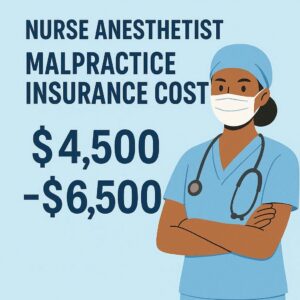
Nurse Anesthetist Malpractice Insurance Cost
Understanding Malpractice Insurance for CRNAs: More Than Just a Price Tag
Before diving into dollars and cents, it’s crucial to understand what you’re purchasing. Malpractice insurance, also known as professional liability insurance, is designed to protect you if a patient alleges that your professional services caused them harm. For CRNAs, whose work is complex and high-risk, this isn’t optional—it’s imperative.
There are two primary types of coverage structures:
-
Claims-Made Policy: This is the most common type for healthcare professionals. It provides coverage only if the policy is in effect both when the incident occurs and when the claim is filed. This creates a need for “tail coverage” (an extended reporting endorsement) if you change jobs, retire, or cancel the policy, to protect you from future claims for incidents that happened during the active policy period.
-
Occurrence Policy: This type provides coverage for any incident that occurs during the policy period, regardless of when the claim is filed—even years later. These policies are typically more expensive upfront but eliminate the need for and cost of tail coverage.
As noted by a veteran healthcare risk consultant, “The cheapest premium today can become the most expensive mistake of your career tomorrow if it leaves gaps in your coverage. For CRNAs, evaluating the policy’s limits, consent-to-settle clauses, and licensing board defense coverage is as important as the price.”
Key Factors That Determine Your Premium
Your nurse anesthetist malpractice insurance cost is not random. Insurers use a detailed actuarial process to assess risk. Here are the primary levers that adjust your premium.
1. Geographic Location (State of Practice)
This is often the most significant factor. States with a history of high-value lawsuit payouts (often called “judicial hellholes”) and high concentrations of litigious activity will have much higher premiums. For example, practicing in New York, Florida, Illinois, or certain urban areas in California will cost significantly more than practicing in the Midwest or rural states.
2. Practice Setting and Duties
Where and how you work dramatically affects risk perception.
-
Hospital Employed (W-2): Often considered lower risk, especially if covered under the hospital’s policy. Your individual policy may be cheaper as it acts as excess coverage.
-
1099 Independent Contractor / Locum Tenens: This typically commands the highest premiums. Insurers see increased risk due to varying work environments, lack of institutional oversight, and the fact that you are solely responsible for your defense.
-
Ambulatory Surgery Centers (ASCs), Pain Clinics, Dental Offices: Risk profiles vary. An ASC might be viewed similarly to a hospital, while a pain management setting could be rated higher due to the chronic and complex nature of the patients.
3. Coverage Limits
Limits are expressed as “per claim / aggregate” (e.g., $1,000,000 / $3,000,000). Higher limits mean higher premiums, but they are often required by employers or state boards.
4. Claims History
A clean record is your best asset. Even one settled claim can increase your premium for years. Multiple claims can make securing affordable coverage challenging.
5. Experience Level and Hours Worked
New graduates may pay slightly more due to lack of experience. Conversely, a CRNA nearing retirement with a pristine record might secure a slight discount. The number of hours you work per week (full-time vs. part-time) also directly impacts cost.
6. Policy Type and Insurer
As mentioned, an Occurrence policy will cost more upfront than a Claims-Made policy. Additionally, the financial strength and reputation of the insurance carrier (e.g., CM&F, NSO, Proliability) can influence price and service quality.
CRNA Malpractice Insurance Cost: A State-by-State Comparison
The following table provides estimated annual premium ranges for a full-time, W-2 employed CRNA with a clean claims history, seeking a Claims-Made policy with $1M/$3M limits. These are illustrative estimates; your actual quote will vary.
| State / Region | Estimated Annual Premium Range (Employed CRNA) | Risk Tier Notes |
|---|---|---|
| Florida, New York, Illinois | $3,500 – $7,000+ | High-Risk Tier. High litigation frequency and severity. |
| California, Pennsylvania, New Jersey | $2,800 – $5,500 | Medium-High Risk Tier. Major urban centers drive costs up. |
| Texas, Georgia, Michigan, Ohio | $2,200 – $4,200 | Medium Risk Tier. Tort reforms in some states (like TX) have moderated costs. |
| Midwest (IA, KS, NE, WI) | $1,800 – $3,300 | Lower-Medium Risk Tier. Generally lower litigation environments. |
| Mountain & Rural States (ID, MT, SD, ND) | $1,500 – $2,800 | Lower Risk Tier. Lowest population density and claim frequency. |
Important Note for Readers: If you are an independent contractor (1099) or locum tenens CRNA, you should generally expect your premiums to be 2 to 4 times higher than the employed ranges listed above. For example, a locum CRNA in Florida could easily see annual premiums between $8,000 and $15,000.
Breaking Down the Real Cost: Employed vs. Independent Contractor
To visualize the dramatic difference, let’s compare two hypothetical CRNAs, both with 5 years of experience and a clean record, working in Ohio.
Scenario A: Hospital-Employed CRNA (W-2)
-
Primary Coverage: Provided by hospital (claims-made, $1M/$3M).
-
Individual “Umbrella” Policy: Claims-made, $1M/$3M for added protection, covering gaps like deposition costs or incidents outside the workplace.
-
Estimated Individual Premium: $2,400/year.
-
Tail Coverage Need: If the hospital’s policy requires you to purchase your own tail upon leaving (a “nose” vs. “tail” issue), that could be a one-time cost of $4,800-$7,200.
Scenario B: Independent Contractor CRNA (1099)
-
Primary Coverage: Must secure your own occurrence policy or claims-made + tail.
-
Coverage Type: Occurrence policy, $1M/$3M (chosen for simplicity and portability).
-
Estimated Annual Premium: $7,500 – $9,500/year.
-
Key Advantage: No separate tail purchase needed. Premium is higher, but long-term cost can be more predictable.
Essential Policy Features That Impact Value (Not Just Cost)
When comparing quotes, look beyond the premium. These features define the real value of your policy.
-
Consent-to-Settle Clause (aka “Hammer Clause”): This is non-negotiable. It gives you the right to veto a settlement. Without it, an insurer could settle a claim on your behalf (which gets reported to the National Practitioner Data Bank) to save money, potentially tarnishing your career.
-
Licensing Board Defense Coverage: Pays for an attorney if your professional license is challenged, even if no malpractice claim is filed.
-
Deposition and Legal Expense Reimbursement: Covers costs associated with giving depositions for cases where you are not the primary defendant.
-
Personal Liability Coverage: Often included and protects against non-work related personal injury claims.
-
Wide Definition of “Insured Professional Services”: Ensures coverage for a broad range of activities, including mentoring, committee work, or even volunteer services.
Practical Strategies to Manage Your Insurance Costs
You have more control than you think. Here’s how to intelligently manage your nurse anesthetist malpractice insurance expense:
-
Shop Around and Compare: Get quotes from at least 3-4 reputable carriers that specialize in healthcare professionals. Use an independent broker who can access multiple markets.
-
Bundle Policies: If you need other insurance (e.g., disability, life, home), bundling with one carrier can yield discounts.
-
Choose Your Deductible Wisely: Opting for a higher deductible (the amount you pay out-of-pocket before insurance kicks in) can lower your annual premium.
-
Inquire About Discounts: Ask about discounts for:
-
New graduates (first-year discounts).
-
Members of professional associations (AANA membership).
-
Electronic funds transfer (EFT) payments.
-
Claim-free years.
-
-
Consider “Occurrence” if Contracting Long-Term: For long-term 1099 work, run the numbers on an Occurrence policy versus a Claims-Made policy + the future tail cost. The break-even point is often around 5-7 years.
-
Maintain Impeccable Records and Continuing Education: Your best defense against claims is impeccable practice. Document thoroughly, communicate clearly, and stay current with CE. A clean record is your most powerful discount tool.
FAQ: Your CRNA Malpractice Insurance Questions Answered
Q: Is malpractice insurance required for CRNAs?
A: Legally, no single federal law mandates it. However, virtually every employer will require you to have coverage, either through their policy or your own. Most state boards of nursing also strongly recommend or have specific requirements for professional liability coverage as a condition of licensure or practice.
Q: If my employer provides coverage, do I need my own policy?
A: Absolutely, yes. Employer-provided insurance protects the employer’s interests first. Your own individual policy protects you. It ensures you have your own legal defense, covers gaps (like if you work a side job), and follows you from job to job. It’s a critical layer of personal asset protection.
Q: What is “tail coverage” and how much does it cost?
A: Tail coverage protects you for claims made after a claims-made policy ends, for incidents that happened while the policy was active. It’s typically purchased when you leave a job. The cost is usually 150-250% of your annual premium at the time you purchase the tail. This is a major financial consideration.
Q: How do I choose between Claims-Made and Occurrence?
A: For employed CRNAs with stable career plans, a Claims-Made policy (with the understanding of future tail cost) is often cost-effective. For independent contractors, locum tenens, or those anticipating job changes, an Occurrence policy, despite its higher annual premium, offers simplicity and predictable long-term cost without the tail surprise.
Q: When should I first purchase my own policy?
A: The day you begin clinical practice as a student. Most insurers offer very affordable “student” policies that convert seamlessly to “new grad” policies. This ensures you have continuous protection from the very start of your career.
Conclusion
Understanding nurse anesthetist malpractice insurance cost involves analyzing practice location, employment status, coverage details, and policy features. Investing in robust, personalized coverage is a non-negotiable pillar of a secure CRNA career. By prioritizing both comprehensive protection and cost-effectiveness, you safeguard your professional future and gain invaluable peace of mind.
Additional Resource:
For a deeper dive into policy specifics and current industry trends, the American Association of Nurse Anesthesiology (AANA) provides excellent member resources and partners with reputable insurance providers. You can explore their risk management and insurance information here: AANA Risk Management & Insurance